Two Critics Walk into Ciccio Mio, a Yelp Top 100 Restaurant
Maggie Hennessy
August 25, 2026
Get more recipes, food news, and stories at wttw.com/food or by signing up for our Deep Dish newsletter.
I arrive at Ciccio Mio at 4:15 p.m. on a Tuesday, because it’s impossible to book a table at this sultry 50ish-seater unless maybe you’re Beyonce. I snag one of four counter stools available to walk-ins in the entry lounge. (A plush couch and armchair are fair game for walk-ins too, but who wants to eat lasagna and sip a long-necked vesper while hunched over a coffee table? Scarcity’s a powerful tool, I suppose.)
I’m here today to reacquaint myself with what the fuss is about, since, according to Yelp, Ciccio Mio counts among the top 100 places to eat in America in 2026 – number 65, to be exact. It was one of three Chicago restaurants to make this list, along with fellow Hogsalt Hospitality concern, the coal-fired tavern Trivoli Tavern (#98), and the family-owned Latin-fusion brunch favorite, Un Amor (#96).
What’s interesting about said lineup is that – whether deserved or not – these restaurants don’t routinely crop up on best of lists or pile up critical acclaim and awards. (This former Time Out restaurant critic had only been to Ciccio Mio once before reporting on this story.) Yelp, with its 28 million unique monthly users, arguably carries more weight than most restaurant guidebooks, save, perhaps for the wee fraction of world-class restaurants that nab Michelin stars.
On the whole, Yelp favorites seem to hit a different kind of spot for the dining public: One that satisfies, comforts, and is, elusively, likable – enough so that they take to online review platforms to say how much they relished the “fantastic” food, “friendly, motivated” service and “stunning, cozy vibes – literally everything!” After that, a good chunk of the 178 million unique monthly visitors to the platform take said four- and five-star ratings into account, patronize those restaurants, and the cycle continues. But what’s behind the gap between critical praise and the mushier space comprising what a lot of the public honest-to-goodness likes?
“What critics think matters more to the restaurant industry than the public,” says restaurant critic and food writer John Kessler, quite matter-of-factly. The affable, bespectacled Kessler has been the official critic at Chicago magazine for four years and a contributor since 2015. He previously clocked 18 years as a food writer and critic at the Atlanta Journal-Constitution. Incidentally, Kessler hadn’t been to any of the Yelp-approved three, so I asked him to select one and meet me there for a meal. He picked Ciccio Mio, adding, “Maybe we can crack the Hogsalt code!”
This is the 13th year of Yelp’s top 100 list. According to the company, winners are selected through a combination of submissions, individual ratings, review numbers, and community input. Yelp data scientists analyze and weigh total review volume, user ratings, and geographic diversity, while local community managers lend their on-the-ground expertise to curate the final selection and make sure it reflects current tastes. (It’s worth noting that 43% of Yelp users are over 55. Three-quarters of Gen Zers, meanwhile, have never written a Yelp review. Over half of users [58%] are college educated and 53% make more than $100,000 a year.)
A handful of critically acclaimed restaurants did make the list this year, including COTE Miami, the Michelin-starred Korean steakhouse, and two-year James Beard Foundation Award semi-finalist Meesh Meesh Mediterranean in Louisville. Much of the rest comprises amiable mom-and-pops, like Waffle and Berry (#4) in Honolulu, opened by a longtime restaurant server; the Vietnamese-Peruvian fusion restaurant Nam Kitchen (#3) in Gardena, California; and Slackwater Pizzeria (#9), which slings pop culture-themed pies in Salt Lake City. Such thrilling, crowd-sourced hidden gems (if the term still exists in our internet age) would draw the frosty-haired Guy Fieri to shout at us, “You gotta check out this joint!” on Diners, Drive-ins and Dives.
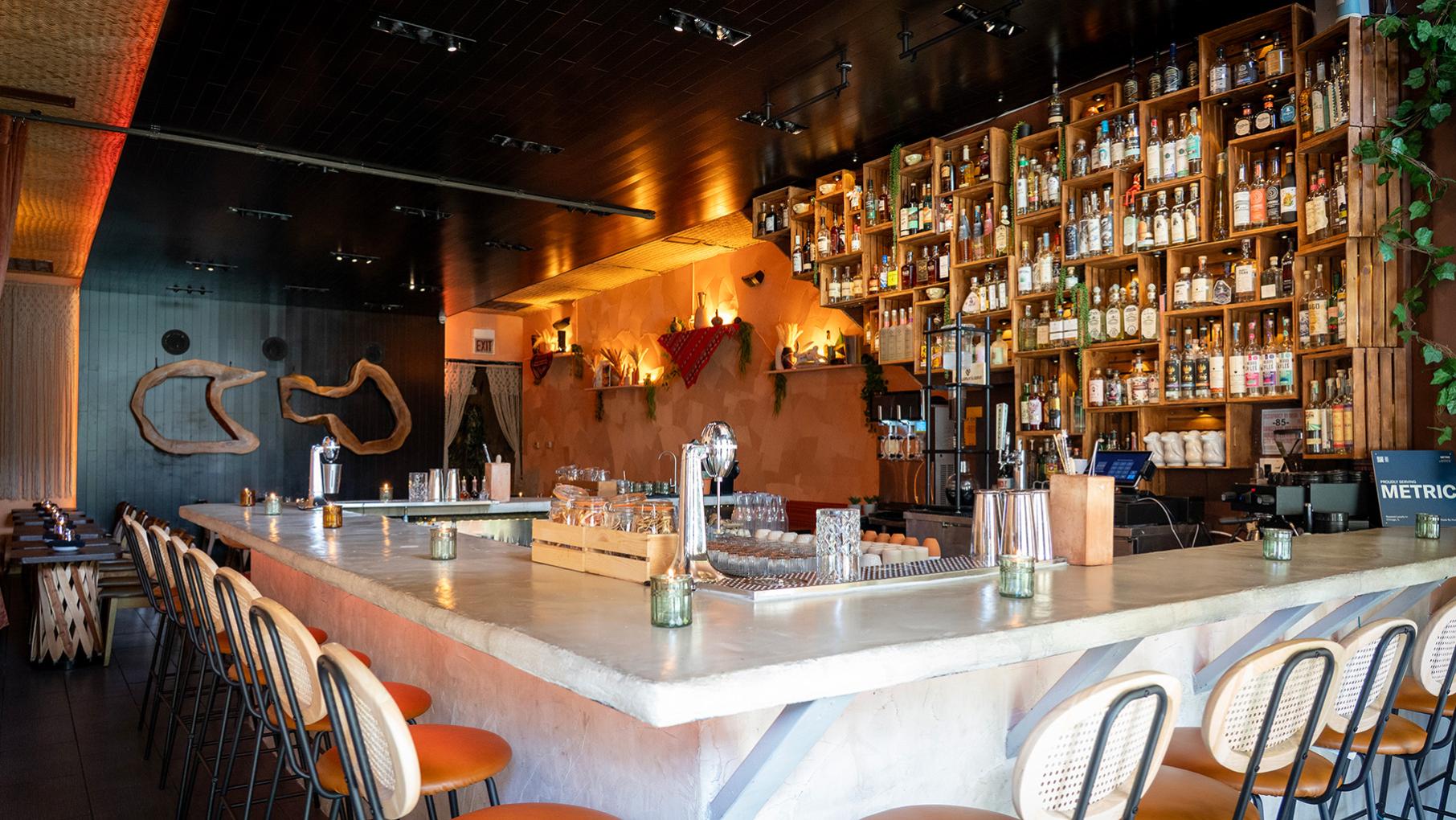
Ciccio Mio wittily self-describes as “A Nice Italian Restaurant.” Like all Hogsalt restaurants, it is outfitted to within an inch of its life in sumptuous escapism, or, as one Yelper put it, “stunning room, old-school Italian American vibes.”
Hogsalt (Bavette’s Bar & Boeuf, Au Cheval) founder Brendan Sodikoff is something of a ringmaster for dining experiences that are absorbing, all of which seem centered on self-indulgence as a human right. Think hefty, spare-no-expense maximalist decor and few enough oversized seats that if you happen to secure one, you do feel a little like Beyonce. Menus read sophisticated without challenging anyone too much: fresh seafood, big salads, thick steaks, comfy pastas – “indulgent without hitting you with that sense you can’t go on,” Kessler says. It’s a good thing too, because those coolly knowledgeable servers can charm the most miserly bugger into an upsell – and happily.
What Do We Food Experts and Critics Know Anyway?
“I’m Jessica, I’ll be enabling you all night,” says the server, who will quickly become, I think, my favorite of all time. It’s not just her assured mastery of the menu, attentiveness, and delicious linguistic choices (“I’m a Braulio girl, especially shaken.”) She has the uncommon gift of making you feel like she’s shepherding you through the perfect evening and is genuinely delighted to do so.
She nudges me toward the beguilingly good Bella Punch, a vodka, Cocchi Rosa and St. Germain cocktail I would never order that tastes like, in her brilliant words, bitter bubblegum. Kessler orders the zingy, viscous Bergamot Vesper with olive gin, vodka, bergamot liqueur and a bracing slick of citrus oil. We quickly agree that this place makes outstanding cocktails. Twenty minutes in, am I giving Ciccio Mio five stars?
Chicago’s star rating system, however, doesn’t even go up to five. Stars run from one (Recommended) to four (Exceptional), with Very Good (two) and Excellent (three) filling out the middle. In the simplest terms, Kessler thinks of them as a measure of “how high the restaurant aims with its food and service and then how well it achieves its goals,” he says. He determines this over a series of visits, during which he and his lucky dates consume as much of the menu as possible.
“Only a few restaurants have been three stars out of the gate for me,” he says, “John’s Food & Wine, Cariño, All Well, maybe Coach House [which has since closed]. Restaurants I love that seem like they are still working things out will probably hit three, but get 2.5 – like Maxwell’s Trading. If a place aims lower – a good genre restaurant – and hits its marks, two stars, maybe 2.5 if the food is really beyond.” (Ciccio Mio sibling steakhouse Bavette’s at one point reached 2.5 stars, but has since been demoted to two.)
Theoretically, if one had no time to read a critic’s thoughtful, engaging prose, the star ratings exist to guide the reader toward a good decision for their hard-earned disposable income. I recall a 2022 New York Times “Daily” podcast interview with former longtime critic Pete Wells saying, a little jealously perhaps, “The stars are supposed to be a summing up of the review. I think for some readers they're the entire review.”
On the other hand, what the public rates as outstanding online isn’t quite so reliable, suffering from what’s been academically deemed the “positivity problem,” a.k.a. too positive to be trusted. (And you thought the internet was just for meanies!) A 2021 study published in Nature found that 80% of online reviews on sites like Yelp and Amazon rate items with four or five stars, rendering them unreliable as guides for people seeking where to shop or dine. (In 2025, 70% of Yelp reviews were for four or five stars.)
Being loved by a committee – flawed or not – has to count for something though, right? As Atlantic staff writer Caity Weaver argued in her excellent, 11,000-word tome about finding the best free bread in America, “Wouldn’t many people citing the same thing as their favorite necessarily make it, at least in some way, the best?”
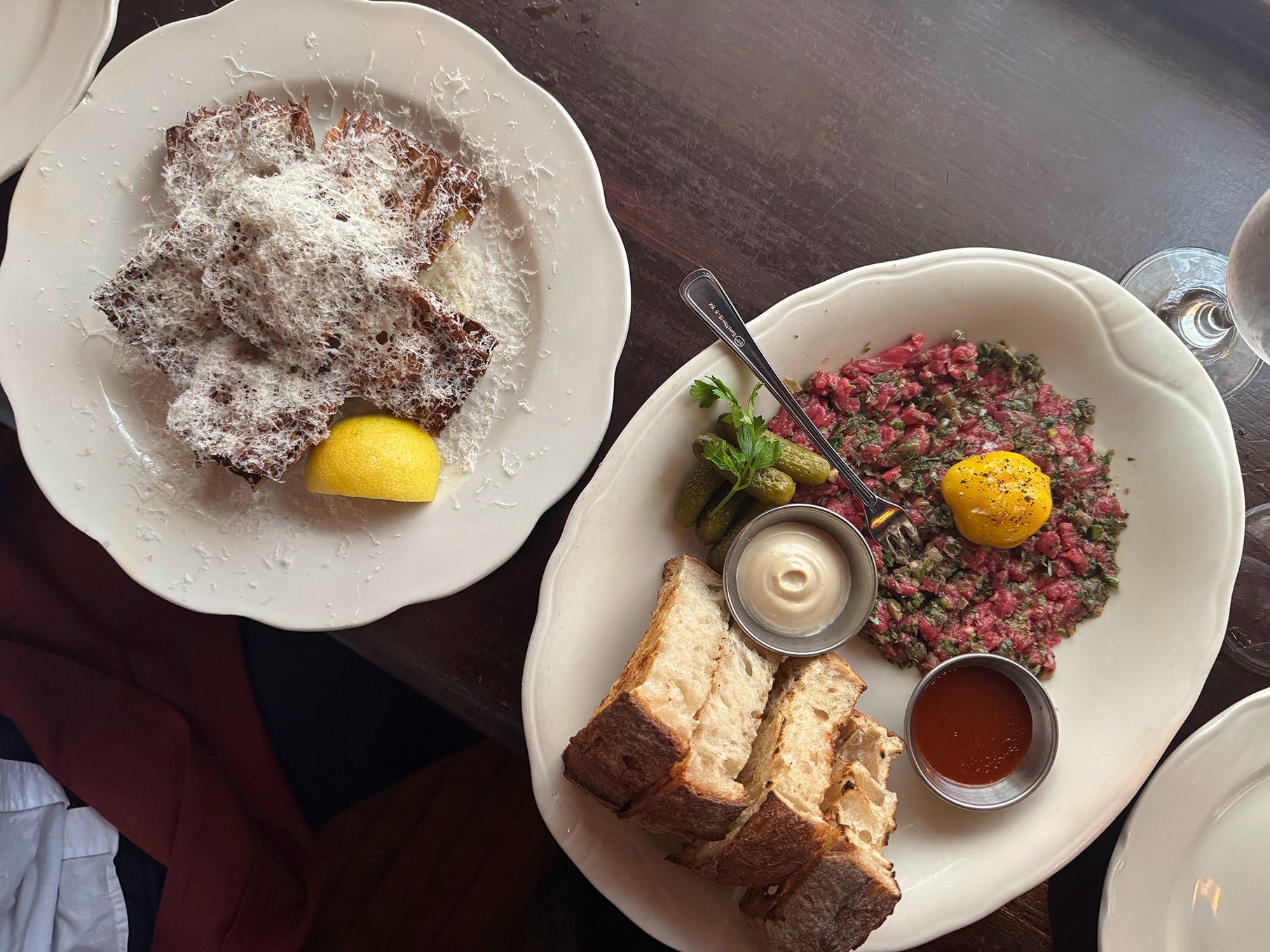
The steak and anchovy tartare we begin with is solidly good – luscious and bright red, laced with umami-rich anchovy mayo, briny capers and a slightly-too custardy egg yolk, alongside thick, soft sourdough toast rafts. (Jessica, for one, regularly sits down to this as an entree.) The fried artichoke hearts sitting atop Caesar aioli, which are listed as a side but recommended as a starter, are pleasant if texturally a little challenging, and needing acid. Kessler wonders aloud where they’re sourcing artichokes so far out of season.
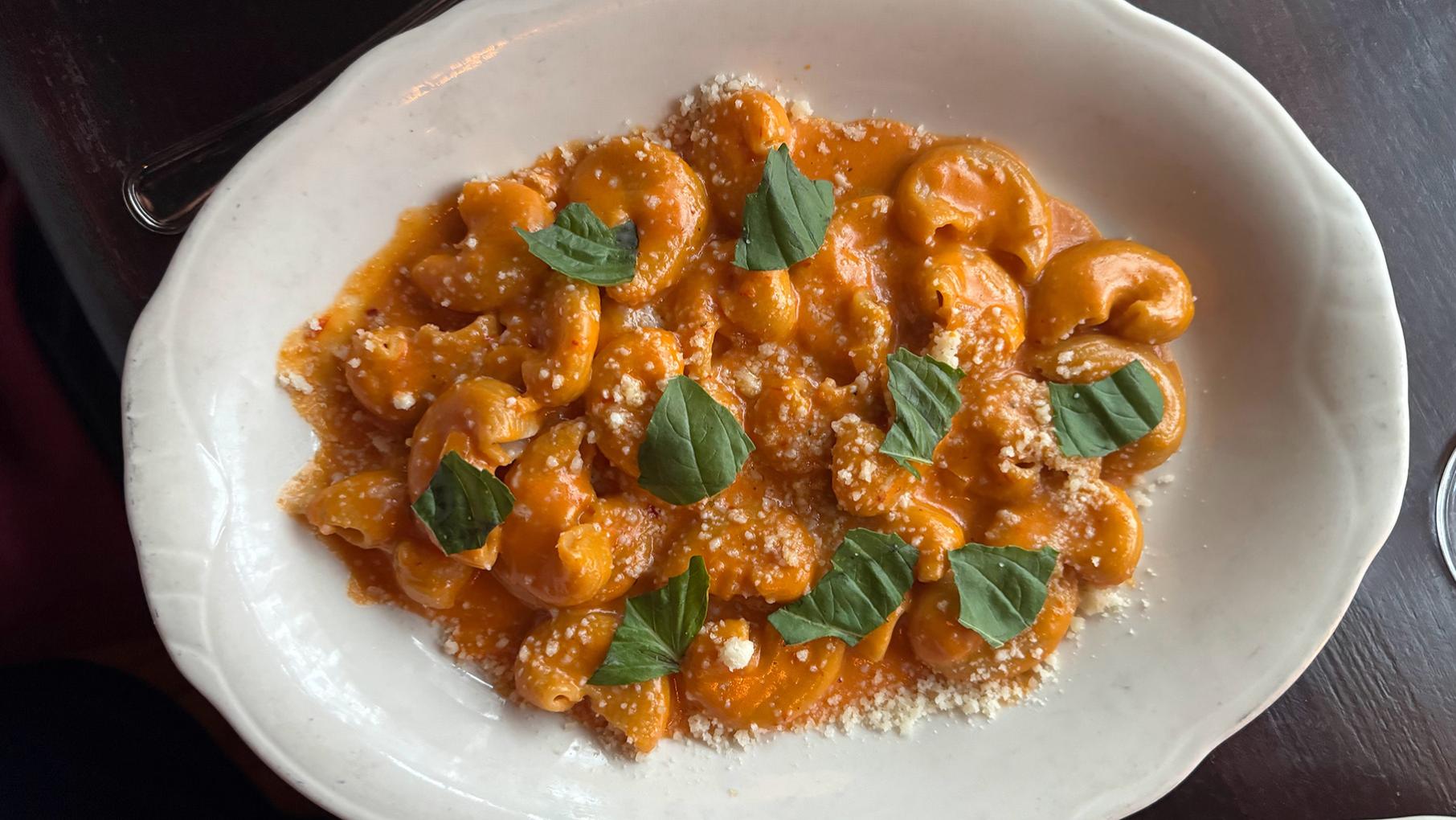
The rigatoni vodka comes recommended as a crowd favorite. “The vodka sauce takeover continues,” Kessler sighs. (Naturally, we order it.) We deem the savoriness at first a little jarring compared to oft-sweeter versions of the sauce, then find ourselves almost licking the plate clean.
“The sauce was pebbly and coated well,” Kessler says. “The textures were balanced against each other. They snuck fat into it without it being heavy and greasy.”
OK, maybe four stars? We prove hilariously easy to convince to round out the meal with a gussied amaro from Ciccio Mio’s superb list (Kessler’s nutty Gran Classico takes slushy form, my herbaceous, earthy Braulio is shaken with ice, owing to my now undying trust in Jessica.)
We float away on the sticky summer air happy and a little tipsier than planned.
“Carpe diem, darlings!” Jessica might say.
Thanks to her, the tartare and cocktails, I – feeling unburdened by those horrid “meaningful” stars critics must oblige, settle on 3.5. Kessler, like the professional he is, wouldn’t presume to review Ciccio Mio after one visit and only three dishes.
“Based on the food, service and feeling of the room, it feels like a two-star if the food is consistently very good,” he says, leaving it maddeningly, nobly, open-ended.
But what do we food experts and critics know anyway? Sometimes it’s better to let the hyperbolic good times wash over us like a bitter bubblegum wave. Such a vibe! Stunning room, fantastic service! Good-enough food! Felt special for two hours!
Was the experience genuinely worth my forking over $100 on a Tuesday evening? Perhaps not. But I had a ball and ate and drank well in an uncommonly pretty room. Isn’t that what going out to eat is all about?