The 1893 World's Fair Is the Subject of a New 'Chicago Stories' Documentary
Daniel Hautzinger
October 2, 2026
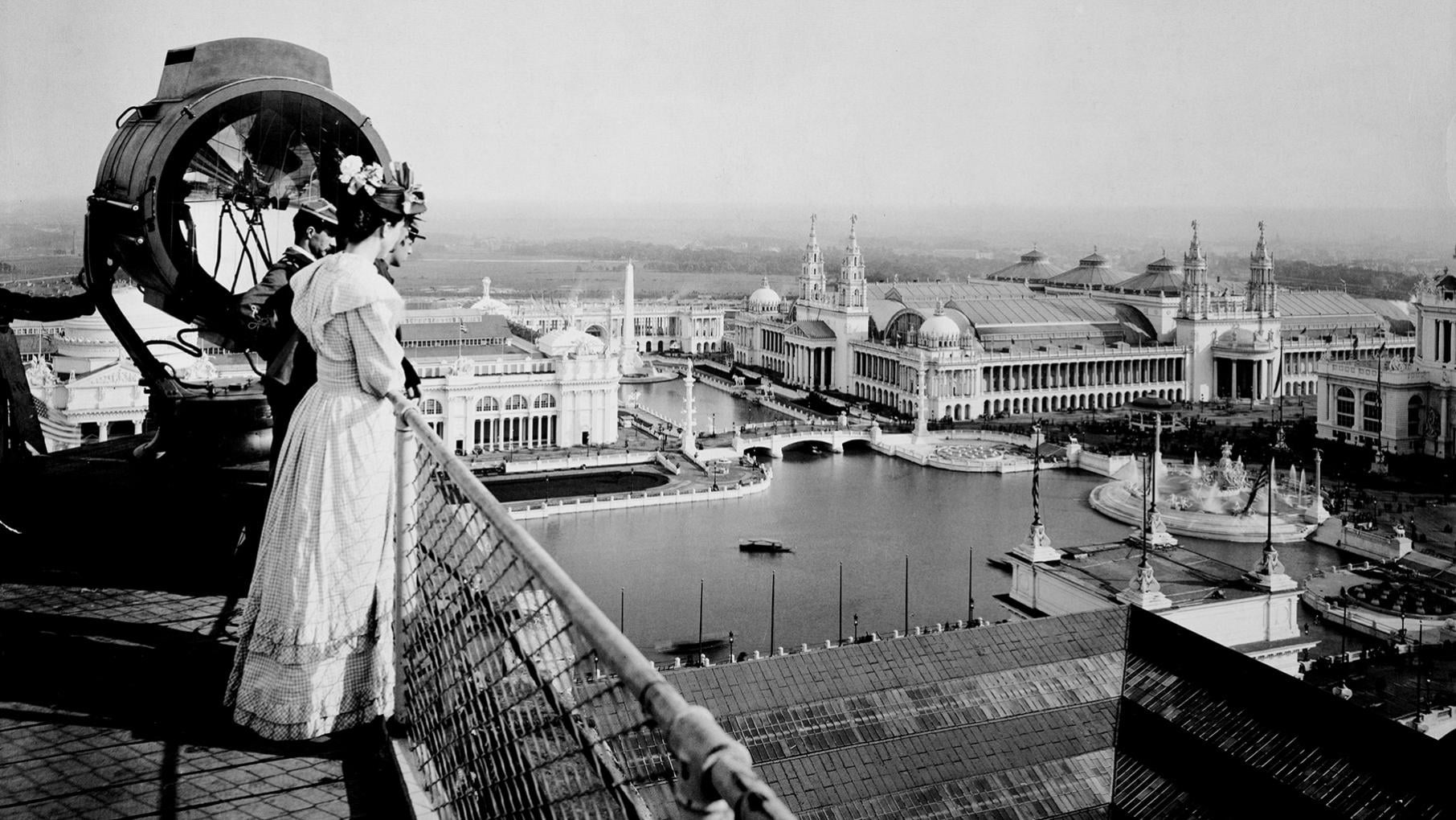
“This fair not only changed Chicago, it shaped the American imagination,” says Peter Marks, one of the producers and writers of the new documentary The World’s Fair of 1893, which leads off a new season of our Chicago Stories on Friday, October 2 at 8:00 pm and at wttw.com/chicagostories. Walt Disney’s father was a carpenter who helped build the fair, while the illustrations of the Emerald City in The Wonderful Wizard of Oz by L. Frank Baum, who attended, look “an awful lot like the White City” of the fair. The World’s Columbian Exposition not only inspired people; it also showed the world a new Chicago and introduced Vienna Beef, the zipper, and much more.
We spoke to Marks, his fellow producer and writer Tania Lindsay, and digital producer Meredith Francis about the fair, the documentary, and the companion website.
The Guide: Why is this World’s Fair so important to Chicago?
Peter Marks: This is the moment Chicago announced itself to the world. Only 20 years after the Great Fire, Chicago had transformed into an economic powerhouse and the birthplace of the skyscraper. [The skyscraper is the subject of another new Chicago Stories.] But people, especially New Yorkers, still dismissed us as a smelly ‘cow town.’ When Chicago beat out New York for the right to host the World’s Fair, Daniel Burnham and John Root had less than three years to turn a swamp in Jackson Park into a city that would dazzle and delight the world. Twenty-seven million visitors later, nobody could call Chicago a cow town anymore.
Tania Lindsay: It put the city on the map as a rival to New York and Paris. It also physically reshaped the city and seeded institutions, ideas, and products we still use daily.
The Guide: Why revisit the World’s Fair now?
Lindsay: Partly because there is no bad time to revisit the wonder that was the White City. And partly to remind Chicago of something about itself: That this is a city with a long history of doing hard and wonderful things, if imperfectly, and showing the world that we are much more than whatever the news says in any given year. The imperfect part matters too, and while we celebrate all the glorious wonders of the fair, the film doesn’t skip the hard parts, like who got left out, who got taken advantage of – or worse – and who carried on despite tragedy.
Marks: I think there’s something valuable about remembering a moment when Chicago took on the impossible. The fair is a reminder of Chicago’s “I Will” spirit, and what we can accomplish when we think big.
The Guide: How did you try to take a new approach towards a topic many Chicagoans already know?
Marks: One of the things we wanted to do was separate H.H. Holmes the murderer from H.H. Holmes the myth. Many people have read The Devil in the White City, in which Holmes builds this elaborate murder castle to lure unsuspecting victims. But that isn’t quite what happened. Newspaper reporters exaggerated the details, publishing fabricated diagrams of secret chambers and a crematory.
Meredith Francis: Another darker story to come out of the fair was the assassination of Chicago's mayor, Carter Harrison, just a couple days before the fair was set to close.
The Guide: What is something new that you learned in making this documentary?
Lindsay: Brownies can be highly controversial. While Bertha Palmer’s kitchen at the Palmer House Hotel is given credit as inventor of the beloved brownie, others question whether that apricot-glazed confection should be considered a brownie at all. It’s a highly sensitive topic. Some historians refused to comment, others cautiously avoided picking a side. Some said one thing off the record, and something different on. We may never know the right answer. But we’ll always have brownies.
The Guide: What’s something that most Chicagoans don’t know about the fair?
Marks: Most Chicagoans think the World’s Fair vanished, but it didn’t. If you walk down the Midway Plaisance at the University of Chicago, that’s where belly dancers once strutted and the first Ferris wheel spun. The Museum of Science and Industry was originally the Palace of Fine Arts. The Art Institute was created for the fair. There’s a ticket booth tucked in the yard of a private residence. The Obama Presidential Library rises on ground where the Horticulture and Women’s Building once stood. The fair is still very much around us if you know where to look.
Francis: On the companion website, we want people to be able to immerse themselves in this world, and to be able to imagine what it might have been like to attend the fair. We have some amazing historical images that go beyond the typical picture people might have in their heads. Our talented graphics team has created a really cool 3D imagining of what it would have been like to walk through the fair. It gives you a sense of just how expansive it was, and what it took to achieve that.
The Guide: What’s your favorite lasting impact of the fair?
Marks: For me, it’s Daniel Burnham’s vision. The White City helped inspire the City Beautiful movement and Burnham’s 1909 Plan of Chicago. There are times our skyline, parks, and museums still take my breath away.
Francis: There are a couple things that I would argue have made my life better: An early model of the modern dishwasher (invented by a woman!), and the brownie.
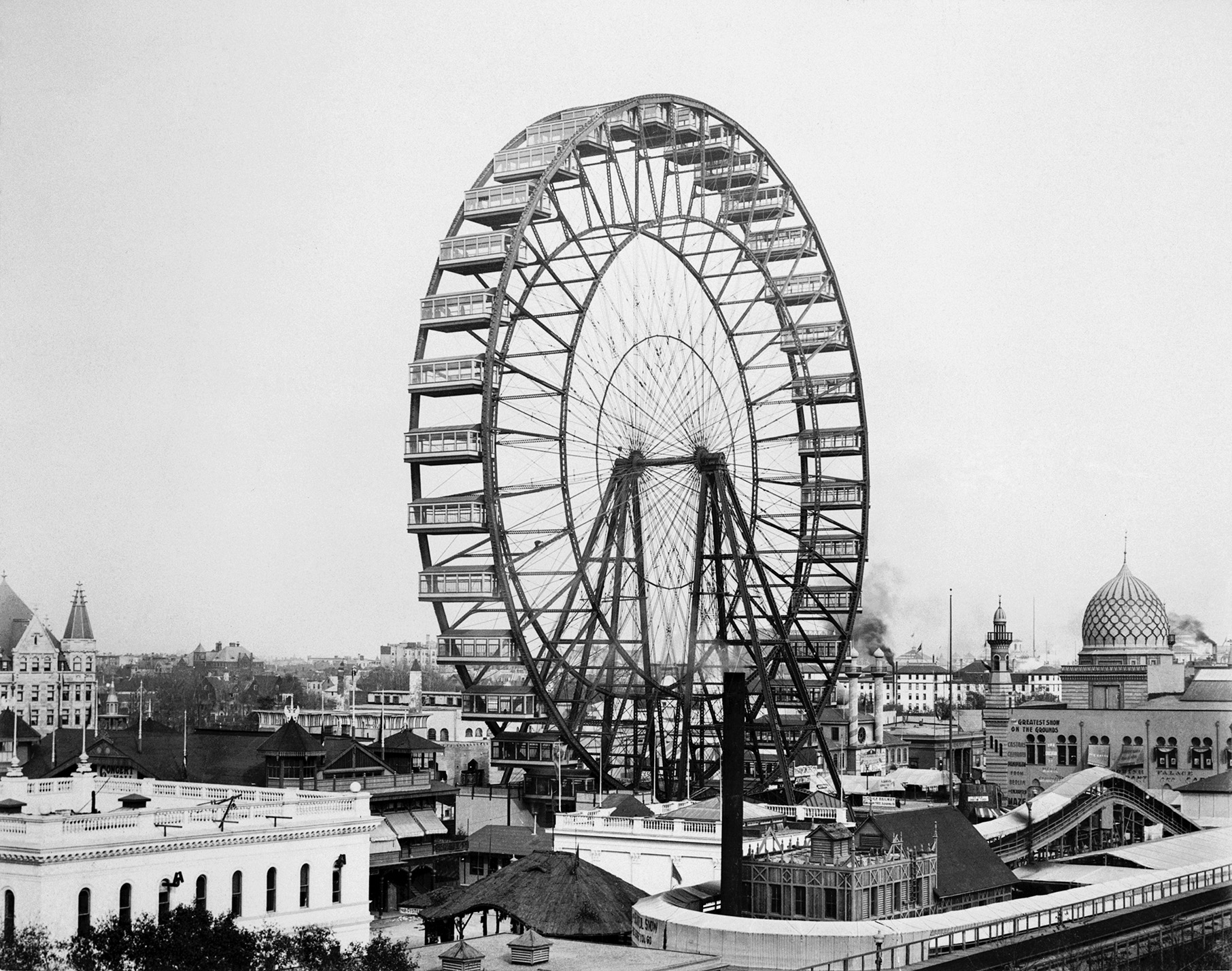
Lindsay: My favorite may well be the Ferris Wheel. I love that it exists because Chicago had a serious case of envy and wanted to top Paris’s 1889 World’s Fair stunner, the Eiffel Tower. George Ferris engineered the first-of-its-kind, giant wheel, with riding cars the size of city buses. It was a sensation when it debuted on the Midway Plaisance, which helped become the blueprint for the modern amusement park. Every time I see the wheel at Navy Pier, I see part of the Fair’s legacy, still spinning today.