
'Marble Hall Murders' Recap: Episode 6
Daniel Hautzinger
October 11, 2026

Marble Hall Murders is available to stream. Recap the previous episode.
Recap and stream the previous two series, Magpie Murders and Moonflower Murders.
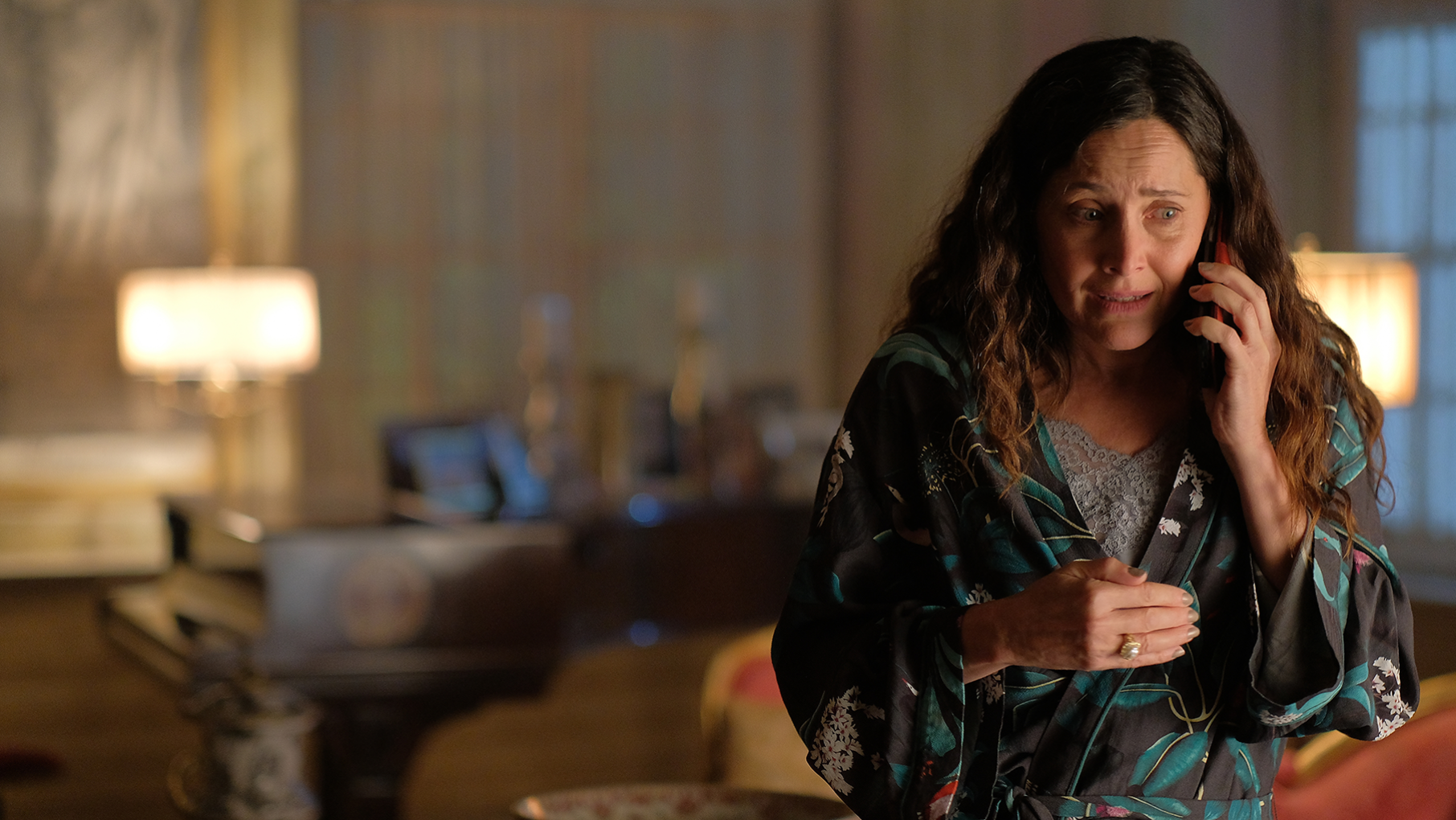
When Susan returns to her home to pick up clothes, she finds workers refurbishing it after her burglary, and Wardlaw. The detective tells her that her partner Blakeney is only being kind to Susan in order to get her to confess to killing Eliot. Doubt planted, Susan begins to question Blakeney’s motivations to her sister Katie. Meanwhile, Katie’s boyfriend David offers some unsolicited general advice: he thinks Susan should start her own publishing company.
Blakeney and Wardlaw visit Roland to question him about Eliot’s belief – learned by Susan via Charles – that Roland killed their grandmother, Miriam. Roland says that he, Eliot, and their sister Julia did make a potion to kill their grandmother, but it was a fantasy. Nevertheless, Rolad was scared to have the potion in his room, so he went down the hall to the bathroom opposite his grandmother’s room in the night to pour it down the toilet. That is why Eliot saw Roland carrying the jar towards Miriam’s room soon before she died.
Roland also defends himself against the charge of running over Eliot: he can’t drive, as he is color-blind like Miriam and thus was afraid to ever get his license.
After Susan finally returns home permanently, she receives a surprise visitor: Elaine Clover. Elaine warns Susan that Blakeney questioned her and said the police were about to arrest Susan for killing Eliot. Charles wishes he had killed himself rather than go to prison, Elaine shares, suggesting Susan might want to consider her options.
But Susan has already deduced that Elaine is the one who trashed her house and tried to frame her in Eliot’s death. First off, how does Elaine know where Susan lives? Second, Susan heard a doorbell when Elaine called her after Susan visited Charles, at the exact time that a package was delivered to Susan’s house – and Elaine’s own doorbell sounds different, as it is still a snippet of Charles’ playing the piano.
Susan guesses that Elaine found Eliot outside the Crace foundation party after he was hit by a car and, rather than call the police, snipped a piece of his jacket to place on Susan’s car, kicking it to make it appear as if it had hit Eliot, and giving an anonymous tip to the police that Susan’s car had been seen speeding away from the police.
Elaine admits it: she hates Susan for ruining Elaine’s life by sending Charles to prison. She grabs a knife and threatens Susan, who tries to tell her to walk away. Elaine refuses, so Susan screams to attract the attention of the person who has just rung the doorbell. It’s Blakeney, who saves Susan from Elaine with only a slashed arm to show for it.
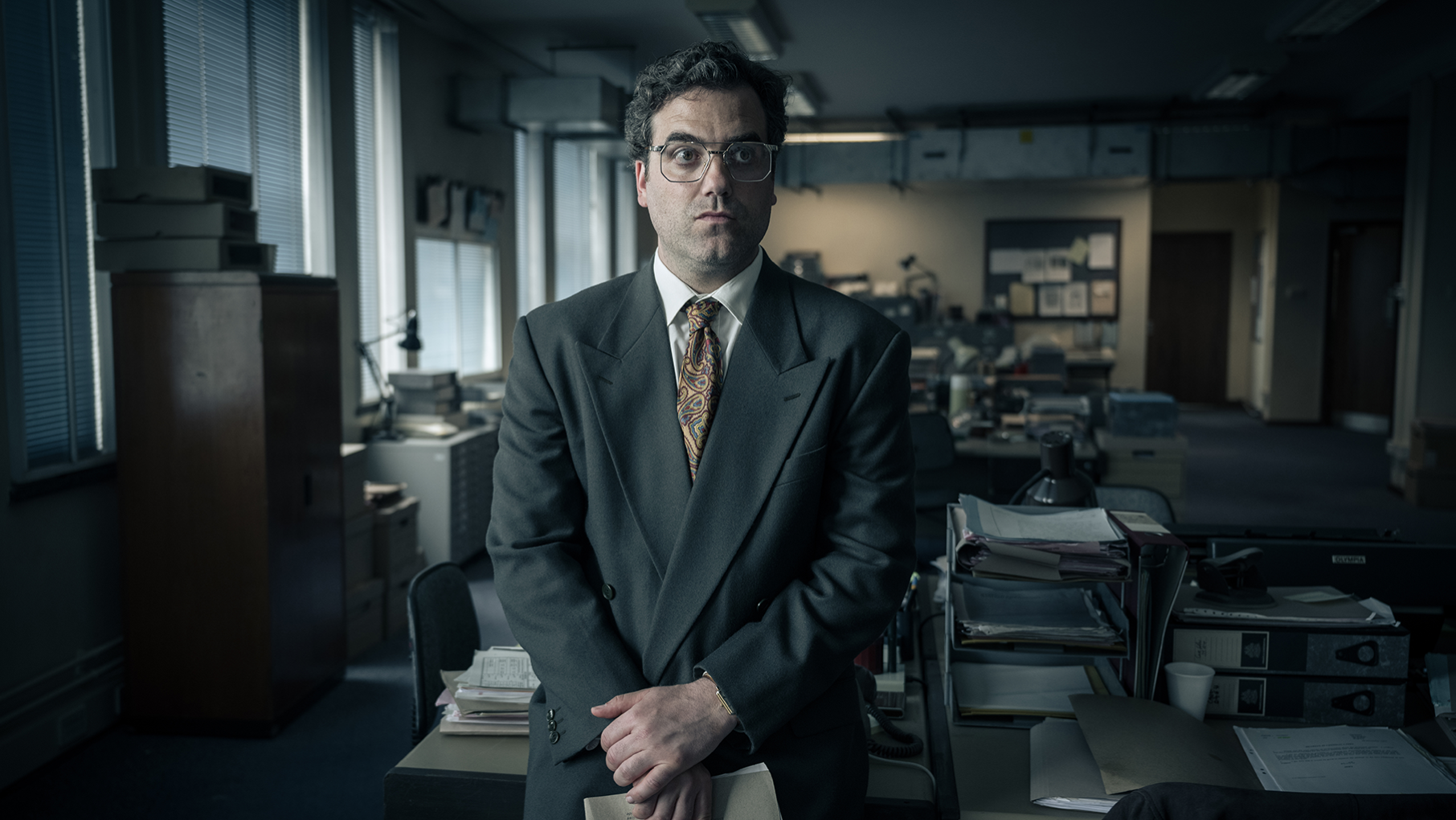
After Elaine is arrested, Susan tells Blakeney she knows he is just trying to butter her up so that she confesses. He guesses that she talked to Wardlaw and reassures her that he is on her side. In fact, he was coming over to share the end of Eliot’s novel with Susan. Blakeney figured out how Eliot was planning to end Pünd’s Last Case and completed it himself – he has aspirations of being a writer, after all.
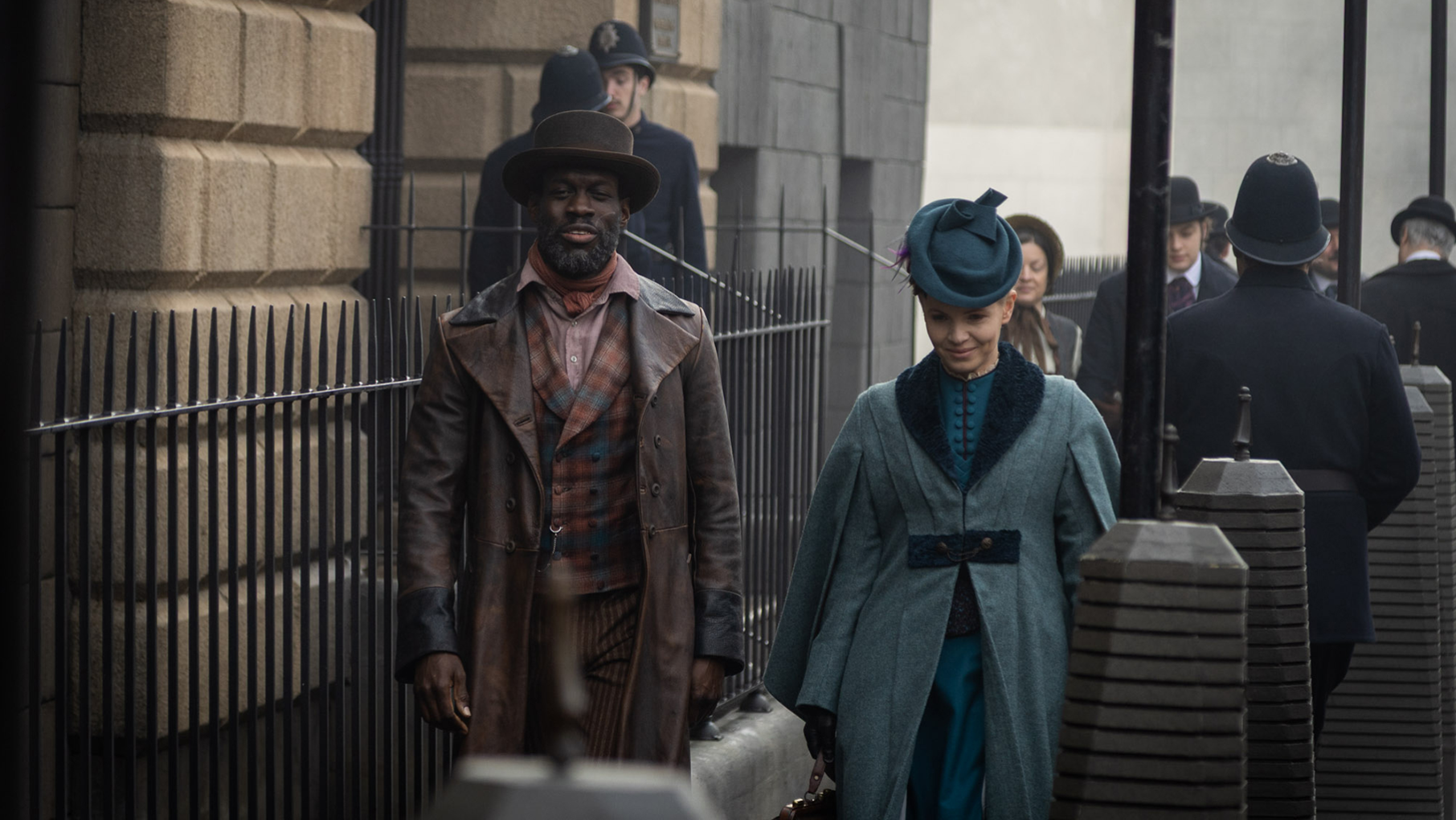
Pünd gathers everyone to present his deductions. All the evidence points to Elmer as the poisoner of his wife, Lady Chalfont. But there are two things wrong with that: One, Elmer is the only one in the family who didn’t need money from Lady Chalfont’s inheritance, and two, how could an intelligent man like Elmer have made so many mistakes in leaving clues that led straight to him?
Harry suggests that Elmer was careless because he thought Lady Chalfont’s death would be deemed a natural death. But Harry himself is the one who insisted that the police be called. And that’s the clue: everyone helped frame Elmer, in a scheme hatched by Elmer’s own son, Robert.
Robert hates his father, blaming Elmer for Robert’s mother’s suicide and resenting Elmer’s domination over him. So Robert invited Harrison Carter, the archaeologist searching for treasures stolen by the Nazis, to Villa Belmar, purposefully opening the windows so that Lady Chalfont could hear Carter accuse Elmer of selling Nazi goods. This is why Lady Chalfont approached Pünd. Robert wanted the police to think Lady Chalfont was cutting Elmer out of her will, thus giving Elmer motive. That’s also why he had Lola call the lawyer Lambrose, posing as Lady Chalfont and asking Lambrose to visit to revise her will.
Robert disguised himself as his father and bought the poison, dying his hair white with shoe polish – which smells like the surgical spirit the merchant noticed on his customer. He planted clues leading to his father along the way. He even pretended to be in love with Lambrose’s assistant Sofia so that he could learn the contents of Lady Chalfont’s will from her, then killed Sofia in order to silence her when she became panicked that she had played a role in the murder of Lady Chalfont. He planted Harry’s photo on Sofia to misdirect the police again.
The whole family helped Robert’s scheme because they all needed Lady Chalfont’s money, and she was already dying anyway. They just sped things along, planting clues and aiding Robert. Even the fight Pünd witnessed after the reading of the will was staged, to make it seem as if no one knew the will’s contents.
Susan is impressed by Blakeney’s writing – and by Eliot’s word games. “Robert Waysmith,” the murderer in the book, is an anagram of “It was my brother”: Eliot’s way of revealing the person he thought murdered his grandmother.
But Blakeney tells Susan about Roland’s denial of both Miriam’s and Eliot’s murder – and Susan figures out the real culprit. She, like Pünd, gathers everyone together.
Color-blindness is hereditary. Roland, like his grandmother, has it – and so does another one of her descendants: Frederick. Passed off as an adopted child, he was Miriam’s biological child. The car crash that blinded him was a result not of alcohol or a cold but color-blindness: Leila told Susan that Frederick was unimpaired but went straight through a red light.
This is how Frederick learned he was color-blind, which led him to dig into his parentage. He found his birth certificate and learned that Miriam was his mother; her infamous stay at a clinic was not for nerves or even an affair but so she could give birth to Frederick, an illegitimate product of a liaison with her chauffeur – whom she then fired, but kept a photo of in Marble Hall. (Eliot put said driver in his book as the gardener, perhaps unconsciously realizing he was significant.) Miriam then put Frederick in her own orphanage and adopted him, never telling him the truth and treating him as a second-class member of the family.
Tired of the lies and belittling treatment, Frederick poisoned her, using the cover of Roland, Eliot, and Julia making a poison as extra protection – he could always blame them. Frederick got his poison from one of Miriam’s husband’s antique taxidermied animals, which contain arsenic.
When Eliot threatened at the Crace foundation party to reveal Miriam’s killer in his book, Frederick thought Eliot knew the truth and silenced him by running him over.
With both cases solved, Susan follows David’s advice and starts her own imprint that she calls Redlayn, in an anagram of her last name. The first book she publishes is Eliot’s Pünd’s Last Case, finished by debut author Blakeney, who is writing his own original book for Susan – and dating her.
Susan reconvenes with her longtime companion Pünd, who tells her this will be the last case they work on together: she now has her own detective, Blakeney. But Susan has one more project to work on with Pünd: she’s publishing the criminology book he was always writing in Alan Conway’s novels but never finished. Susan and Pünd can write it together.