Some of Chicago's Favorite Skyscrapers Were Built in an Optimistic Six-Year Period, As a New Book Explores
Daniel Hautzinger
October 16, 2026

Chicago Stories: Skyscrapers premieres on WTTW Friday, October 16 at 8:00 pm and at wttw.com/chicagostories.
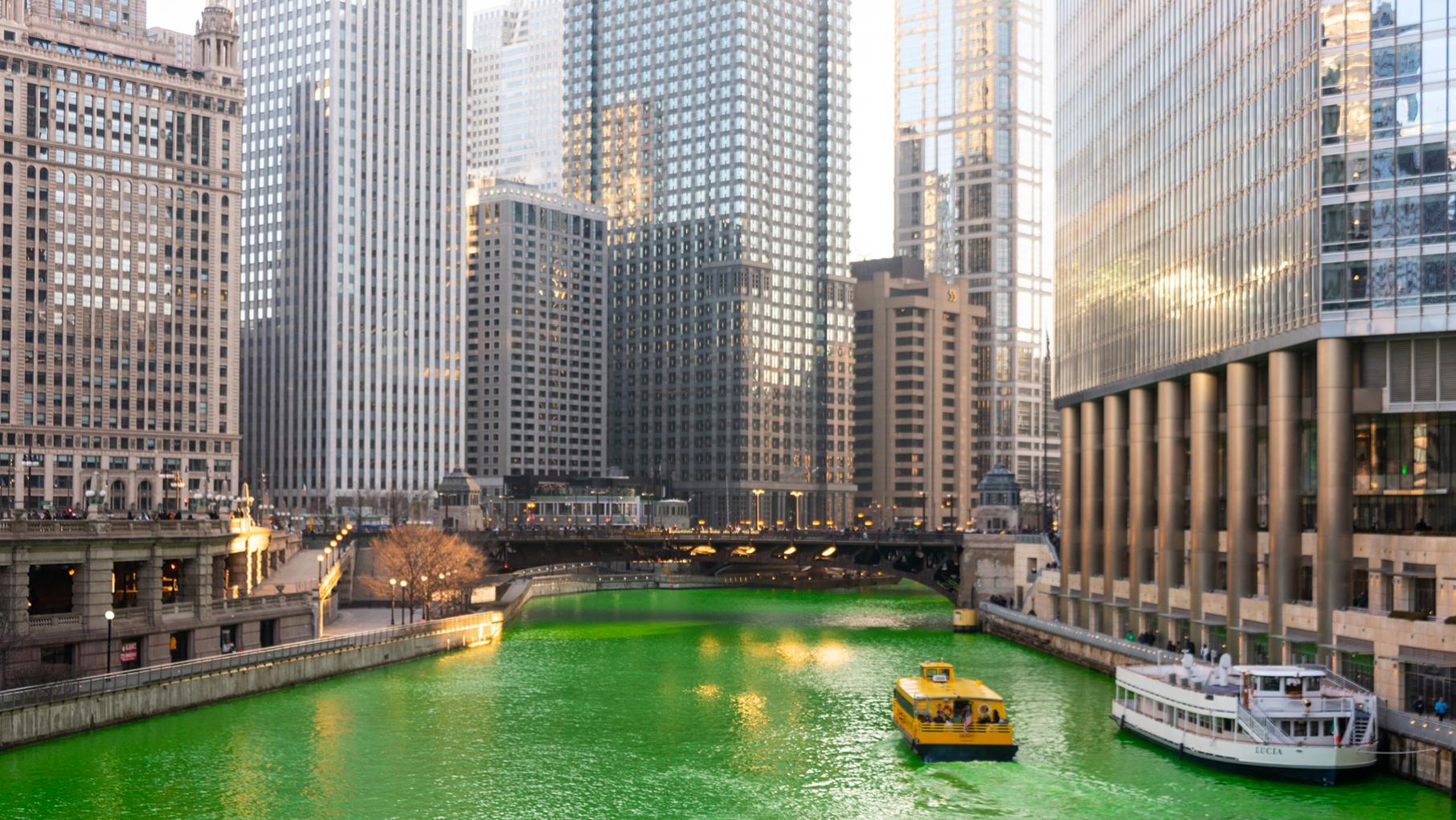
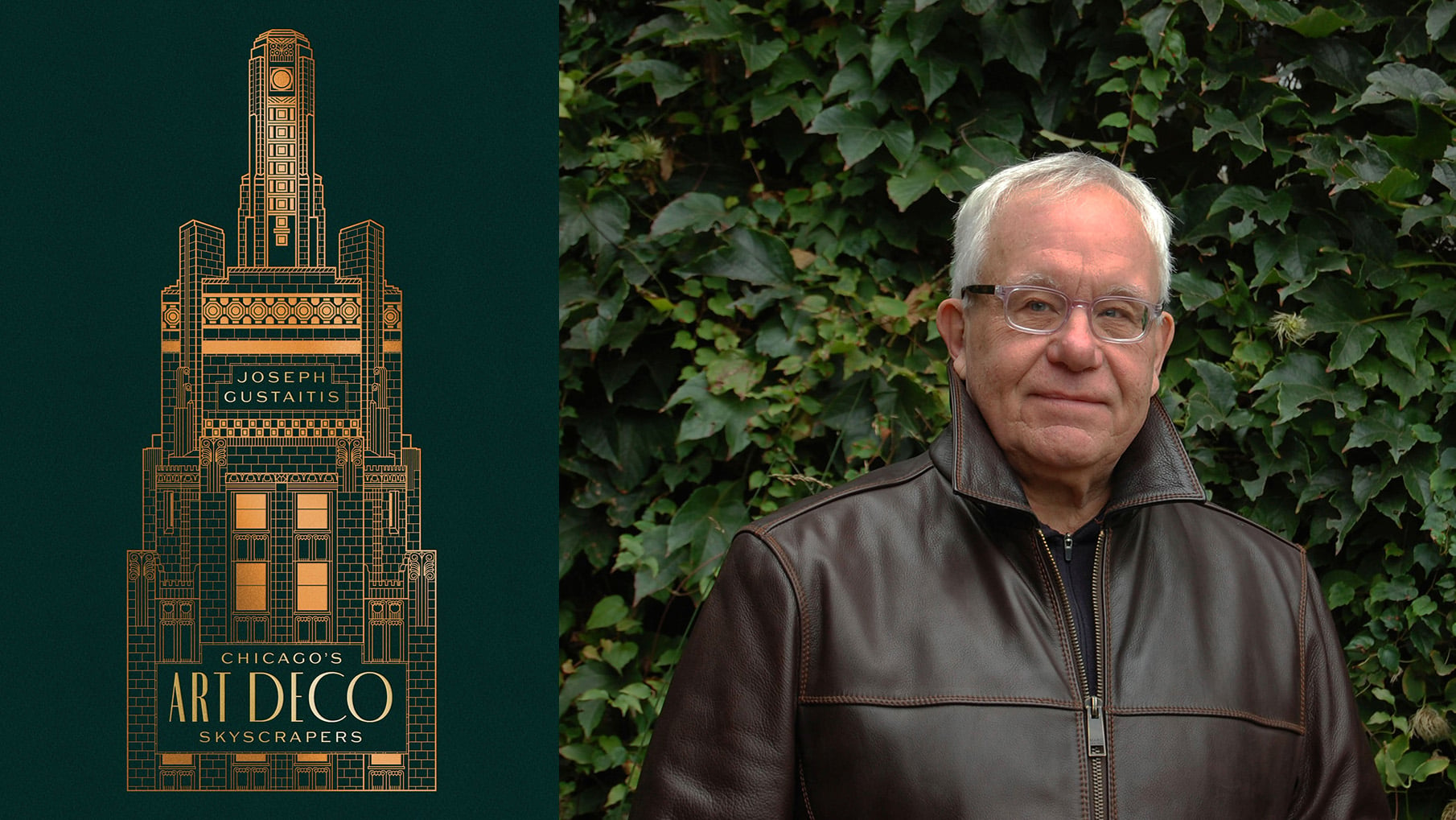
Chicago is famous for its skyscrapers. A new book examines a distinctive subset of these iconic buildings, telling the stories behind 20 towers constructed over just a six-year period in Chicago. Chicago’s Art Deco Skyscrapers by Joseph Gustaitis starts in 1927 with the construction of 333 N. Michigan where Michigan Avenue crosses the river and ends in 1933, when the Century of Progress World’s Fair served as a swan song for Art Deco architecture. Some of Chicago’s most familiar buildings – including the Merchandise Mart, Civic Opera House, and Palmolive Building – were erected in that short period, before the Great Depression halted the construction of skyscrapers in Chicago until after World War II.
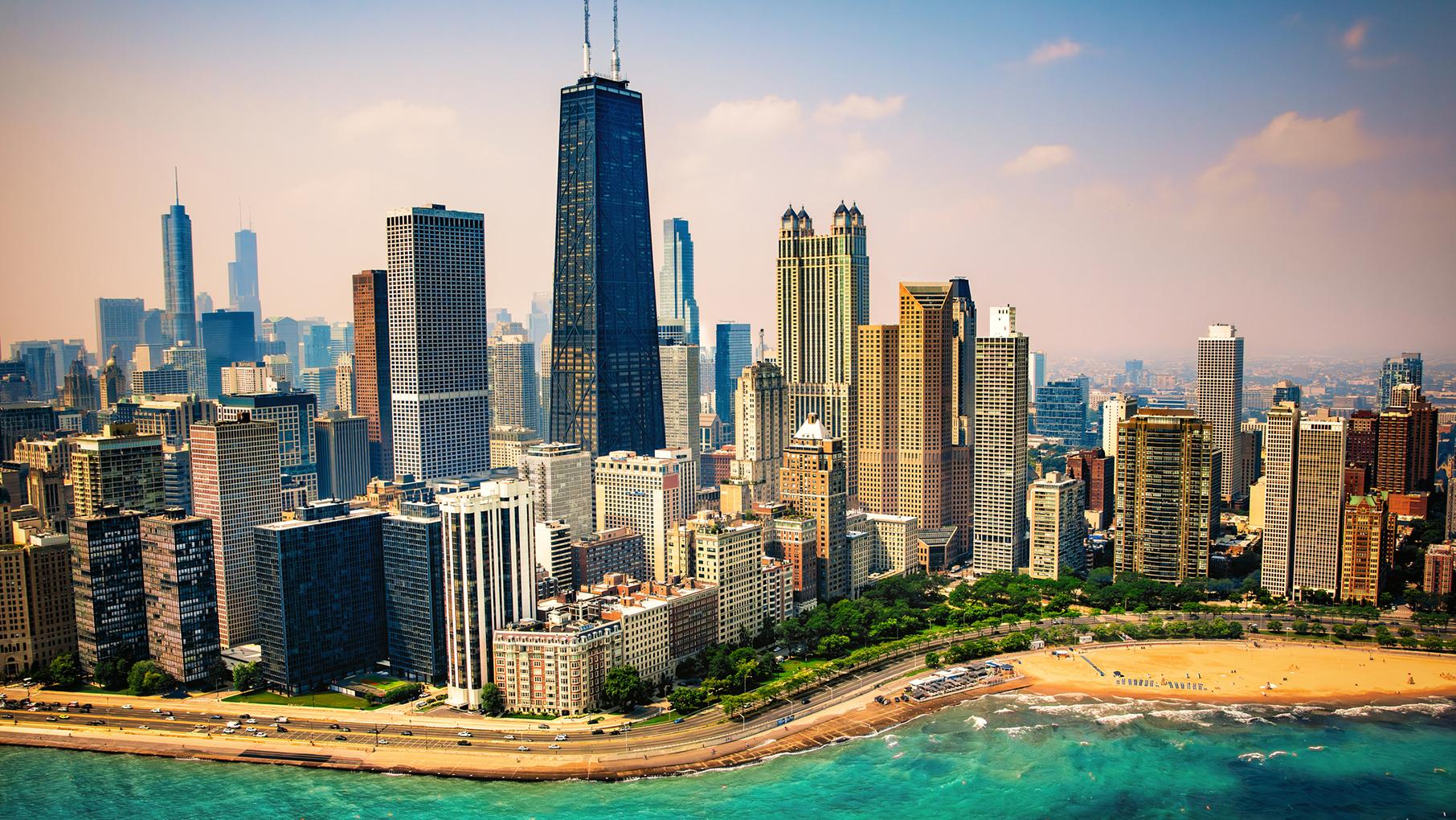
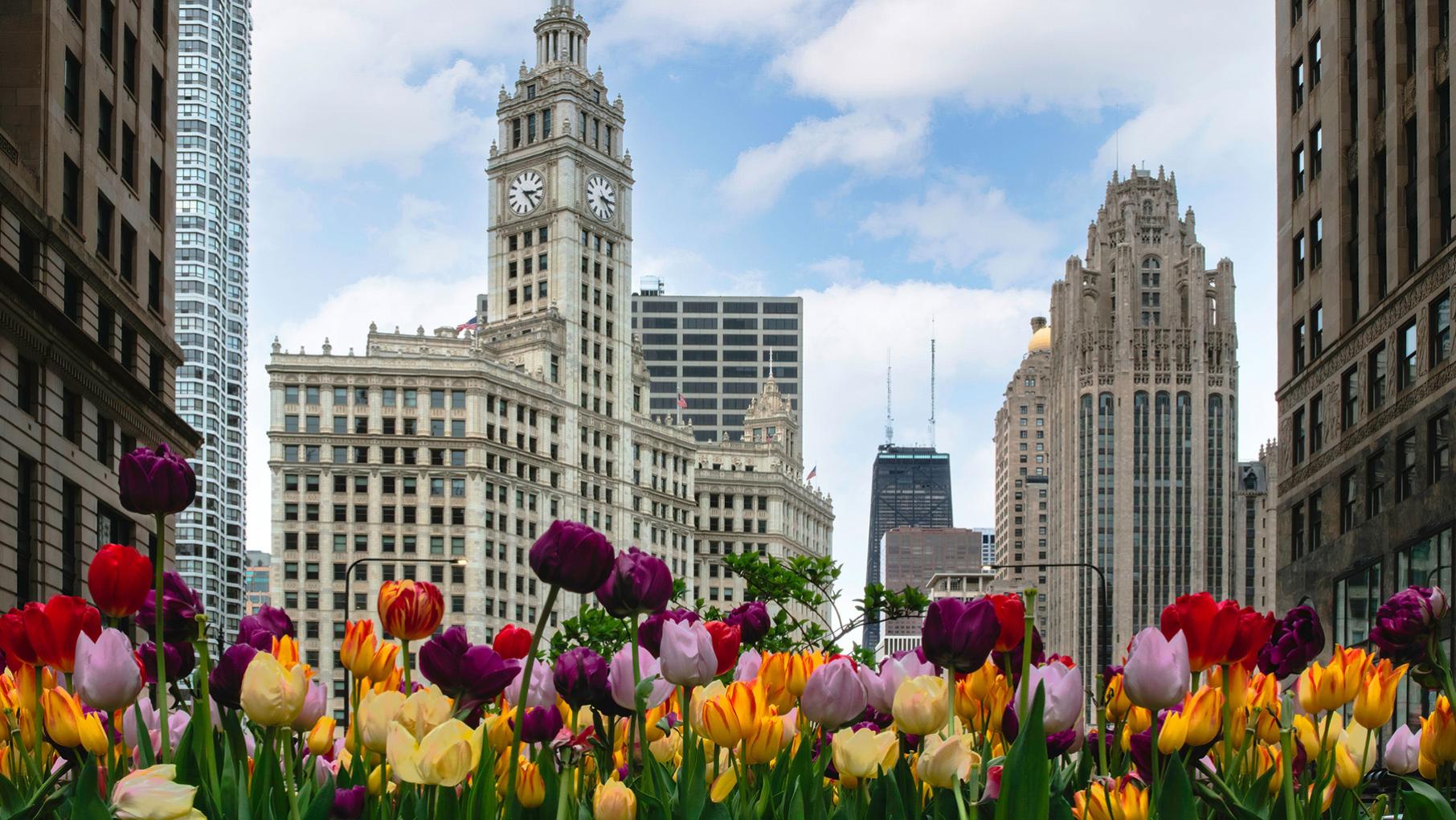
Gustaitis’ book comes as WTTW’s new Chicago Stories documentary Skyscrapers explores how the city has been a pioneer in the architecture of tall buildings, from the early days of the skyscraper – William Le Baron Jenney’s Home Insurance Building is often called the first – through the creative innovations of Jeanne Gang and Adrian Smith today. The Wrigley Building, Marina City, Willis (formerly Sears) Tower, Aqua – Chicago is home to buildings that have been the tallest in the world, influential in urbanism, and groundbreaking in design.
New York City might have more famous Art Deco skyscrapers in the form of the Empire State Building and the Chrysler Building but Chicago’s are still an important and cherished part of the city’s skyline and history. The green and gold Carbide and Carbon Building is a popular favorite thanks to its champagne bottle-like appearance, while it’s hard to imagine the Loop without the dramatic Board of Trade Building capping off LaSalle Street.
“The great Art Deco skyscrapers were considered a breakthrough. Something that wasn’t only new, but it was American,” says Gustaitis, even if the Art Deco style originated in Europe. “Americans did really apply the style to so many technological breakthroughs, and once they did that, they exported it to the rest of the world.”
The easily recognizable Art Deco style, with its zigzag and chevron motifs, was applied to everything from toasters to ocean liners – and many Art Deco appliances were designed and manufactured in Chicago, according to Gustaitis. Frank Lloyd Wright is sometimes said to have anticipated the style with his art glass, ceramic tiles, and geometric patterns, particularly at the now-demolished Midway Gardens on the South Side of Chicago. Louis Sullivan, another Chicago architect, prefigured Art Deco’s emphasis on ornamental design in architecture, which can be found on elevator doors, carved panels, facades, and even railings.
Such decorative exuberance mostly vanished when Chicago again began building skyscrapers in the 1950s, now under the thrall of the “less is more” modernism of Mies van der Rohe. Unlike Mies, who is legendary enough that his name is often used as an adjective, Art Deco architects are not household names. Chicagoans may know the firms Holabird & Root, and Graham, Anderson, Probst & White, which together designed 11 of the 20 buildings in Gustaitis’ book, but likely can’t name a single architect from them. (New York is even more obscure: have you heard of Shreve, Lamb and Harmon or William Van Alen? They designed the Empire State and Chrysler Buildings, respectively.)
This is in part because skyscrapers in the Art Deco era were often designed and built by teams as building technology became ever-more complicated, involving larger and larger crews of contractors, engineers, and laborers. Art Deco buildings also frequently involved artists and sculptors who provided murals – such as the famous ceiling one that has been removed from the recently landmarked Chicago Daily News Building – or carved panels, like those by Gwen and Eugene Lux for the Trustees System Service Building at 182 W. Lake St.
Gustaitis dips into the careers of those artists and sculptors as well as other topics beyond architecture suggested by the buildings he covers, for instance the growth of the car (Chicago Motor Club), newspapers (Chicago Daily News Building), and apartment living (Hyde Park’s Powhatan). It all conjures an era of a belief in progress and confident optimism that would soon be dashed by the Depression.
“Chicagoans were probably more upbeat than just about any other city,” says Gustaitis, who has published a book called Jazz Age Chicago on the era. “They really thought that Chicago would become the greatest city in the world.”