While Sujan Sarkar Expands His Restaurant Empire, Sahil Sethi Keeps the Chicago Spots Up to Snuff
Daniel Hautzinger
November 13, 2026
Get more recipes, food news, and stories by signing up for our Deep Dish newsletter.
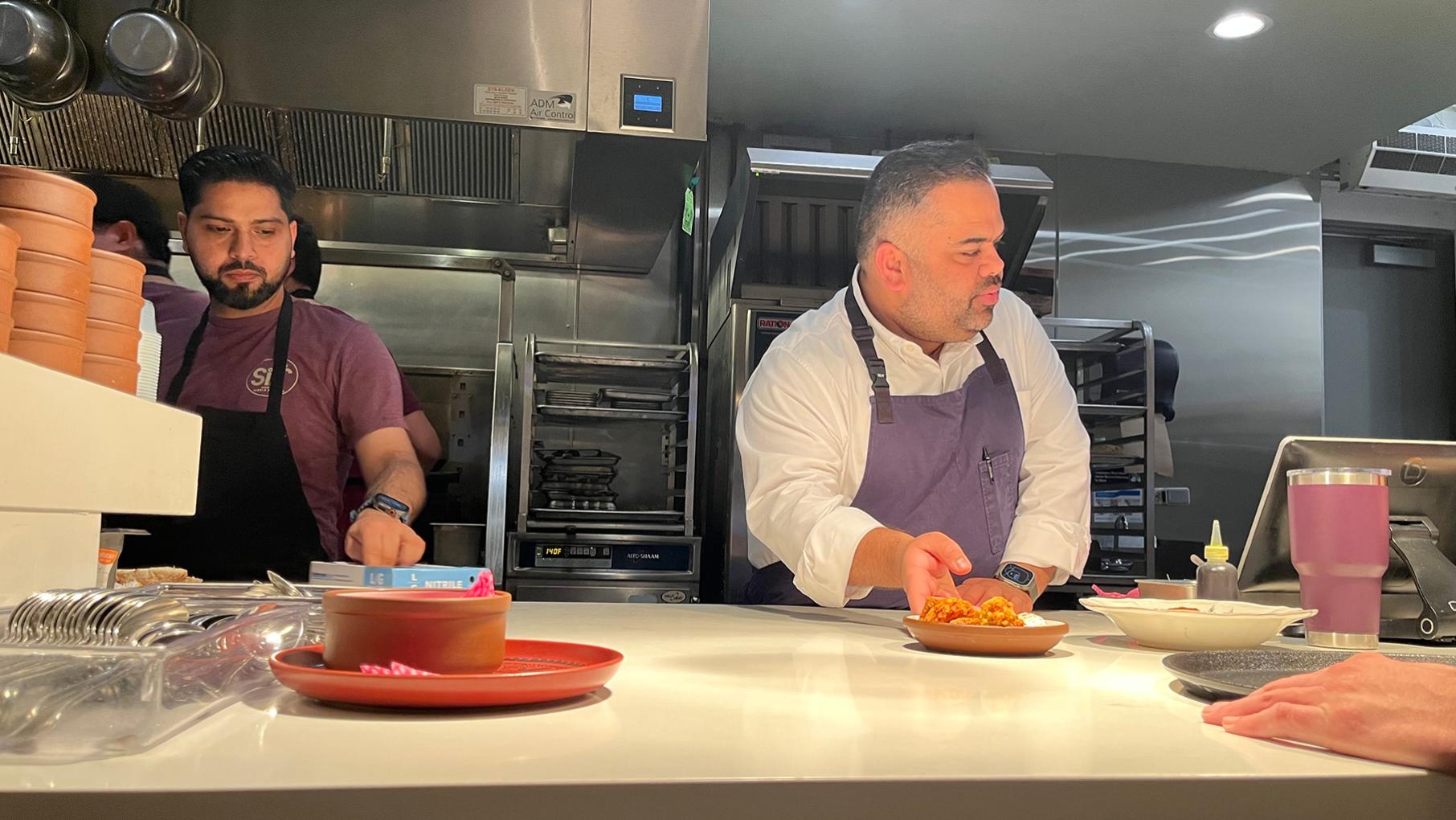
More than ten years ago, Sahil Sethi and Sujan Sarkar met in the kitchen of a Mediterranean restaurant in India. Many years, restaurants, cities, and awards later, they are still working together, with Sarkar expanding into a global presence based on the reputation of restaurants in Chicago that Sethi helps to oversee and maintain as culinary director.
“If we can give the right talent the opportunity, then we can grow together,” says Sarkar of working with Sethi and other team members. “What I’m looking [for is] how honest they are, are they really passionate or not, [do] they really know this job or not?”
The pair have been busy. While Sarkar opens outposts of his Michelin-starred Indienne in New York City and Abu Dhabi, Sethi has debuted a daytime menu of pastries and breakfast dishes at Sifr, their Middle Eastern restaurant at 660 N. Orleans St. in River North. He’s also contributing to Sarkar’s further expansions in Chicago, from a second Swadesi Cafe location on the North Side, which will transform into a butter chicken-centered restaurant in the evening, to another ambitious project in Bucktown. Both of those are slated for openings early next year. Swadesi and the regional Indian restaurant Nadu will both jump from Chicago to New York soon, and Sarkar has also opened a restaurant with his brother in San Francisco (Tiya) while working toward a new place in Chapel Hill, North Carolina (Ayra).
It’s an impressive growth rate even for these industrious chefs, who have worked around the globe and opened a restaurant per year in Chicago, with Nadu in Lincoln Park their most recent. They have reached the point where they are as much businessmen as they are chefs, managing some 150 people in Chicago to execute their menus.
Whereas many American restaurant kitchens are staffed by Mexicans and other Latin Americans, Sarkar’s feature a large proportion of fellow South Asian cooks, including some who have worked with him and Sethi for years. While Sarkar says that’s not necessarily intentional but more of an outgrowth of how different Indian culinary technique is from Western, he and Sethi both emphasize their desire to nurture talent – just as Sarkar himself has done with Sethi.
“We are making sure that we are a platform where we’re able to support a lot of these young leaders that we’re trying to create and bring more of that motivation to them,” says Sethi. It seeds a future generation to potentially continue the exciting growth of South Asian food in America.
Inspired by Grandparents and Travel
Sethi is from northern India, where he was inspired to enter the hospitality industry while joining his grandparents as they helped prepare food at temples for those in need on Sundays.
“Everything started through the community kitchens,” he says. “That gave me a sense of peace and relaxation every time I went there.”
That example, combined with the warmth of large family feasts at home and the allure of Indian chefs on TV, led him to declare early on that he wanted to be a chef. He started his career near New Delhi then bounced around the world: a culinary education program in Napa, a stage at Noma in Denmark, two years in Abu Dhabi, among other stints.
It was in Abu Dhabi that he fell in love with Middle Eastern food, drawn by the familiarity of spices shared with the food he grew up eating. He still relishes the enjoyment of Sifr’s diners while they eat housemade pita and hummus, because it reminds him of doing the same every chance he had back in Abu Dhabi.
“There’s a piece of my heart that I left when I left Abu Dhabi,” he says.
But after meeting Sarkar at the Mediterranean spot in India, Sethi followed him to the U.S., opening restaurants in several cities with him before coming to Chicago to open Rooh in 2019. Their successful ascent ramped up here with Indienne, where French and modernist techniques are applied to Indian flavors in a surprising but approachable tasting menu. It won a coveted Michelin star a year after opening, in 2023, the same year that Sifr opened.
“You have to be passionate about some kind of cuisine,” Sarkar says. For Sethi, that was Middle Eastern food, so they opened Sifr with Sethi as chef. “He understands the flavors,” says Sarkar, and was “very much interested from day one to want to do that.”
Everything is Expanding
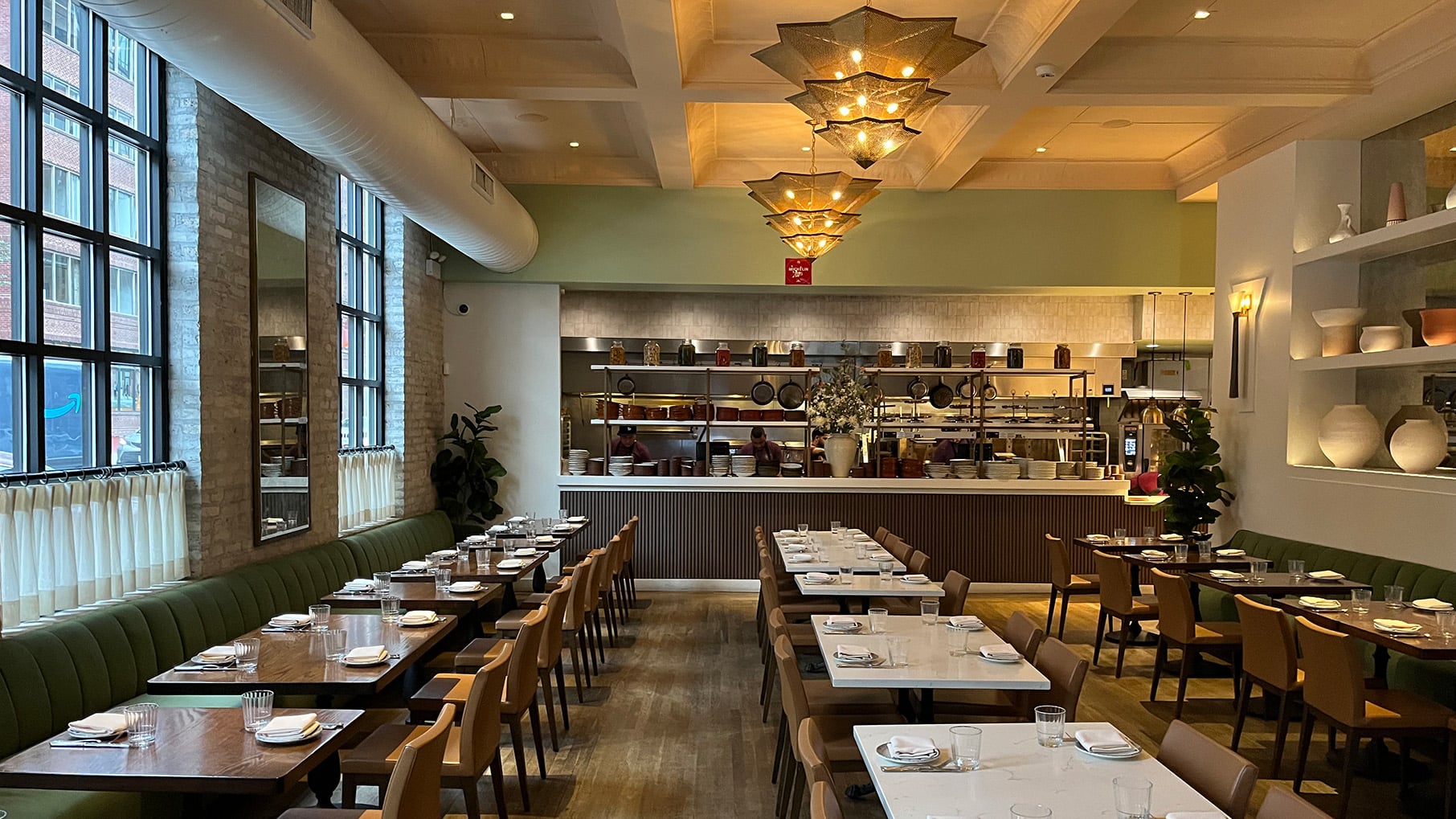
Sifr’s kitchen is oriented around fire, from the pizza oven used to bake their pita – which first proofs for 48 hours – to the centerpiece wood-fired hearth. Nearly everything touches the hearth, whether it’s chicken or lamb kebabs grilled on a skewer, scallops seared over the fire on a pan with holes to allow smoke through, branzino blistered by flame, or eggplant slowly cooked over the embers at the end of the night to be turned into a silky spread the next day. Dips and small plates of mezze are the heart of the menu, which prioritizes communal eating.
South Asian influence creeps in, too: prawns with chana masala-like spice, the Persian stew ghormeh sabzi served under a sealed pastry lid like biryani. Sethi said he searches out such “commonalities.”
“It’s not about copying what it is but understanding: this is what a specific home eats in Turkey, or a specific household eats in Lebanon. How can I create that using the spices that I have, using the techniques I know?”
The freshness and straightforwardness of Middle Eastern food also allows Sethi to spotlight local produce more brightly than he can with South Asian cooking, with its vibrant sauces and complexity of flavors.
Now Sethi is bringing his ever-curious sensibility to casual breakfast and lunch foods as Sifr opens during the day as a cafe. A harissa chicken sandwich is served on focaccia that’s similar to Moroccan frena. Harissa spikes mayo on the obligatory breakfast sandwich, with a lamb kebab and egg. Sweets follow the trend of mixing global flavors with European pastries, from a baklava croissant to a carrot halwa babka and cardamom canelé.
It’s a similar idea to Swadesi Cafe, which adds Indian flavors to a coffee shop the same way spices enliven tea for the chai served both there and at Sifr.
The upcoming second Swadesi location in Chicago will also embrace the all-day trend, turning into Butter Chicken Social in the evening. Sarkar and Sethi first debuted the casual concept during COVID, then opened a version in New York City food hall this year. (The hall showcases another Chicago chef, BK Park, with a handroll bar and an upcoming outpost of his omakase restaurant, Mako.) Chicago’s Butter Chicken Social will offer a more extensive menu than New York’s, since it will operate out of its own space rather than a food hall.
The Swadesi/Butter Chicken Social spot may open as early as January. The other concept, which they are not ready to announce, is planned for the first quarter of the year as well. Sarkar’s sixth restaurant in Chicago, it will be an excursion into a new cuisine for the team.
“We have something from [a] cafe to one Michelin star,” says Sethi. “That’s how we diversify the portfolio.”
It’s not just their portfolio they’re diversifying: it’s Chicago’s dining scene.