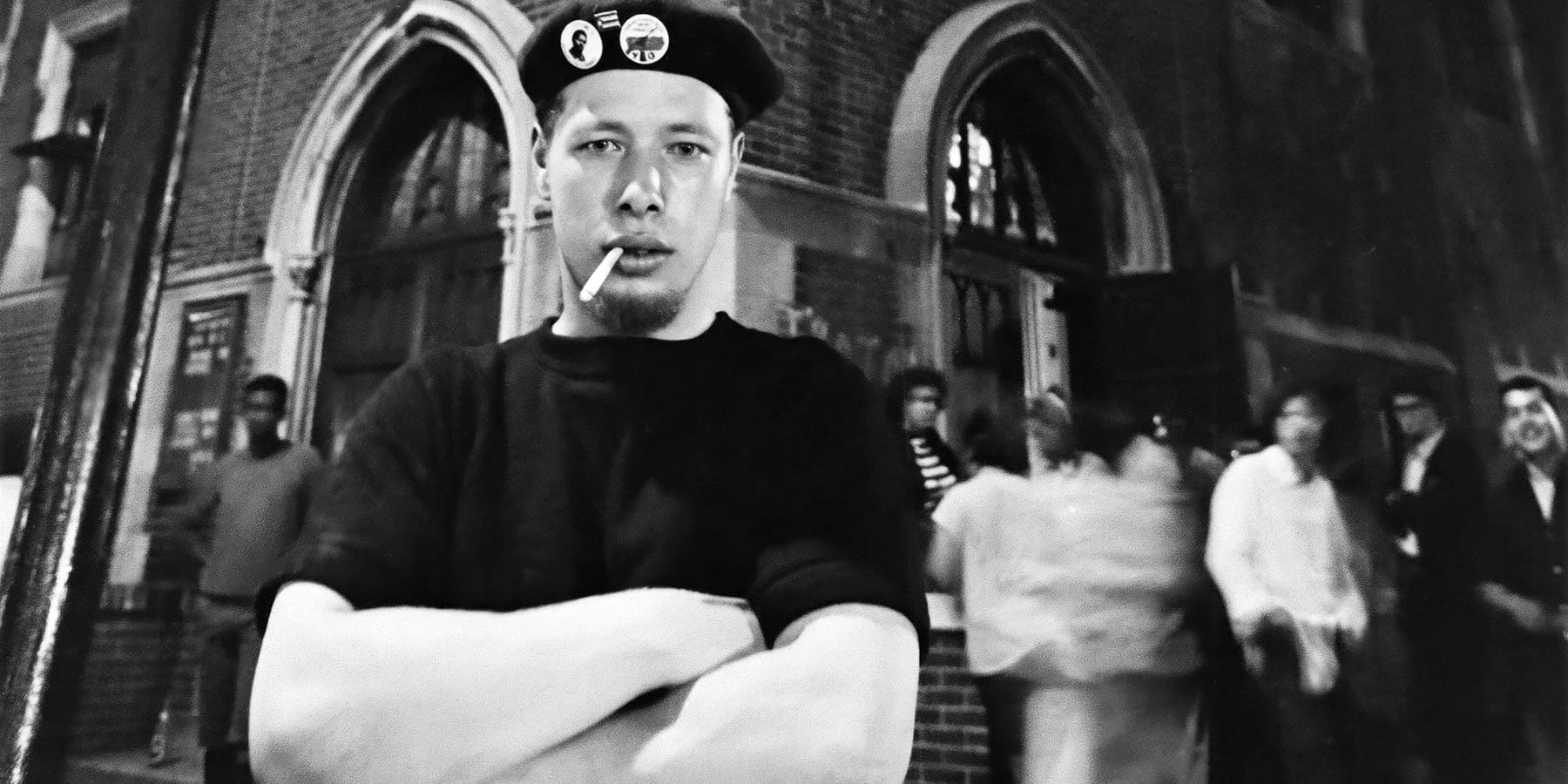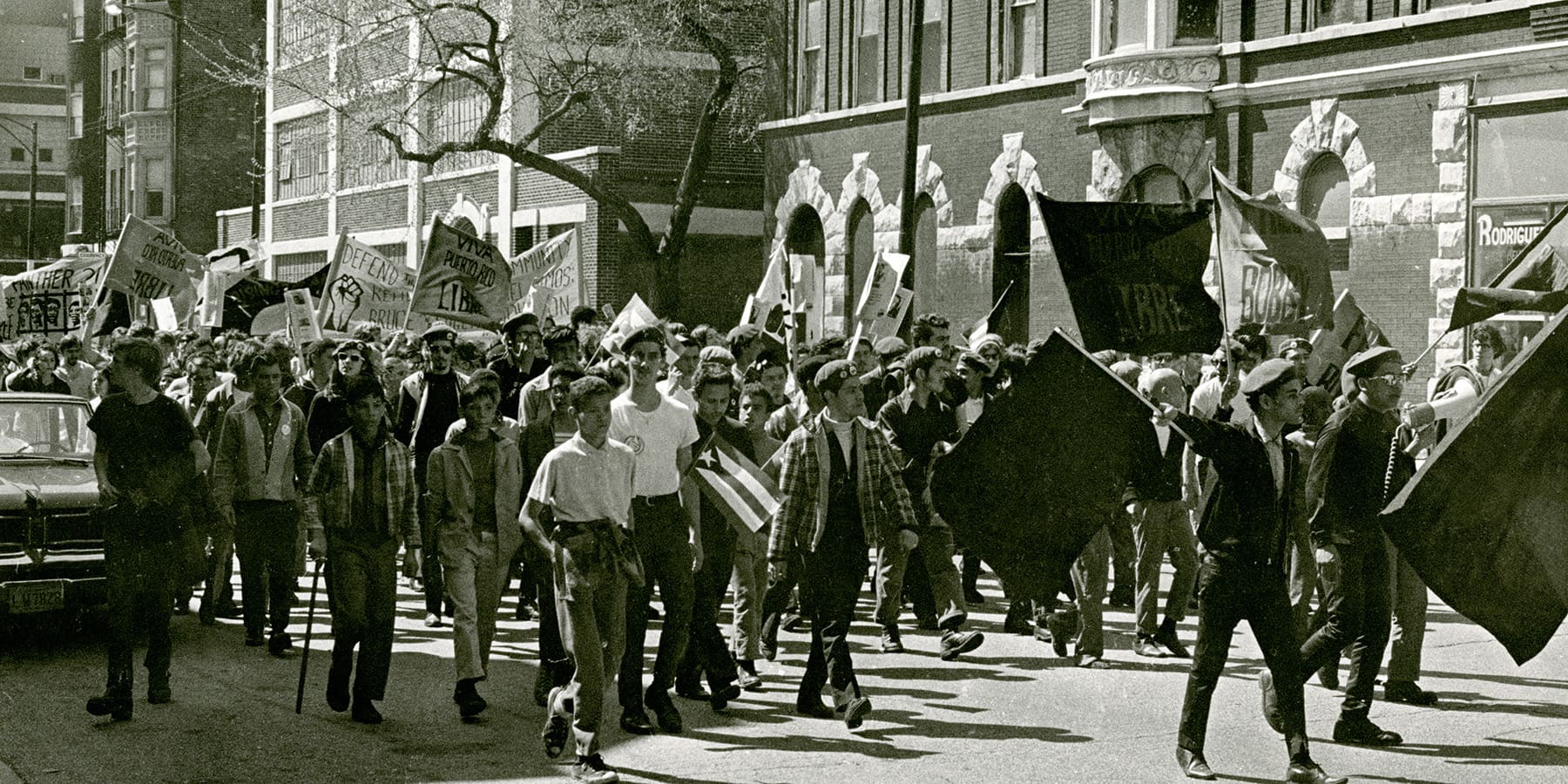




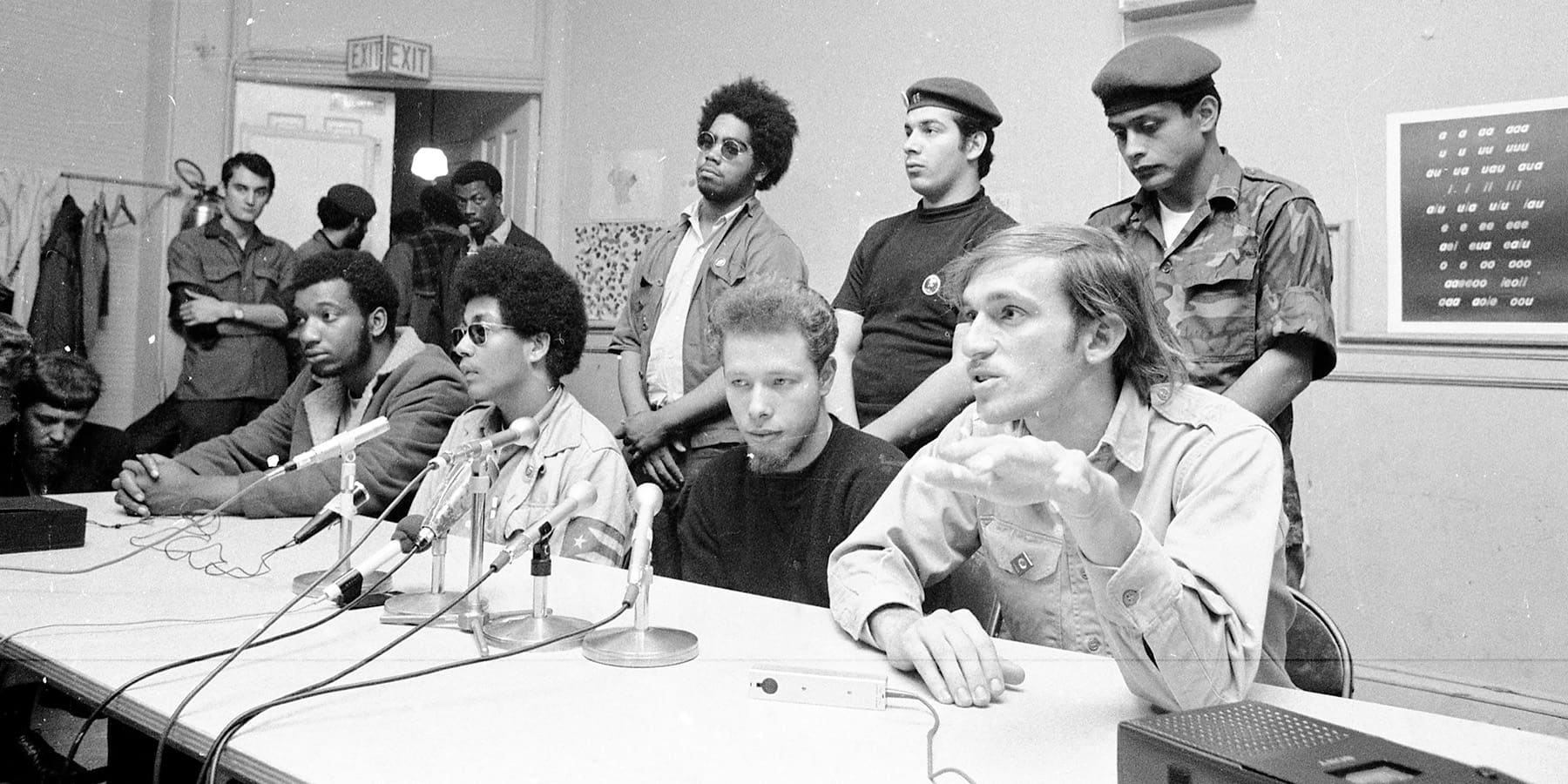
Outside a party in Bridgeport the night of May 4, 1969, an off-duty police officer shot and killed a young man named Manuel Ramos, as well as another man who survived. The death of Ramos, a member of the Young Lords Organization, was a shock to his community. When the Young Lords held a rally in Ramos’s honor, they weren’t the only organization to show up. Members of the Illinois Black Panther Party and a group called the Young Patriots demonstrated their solidarity.
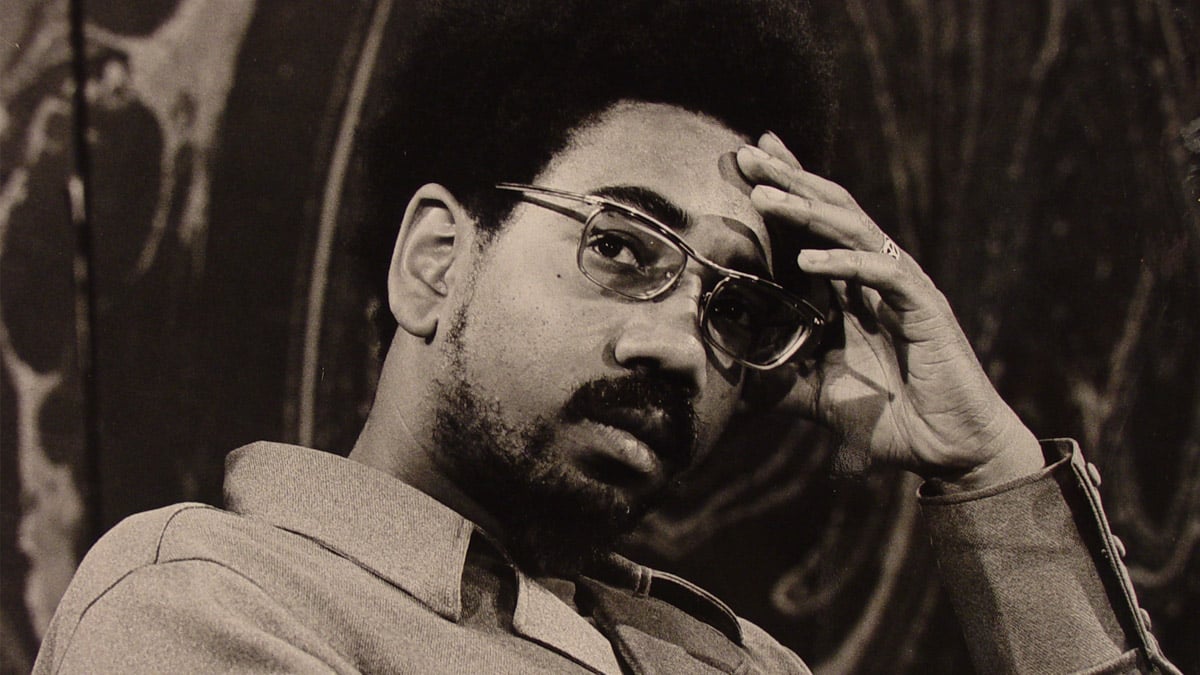
Achieving the Dream: Death of a Panther
In 1968, an Illinois Chapter of the Black Panther Party was formed on the West Side of Chicago. The militant organization quickly recruited hundreds of young black members who connected with the Panther's strident stance against racial injustice and powerful call for black pride.
Go deeper“The fact that they were able to ally with the Black Panthers, with the Young Patriots, to create this massive force of resistance is really important,” DePaul University Professor Jacqueline Lazú told Chicago Stories.
These three groups made up the first multi-racial alliance in Chicago. It called itself the Rainbow Coalition.
Fred Hampton and Bobby Rush founded the Illinois chapter of the Black Panther Party (ILBPP) on Chicago’s West Side in 1968. It was one of more than 40 chapters that emerged in the United States, and it quickly gained hundreds of members. The Black Panthers’ primary aims were to dismantle racism, capitalism, and police brutality. Though their public image was often described as “militant,” as they displayed firearms and patrolled their neighborhoods, the Chicago chapter set up a free breakfast program for children and a medical clinic.
The Young Lords Organization (YLO) also formed as a political group in 1968. It began as a youth street gang made up mostly of young Puerto Rican men, but its leader, José “Cha Cha” Jiménez, transformed it into a political organization in order to fight back against the displacement caused by Mayor Richard J. Daley’s urban renewal policies. Urban renewal programs sought to eliminate blight in cities and redevelop neighborhoods, often displacing its poorer residents. Chicago’s Puerto Rican community had been forced to relocate many times, with Jiménez’s family moving nine times during their first six years in the city, according to author Johanna Fernández in The Young Lords: A Radical History.
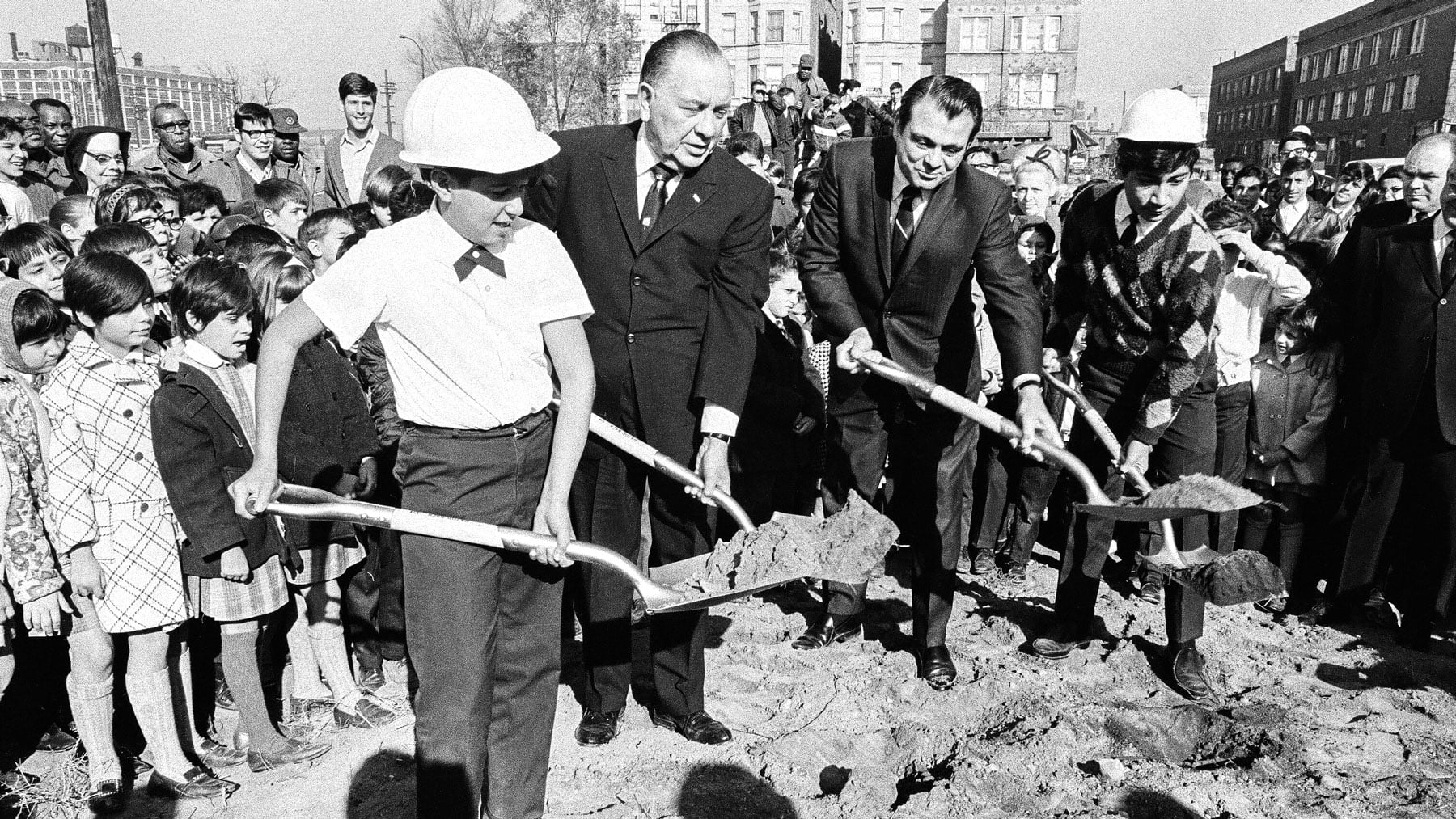
Chicago Stories: The Boss and the Bulldozer
Look at every corner of Chicago today – the iconic skyline, the public art, the sprawling airport, the expansive expressway system – and you can find remnants of Mayor Richard J. Daley’s legacy.
Go deeperThe Young Patriots Organization (YPO) also formed in 1968. The group, led by 20-year-old William Fesperman, was made up of poor, white migrants from Appalachia who had settled in Uptown in search of higher-paying jobs. At the time, Uptown was a poor neighborhood, and poor whites struggled to find affordable housing, good education, and health care. Due to “hillbilly” stereotypes, they also experienced police harassment and discrimination. The YPO, however, displayed the Confederate flag as their symbol.
So how did these groups begin to work together?
The seeds for the idea of a multi-racial coalition were planted when Bob Lee of the ILBPP and members of the YPO were both invited to an event at a North Side church. The YPO got into a tense discussion with some unreceptive white, middle-class congregants about the need for housing and employment. Lee joined in and argued that what they had in common – class, rather than race – meant they could work together to achieve their shared goals.
There was also common ground to be found with the Young Lords. Omar Lopez, a member of the YLO, told Chicago Stories that when the groups began to connect, they found that they had a lot of the same issues. Their neighborhoods were changing, and affordable housing was hard to find. They lacked access to health care and child care. They experienced mistreatment and abuse at the hands of the police.
“One of the things that Fred Hampton would say was, ‘You fight racism with internationalism,’” Lopez said. “What we did in developing those coalitions is we talked about the commonalities, the things that brought us together.”
Hampton also had a close friendship with Jiménez and invited the YLO to join the alliance to form the Rainbow Coalition. (Another group, called Rising Up Angry, was also part of the coalition later.)
“They may have come into the neighborhood battling each other because they were different, but when they realized what they were fighting against, they realized it was a class struggle,” Melissa Jiménez, José’s daughter, told Chicago Stories. “My dad and Fred Hampton were like brothers. And I think they really inspired each other because of their shared causes, their shared struggles,” Jiménez said.
According to Lopez, the Young Lords structured their organization similar to that of the Black Panthers, with members holding such titles as chairman, minister, and field marshall. Together, the Rainbow Coalition backed one another at rallies, protests, occupations, and other actions that called attention to the lack of resources and discrimination faced by their communities. The YPO also later removed the Confederate flag as their symbol.
But the FBI’s Counter Intelligence Program (COINTELPRO) sought to undo the unity established among the groups in the Rainbow Coalition. COINTELPRO was initially formed in the 1950s to dismantle the Communist Party of the United States, but later expanded as a way to monitor and undermine political organizations. It targeted everything from feminist, socialist, and civil rights groups to white hate organizations such as the Ku Klux Klan. COINTELPRO sought to create conflict between groups and publically smear the individuals within them. Its involvement with the Rainbow Coalition proved fatal for Hampton, who, along with another Black Panther named Mark Clark, was shot and killed while sleeping in his home in Chicago. Investigations later found that Hampton’s death was an assassination carried out by the FBI, the Cook County State’s Attorney’s office, and the Chicago Police Department. COINTELPRO ended in 1971 and was widely criticized by Congress and the American public for its overreach.
The term “Rainbow Coalition,” however, would live on, most notably through the Rainbow/PUSH Coalition, founded by Reverend Jesse Jackson in 1971.
“I think it’s a testament to the resiliency of Cha Cha Jiménez and of others around the Rainbow Coalition. As much as the police wanted to kill it, as much as the FBI and those that were surveilling it wanted to defeat it, it was too late,” Baylor University professor and historian Felipe Hinojosa told Chicago Stories. “The legacy was there, the politics were there, the ideas were there. And those politics continued in a very, very real and significant way.”
Related