A New Logan Square Spot Wants to Be a Neighborhood Restaurant with Hand Rolls and an Approachable Omakase
Daniel Hautzinger
July 22, 2025
Get more recipes, food news, and stories at wttw.com/food or by signing up for our Deep Dish newsletter.
Have a food story or recommendation? Email us at [email protected].
When you think of a casual neighborhood restaurant, you probably don’t picture an omakase bar serving individual pieces of sushi in a set meal. But that’s exactly what the new Logan Square restaurant Omakase Box, which opens July 30 at 3038 W. Armitage Ave., aims to be.
“What we are trying to do here is be a mom-and-pop spot that has a lot of industry experience and wants to provide a really upscale experience but make it feel very homey,” says Andrew Choi, a co-owner and manager of Omakase Box. “The whole concept is, ‘Let’s put really great food and drinks out where it meets value.’”
“Value,” “mom-and-pop” and “homey” are not words typically used to describe places specializing in omakase, a refined style of Japanese meal in which a sushi chef presents a predetermined succession of nigiri, often serving exquisite fish directly to a handful of diners who have paid hundreds of dollars. The popularity of omakase restaurants has exploded in recent years, with numerous cropping up in Chicago and other major American food cities. They have begun to rival steakhouses as a destination for expense account-flouting businesspeople eager to indulge in some conspicuous consumption in the form of luxury ingredients like caviar, uni, and truffle on top of gorgeous raw fish – the New York Times even christened the trend “bromakase.”
This is not what Omakase Box is going for.
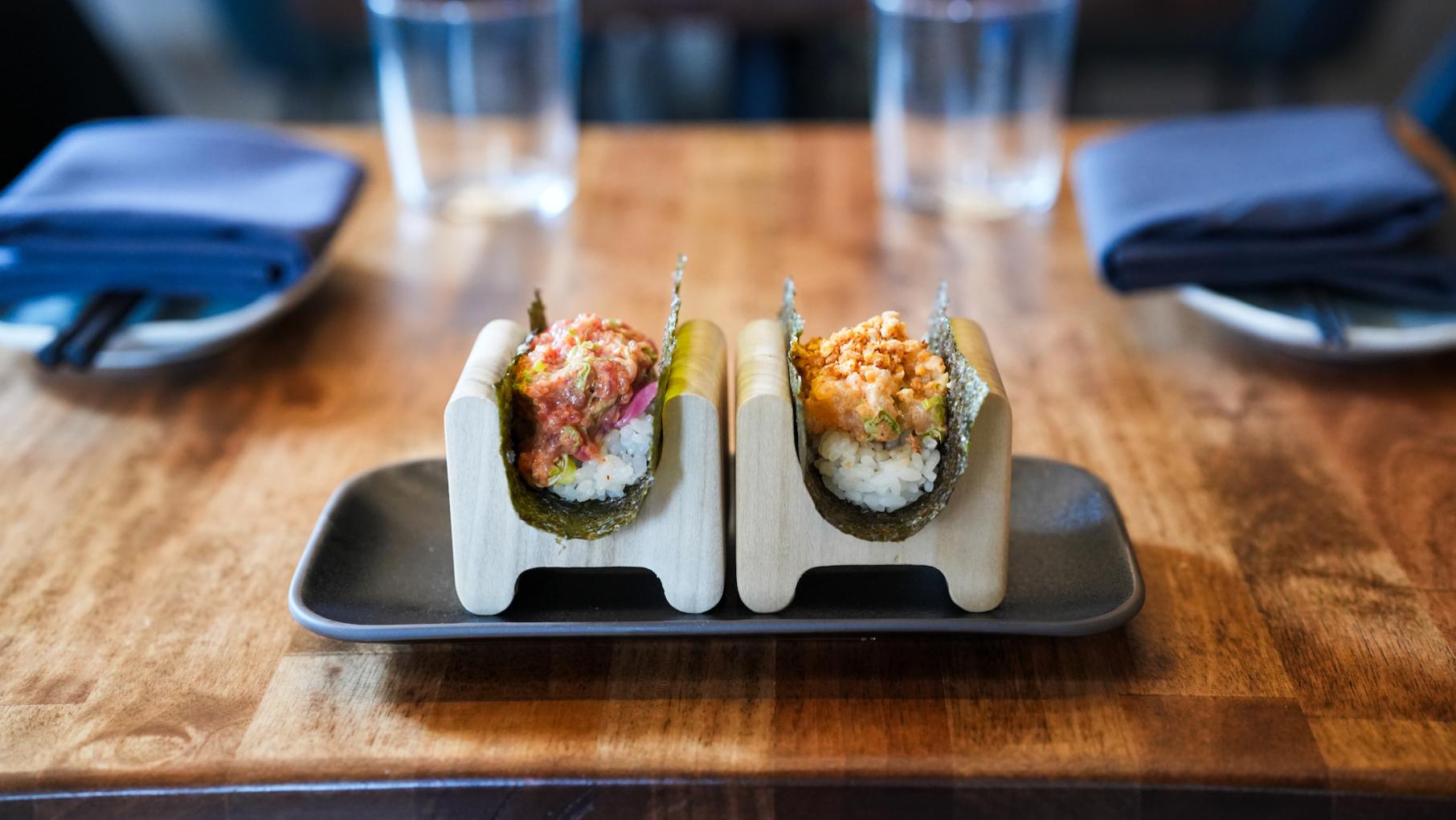
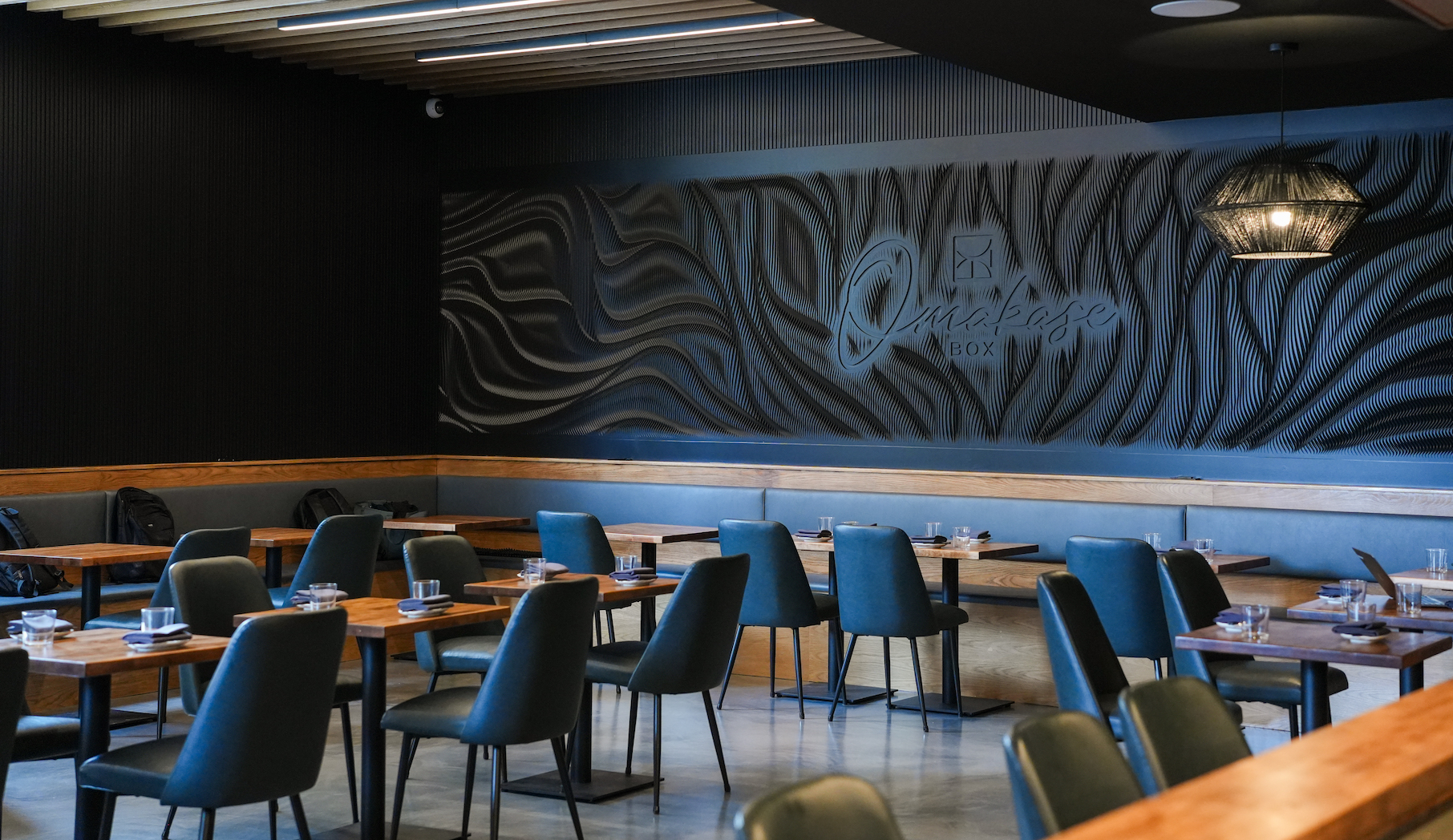
It will offer a 15-piece omakase menu at the chef’s counter, which seats 10 people, for $98 – a relative deal, considering that an omakase menu at the lauded Kyōten less than a mile east on Armitage goes for $440-490. A more casual meal of a la carte nigiri, hand rolls, and a small menu of starters can be had at the restaurant’s tables in the chic black and tan space, where diners can also sample the omakase experience with a shorter, cheaper set menu.
“The omakase game in Chicago is crazy,” says Choi. “I feel like there’s a lot of pretenders, and there’s a lot of people who are absolutely killing it, and it’s kind of hard to tell.”
Choi and his team at Omakase Box are no strangers to the omakase game. He, front of house manager Jane Yim, and chef Timmy Chen met while working at sushiDOKKU in the West Loop – the only restaurant that responded to Choi’s application when he was first starting off in the hospitality industry. They continued as a team at Jinsei Motto, the omakase restaurant incongruously hidden past the bar of CH Distillery that Choi opened with chef Patrick Bouaphanh several years ago. (Jōtō took over the Jinsei space earlier this year, and Bouaphanh is opening a new sushi restaurant under the Jinsei Motto name in Logan Square.)
Jinsei Motto won acclaim as part of the vanguard of a “new sushi wave,” as Chicago magazine called it, but Choi started to want to do something more approachable. “I was kind of torn at Jinsei, because it turned into such an upscale thing, especially at the omakase being pretty much $200. It didn’t strike the chord with me,” he says, emphasizing that he is grateful to CH for the opportunity and enjoyed his time there. With Omakase Box, he wanted to create a place “where I could feel comfortable going,” in a neighborhood that he loves.
“I want it to be for the neighborhood,” he says. “I want it to be for my kind of people, which is just your everyday person.”
But he didn’t want to give up on omakase and simply open a standard American sushi restaurant featuring maki rolls slathered with mayo and sauces. “For me, [omakase] truly is the best way to appreciate sushi,” he writes in an email. “The experience of watching the preparation and enjoying each piece as it's served enhances the flavor. Not only is it great to watch the chefs, but each bite is also enjoyed at its optimal state. Nigiri is best when the rice is around body temperature and the fish is at room temperature, something you can't achieve with a platter of assorted nigiri.”
He also cherishes the personal touch of being handed a bite of food straight from the chef, and believes that a well-planned succession of nigiri can make a diner notice and savor the nuances of different fish. “I always say to people, ‘You can’t appreciate something unless you’ve had another bite,’” he says. “You start to appreciate the things that are more mild in flavor compared to the ones that are super in your face.”
Those subtleties will be emphasized at Omakase Box through dry-aging of some cuts of fish, which allows flavors to develop and deepen. For now, it’s BYOB until the liquor license is finalized. But the restaurant will eventually offer a beverage pairing of sakes for the omakase menu, to further complement and enhance those flavors. Beer, highball cocktails, and sake will also be available to order individually. The food offerings will also expand over time: Choi wants to host a late-night hand roll omakase menu, something much rarer in Chicago.
“Having done this for a while and seeing what people respond to, I feel that we can give people what they want at a little bit more of a price point that makes sense,” he says.