How Food Ties into the Obama Center's Mission, Through Gardens, Events, and Opportunities
Daniel Hautzinger
September 2, 2026
Get more recipes, food news, and stories at wttw.com/food or by signing up for our Deep Dish newsletter.
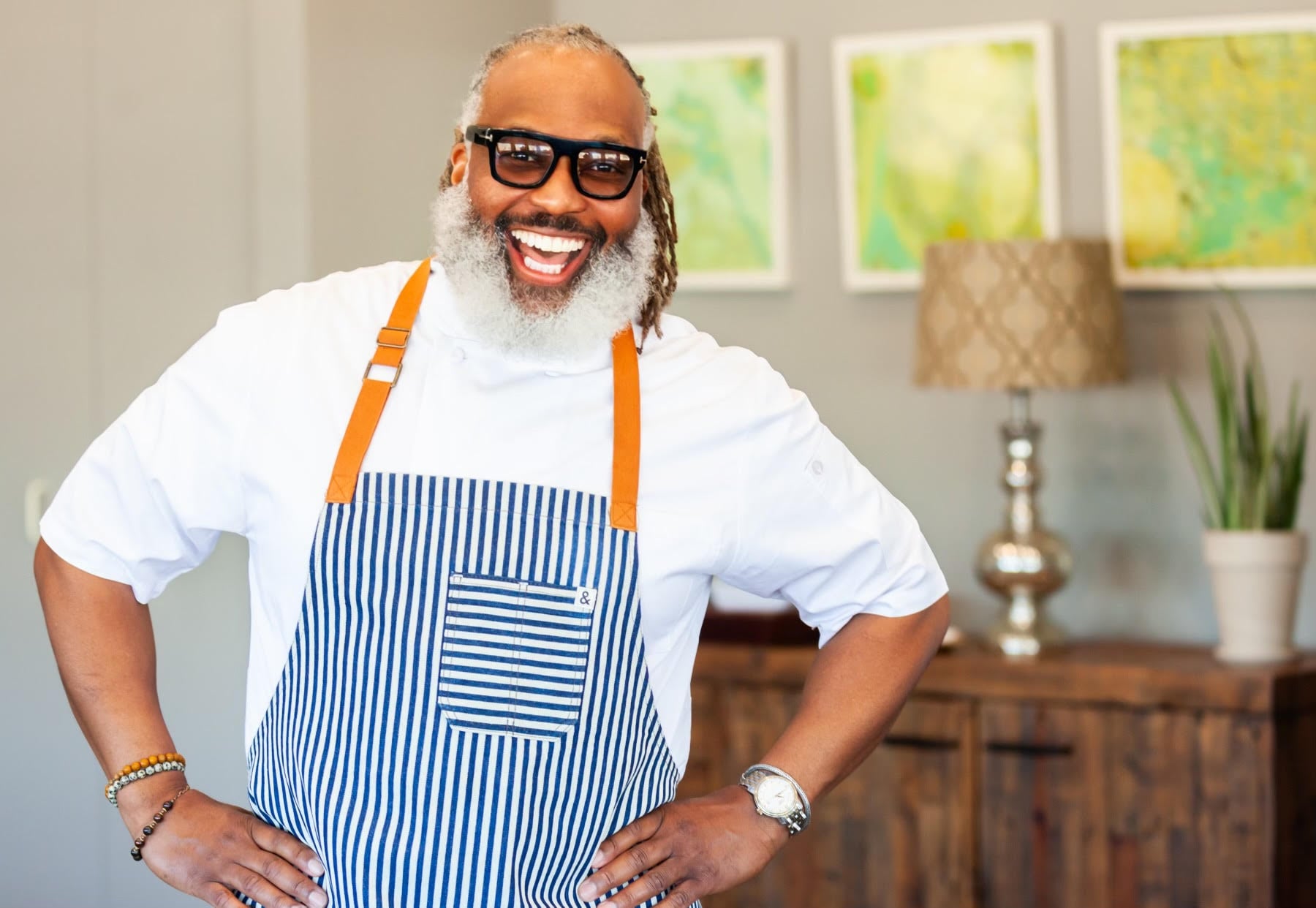
Cliff Rome grew up in Englewood, on Chicago’s South Side. When he was 17, he got a job a few miles away in a restaurant at the Museum of Science and Industry. Now in his 50s, he can look out at both his childhood neighborhood and at that teenage workplace from the top-floor Sky Room of the newly opened Obama Presidential Center, where he heads up the restaurant, cafe, and catering. From his roots he has grown to a high-profile pinnacle of Chicago, just across the Jackson Park lagoon from the Museum of Science and Industry where he worked so early in his career.
“It’s a dream come true,” he says.
But his excitement isn’t just about the visibility afforded him by the Obama Center – it’s also about what it does for his native South Side. It’s not just that people from across the city and country are visiting the South Side, perhaps for the first time, to see the Center – he suggests making a day of it by breakfasting at his Peach’s restaurant in Bronzeville, going past the Obamas’ Kenwood house, then spending time at the Obama Center and dining at its restaurant, Tafari’s Kitchen. He’s also pleased that people from across the city want to work in food at the Obama Center under BAMJoy, the partnership between his own Rome’s Joy Companies and Bon Appétit Management that manages the food there.
“Now people are coming to the South Side to work and advance their culinary career,” he says with evident pride.
Rome left the South Side to advance his career, training and working around the world. But he made a conscious decision to come back, opening up Peach’s and a number of other companies and training at-risk youth in the culinary and hospitality industries through a program that places participants at his restaurants and in his catering operation. He jokes that his work these days is more focused on “talent discovery” than cooking.
Like Rome, the Obamas also have deep roots on the South Side – it’s why the Obama Center ended up there. It’s where Barack decided to go into politics, launched his political career, and met Michelle, who grew up in South Shore. Michelle’s mother, Marian Robinson, would cook soul food for the family – including Barack – at the bungalow they lived in for decades. Her red rice with shrimp, bacon, and sausage made it to the menu of Tafari’s Kitchen – which is named after a White House chef who became the Obamas’ personal chef – as did an Obama family chili recipe.
Transmitting Values Through Food
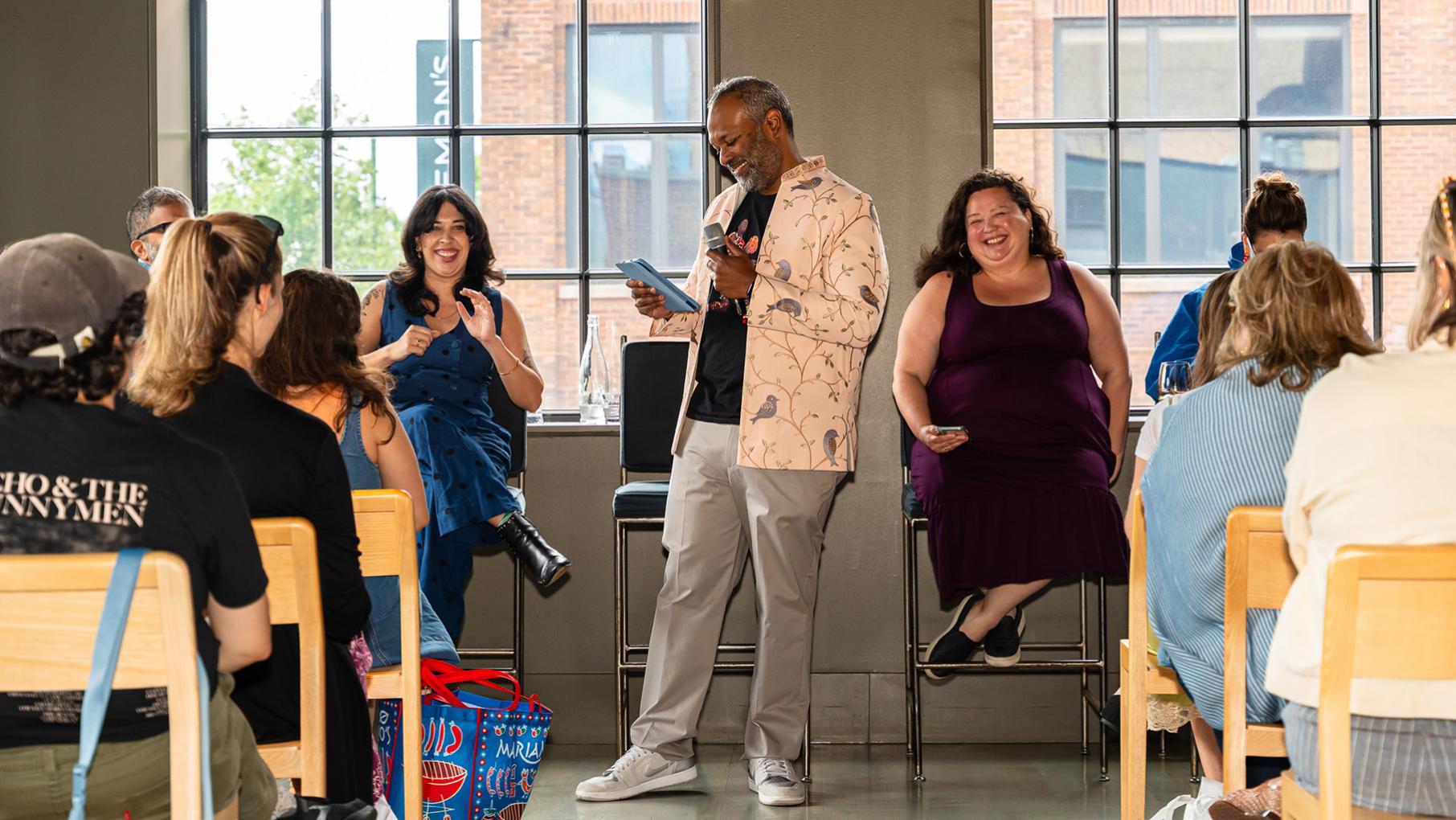
“We have to maintain and respect those recipes, to hold them tight,” said Maya-Camille Broussard about dishes – such as red rice – brought to Chicago by ancestors who came here during the Great Migration from the Jim Crow South, as did Marian Robinson’s father. Broussard is another South Side native, who runs the bakery Justice of the Pies in Avalon Park. She was speaking on a panel along with Rome and other culinary luminaries in an event called “Food and the American Story,” part of the Obama Center’s programming celebrating the 250th anniversary of the United States.
The discussion focused especially on the Great Migration and the soul food it engendered – scholar Adrian Miller, another panelist, calls soul food the American migrant cuisine. That’s a history Rome tries to uphold at Peach’s, which is located in Bronzeville, the neighborhood where so many Black southerners ended up, due to restrictive racial covenants and unwilling landlords. He wants Peach’s to be a cornerstone of the neighborhood, an institution like such shuttered Chicago soul food icons as Gladys’ Luncheonette or Army and Lou’s.
“Food really tells a story of diversity and inclusion,” says Tina Tchen, the executive vice president of programs at the Obama Foundation. “The story of America is really a story of those culinary traditions, and how they are not just something that we eat to nourish ourselves, but also how we express ourselves and express our cultures. An important part of America, and an important part of our democracy, is to celebrate that diversity, and to celebrate it together across cultures.”
Among the dishes served by Chicago chefs after the panel were hummus made by the Indian chef of a Middle Eastern restaurant (Sahil Sethi of Sifr), New Orleans-style blackened shrimp (Darnell Reed of Luella’s Southern Kitchen), and a tamale filled with a vegetarian version of Javauneeka Jacobs’ mom’s collard greens. (Jacobs’ boss at Frontera, Rick Bayless, was also there; he cooked for the Obamas at the White House and was rumored to be a top choice for their chef there.)
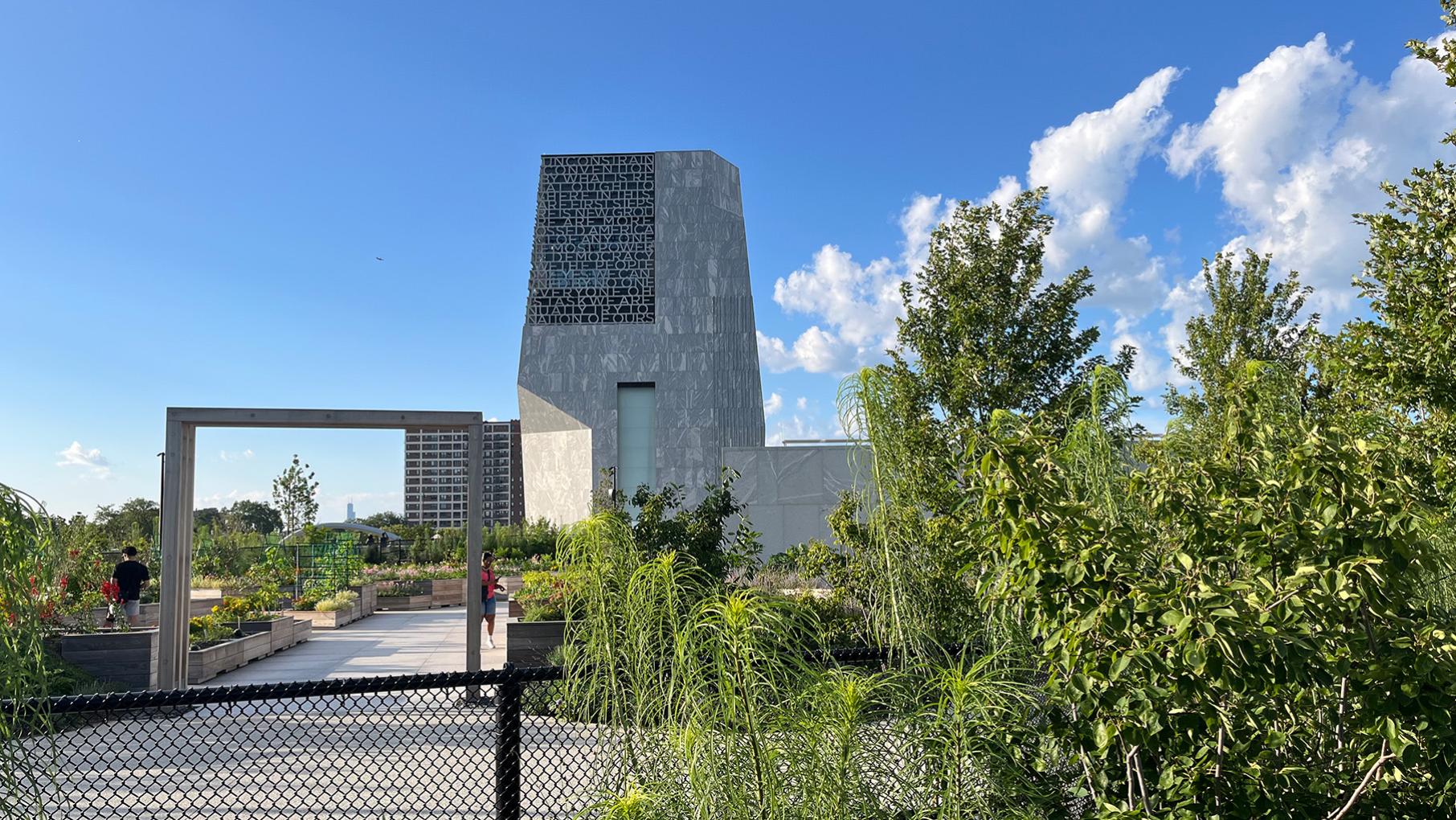
The Obama Center is more than just a museum; there’s the programming center the Forum, where the “Food and the American Story” took place; a Chicago Public Library branch; a basketball court; and extensive gardens. That includes the Eleanor Roosevelt Fruit and Vegetable Garden, which overlooks the Center’s tower and plaza from the roof of the library.
“When Mrs. Obama got to the White House in 2009, one of the first things she wanted to do was to put a fruit and vegetable garden on the White House grounds,” Tchen says. The extensive White House garden – a successor to Eleanor Roosevelt’s victory garden planted during World War II – was a signature part of Michelle Obama’s Let’s Move! initiative to reduce childhood obesity by encouraging healthy lifestyle choices, including through gardening and eating more fresh fruit and vegetables.
The Obama Center fruit and vegetable garden, designed by the Chicago Botanic Garden, is meant to similarly inspire people to take up gardening and grow their own fresh produce. Over the summer, Chicago’s Urban Growers Collective hosted regular events there to teach people about gardening, from pickling and preserving produce to learning how to compost. The food harvested from the garden – tomatoes, cucumbers, maroon okra, purple kohlrabi, and more – is donated to the nearby Hyde Park-Kenwood Food Pantry.
“How food can transmit values and history and diversity has always been something that we’ve thought about,” says Tchen, who served in the White House through the Obama presidency.
Inspiring healthy eating and gardening; supporting a community with food; encouraging people to share their stories through recipes; learning about other cultures and people through their dishes – it all might seem removed from a Presidential museum, but Tchen says it fits right in.