
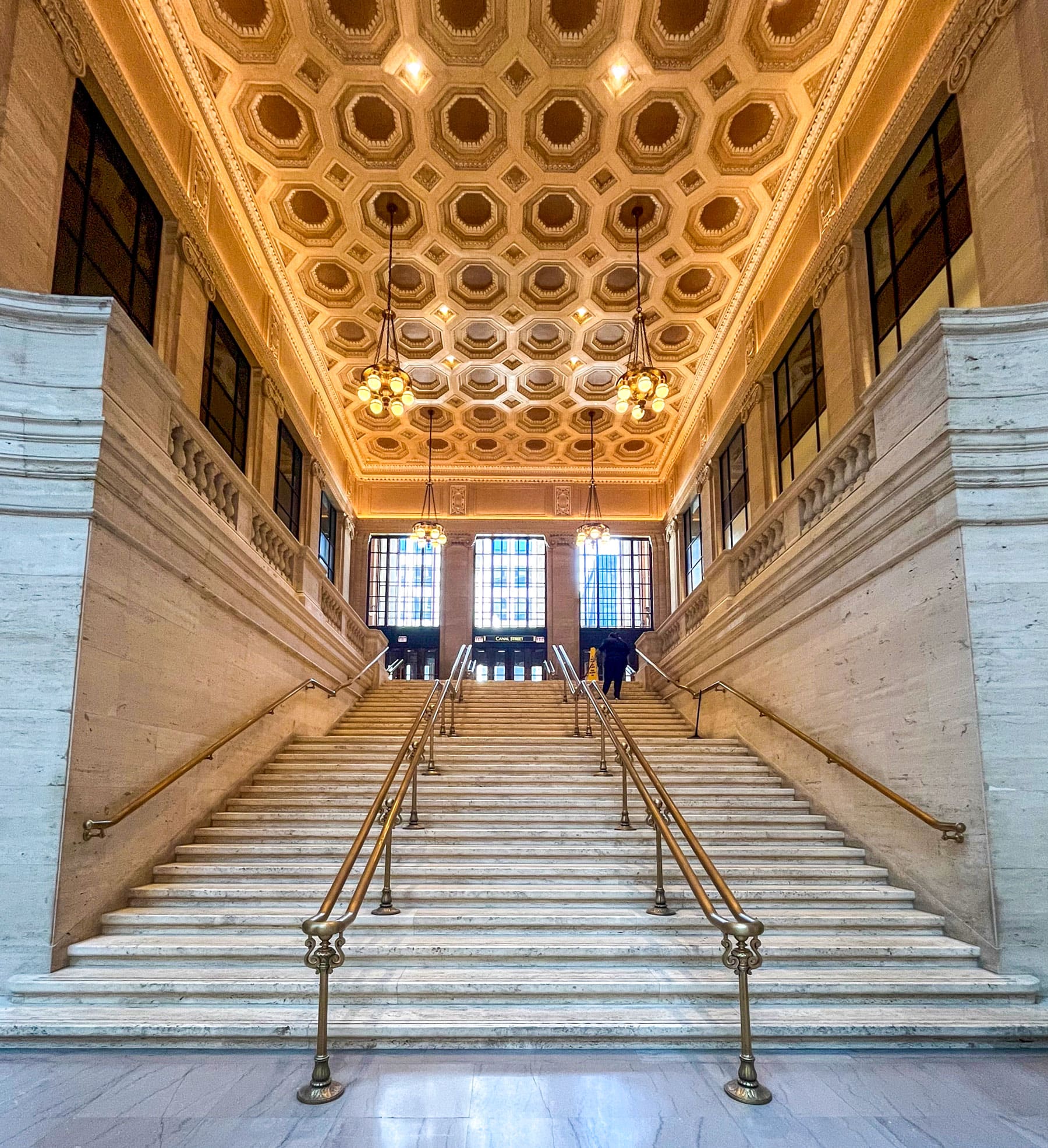
When descending the travertine steps from the Canal Street entrance to Chicago’s Union Station, it’s hard not to stop in your tracks and look up in wonder. The ornate flourishes of the Great Hall’s Corinthian columns and rosettes draw the eye up toward the expansive, luminous simplicity of the skylight. It is, of course, a room that serves a functional purpose – a waiting room where people with headphones wait to board their train, a parent drapes a blanket over a child napping on one of the long oak benches, an Amtrak employee directs someone to the platform. But Union Station’s architecture goes beyond the utilitarian. It is a space that says you have arrived, or you’re on your way.
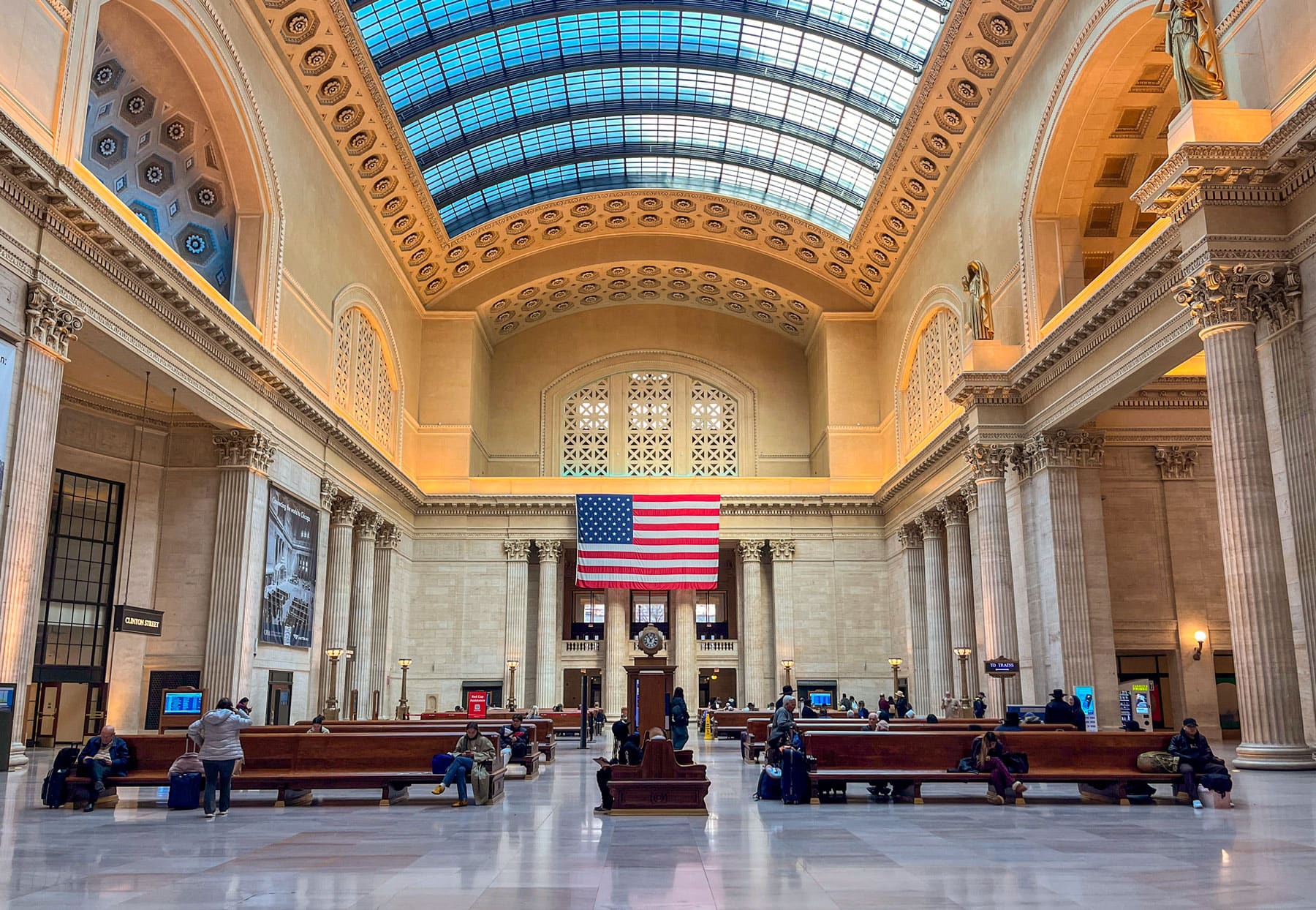
“You want train stations to be memorable, where you walk in and say, ‘I’ve arrived. This place is a place of great importance,’” DePaul University professor Joseph Schwieterman told Geoffrey Baer.
Beginning in the late 19th century, Chicago built several railroad terminals at the edge of downtown. But that created travel headaches for railroad passengers who were stopping in Chicago to transfer to another railroad housed at a completely different station. And this was before the days of rolling suitcases.
“The stations are generally on the periphery of downtown because you can’t punch your railroad right into the heart without lots of demolition,” Schwieterman said. “We had connecting taxi services, but we never solved the problem.”
But famed architect Daniel Burnham proposed a possible solution. In his 1909 Plan of Chicago, Burnham envisioned Chicago’s potential as a grand metropolis, with an open lakefront, a system of parkways, development of civic institutions, and “improvement of railway terminals.” According to the Chicago Architecture Center, Burnham saw the station as key to the development of the West Loop, and believed consolidating train stations would make more land available for development.
“Union Station was built to become our grandest terminal. It was built somewhat late in the game, and the idea was this would become our flagship terminal for the city. It lived up to that,” Schwieterman said.
Burnham, however, died in 1912 before construction began on the station. It was the firm of Burnham’s partner, Ernest R. Graham (Graham, Anderson, Probst & White), that would realize his initial vision. A group of four railroads came together to build the station: the Chicago, Burlington and Quincy Railroad; the Chicago, Milwaukee St. Paul, and Pacific Railway; the Michigan Central Railroad; and the Pennsylvania Railroad.
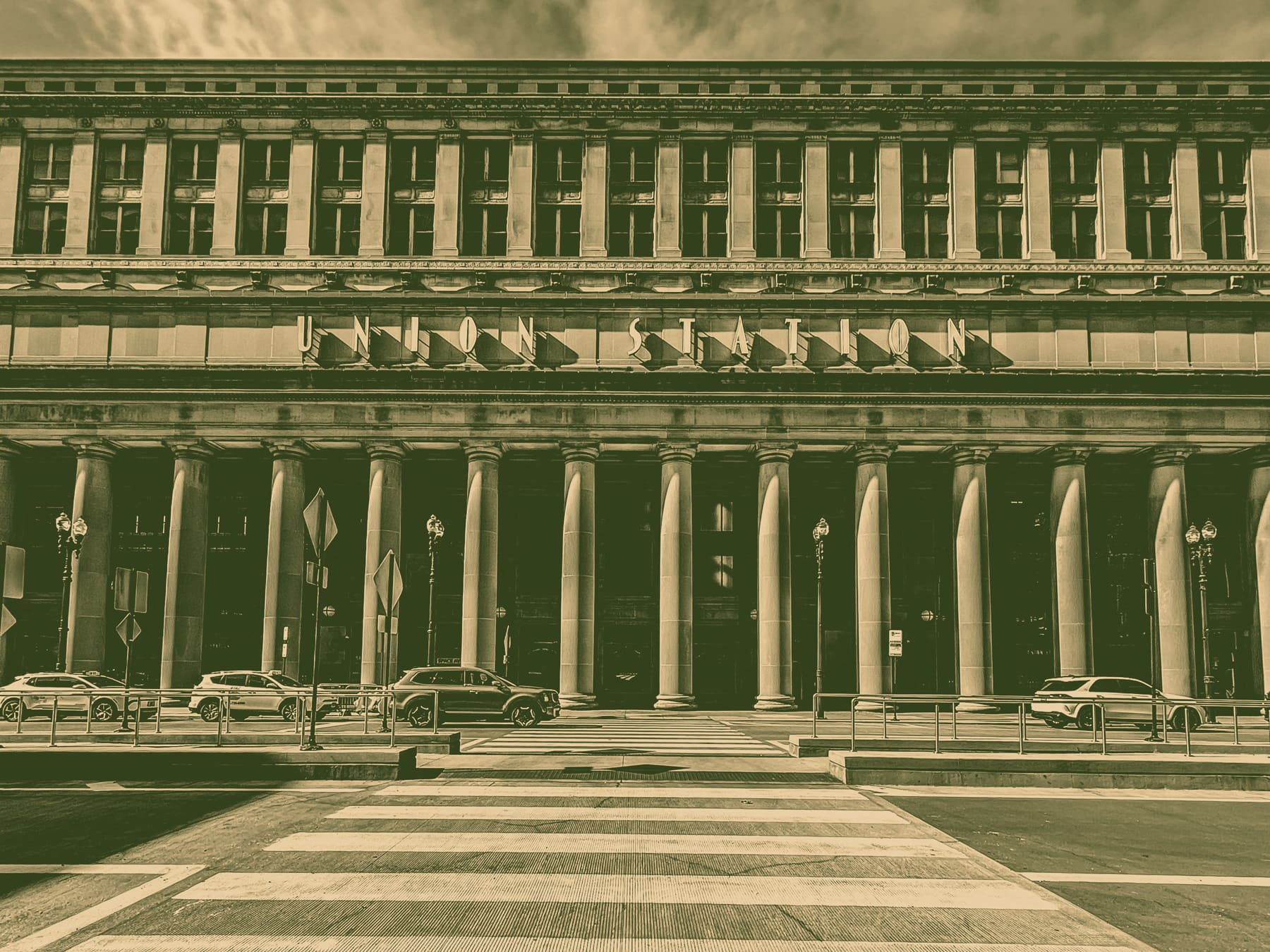
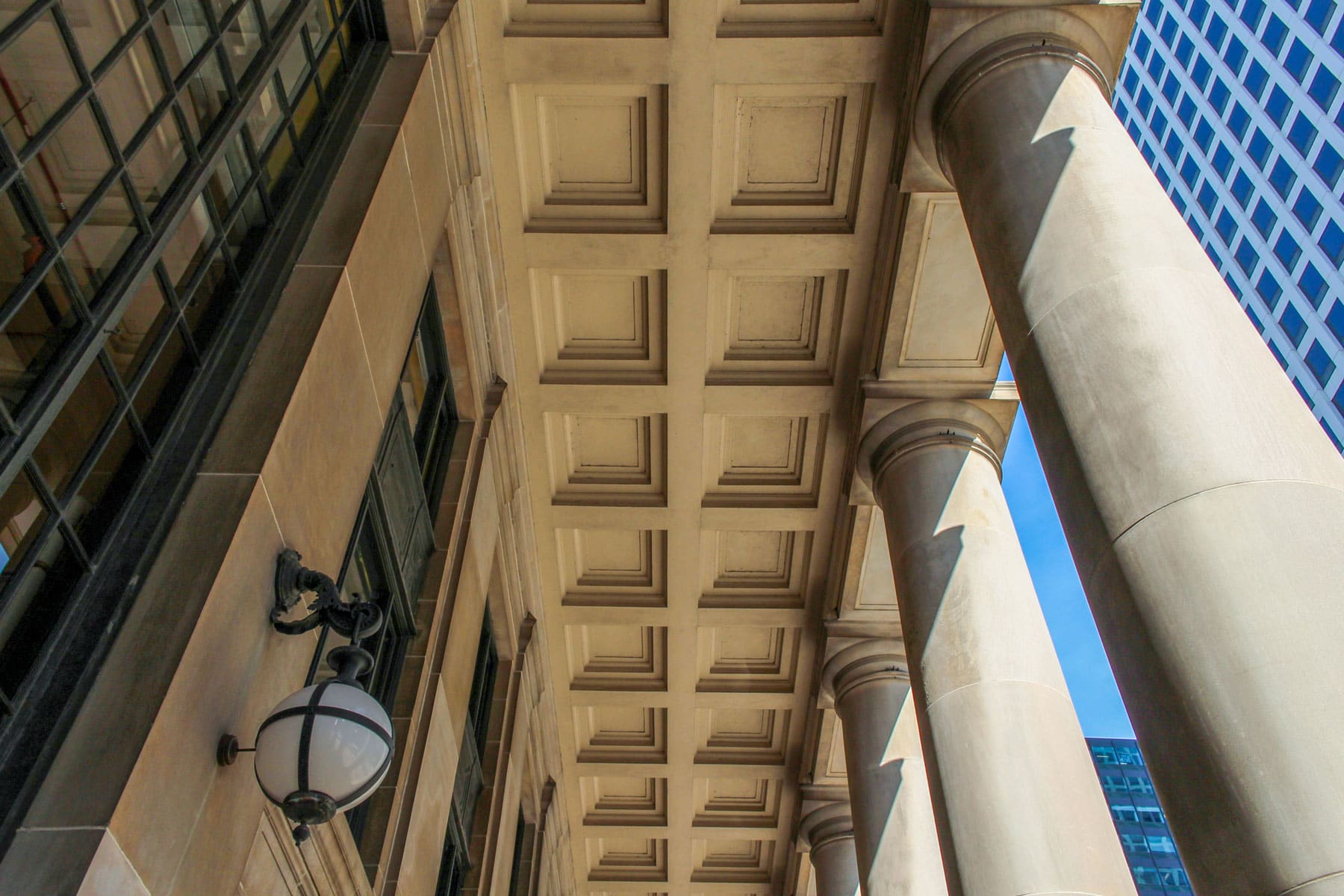
Chicago Union Station opened in 1925 after 10 years of construction at a cost of $75 million (more than a billion dollars in today’s currency). The station was designed in the Beaux-Arts style, with the exterior made of Bedford limestone from Indiana. According to the station’s history, it is the “only example in the United States of a ‘double-stub’ station,” in which tracks approach the station from two different directions.” The grand concourse where those tracks converged was torn down in 1969.
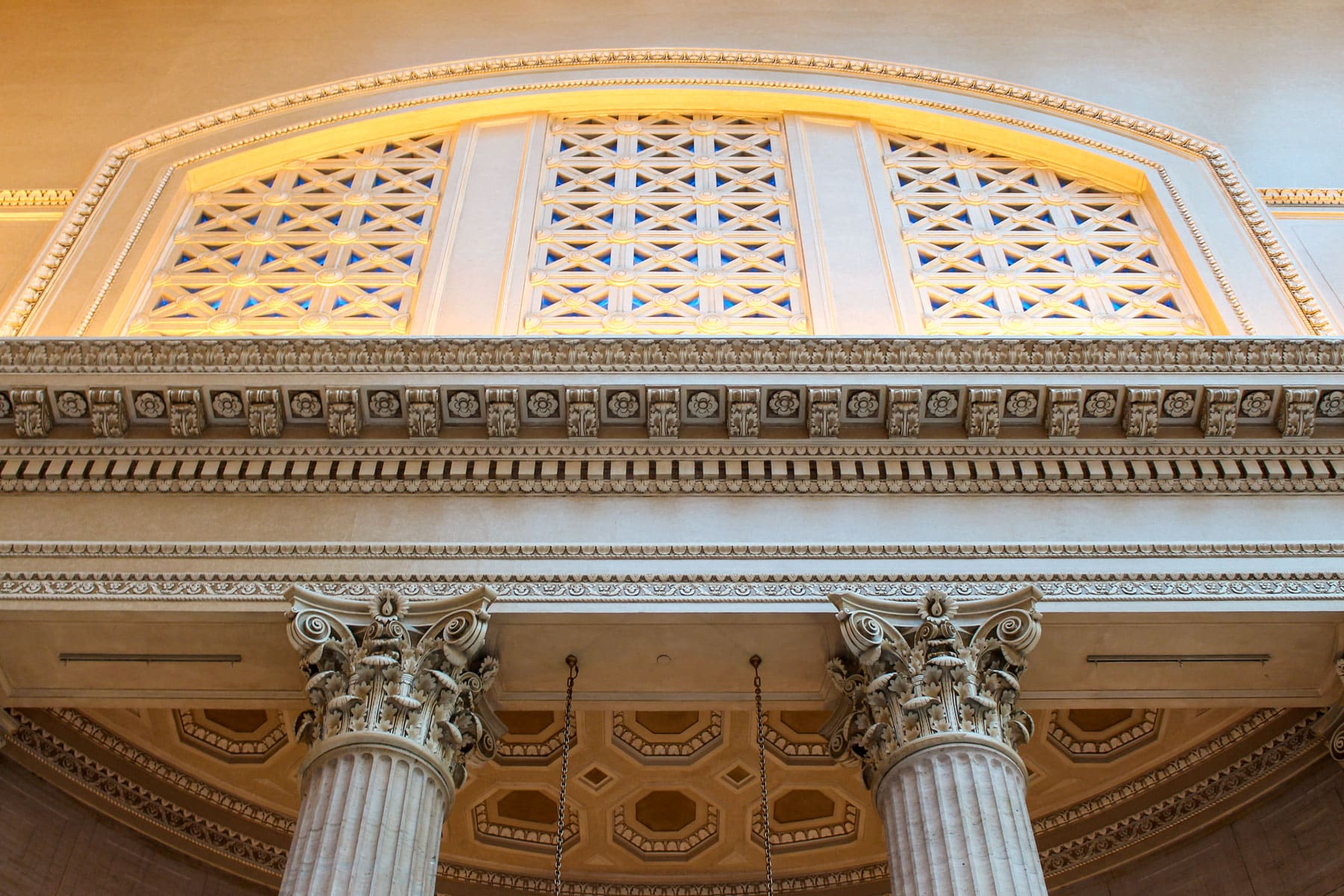
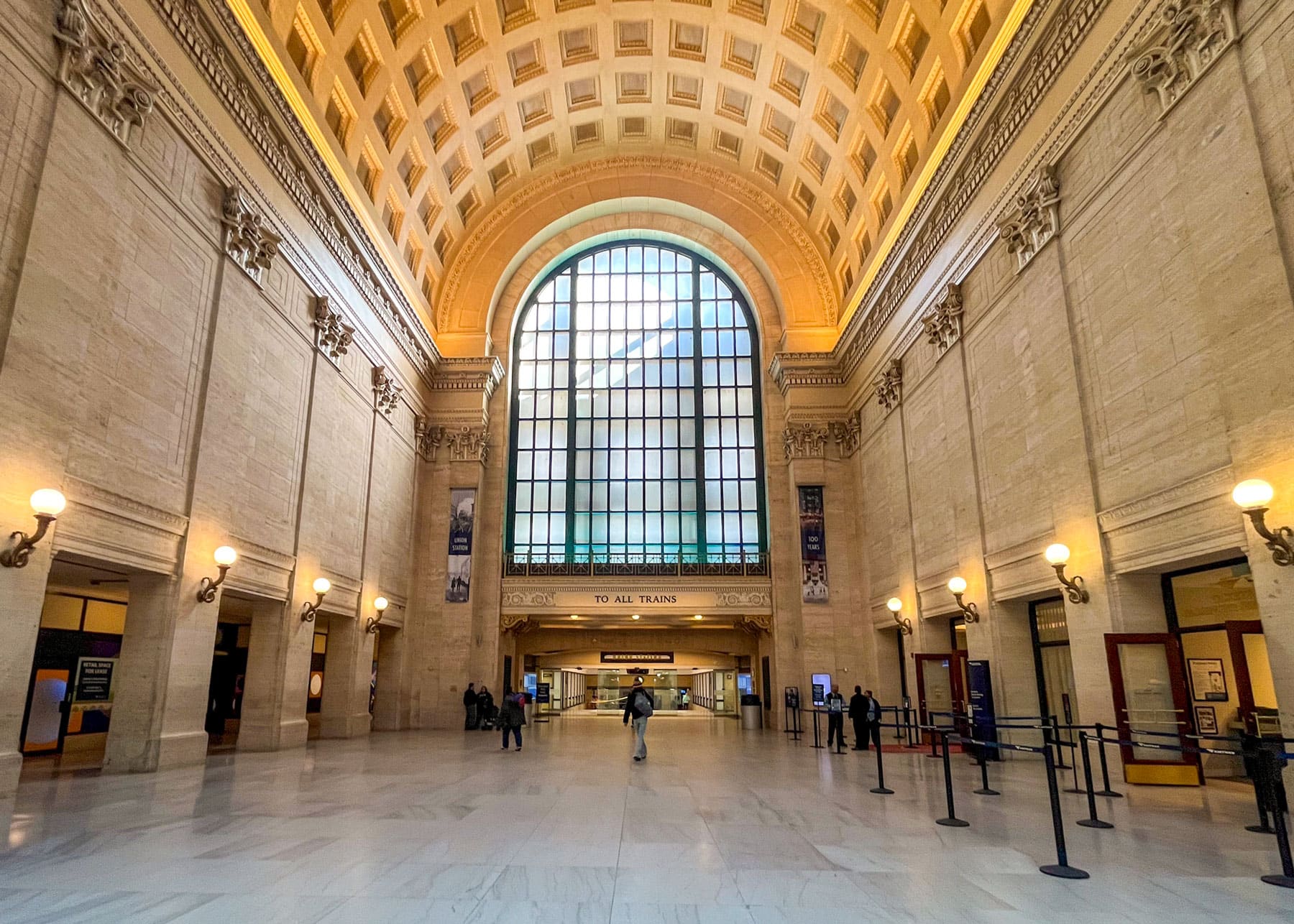
Inside the headhouse, the palatial Great Hall welcomed passengers, inevitably drawing their eyes 115 feet up toward its 219-foot-long barrel-vaulted skylight. During World War II, the skylight was blacked out for fear it would be targeted for aerial bombardment.
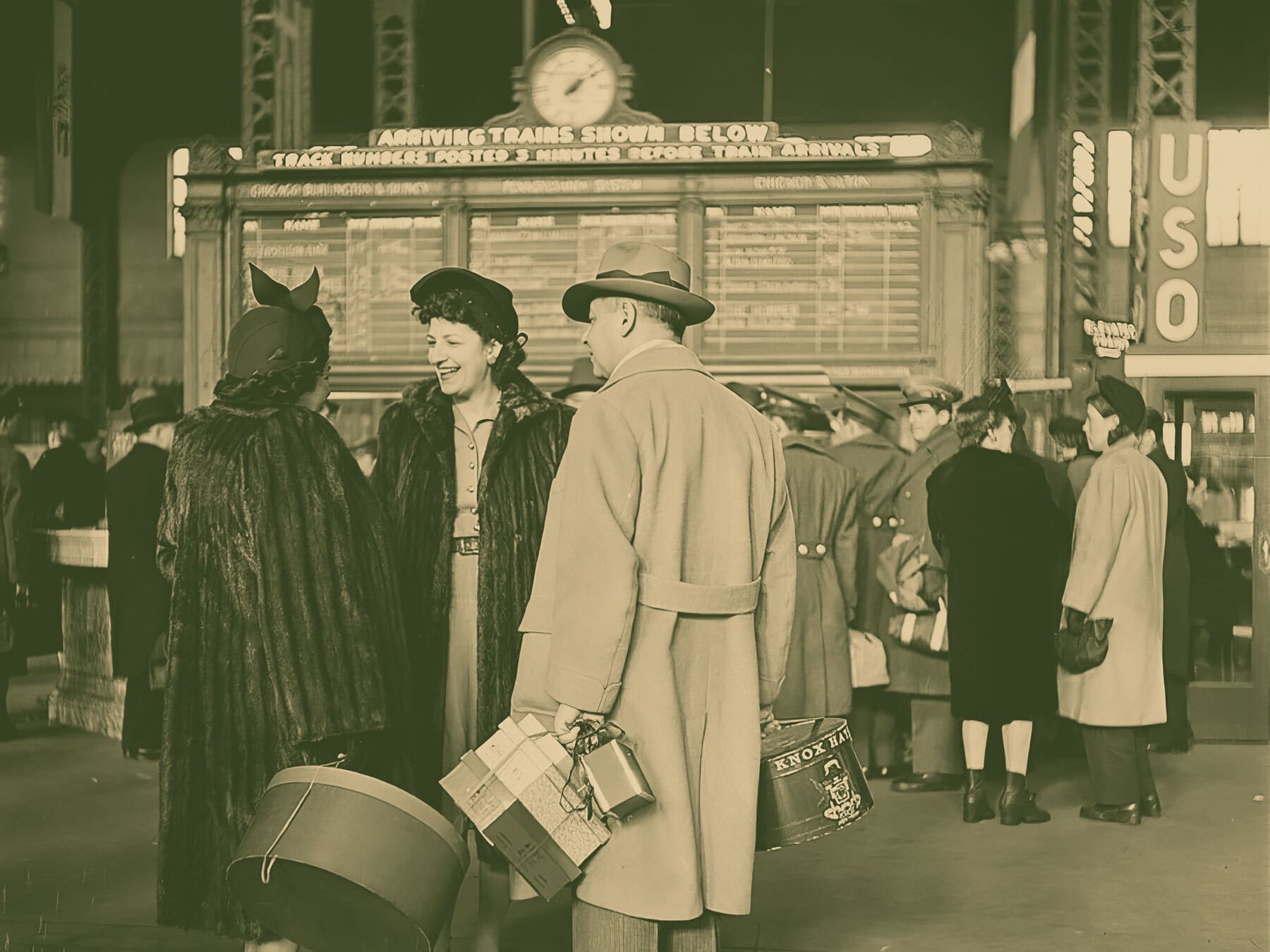
“In World War II, this place was arguably the nerve center of the U.S. transportation system,” Schwieterman said.
During that era, passengers had plenty to keep themselves entertained as they passed through the station or waited for their connections on the long oak benches. Ticket offices, waiting rooms, a ladies’ lounge, shops, restaurants, a nursery, a first aid room, and even a jail once occupied Union Station. Flanking the entrance to the tracks, towering high up near the ceiling, two statues of goddesses – one carrying a rooster, the other an owl – symbolize the round-the-clock nature of rail travel. The station also once had a concourse building east of Canal Street, but it was torn down in 1969. Most of the station’s concourse operations were moved below ground, and office towers occupy the site today.
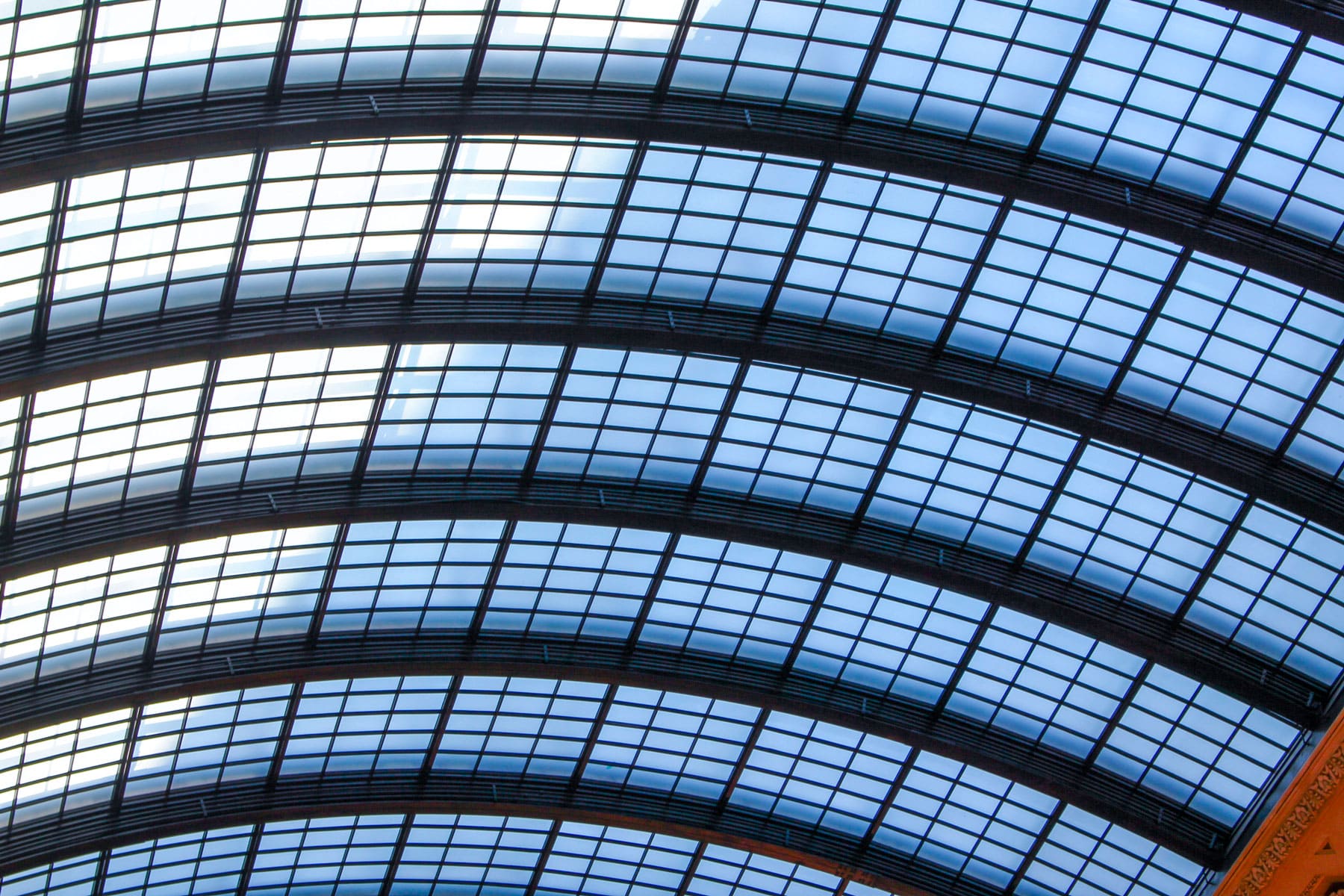
Another timeless architectural element of the Great Hall are the two staircases. Something about the travertine steps and brass handrails feels almost cinematic – fitting, as the stairs served as a setting for a famous shootout scene including a baby carriage rolling down the stairs in the 1987 film, The Untouchables. In 2019, a $22 million restoration of the Great Hall was completed, returning light to the space by uncovering and repairing the skylight, replacing the worn travertine steps, refurbishing light fixtures, and adding modern amenities and infrastructure updates.
“The Great Hall, the headhouse, and the track configuration is identical to the glory days,” Schwieterman said. “If you wanted to bring somebody to Chicago and say, ‘Let me feel the pulse of Chicago railroading,’ boy, this would be it.”
In 1971, as passenger rail use was trending downward, Amtrak formed, and the new company transferred much of its rail service to Union Station. Today, Amtrak still owns the busy station, which Metra, Chicago’s commuter rail, also uses. Schwieterman said it’s been an encouraging time for train ridership.
“People are hungry for experiential travel,” Schwieterman said. “Union Station’s architecture has a lot of fans. It’s got a pretty bright future.”
Related Content