
In the golden age of rail travel, downtown Chicago was home to not one, not two, but six passenger train stations. These awe-inspiring buildings were more than just functional gateways. They transformed riding the rails from a practical, point-A-to-point-B necessity into an experience in its own right.
“No other city even came close to the number of terminals Chicago had,” DePaul University professor Joseph Schwieterman told Geoffrey Baer. “We are the railroad hub – times two, you might say. Chicago, particularly in the area of passenger rail, had no rivals.”
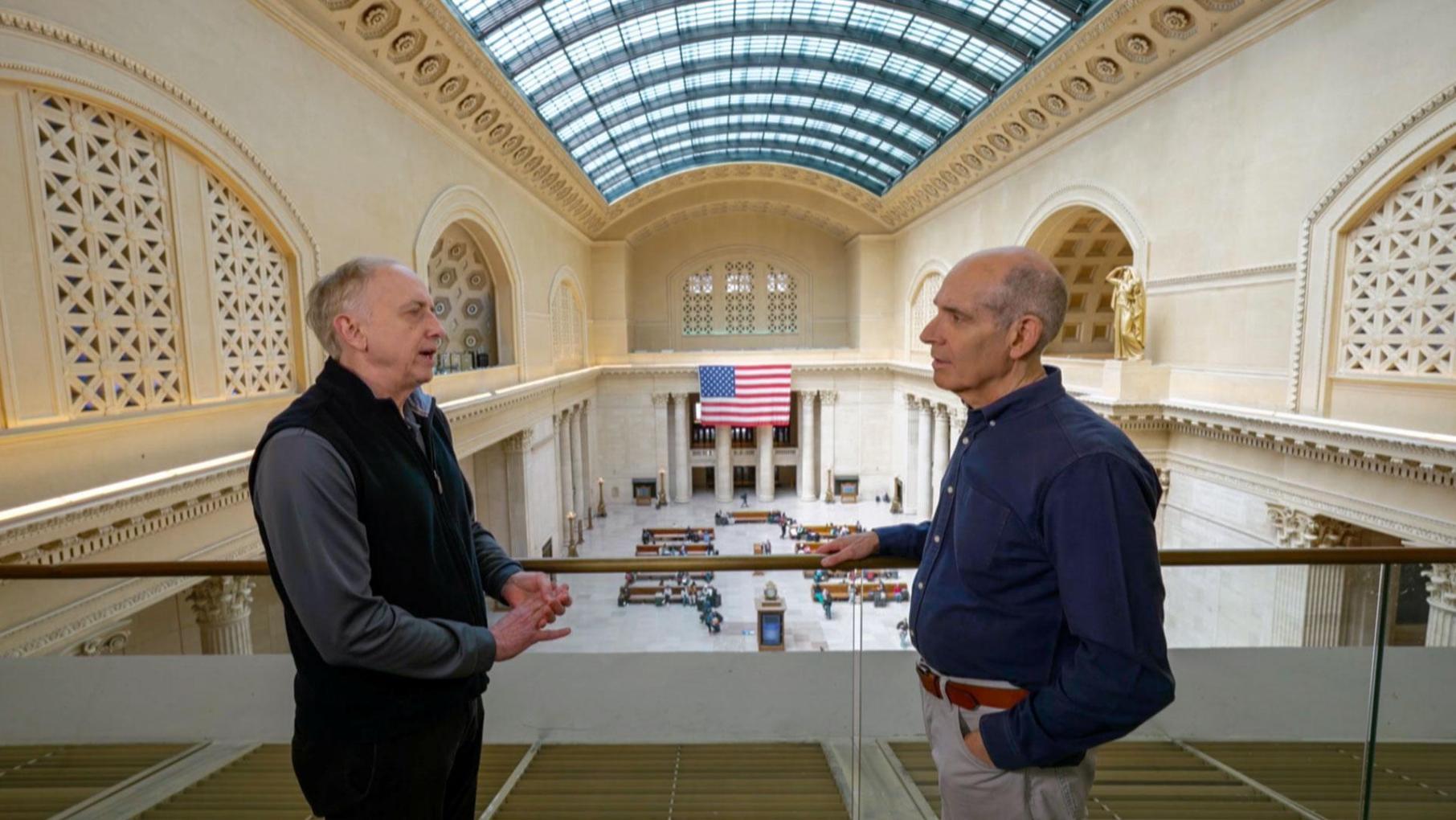
Despite their grandeur, the six stations created a bit of a headache for many travelers. Because they were all located on the periphery of downtown, any transfers between rail lines meant having to hoof it to one of the other stations. As Americans’ transportation preferences shifted to the air and the interstate, demand for passenger rail dipped dramatically by the mid-20th century. Many of the train stations below were demolished or reconfigured in the 1970s and 1980s.
“Shame on us, you might say, but in fairness the historic preservation movement gained momentum in the mid-’70s, maybe 5 or 10 years too late,” said Schwieterman.
Today, only one of the six stations is still used for passenger rail service.
Central Station
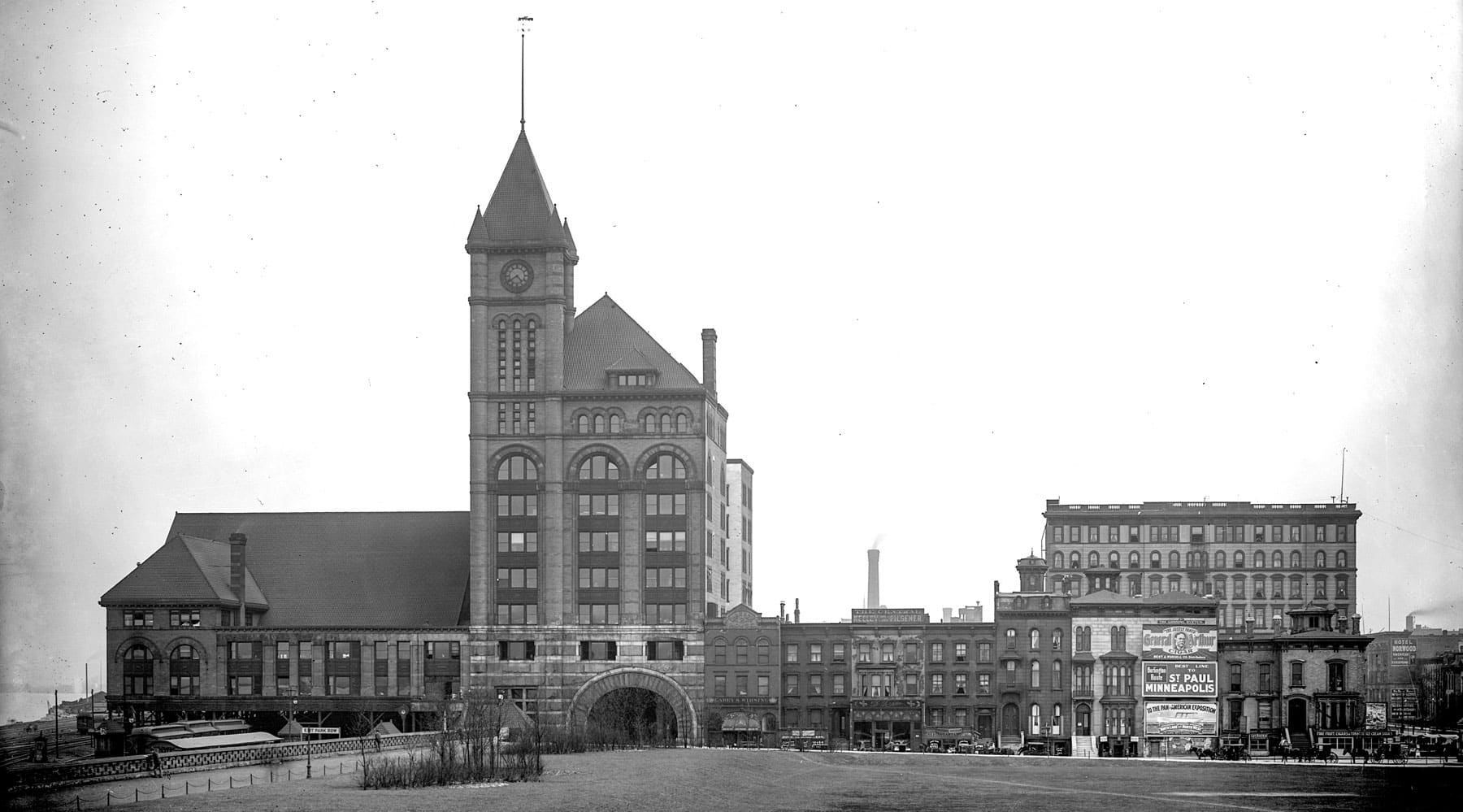
Located near the southern end of Grant Park, Central Station first opened in 1893 at Michigan Avenue and Roosevelt Road to prepare for the influx of visitors to the city amid the World’s Columbian Exposition. The Illinois Central Railroad – which called itself the “Main Line of Mid-America” – owned the station, though other companies used it, as well. Architect Bradford L. Gilbert designed the Romanesque Revival structure, which featured an impressive 13-story clock tower and a 9-story building that housed railroad offices. Central Station served some routes to and from the South, making it an important point of entry to Chicago for Black Americans during the Great Migration. As passenger rail declined and Amtrak consolidated its service at Union Station, Central Station closed in 1972 and was demolished in 1974. The land was later turned into the Central Station development that includes luxury high rises One Museum Park and One Museum Park West, which tower over the south end of Grant Park.
Chicago and North Western Terminal
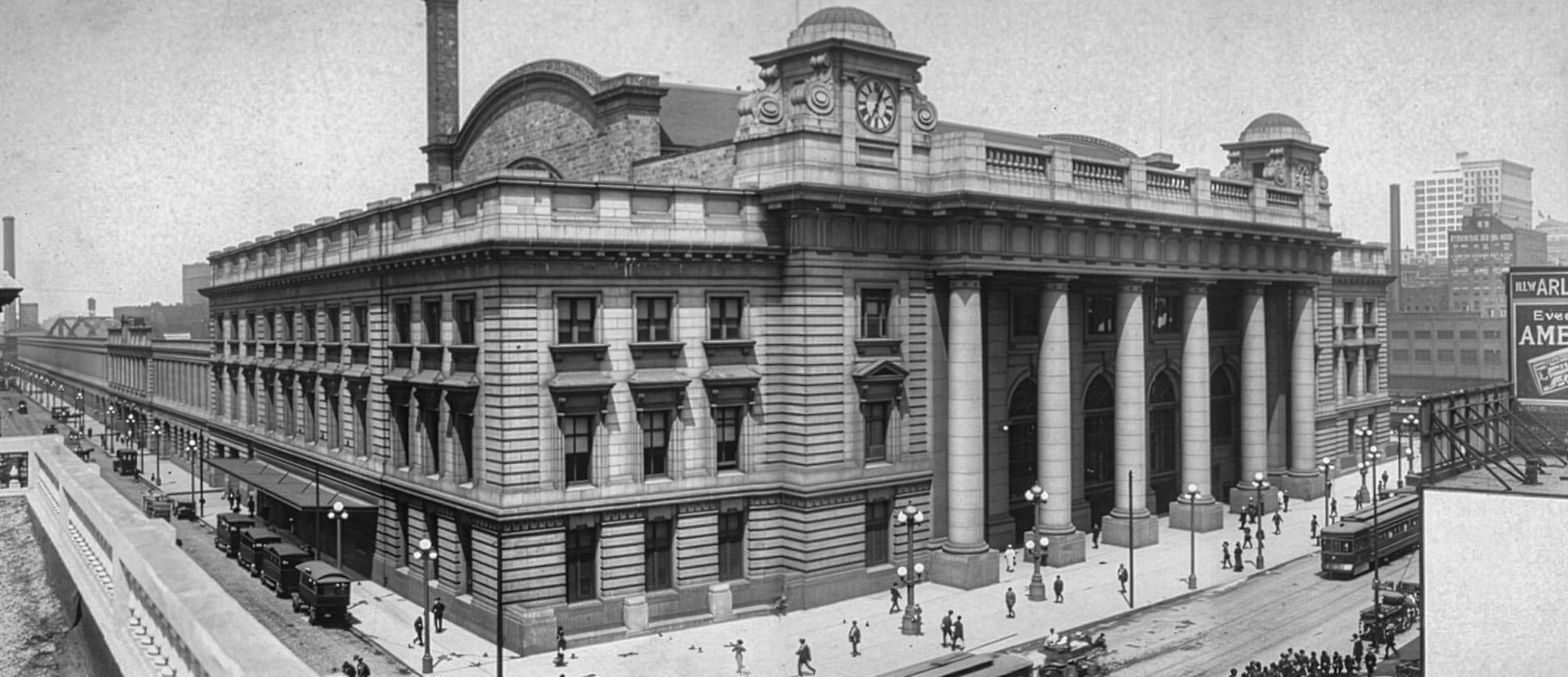
In 1911, the Chicago and North Western Railroad opened a grand terminal at Madison and Canal streets just west of the Chicago River. Designed in a Renaissance Revival style by architects Charles Frost and Alfred Granger (who also designed the LaSalle Street Station), the massive terminal replaced an earlier station where the present-day Merchandise Mart is located. The tracks, which served both long-distance passenger trains and commuter trains, were elevated above street level. Inside the station, passengers could enjoy ornate concourses, waiting rooms, and even barbershops. The Chicago and North Western Railroad connected Chicago to cities to the north and west, including Milwaukee, Madison, the Twin Cities, and more. In 1984, the station’s headhouse was demolished, and a new tower – designed by renowned architect Helmut Jahn – opened in its place in 1987. Metra, Chicago’s commuter rail, took over the station, and in 1997, it was named Ogilvie Transportation Center after Illinois governor Richard Ogilvie. Today, the Chicago and North Western Railway Powerhouse (which provided heat and electricity to the old terminal) remains at the corner of Fulton and Clinton as a city landmark, and the historic exterior walls of the train shed were also preserved.
Dearborn Station
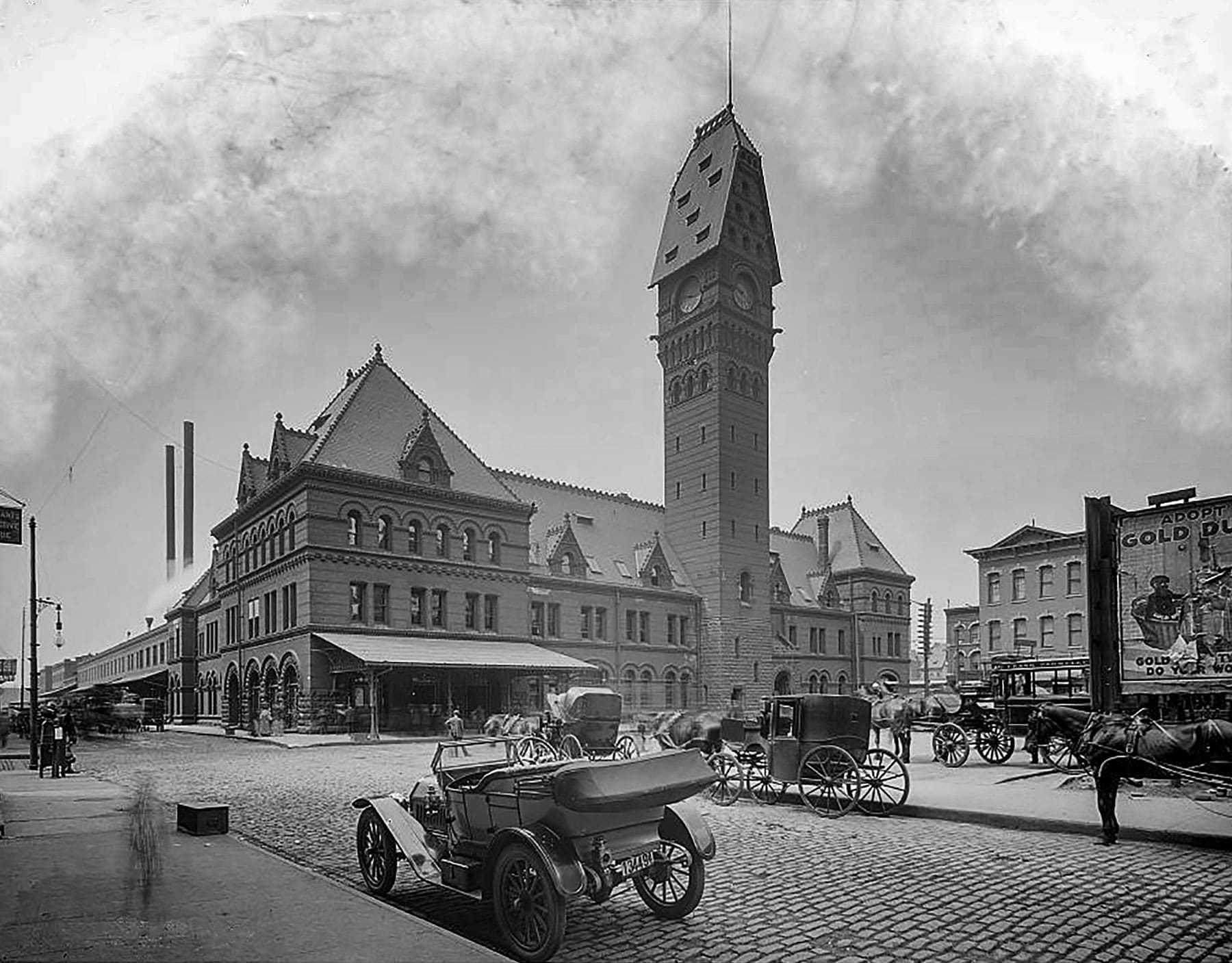
The oldest of Chicago’s six downtown passenger stations, Dearborn Station opened in 1885 in what is the Printers Row neighborhood today. Also called Polk Street Depot, the station was designed in the Romanesque Revival style by architect Cyrus L. W. Eidlitz and featured a 12-story clock tower. The red brick and pink granite structure used to have a pitched roof, but a 1922 fire destroyed the roof. Several rail companies operated out of the station, including the Chicago and Western Indiana Railroad; the Atchison, Topeka & Santa Fe Railway; the Chicago, Indianapolis & Louisville Railway; and the Wabash Railroad. Service halted at Dearborn Station in 1971, and the train shed and tracks were demolished five years later. Though it fell into a state of disrepair for several years, the headhouse remained and was later redeveloped into office and retail space, and the surrounding area was developed into a new neighborhood. Today, the clock tower is still a fixture in the Printers Row cityscape.
Grand Central Station
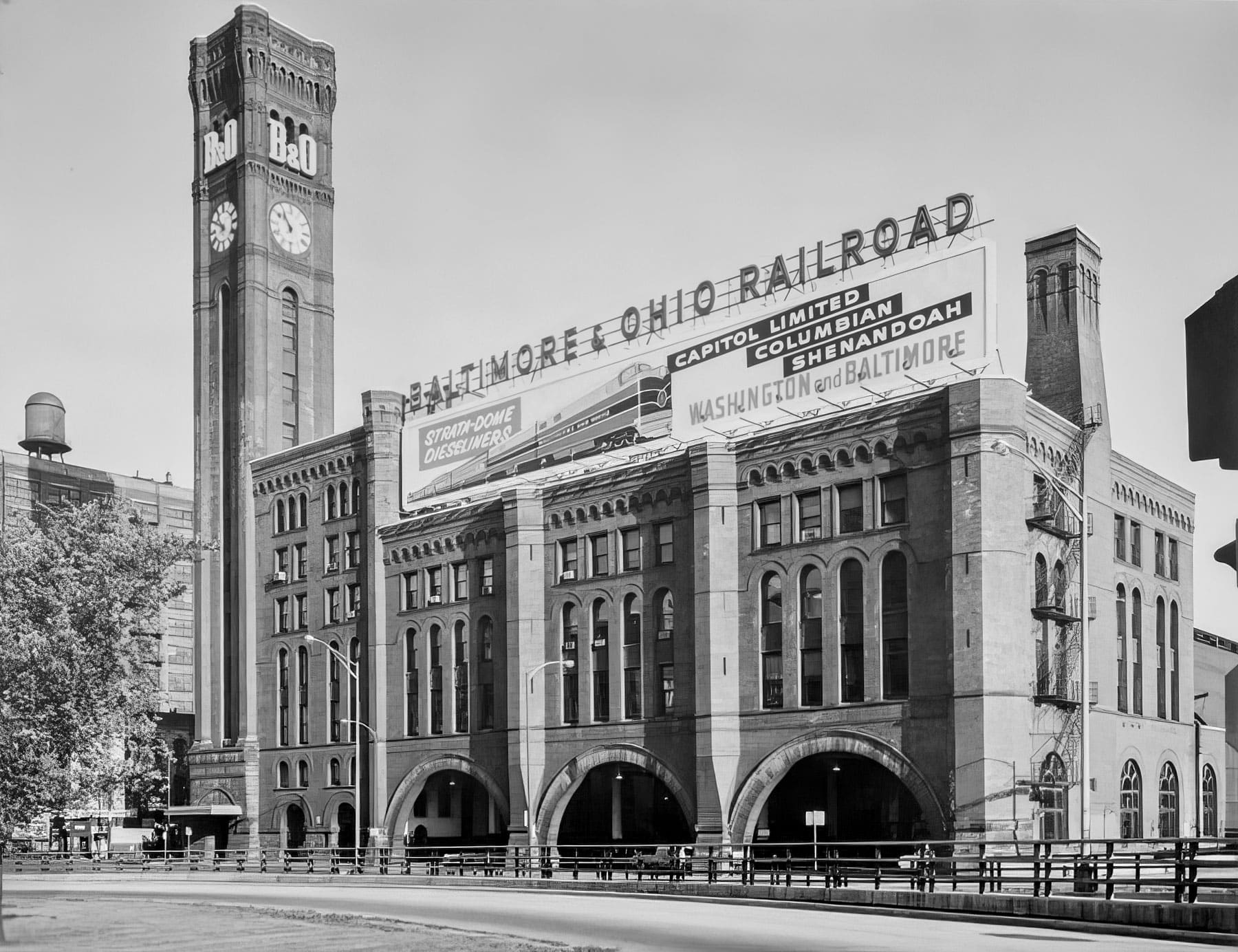
You read that right: Chicago had its own Grand Central Station, not to be confused with New York’s famed terminal. The smallest of the downtown train stations, Grand Central Station opened in 1890 and was located on Harrison Street on the Chicago River not far from Dearborn Station. Architect Solon S. Beman designed it for the Chicago and Northern Pacific Railroad in the Norman Castellated style, and like other stations, it had a grand clock tower. Beman had other railroad connections, too: He designed the Pullman community, the planned company town for the railcar manufacturing giant. Passengers could board trains to cities across the Midwest and Great Lakes region, as well as to Washington, D.C. The Chicago and Northern Pacific Railroad went bankrupt after the Panic of 1893, and the Baltimore and Ohio Railroad later took ownership of the station. As fewer and fewer people used the station by mid-century, the last train left the station in 1969, and the structure was demolished in 1971.
LaSalle Street Station
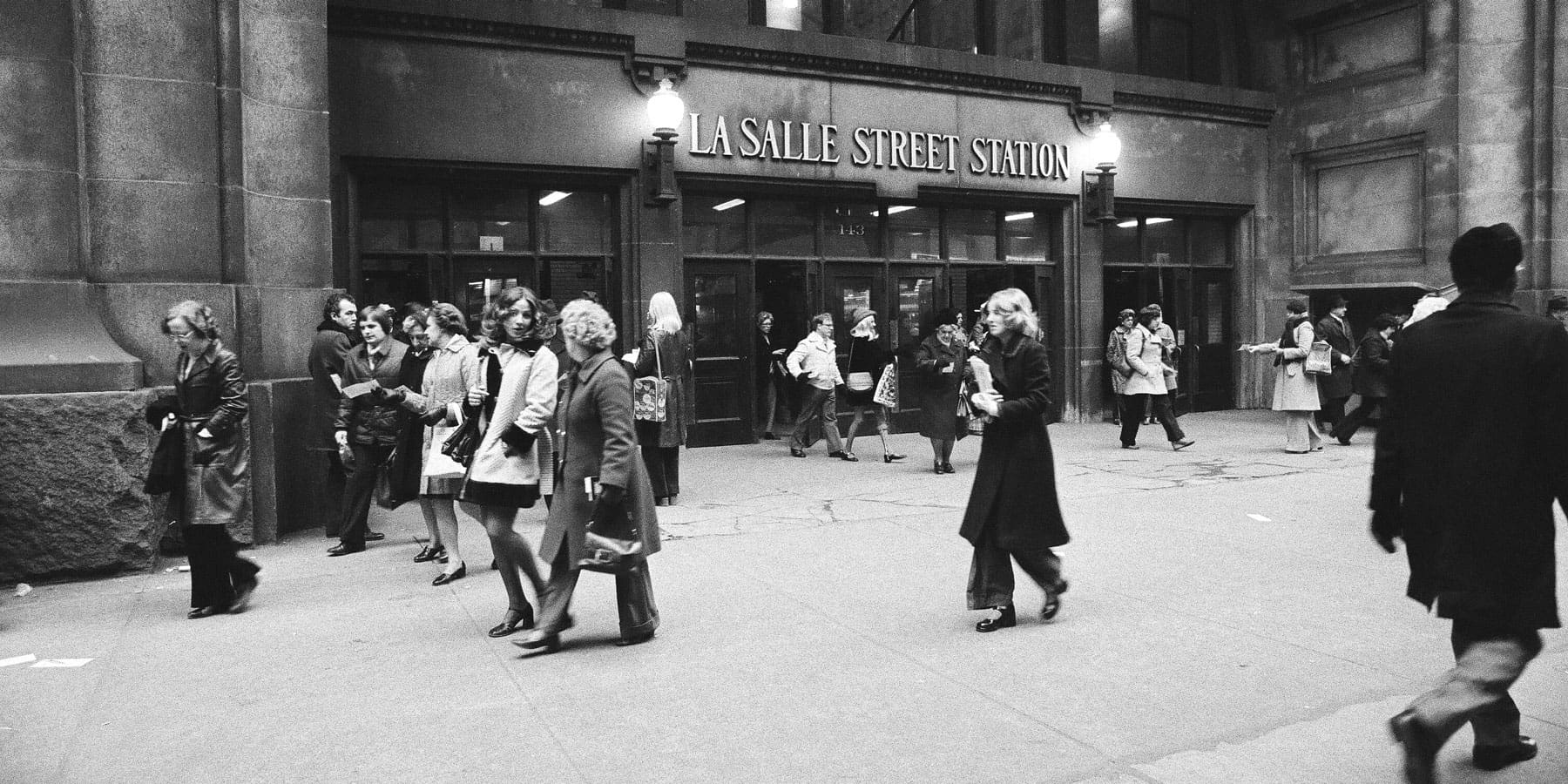
Though it has taken many forms over the years, a train station has stood on LaSalle Street in the South Loop between Van Buren and Harrison streets since 1852. First, it was a small wooden station that served the Chicago and Rock Island Railroad. A new station opened in 1866, but the Great Chicago Fire of 1871 destroyed that one, and another station was built. Then in 1903, a new station opened, this one designed in the Beaux-Arts style by Frost and Granger, the same firm that later designed the Chicago and North Western Terminal. LaSalle Street station was also a notable film location, appearing in North by Northwest, directed by Alfred Hitchcock and starring Cary Grant and Eva Marie Saint, as well as in The Sting, starring Robert Redford and Paul Newman. Throughout its lifespan, LaSalle Street Station has served the Lake Shore and Michigan Southern Railway; New York, Chicago and St. Louis Railroad (also known as the Nickel Plate Road); and the Michigan Central Railroad. The Frost and Granger headhouse was demolished in 1981 and an office building was constructed in its place, though the tracks still remained operational. Today, Metra still uses the smaller, scaled-back station for its Rock Island line.
Union Station
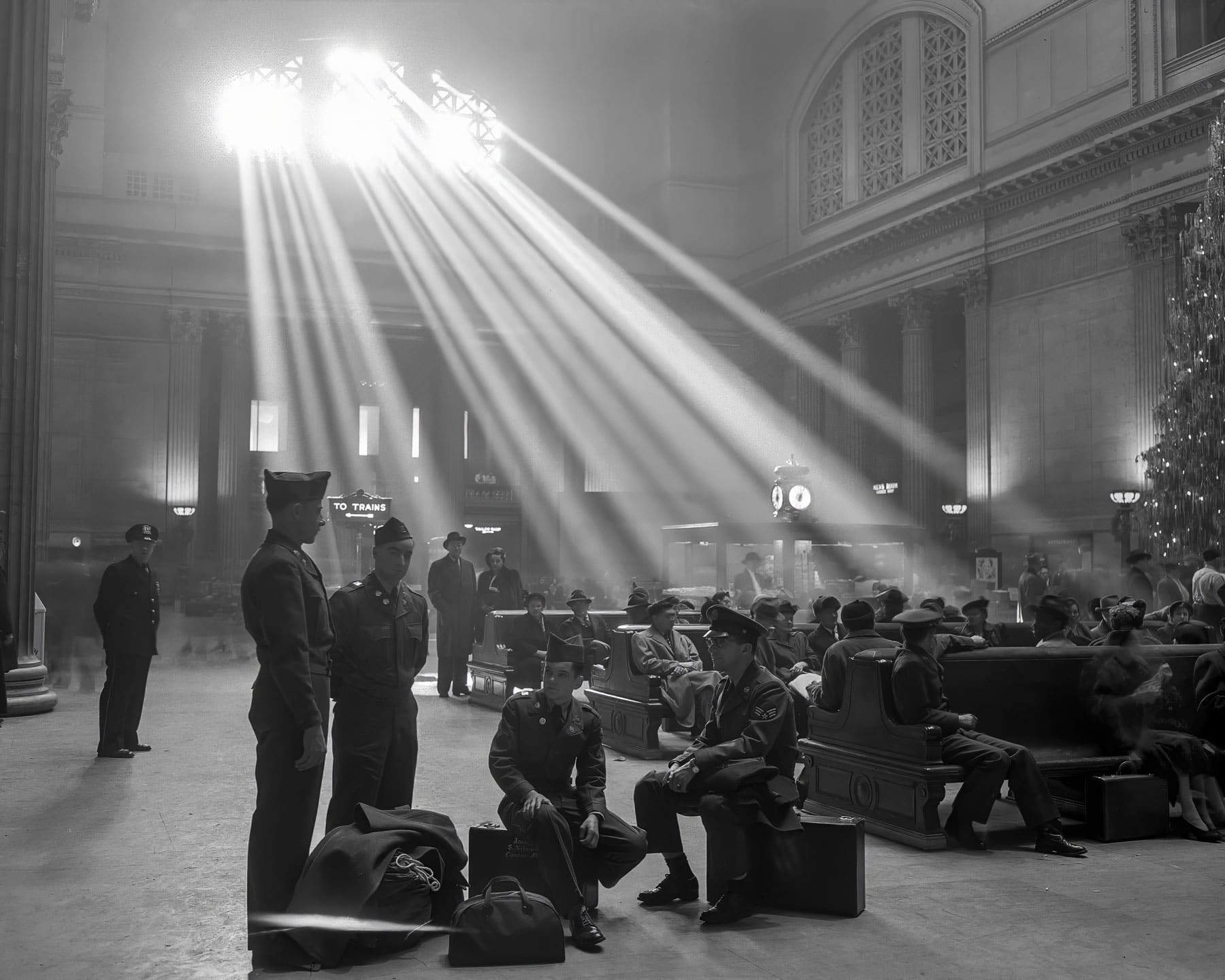
The last remaining historic downtown passenger terminal, Union Station opened in 1925. The vision for a centralized rail terminal was first outlined in architect Daniel Burnham’s 1909 Plan of Chicago. Burnham, however, died before construction began on the station. Burnham’s successor firm, Graham, Anderson, Probst & White, designed the station in the Beaux-Arts style for a joint venture by four railroads: the Chicago, Burlington and Quincy Railroad; the Chicago, Milwaukee, St. Paul and Pacific Railway; the Michigan Central Railroad; and the Pennsylvania Railroad. The station’s headhouse features an awe-inspiring barrel-vaulted skylight in its Great Hall. Union Station also once featured a concourse building east of Canal Street, but it was torn down in 1969. Most of the station’s concourse operations were moved below ground, and office towers occupy the site today. It also had a ladies’ lounge, a nursery, a first aid room, and even a jail. Its marble staircase featured prominently in a shootout scene in the 1987 film, The Untouchables. In 1971, Amtrak formed, and the new company transferred much of its rail service to Union Station. Today, Amtrak still owns the busy station, which Metra also uses. (Read more about Union Station’s history and architecture here).
Related Content