



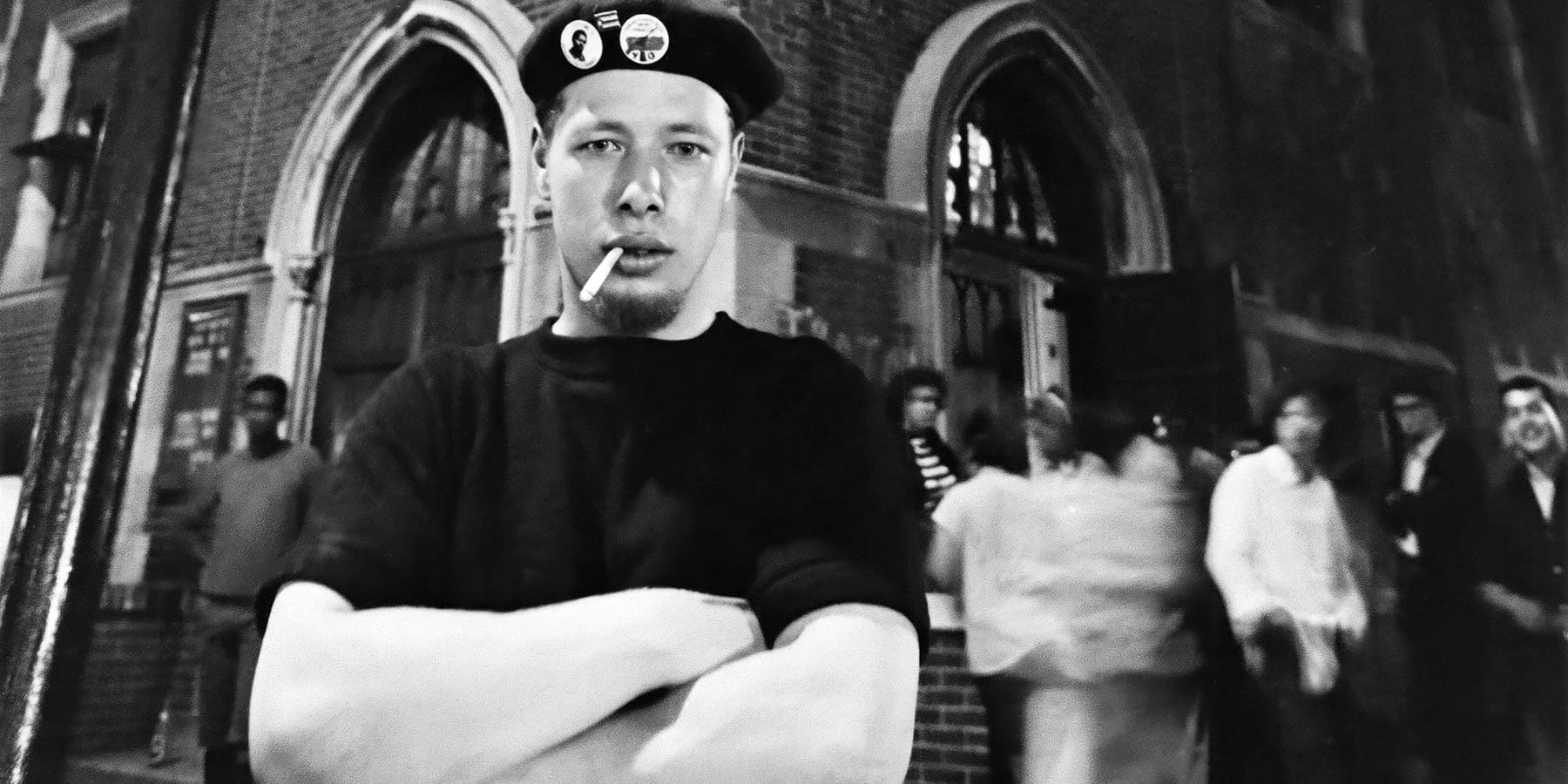
When the bulldozers came to Lincoln Park, a young man named José “Cha Cha” Jiménez decided to get political. Puerto Ricans, such as Jiménez, were frequently displaced throughout the 1960s due to the relentless pace of urban renewal projects in Chicago. Jiménez, who was part of a Puerto Rican youth street gang called the Young Lords, transformed his gang into a political organization that fought against displacement and police brutality and fought for affordable housing, child care, and health services for their neighborhood. The group used disruptive techniques similar to those of the Black Panthers – with whom they formed an alliance – to achieve their goals, particularly during the summer of 1969 when some of their boldest actions made headlines. Though the fight to stop gentrification in Lincoln Park was ultimately a losing battle, the Young Lords made their mark on their community.
The Puerto Rican Community in Lincoln Park
Take a stroll through Lincoln Park today, and you’ll find ornate Victorian homes, sleek new condo buildings, shops, bars, restaurants, well-kept parks, and just about any amenity that an affluent neighborhood and its residents could want.
The neighborhood has changed a lot.
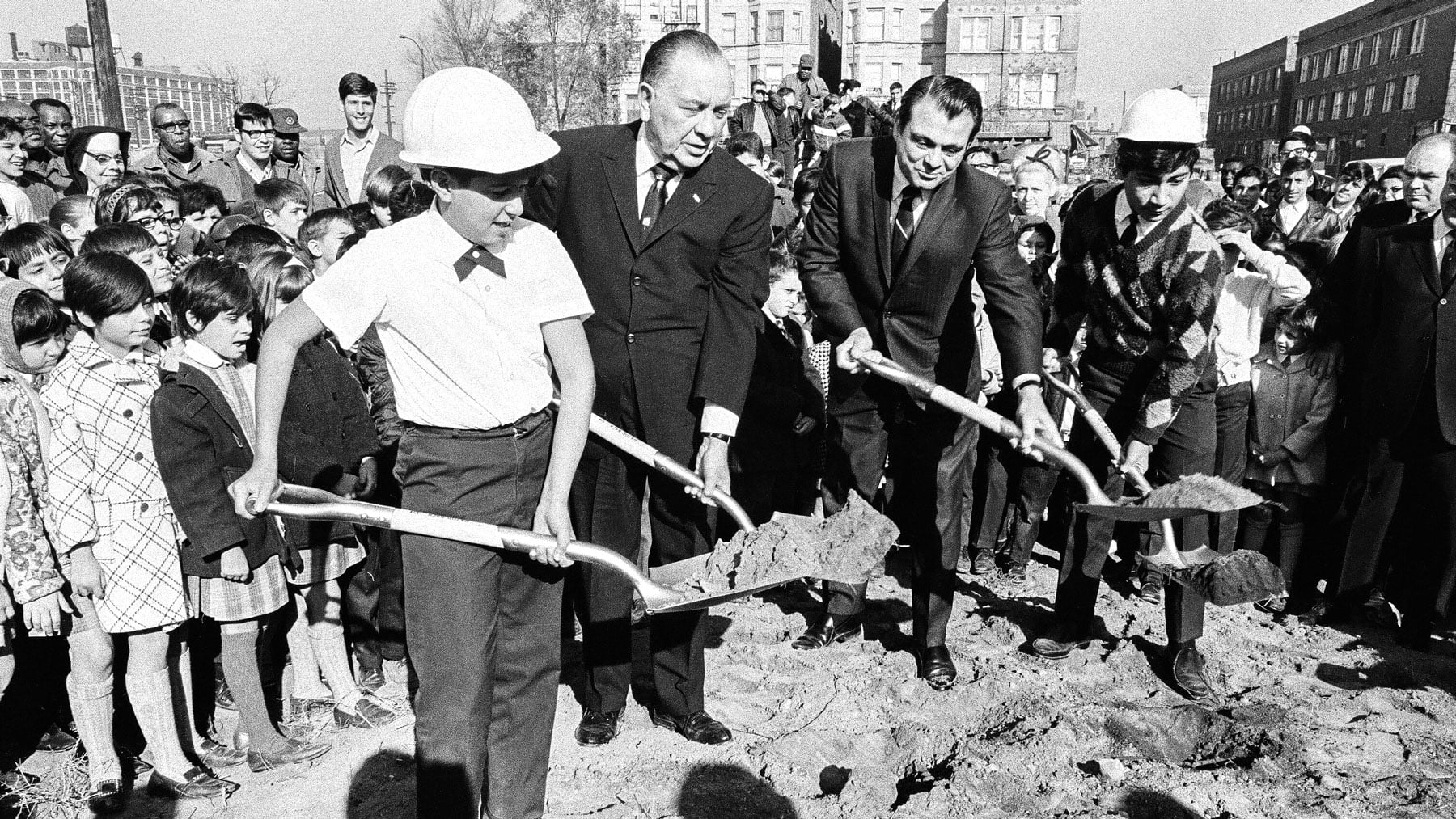
In the mid-20th century, Lincoln Park was a diverse working-class and low-income community. For a time, it was mostly ethnic whites. Fewer than 300 Puerto Ricans lived in Chicago in 1940, according to Lilia Fernández in Brown in the Windy City. But in the 1950s, Puerto Ricans began arriving in Chicago, and by 1960, that number increased to 32,000. Many first settled in a Near North Side neighborhood nicknamed “La Clark.” But the neighborhood was quickly targeted for one of Mayor Richard J. Daley’s urban renewal projects – public programs that sought to revitalize inner cities by clearing slums and eliminating blight, often at the cost of displacing lower-income residents.
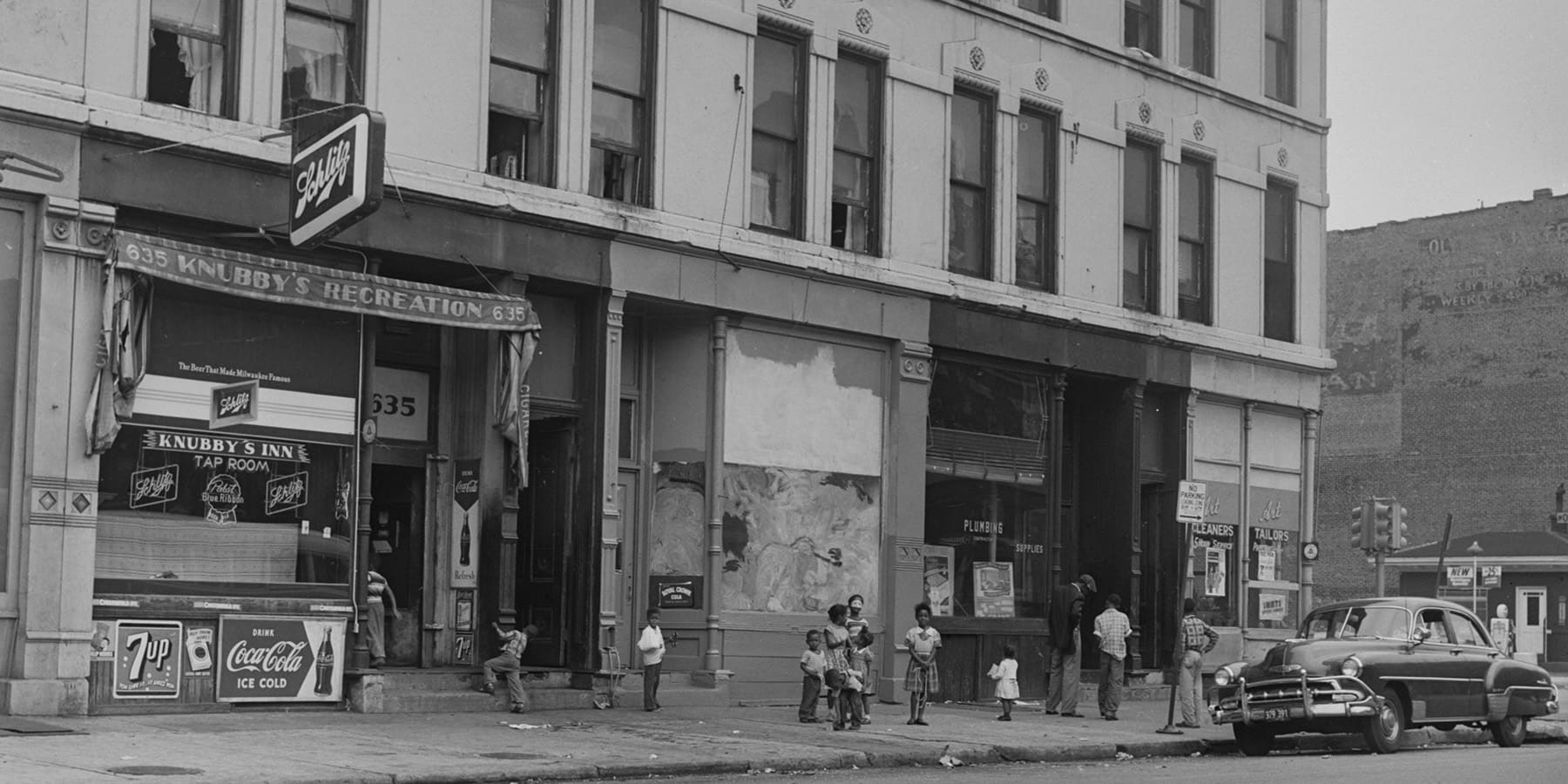
“The city had essentially decided that [La Clark] was an eyesore because it was too close to the Gold Coast, which, as we know, is one of the most lucrative real estate neighborhoods in Chicago,” Johanna Fernández, Baruch College of the City University of New York professor and author of The Young Lords: A Radical History, told Chicago Stories.
As part of the construction for an urban renewal development called Sandburg Village, La Clark was swiftly demolished, forcing Puerto Rican families to relocate to other neighborhoods, including nearby Lincoln Park.
“There were so many resources for Puerto Ricans in Lincoln Park; everybody had a sense that, yes, this was where the Puerto Rican community could very well thrive.”– Jacqueline Lazú, professor, DePaul University
Some families were able to establish a small but burgeoning Puerto Rican enclave for themselves in which their food, music, and culture flourished, and the Puerto Rican flag was flown proudly. One of those families was that of a young man named José “Cha Cha” Jiménez. His parents, as with many Puerto Rican migrants, had come to the United States to work, and they eventually settled in Chicago in the early 1950s. According to Fernández in The Young Lords, the family moved nine times in their first six years in the city, urban renewal bulldozers at their heels. When Puerto Ricans ultimately landed in a southern portion of Lincoln Park, some of their new neighbors were not welcoming to families such as Cha Cha’s.
“There was an enormous amount of resentment against their presence in the city and claims to services and jobs in the city,” Fernández said. “That resentment came from the police, [and] from white people in Chicago. Like Black Americans and Mexicans, Puerto Ricans experienced harassment on a regular basis from the police.”
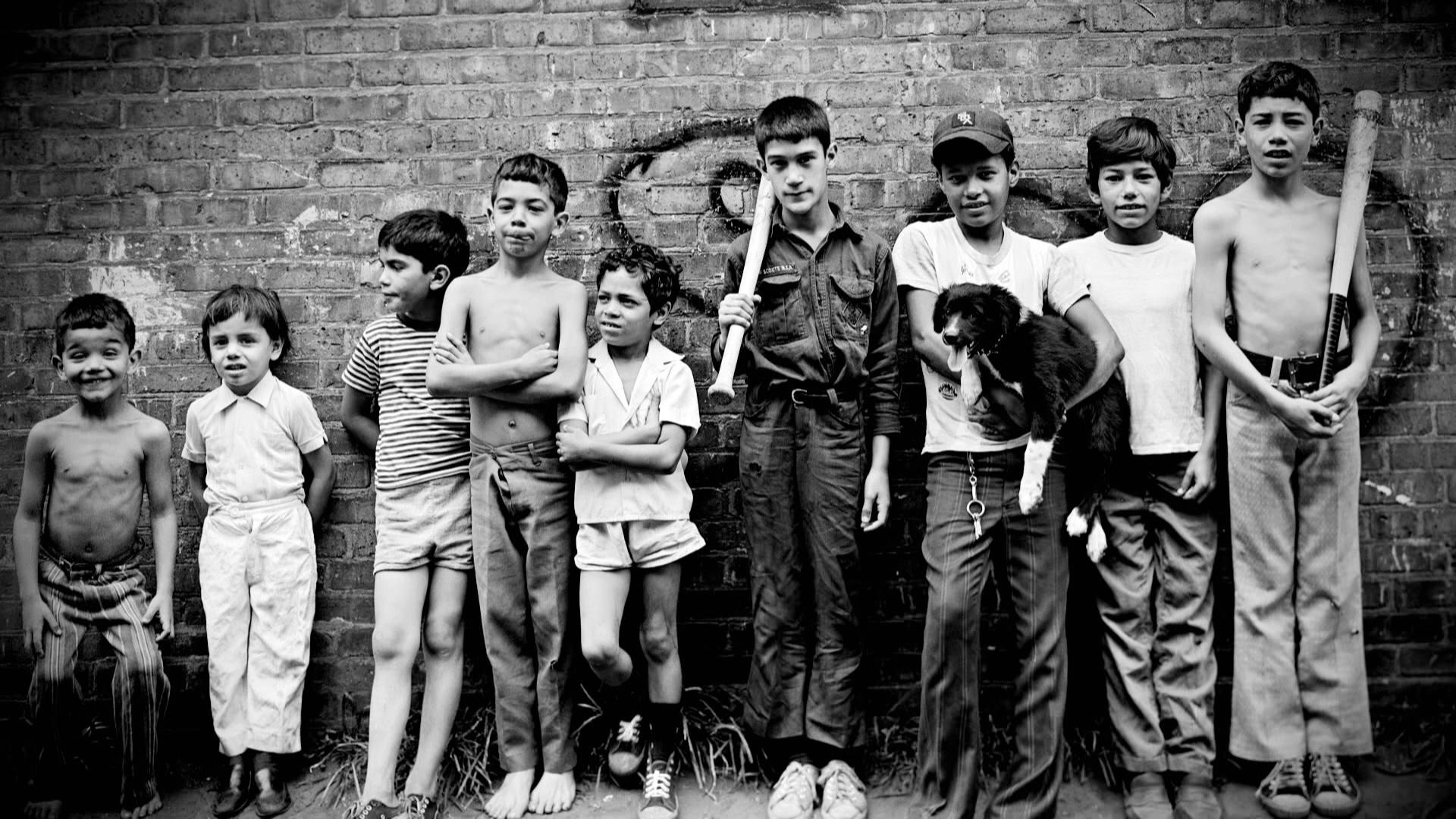
Carmen Flores Rance, who grew up in the neighborhood, told Chicago Stories that she remembers being teased by other kids in school.
“My mother dressed us up [as] if we were living in Puerto Rico – in a warm country. We were made fun of by the kids because my mother would fix our hair different,” Flores Rance said. “The teachers at that time, they didn’t have a lot of Spanish-speaking [students]…So we were isolated.”
Racial tension was common in the neighborhood. As Lilia Fernández writes in Brown in the Windy City, white boys outnumbered Puerto Rican boys 17 to 1. David Rivera remembers regular conflict with white gangs.
“We were 13, 14 years old…getting beat up on the way to school by the white gangs,” Rivera told Chicago Stories. “Sometimes we would even hide sticks and rocks along the way home in case we got chased.”
As a way to protect themselves, a group of mostly Puerto Rican boys – including an 11-year-old Jiménez – in Lincoln Park formed a youth gang called the Young Lords. It began more as a social club, said Rivera, but later morphed into a means of carving out a space for a Puerto Rican community that had too often been forced to be transient in Chicago.
“[The Young Lords gang] emerged in 1959 really as a force to solidify the space for Puerto Ricans in Lincoln Park – where you could go, where you couldn’t go. This is our territory, this is where we belong,” said Baylor University professor and historian Felipe Hinojosa. “This was who they were and in defense of their people and in defense of their community…They were not a politicized group.”
The Politicization of the Young Lords
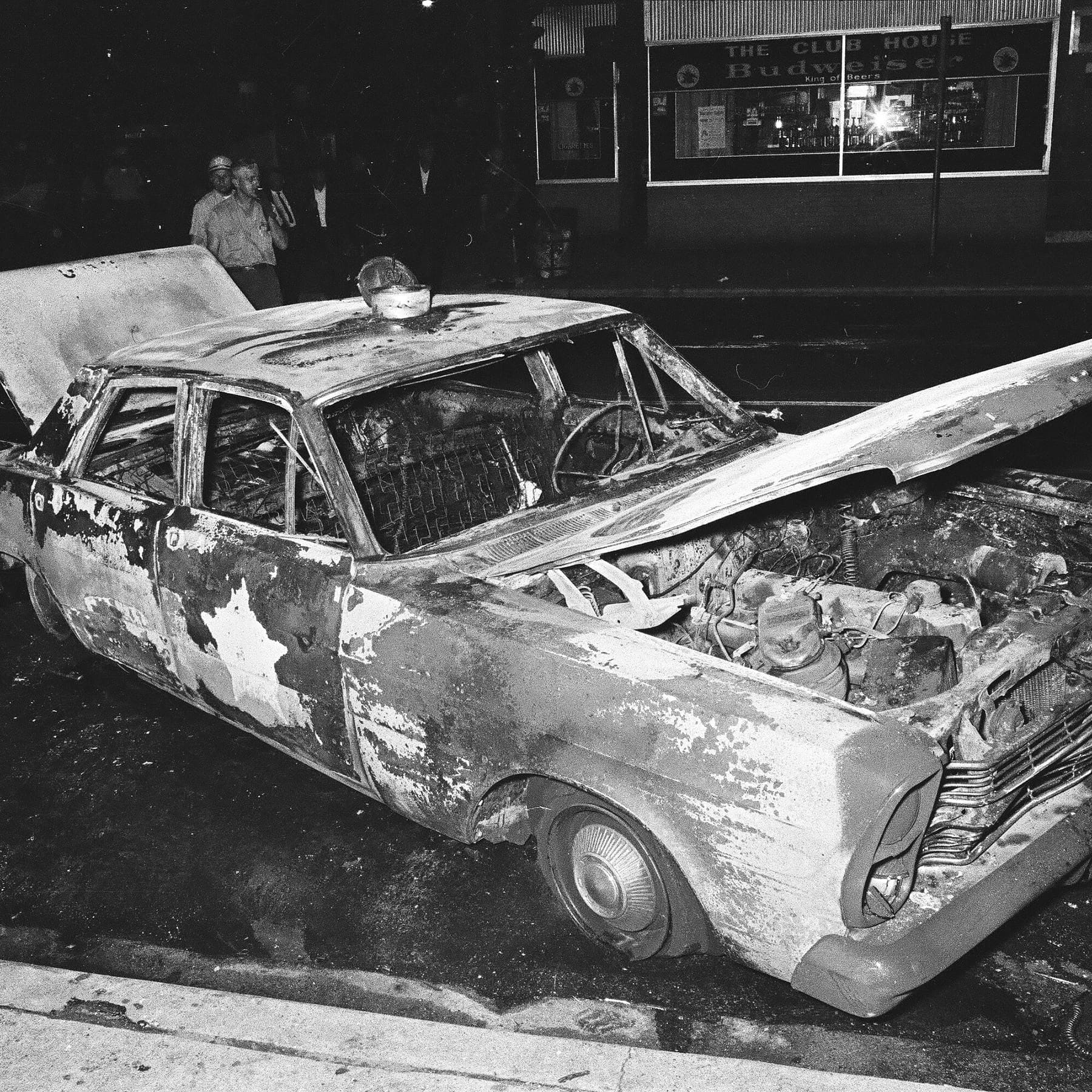
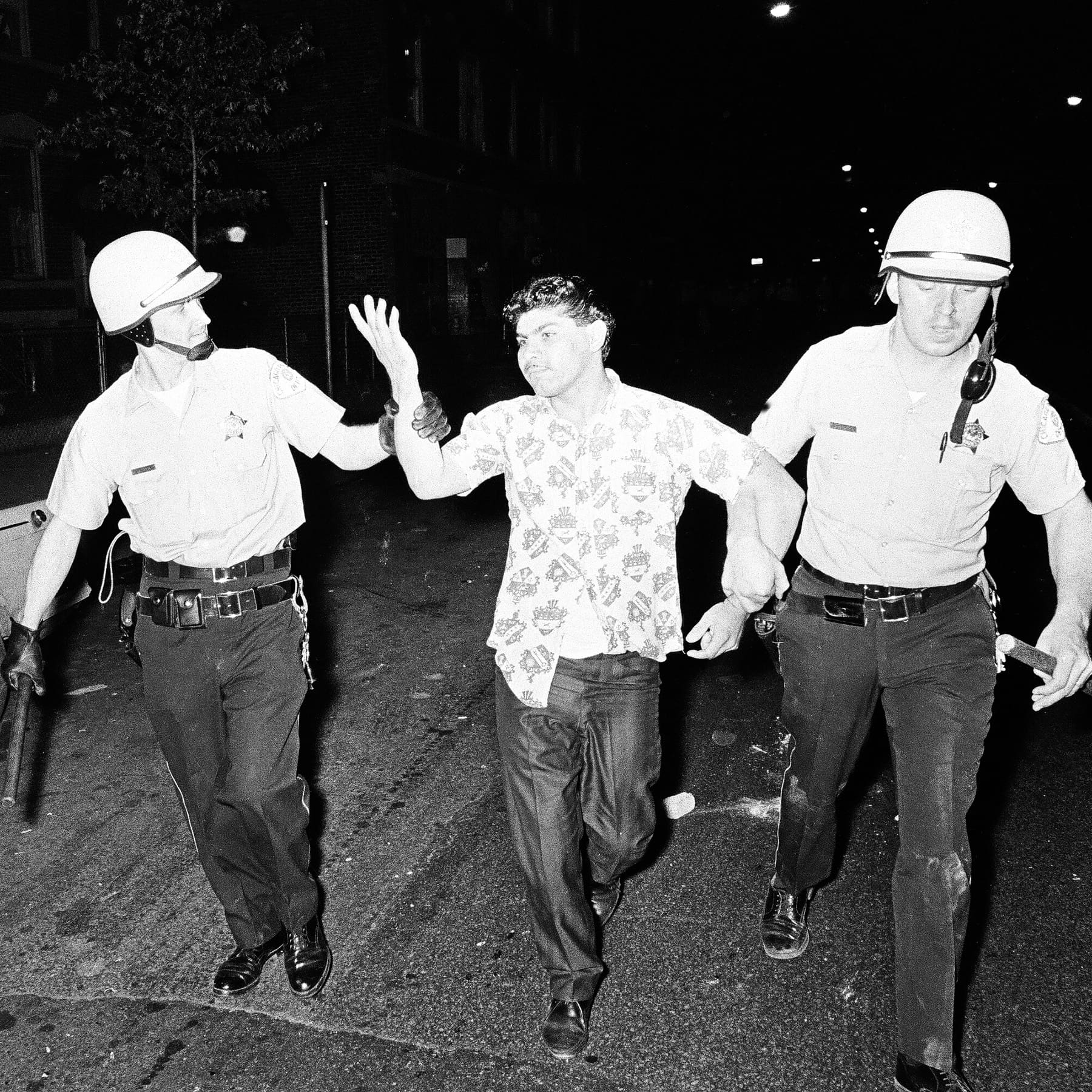
In 1966, Mayor Daley declared the first week of June Puerto Rican Week, which many saw as an important recognition of their people and culture in the city of Chicago. On June 12, the celebratory atmosphere took a drastic turn that evening when Chicago police shot and then arrested a 20-year-old, unarmed Puerto Rican man named Arcelis Cruz. The crowd decried police accusations that Cruz had been armed, and the response that ensued became known as the Division Street riots – three days and three nights of protesting and rioting. Rivera remembers people throwing bricks and rocks at police. People set fires, and when the fire trucks arrived, they set the fire trucks on fire.
“When Arcelis Cruz was shot, it was like a trigger that began the whole rebellion of the youth,” Omar Lopez, a former member of the Young Lords, told Chicago Stories. “That was unstoppable because it was all bottled up for years.”
During the time of the Division Street riots, Jiménez, who was now the leader of the Young Lords, was in jail. He had spent much of his teenage years in and out of prison on drug, assault, and other criminal charges. He was serving another sentence, this time 60 days on a drug charge, in 1968 – a year that saw the assassination of Dr. Martin Luther King, Jr. and subsequent unrest on Chicago’s West Side, as well as the anti-Vietnam War protests in Grant Park that turned into a violent clash with police during the Democratic National Convention. Following the unrest on the West Side, Jiménez watched as mostly Black protestors were put in jail, and he translated for undocumented Mexican workers who had also been brought in. While in solitary confinement, Jiménez read books written by civil rights leaders, including King and Malcolm X. Melisa Jiménez, his daughter, told Chicago Stories, “When my father left jail, he was ready for a revolution.”
Fernández said the books Jiménez read in prison “awakened a political consciousness in him.” But that was just the beginning for Jiménez.
“When he was released from prison, the first thing he took note of was the complete transformation of his neighborhood. Urban renewal was underway in Lincoln Park…He was shocked that his neighborhood could have changed in only 60 days.”– Johanna Fernández, professor and author
After his release, Jiménez met a neighborhood activist named Pat Devine fighting the changes to Lincoln Park.
“So here’s this young white woman from Aurora, Illinois, and Cha Cha is like, ‘Who are you telling me about what’s happening in our neighborhood?’” said Hinojosa. “But it was a turning point. In 1968, the Young Lords became politicized and urban renewal was their cause.”
Shifting the gang to a political organization, now called the Young Lords Organization (YLO), was not an easy sell for its existing members.
“When he came out of jail, he started talking about, ‘What we’re going to do is we’re not going to fight gangs anymore. They are people like us. They’re here because they’re oppressed, too,’” Rivera said. “So he ordered no more gang fighting.”
Some laughed at him, others quit, but he convinced enough people – including Rivera and Lopez – to take up the causes of fighting urban renewal and police brutality, creating social services for the neighborhood, and establishing Puerto Rican independence. Jiménez modeled the YLO after the Black Panthers.
“Self-defense, community control of institutions, self-determination for people – those were the values that we held. Those are the same values I still hold,” Lopez said.
The Young Lords Take Action
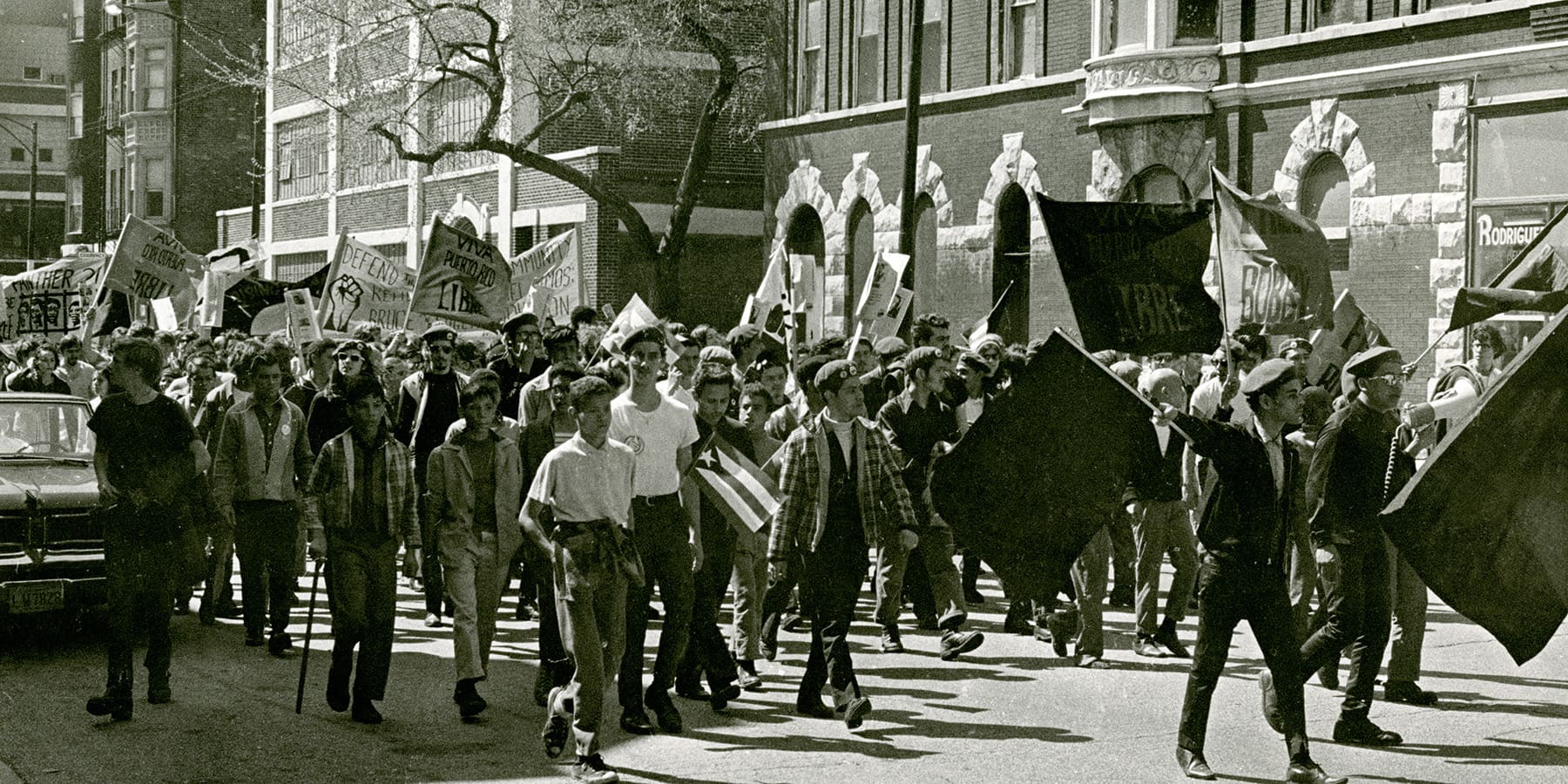
In May 1969, an off-duty police officer shot and killed a member of the Young Lords named Manuel Ramos outside a party. The officer claimed he was acting in self defense and was never arrested. Lopez described the murder as a “trigger” that united any remaining Young Lords who may have hesitated to be political. In response, the YLO organized a rally to honor Ramos.
“All the membership came out dressed in black with purple berets,” said Lopez of the YLO’s signature apparel. “That image that was projected right there to the community was unity.”
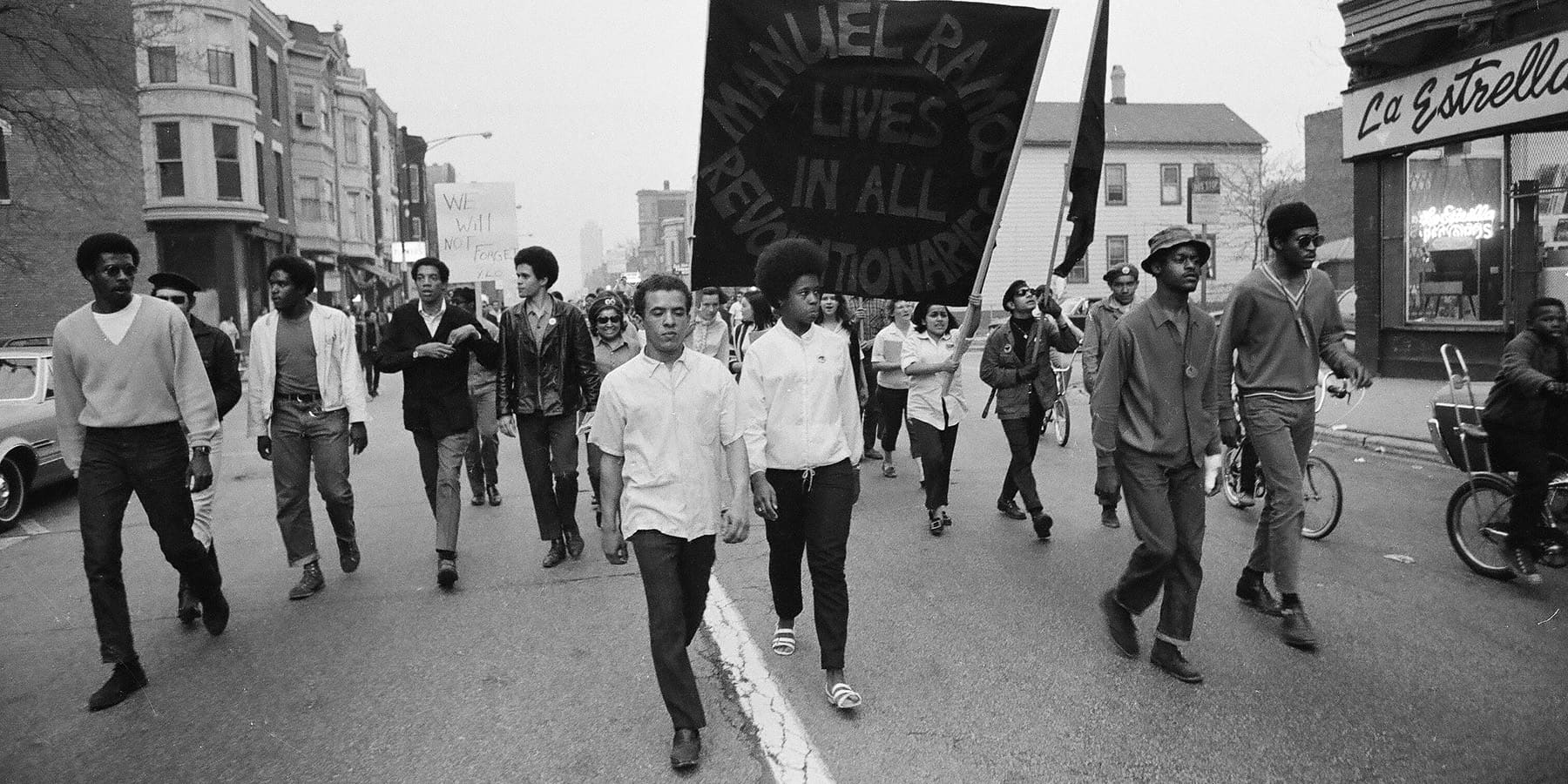
It was not just unity among the Young Lords. Members of the Black Panthers showed up to march with the YLO. Jiménez formed a friendship with Fred Hampton, the chairman of the Illinois Black Panther Party.
“They impacted each other in a great way because they had shared experiences in their own communities,” Melisa Jiménez said. “They were like brothers.”
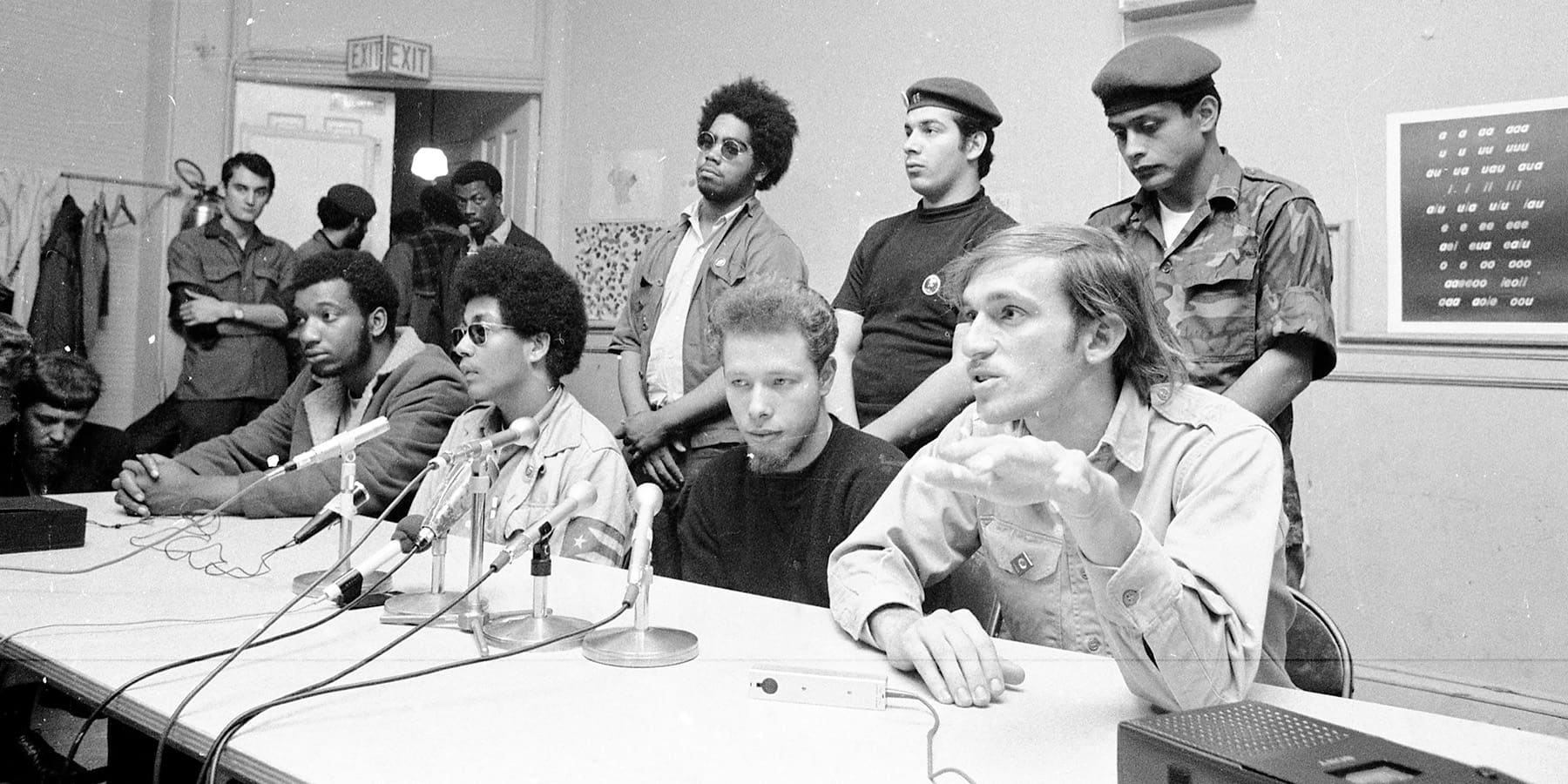
The First Rainbow Coalition
Outside a party in Bridgeport the night of May 4, 1969, an off-duty police officer shot and killed a young man named Manuel Ramos, as well as another man who survived. The death of Ramos, a member of the Young Lords Organization, was a shock to his community.
Go deeperTogether with the Black Panthers, as well as a group of impoverished Appalachians who called themselves the Young Patriots, the group formed the first Rainbow Coalition – a first-of-its-kind, multi-racial coalition.
As with the other two groups, the Young Lords used grassroots organizational tactics and disruptions to pursue their goals. As Lincoln Park changed, the YLO fought back against urban renewal. Shortly after Ramos’s death, they turned their attention toward the Presbyterian McCormick Theological Seminary (located today at DePaul University’s Lincoln Park campus). The YLO and other groups staged a protest during a dedication ceremony for the seminary’s new administration building, demanding that the $601,000 the seminary had allotted for the community be given back to the neighborhood in the form of affordable housing development designed by an architect of the YLO’s choosing, as well as other social services. When the seminary rejected their requests, the Young Lords opted for an action that was harder to dismiss: They staged a takeover of the building.
At midnight on May 15, the Young Lords and other activists took over the building, named it the Manuel Ramos Memorial Building, and refused to leave until their demands were met. For five days, they stayed in the building. The seminary, however, refused to negotiate with the protestors.
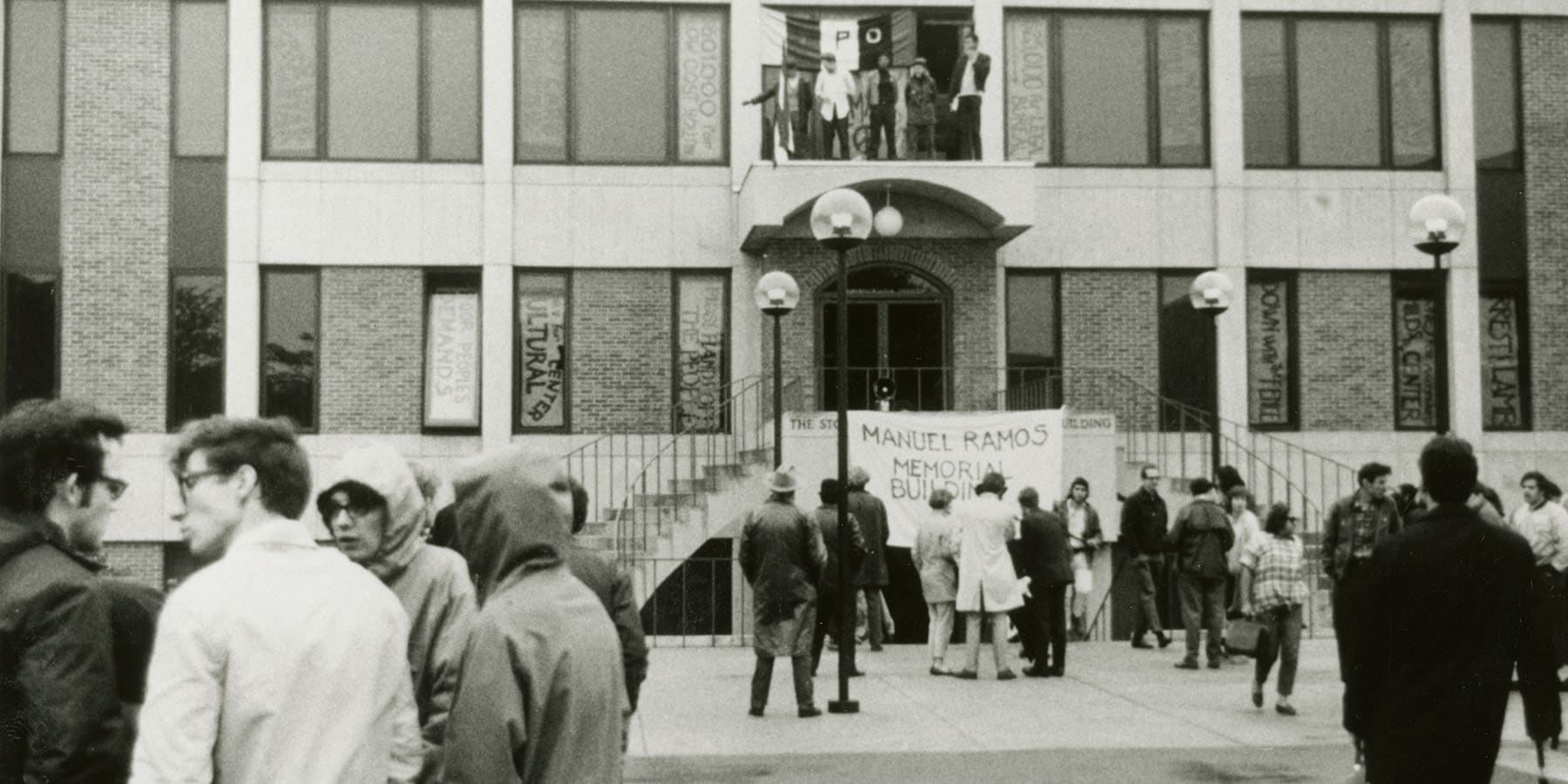
“They threatened to bring in the police and take us in,” Lopez said. “But [some of the seminarians friendly to the YLO’s cause] had also given us some information and said, ‘The library holds a very valuable collection of antique biblical documents and books.’ So we told them, ‘If you bring in the police, then we’ll move into the library and we don’t know what’s gonna happen in the library.’ I think that that contributed to McCormick rethinking its position.”
The protesters’ tactic proved effective, with the seminary giving the YLO the $601,000 plus additional funds for housing, health care, and a legal aid office.
“It’s a great part of this story because it tells us how the Young Lords – along with the coalition that they formed – were rabble-rousers. They were making noise. They were serious organizers, but they were pragmatists…This is not just the Young Lords saying, ‘Here’s everything that’s wrong with urban renewal.’ It was the Young Lords and their coalition stepping up and saying, ‘Here are the things that are wrong, and these are our solutions.’”– Felipe Hinojosa, historian
Fresh off their successful action, the YLO staged another takeover at the Armitage Avenue Methodist Church in Lincoln Park after the church’s board denied their request to use its basement for a daycare center and health clinic. But the church’s progressive young pastor, Bruce Johnson, vocally supported the Young Lords and allowed them to operate out of the building. They called it La Iglesia de la Gente – the Church of the People. Similar to what the Black Panthers had done, the YLO set up a breakfast program for children out of the basement, too, while the daycare center provided relief for working mothers. Whatever skepticism the community may have initially had toward the YLO and its tactics, their services won over many during the summer of 1969.
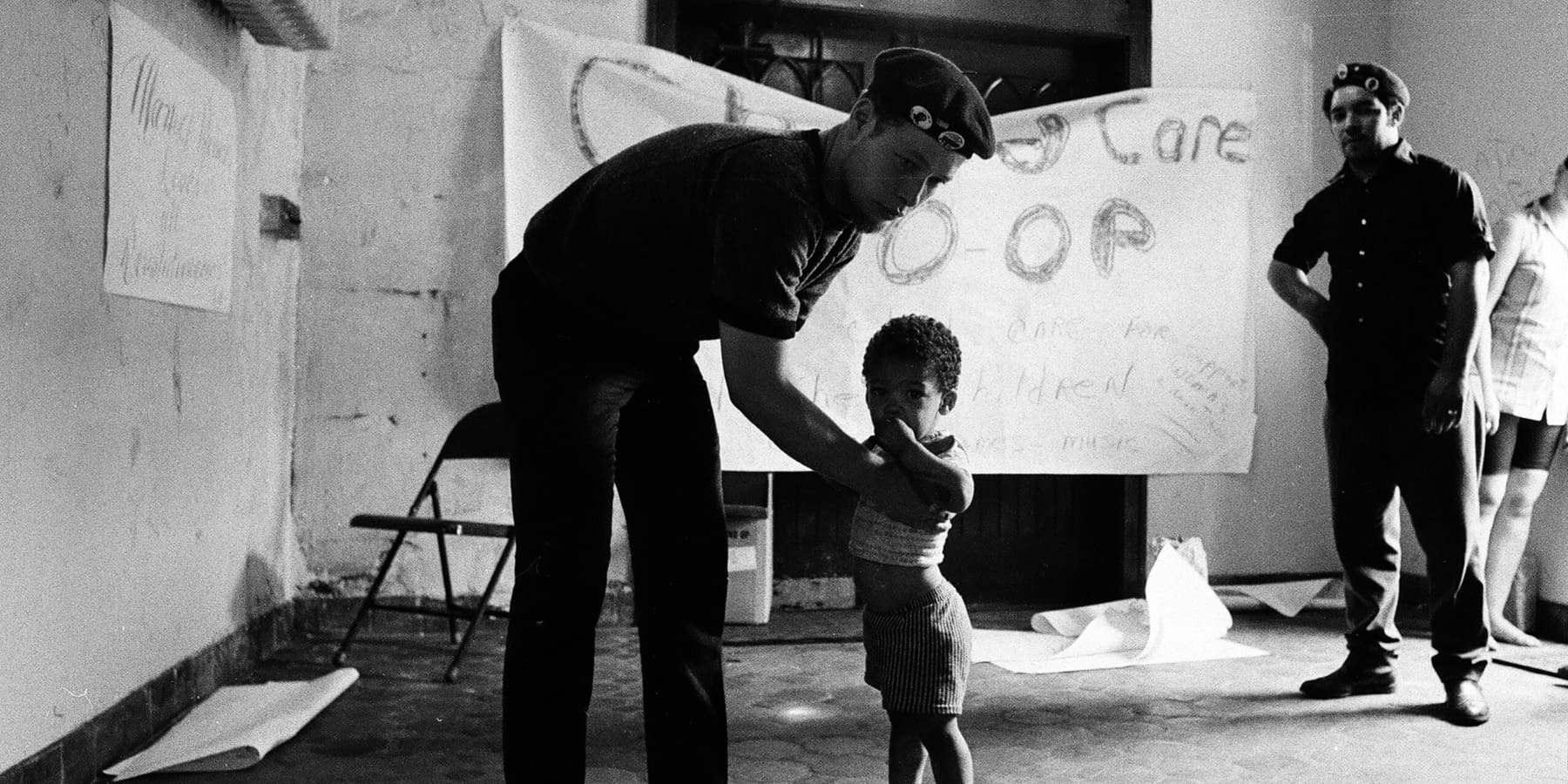
“People found out they’re the ones feeding our kids,” Rivera said. “They’re the ones that are clothing our kids. We can go to their church and get food. We can go to their office and get clothing…We can go and get actual medical care. These are not bad people.”
The Decline of the Young Lords
By the fall of 1969, Jiménez was once again in jail. He was frequently targeted for arrests during demonstrations and other YLO actions, but while in jail this time, news came that Bruce Johnson and his wife had been stabbed to death in their home.
“Reverend Bruce and Eugenia Johnson were viciously murdered in their home for we can only assume – and I think this is what people have thought of since – for their political commitments, for their commitments to the community, for their outspokenness. This remains a cold case,” Hinojosa said.
Additional problems plagued the YLO. Jiménez’s association with the Black Panther Party (which the FBI, led by J. Edgar Hoover at the time, considered a threat to national security) had also led to trouble for him and the rest of the YLO, according to Fernández.
“As soon as the Young Lords became politicized,” she said, “they became the object of police repression and the repression of the Counterintelligence Program [COINTELPRO] of the FBI.”
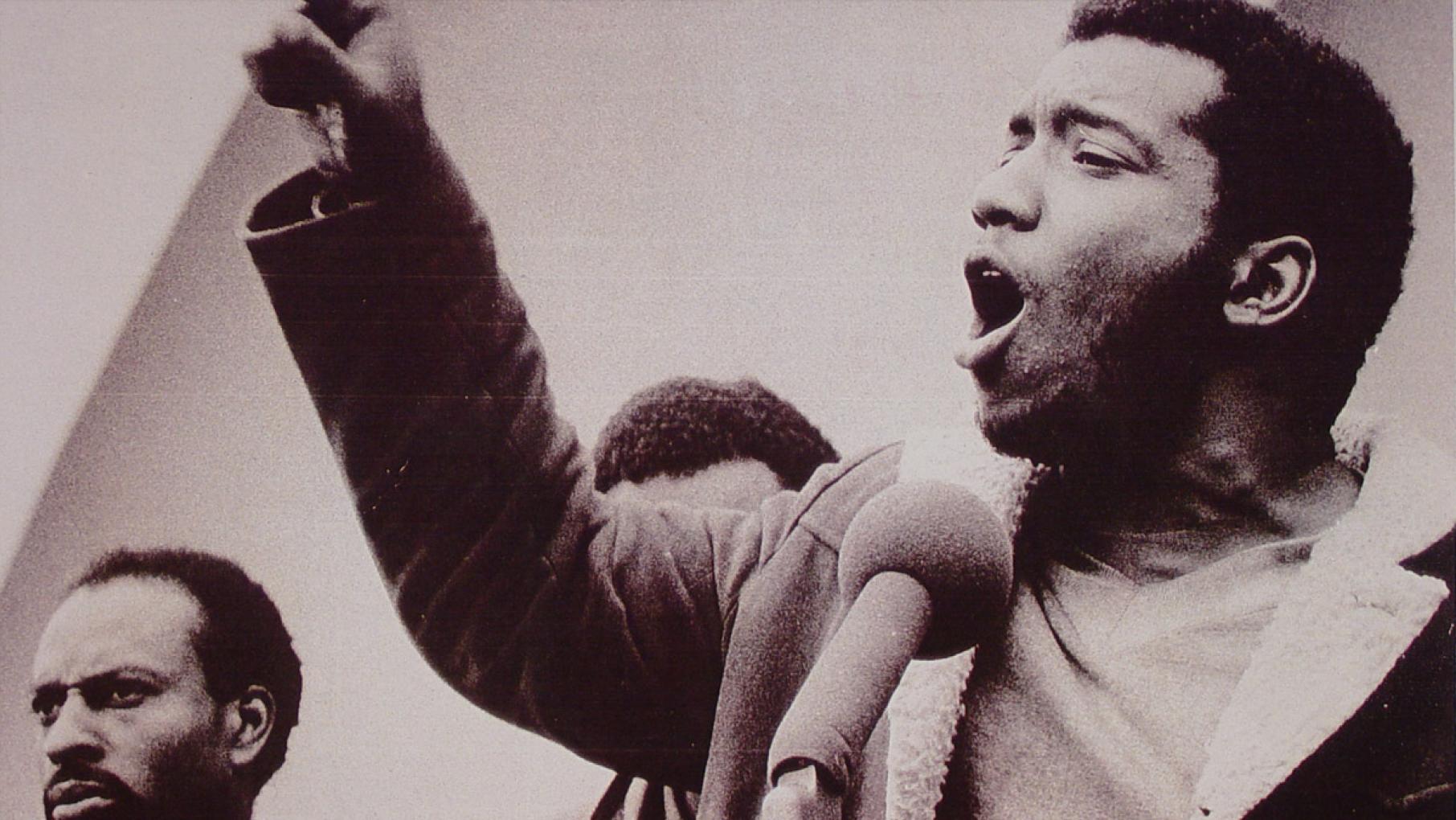
The Killing of Fred Hampton
Fred Hampton did a lot in a single year. When the Illinois chapter of the Black Panther Party was established on the West Side of Chicago in 1968, he became its chairman.
Go deeperThe COINTELPRO, as it was known, was created in the 1950s to monitor and “disrupt,” says the FBI, Communist Party activities and later expanded to include groups such as the Black Panther Party and the Young Lords. Lopez described “24-hour-a-day surveillance.” In December 1969, 21-year-old Fred Hampton and fellow Black Panther Mark Clark were shot at point-blank range in an early morning raid as they slept. The FBI, Cook County State’s Attorney’s Office, and the Chicago Police Department all conspired to carry out the assassination. Hampton’s murder sent shockwaves through the YLO.
“When we got the call that Fred had been assassinated, the first thing that came to my mind is, ‘Where’s Cha Cha?’” Lopez said.
“It became more real,” Rivera said. “They literally want to kill us.”
Amid the fear in the wake of Hampton’s death and with so many criminal cases still active against Jiménez, he was forced “underground,” said Lopez. He left Chicago for a while to live in Wisconsin, while simultaneously struggling with a heroin addiction. By late 1970, just two years after the YLO formed, the organization was on the decline.
“Because the organization was so affected in terms of the structure, our programs really suffered. We were unable to keep up the quality of the services. Internally, the organization was crumbling,” Lopez said.
When Jiménez ultimately returned to Chicago in 1972 to face criminal charges, he ended up serving a year at Cook County Jail. By that point, his Lincoln Park was all but unrecognizable, and the neighborhood’s Puerto Rican community was gone. Jiménez attempted to run for 46th ward alderman in 1974, but lost to a candidate backed by Mayor Daley. However, despite their decline, Jiménez and the Young Lords played a big role in electing Harold Washington, Chicago’s first Black mayor.
“Jose ‘Cha Cha’ Jiménez is larger than life,” Fernández said. “[He] became an unlikely leader of his community. He led with heart. He believed in the power and brilliance of his peers and helped them fight in their community for real revolutionary transformation.”
Though the urban renewal policies of the 1960s and ’70s ultimately displaced the community in Lincoln Park and gentrification remains an issue for Latinos in the city, Chicago’s Puerto Rican community quite literally planted a flag in Humboldt Park. Two nearly 60-feet-tall, steel, Puerto Rican flags mark each entrance to the Paseo Boricua, a mile-long stretch of Division Street in the neighborhood that has become a Puerto Rican business enclave and home to a Puerto Rican cultural center. In addition, a modern-day iteration of the organization called the New Era Young Lords continues to tackle social justice issues and carries on the YLO’s legacy.
“The legacy of the Young Lords, I think, is something that is very powerful,” Lopez said. “The Puerto Rican youth that we impacted, we gave them a springboard for them to continue, not with a feeling of being victims, but as being participants of a system that they have a right to enjoy.”
Related