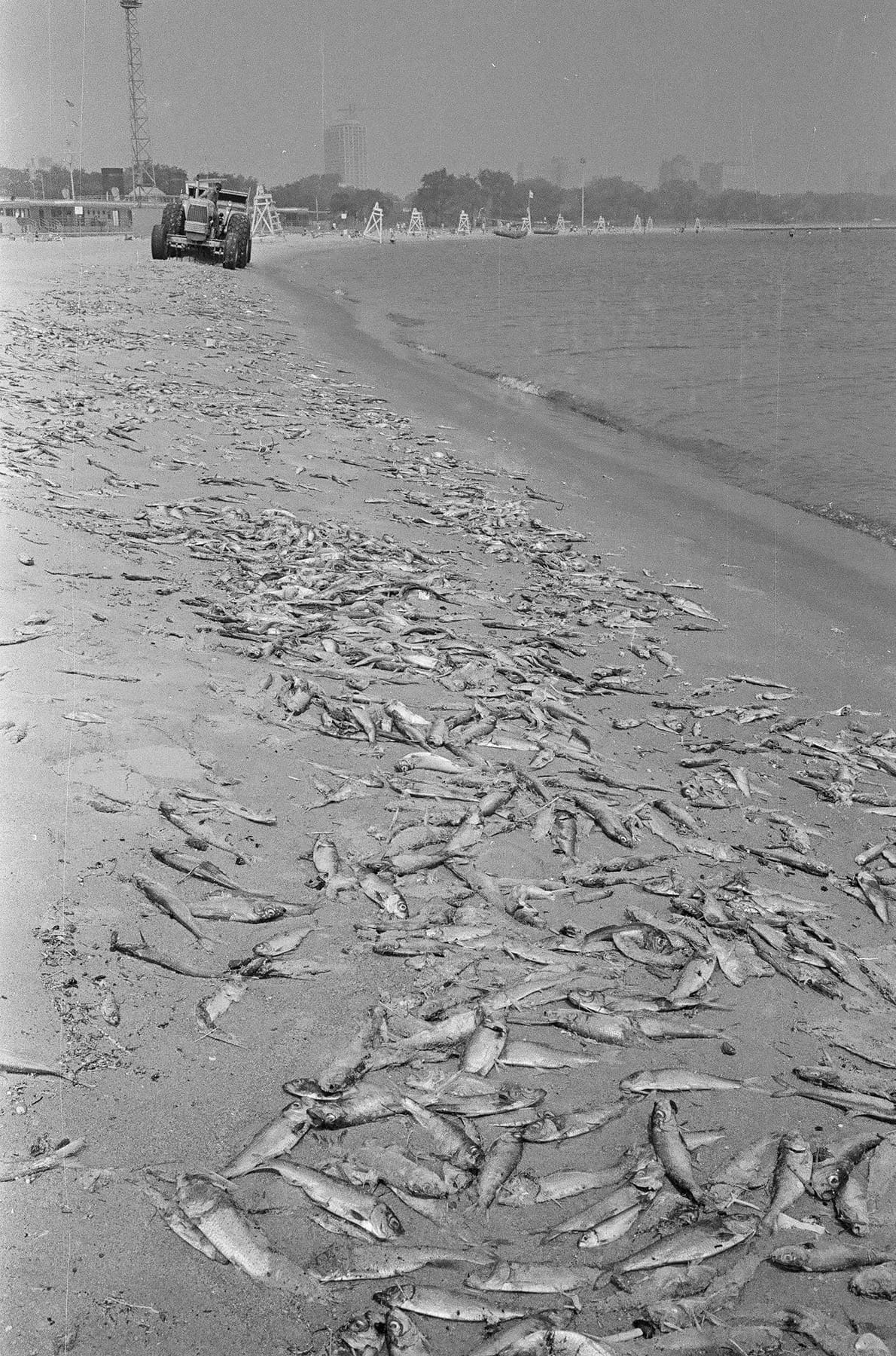
In the summer of 1967, millions upon millions of small silver fish called alewives washed ashore Chicago’s lakefront. The dead fish rotted in the hot summer sun in heaping piles as the city struggled to dispose of them. The stench wasn’t just a Chicago problem – alewives piled up on beaches all along the southern end of Lake Michigan.
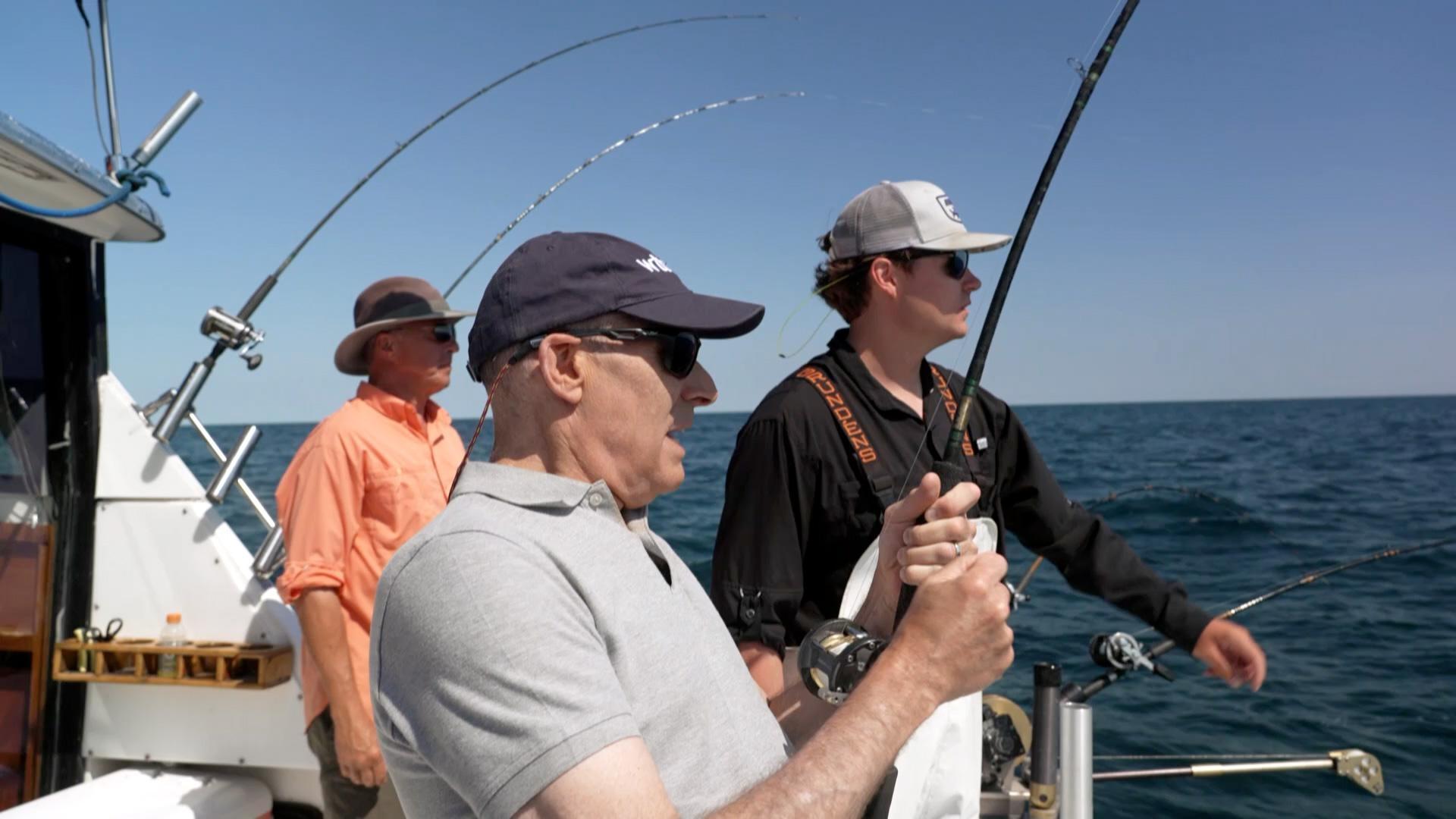
“I remember going to the beach as a kid…the dead alewives were up to your knees!” Captain Gintas Ancevicius of Angler Charters told Geoffrey Baer in Touring Chicago’s Lakefront. “They smelled terrible…and you couldn’t walk barefoot because they would hurt your feet.”
Though it remains unclear what caused the mass die-off (it’s possible it was caused by temperature fluctuations in the lake), one thing is clear: Alewives were never supposed to be in Lake Michigan.
Alewives, a type of herring, are one of possibly 180 non-native species in the Great Lakes, according to the Shedd Aquarium.
“Luckily not all of them have become true invaders,” said Dr. Karen Murchie, director of freshwater research at the Shedd. “The real invasive species are the ones that have started to get a foothold in the lake, and once they do that and have an established population, then they start to really have an impact.”
That impact typically takes the form of disruption to the lake’s ecosystem, as well as infrastructural problems for humans. But how did these species get into the Great Lakes? “It’s pretty much all 100% human-related,” Murchie said.
Some invasive species have entered the Great Lakes through man-made shipping canals, such as the Welland Canal, which connects Lake Ontario to Lake Erie, bypassing the natural barrier of Niagara Falls. Lake Ontario connects to the Atlantic Ocean via the St. Lawrence River. There’s also the Erie Canal, which connects to the Atlantic Ocean via the Hudson River. That means some particularly adaptable saltwater species have gotten into the freshwater of the Great Lakes.
Other invasive species have sneaked a ride in the ballast water of commercial shipping vessels. Ballast water helps ships maintain stability, but large vessels have to take in and drain water to manage their weight as they load and unload their cargo. In doing so, the ships are sometimes taking in small species found in ocean water and draining them into the Great Lakes. That’s become more of a problem since 1959, when the St. Lawrence Seaway (which includes the aforementioned St. Lawrence River) opened, creating a direct commercial shipping route from the Atlantic Ocean to the Great Lakes.
Below, we break down just a few of the invasive species that have caused problems in Lake Michigan – plus one that poses a new threat.
Sea Lamprey
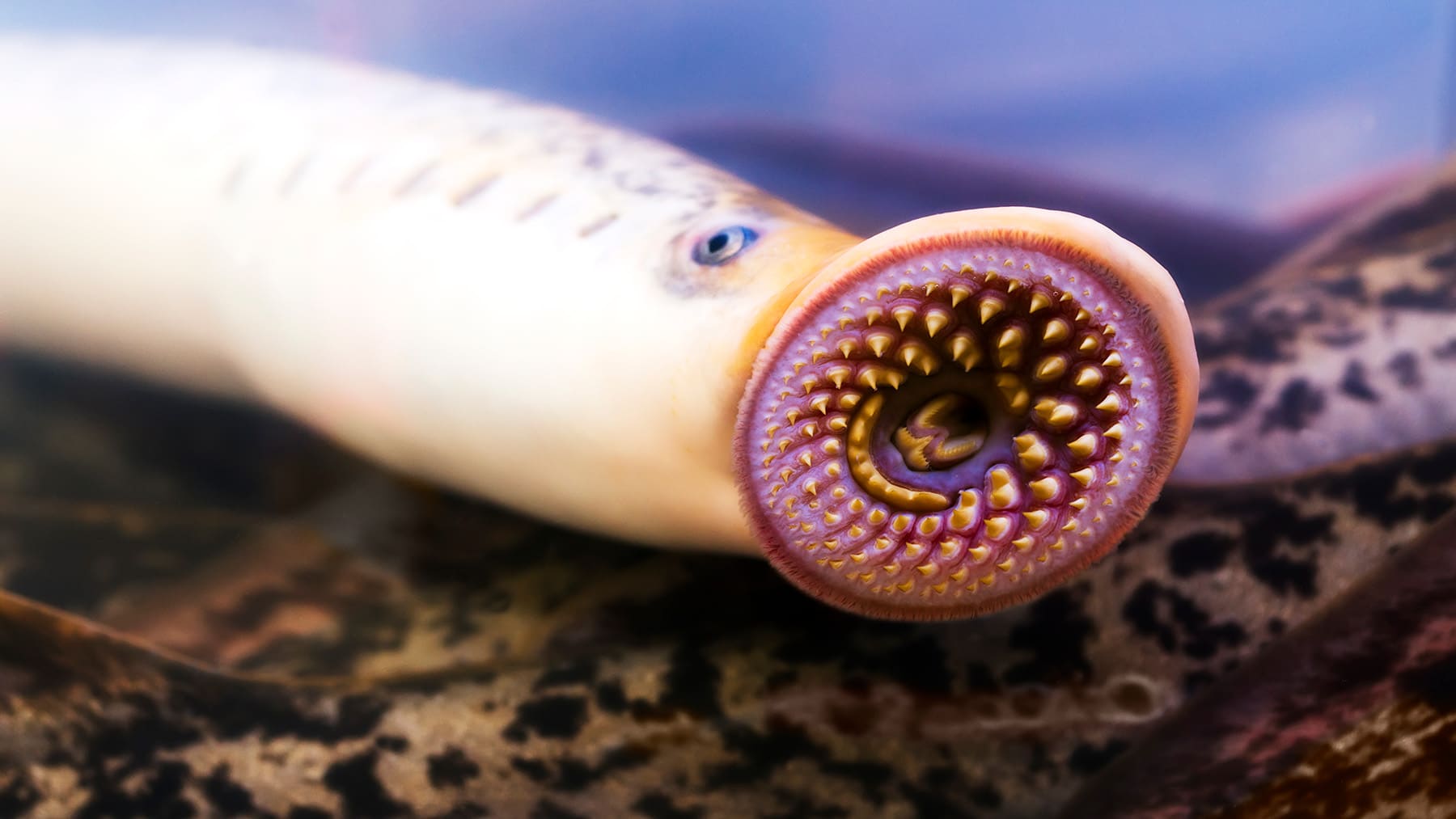
No, you’re not looking at an evil, mythical creature borne from the depths of the underworld. That’s a sea lamprey, and they’re actually more like a jawless, vampiric parasite than a demonic snake, if that’s of any comfort. Sea lampreys are the descendents of an ancient lamprey from the Devonian period called Priscomyzon riniensis, and modern sea lampreys carry on the family tradition of being creepy parasites. Adults can grow to 2 feet in length.
“Sea lamprey have around 150 razor sharp teeth and this nasty, rasping tongue,” Murchie said. “They basically attach to the side of the fish and suck their body fluids and blood. Each sea lamprey can kill around 40 pounds of Great Lakes fish.”
(Don’t worry, they’re not interested in humans!)
They were first discovered in Lake Ontario in 1835, likely having entered through the Erie Canal. Eventually, they entered Lake Erie through the Welland Canal, and by 1936, sea lampreys were feasting on fish in Lake Michigan.
“This may be one of the worst things that happened to the Great Lakes,” said Vic Santucci, Lake Michigan Fisheries Program Manager at the Illinois Department of Natural Resources.
Sea lampreys decimated lake trout, whitefish, and other native fish species. According to the Great Lakes Fishery Commission, a single female sea lamprey can spawn 100,000 eggs. That, combined with the fact that they have no natural predators, meant that the parasitic creature thrived.
The sea lamprey population peaked in the 1950s. Coordinated efforts by the Great Lakes Fishery Commission, the U.S. Fish & Wildlife Service, Fisheries and Oceans Canada, and other agencies brought the population down 90% from its peak. These groups use physical barriers in streams and tributaries, traps, and chemical “lampricides” that target both larvae and adults.
Unfortunately, the damage that sea lampreys caused in the mid-20th century is connected to the flourishing of another invasive species – the same one that led to that smelly summer on Chicago’s lakefront.
Alewives
As with other invasive species in the Great Lakes, it’s possible that alewives were originally native to Lake Ontario or they may have entered that lake through the Erie Canal. By 1931, alewives had entered Lake Erie through the Welland Canal. By 1949, they were in Lake Michigan, according to the U.S. Fish & Wildlife Service.
Due both to overfishing and the sea lamprey’s decimation of the alewives’ native predator fish such as lake trout, the population of alewives grew unchecked, and to exacerbate the problem, they reproduced quickly and in massive numbers. As Dan Egan writes in his book, The Death and Life of the Great Lakes, despite their small size, “for every 10 pounds of fish swimming in the lake, 9 pounds were alewives” in the late 1960s.
Aside from the great stink of their mass-die off in 1967, alewives have caused other problems for native fish species, such as lake trout and whitefish. Alewives eat zooplankton and other food sources that native fish rely on. They also sometimes eat the eggs of native fish. While alewives can be food for lake trout, they lack vitamin B – an important vitamin needed by the predator fish.
“If their diet is strictly alewife, they don’t have enough vitamin B in their systems to successfully reproduce,” said Santucci.
Alewives can still be found in Lake Michigan today, but they aren’t as big a nuisance as they were at their peak in the 1950s and ’60s. In 1966, Howard Tanner, head of the fish division at the Michigan Department of Conservation, had the idea to introduce another non-native fish that would eat the alewives: Pacific salmon. They released a species of salmon called coho and, later, chinook. The experiment was successful and also boosted the recreational fishing scene.
“By around the mid-1980s, the alewives that were in Lake Michigan were at less than 20% of the peak of their population,” said Murchie.
Zebra Mussels, Quagga Mussels, and the Round Goby that Eat Them
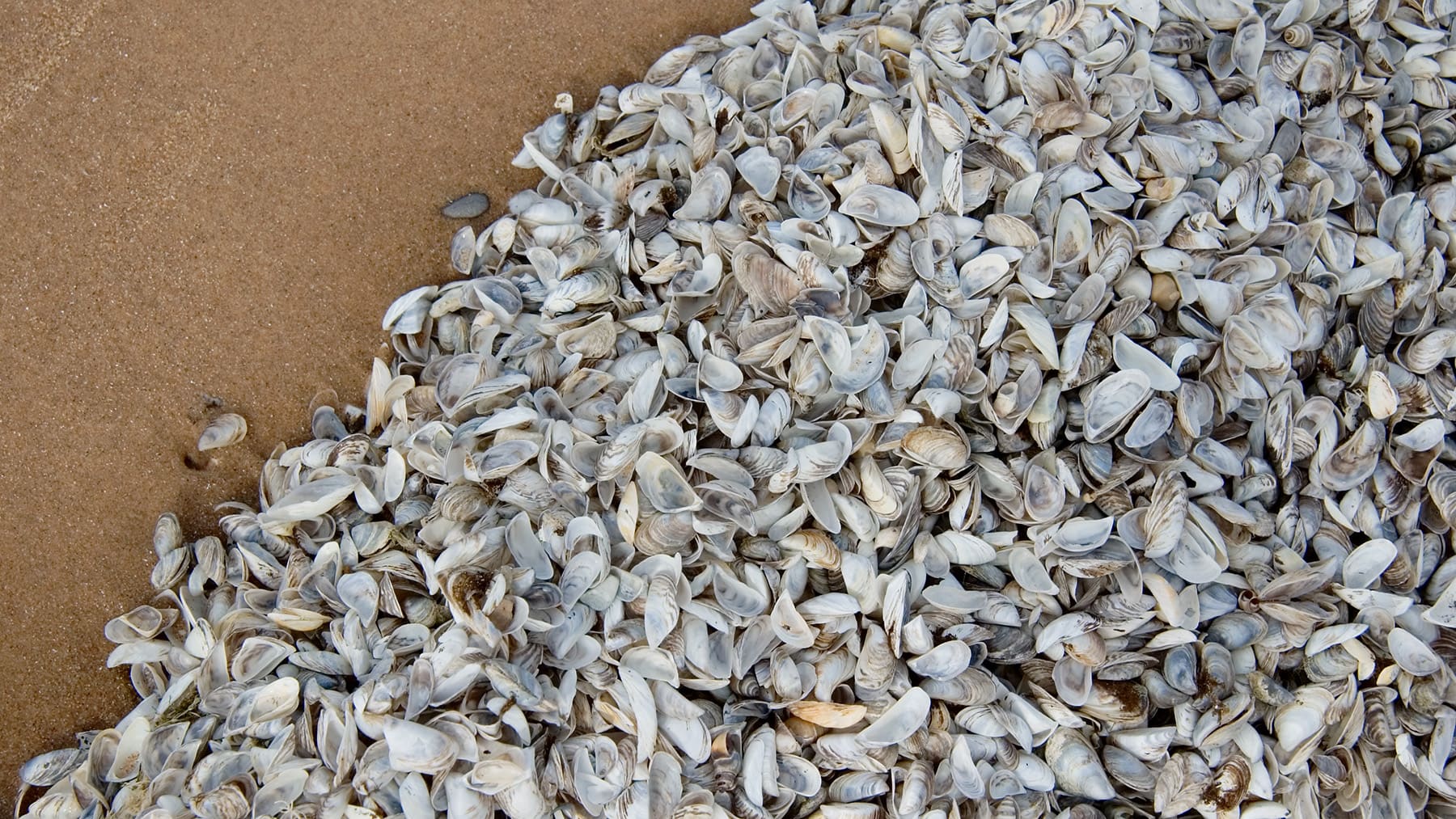
In the 1980s and ’90s, scientists discovered that two separate invasive species of mussels called zebra and quagga mussels snuck into the Great Lakes systems in the ballast water of ships. Some estimates put their population in the trillions across the Great Lakes.
“In Lake Michigan, there’s no part where zebra and quagga mussels aren’t anymore,” said Murchie.
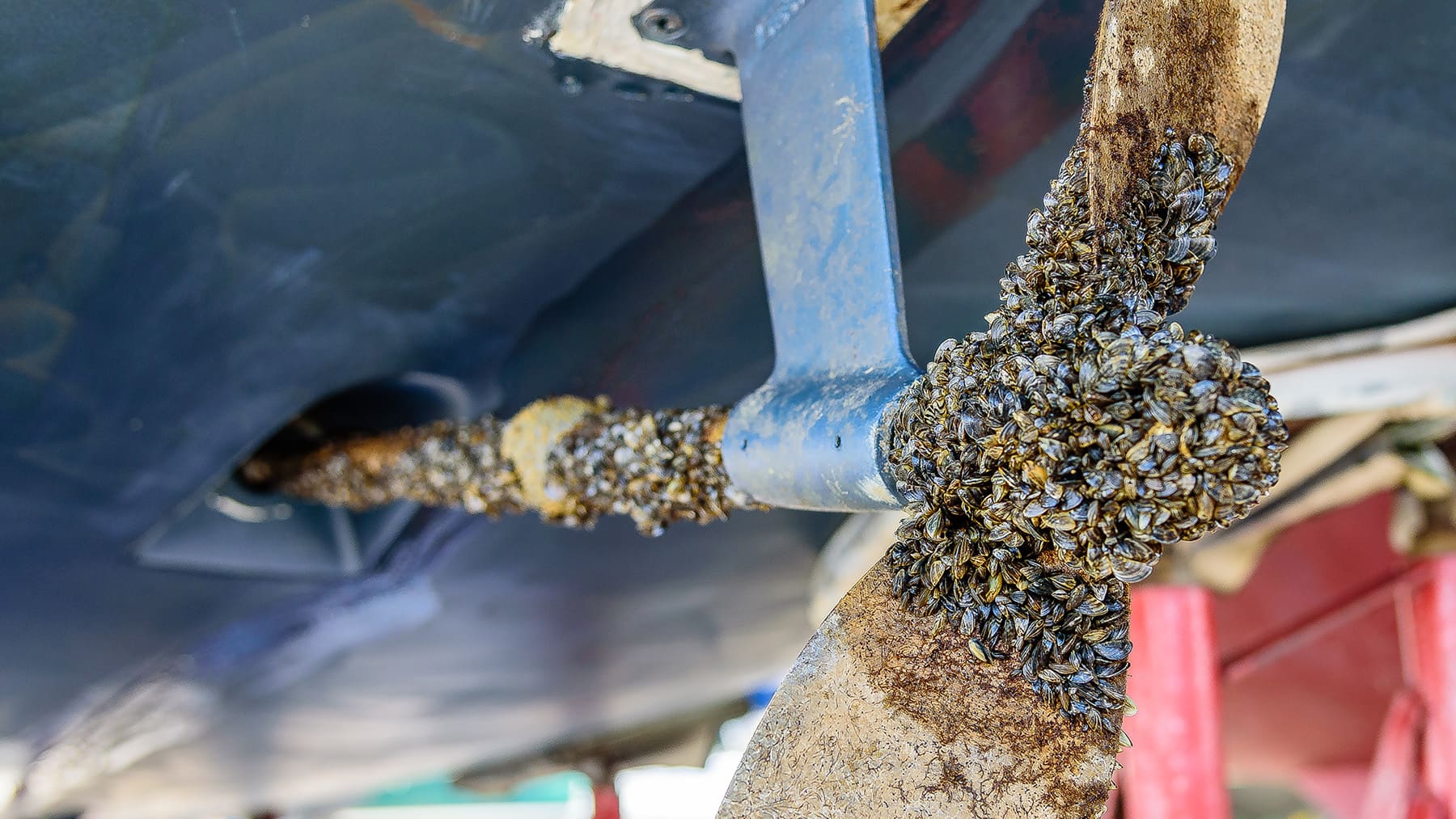
With their alternating dark and light stripes, zebra mussels are native to the Black and Caspian seas. They are usually about an inch and a half long, and they have something called a byssal thread – a kind of arm that allows it to attach to any hard surface. Quagga mussels, which are native to the Dneiper River in Ukraine, behave similarly, though they can survive in even colder waters and therefore greater depths, and they can attach to softer surfaces, too, including the bottom of the lake. Quagga mussels have become the dominant invasive mussel in recent years.
These invasive species can reproduce quickly, too. A female zebra or quagga mussel can produce up to 1 million eggs per year. That’s allowed the species to balloon. Invasive mussels are filter feeders, gobbling up phytoplankton, meaning they not only outcompete native mussels for food, but they also disrupt the bottom of the food chain. Phytoplankton are a source of food for zooplankton, which are a source of food for small fish, which are in turn a source of food for big fish.
Because of their tremendous filtering capacity, they’re also likely one of the reasons Lake Michigan has become clearer in recent years. But that’s not a sign of a healthy lake. Clearer water allows sunlight to penetrate deeper into the water, which can alter plant life and also lead to an increase in harmful algal blooms. A black-and-white disc called a Secchi disc measures the transparency of the water, and while out sampling the lake in the spring, Santucci’s team used one to determine the clarity of Lake Michigan.
“It’ll go down to 60 feet and you can see it like it’s right at the surface. So that tells you there’s not much life in the water column, not much plankton,” Santucci said. “Things have gotten a little better in recent years, but it’s still not back to what it was.”
Zebra and quagga mussels also cause millions of dollars a year in damage to infrastructure around the Great Lakes, clogging up water intake pipes and damaging ships, harbors, and power plants. In addition, they’re consuming history, too – invasive mussels are destroying shipwrecks in the Great Lakes.
Invasive mussels have proven difficult to control, since physical removal is one method, but not the most practical considering their staggering numbers. There have been some efforts to try molluscicides or tarping of surfaces where mussels might attach. Another invasive species called round goby (another native of the Black and Caspian seas that entered Lake Michigan in ballast water) are feeding on some of the smaller, baby mussels, making them “probably our biggest controller” of invasive mussels, says Santucci. But that’s not necessarily a good thing. The aggressive and territorial round gobies out-compete native species such as yellow perch for food and habitat.
“It’s not like when they showed up, now we have no problem with the zebra and quagga mussels,” said Murchie. “They are not a solution by any means to the invasive mussels. They definitely do eat them, but they’re causing their own problem as well.”
The Looming Threat of Invasive Carp
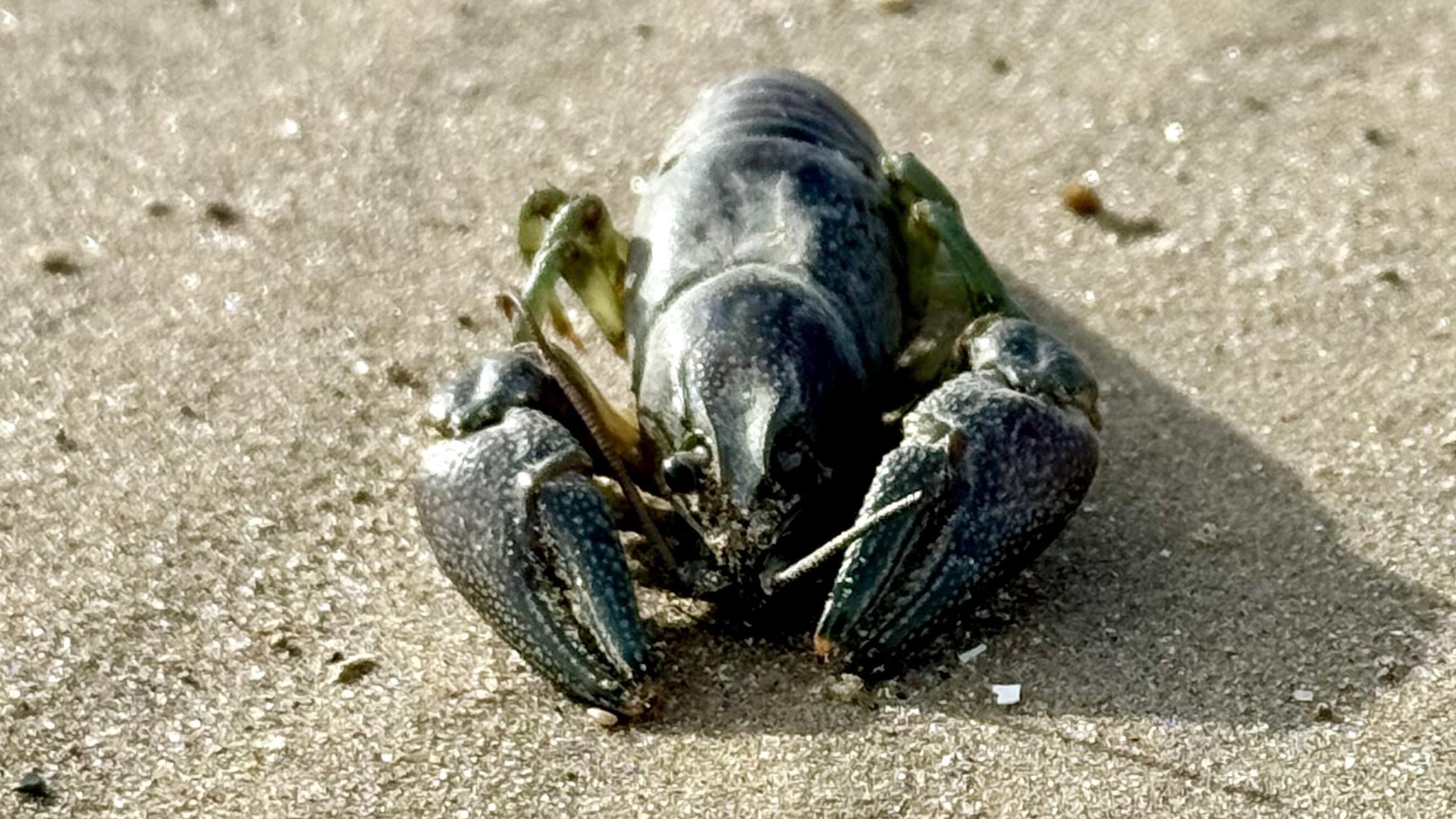
There are several other invasive species that have impacted Lake Michigan’s ecology – including a small creature called the spiny water flea, as well as the rusty crayfish – but scientists and other agencies have turned their attention toward a group of fish that have not yet made their way into Lake Michigan.
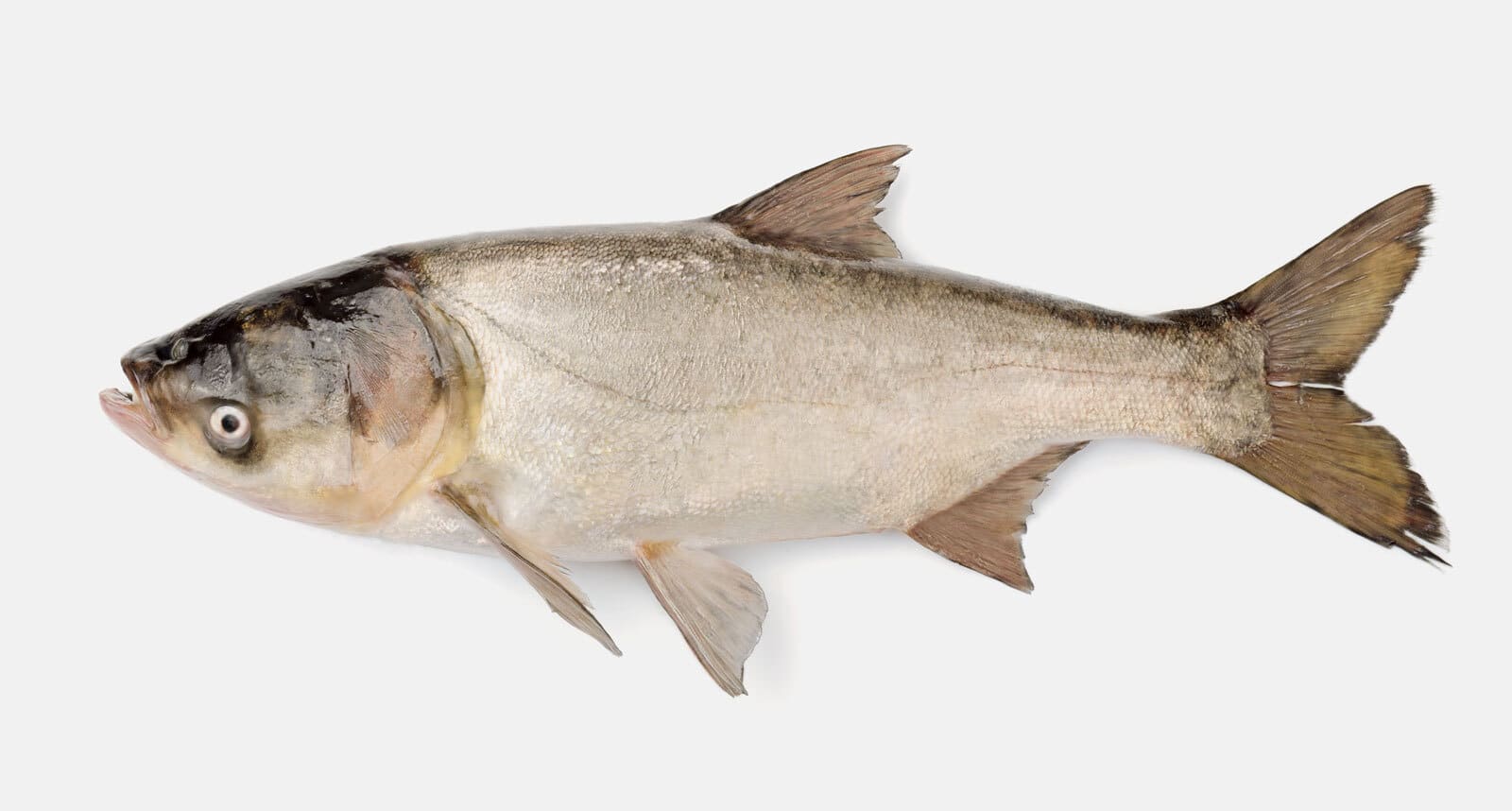
Invasive carp – a group referring to bighead, grass, silver, and black carp – were brought into the southern United States in the 1960s and ’70s to clean and reduce vegetation in retention ponds. (You may have seen these species of carp referred to as Asian carp, but many groups are moving away from that descriptor, and Illinois officials have also tried to rename them copi).
Over time, they escaped retention ponds and got into the massive Mississippi River watershed. That wouldn’t have been a problem for Lake Michigan, but for the Chicago Ship and Sanitary Canal – a man-made canal that famously reversed the flow of the Chicago River. The canal ultimately connects to the Mississippi River via the Des Plaines and Illinois rivers. Invasive carp have already been found in these waterways. If these invasive filter feeders got into Lake Michigan on a large scale, it would once again disrupt the food chain. Some of these carp species can grow up to 100 pounds, and they have a big appetite.
“They can, like all the other invasive species, outcompete native fish for food, and some of them also like to eat plants as well,” said Murchie.
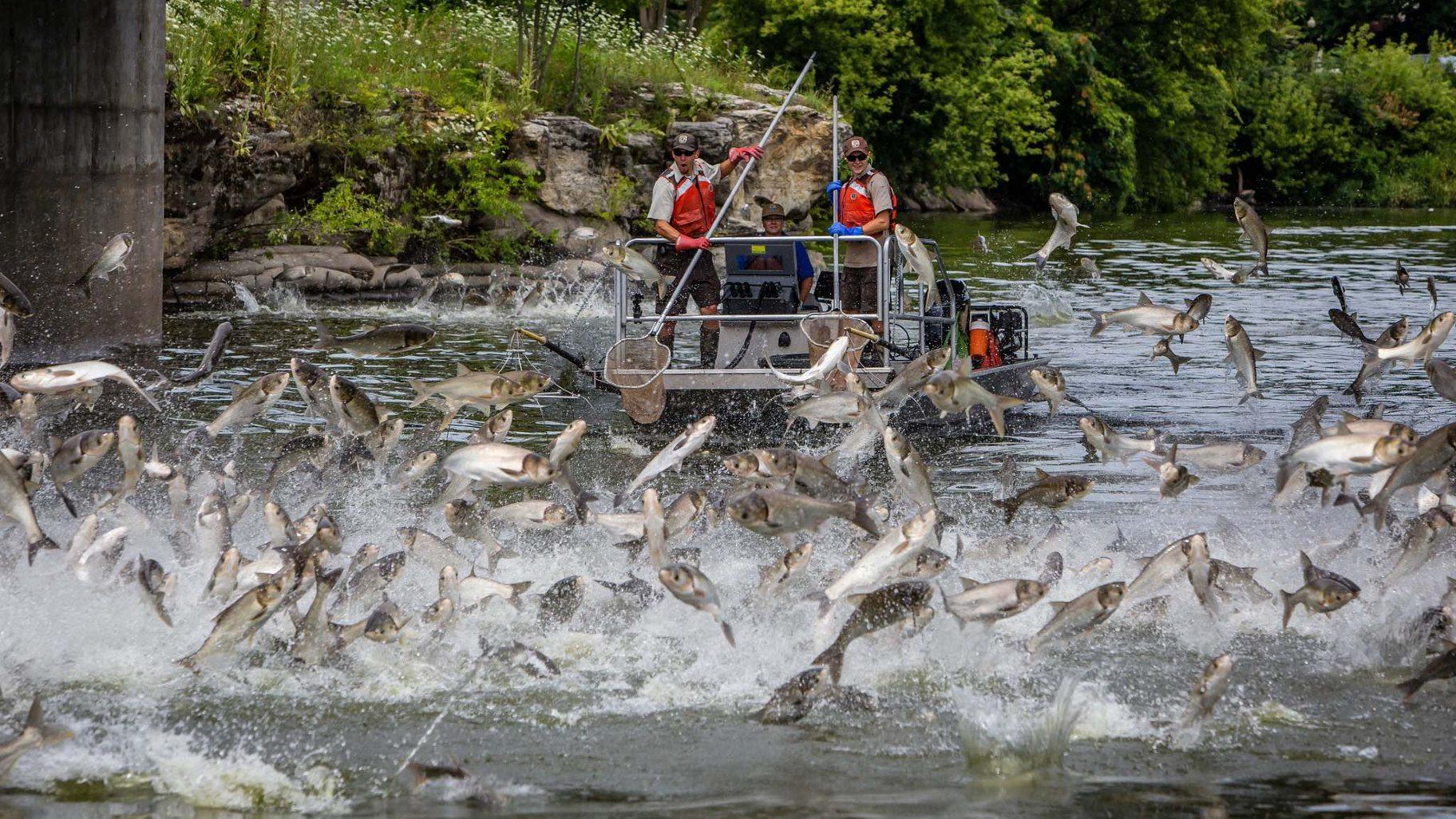
Silver carp in particular could also be a nuisance to recreation and tourism, as they are known to leap out of the water when disturbed by boats or other activity.
“We’ve already seen stuff down on the Illinois River. You get a 10-pound fish flying in the air, hitting people, breaking people’s noses – it causes problems with boating and general recreation,” said Santucci. “That could be devastating to any of the harbors around the Great Lakes.”
Officials have tried to prevent them from entering Lake Michigan by using electric barriers in the Chicago Sanitary and Ship Canal. Some officials have also proposed eating them, but they are a rather bony fish, so the appeal isn’t there. For now, experts continue to search for ways to stop another ecological disaster in Lake Michigan.
“Invasive carp are not currently established in the Great Lakes,” said Murchie “We’re doing everything we can to make sure they stay out.”