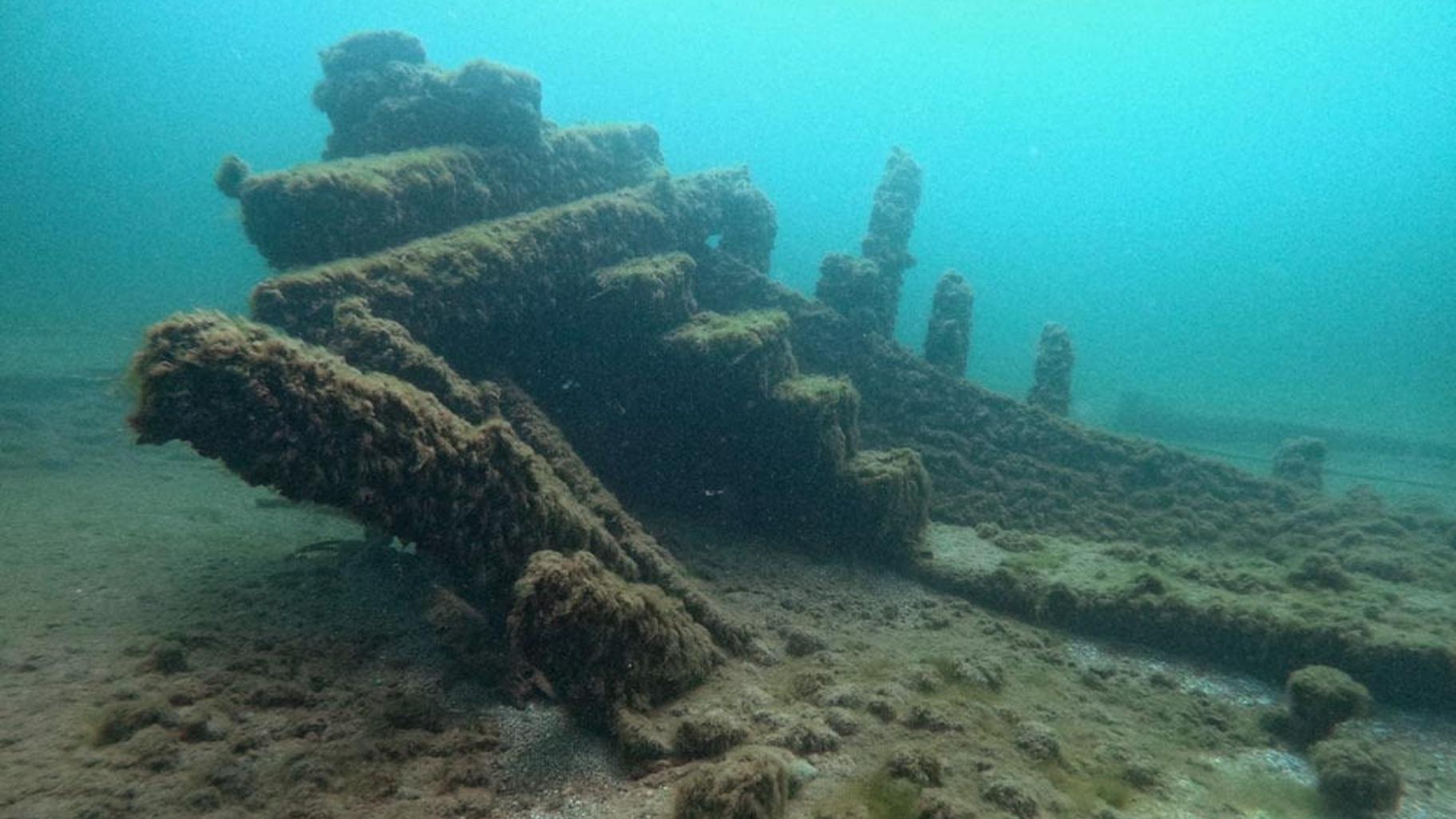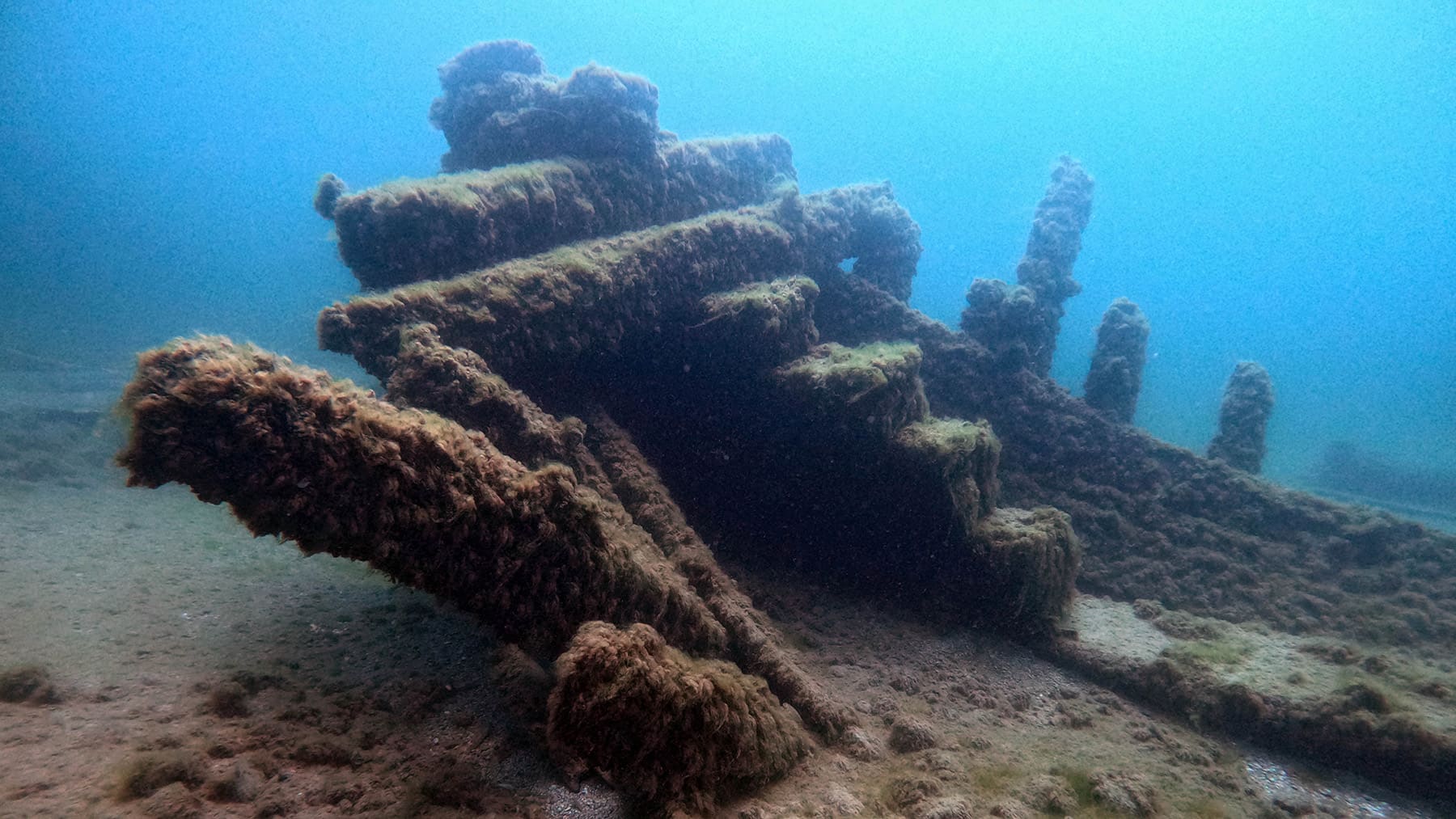
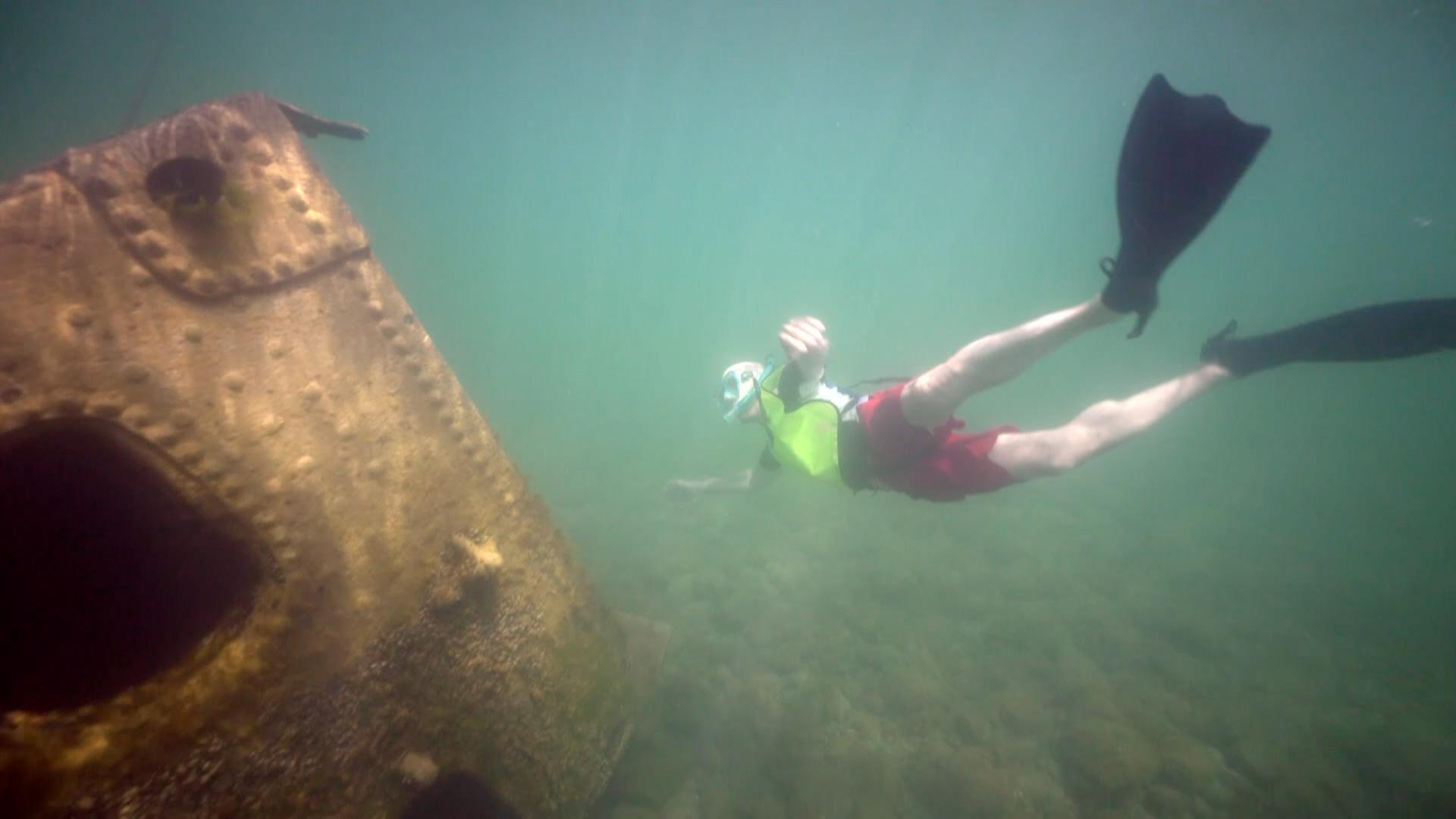
Resting below the surface of Lake Michigan just 600 feet away from 49th Street Beach is what remains of the Silver Spray. Some days, when the water is calm and the lake level is just right, a portion of the ill-fated steamship’s boiler is visible above the surface, a visual reminder that the waters below contain many stories and even more mysteries.
On July 15, 1914, the Silver Spray was steaming south to pick up University of Chicago business students and transport them for a field trip to a Gary, Indiana steel mill. But before students boarded, the vessel ran into a bit of trouble – it ran smack into Morgan Shoal, an ancient, rocky reef of dolomite. The crew wasn’t terribly concerned at first, as they reportedly still tended to their stew. Rescue attempts were made, but after a few days the crew abandoned ship, which broke apart as waves smashed the vessel into the rock. There were no casualties, but there was a bit of a beach party after word spread about the ship.
“Bits and pieces of the Silver Spray then washed up on shore because it was so close,” Philip Willink of the Illinois Natural History Survey told Geoffrey Baer in Touring Chicago’s Lakefront. “Hundreds of people were watching this, and they started picking up pieces of this driftwood and starting fires. Not just fires, but bonfires, huge fires. Parties broke out, it started to get out of hand. Finally, the Chicago police had to come through and clean the place out before it got completely out of control.”
How Many Shipwrecks Are in Lake Michigan?
The Silver Spray is just one of possibly thousands of shipwrecks at the bottom of the Great Lakes. Estimates range anywhere from 6,000 to 10,000.
“When you have that kind of variation, that should be a signal that nobody really knows,” said Ted Karamanski, professor emeritus at Loyola University Chicago. “The reason for that is that it’s only now that there is an attempt to actually map the bottoms of the Great Lakes. So we know more about the top of Mount Everest than we do about the bottom of Lake Michigan.”
In Lake Michigan alone, there could be anywhere from 600 to 1,500 shipwrecks. “Frankly, I think it could even be more, because Lake Michigan was the busiest of all the Great Lakes, with major cities like Chicago and Milwaukee,” Karamanski said.
In the 19th century, Chicago was a rapidly growing city, and its location – Lake Michigan to the east, the Mississippi River system to the west – made it a bustling port city. Ships transported lumber from Michigan and Wisconsin to help build a city on a prairie, while the grain harvested from that prairie was shipped east. So it’s not surprising that amid so much traffic, there would have been mishaps that turned into deadly disasters. A combination of the ships themselves, human error, and weather contributed to the number of shipwrecks. Karamanski said the size of the lake also played a role.
“The biggest danger to a ship in a storm is the shore. Out in the oceans, you get a big storm, and it can sink a ship, of course, but normally a good mariner will run with the storm. When you have something as vast as the ocean, you can just keep going until the storm plays itself out. In Lake Michigan, you can’t do that,” Karamanski said. “It’s a fairly narrow body of water… But so you'll soon run out of what sailors call leeway on the lakes. The vast majority of shipwrecks on the Great Lakes are ships being driven ashore and battered by the waves to destruction.”
The cold waters of the Great Lakes are well suited for the preservation of the vessels entombed in their depths, and researchers are constantly in search of more wrecks. In 2024, a team from Wisconsin discovered the wreckage of a 1893 schooner called the Margaret A. Muir about 50 feet below the surface near Algoma, Wisconsin. The 130-foot Muir was carrying a load of salt and had passed through the Strait of Mackinac when it got caught in a 50-mile-per-hour gale, according to the Wisconsin Underwater Archeology Association. Though the captain’s dog, sadly, did not survive, the crew of six did.
Chicago accounts for just one corner of Lake Michigan, but the city is no stranger to maritime disaster. The Eastland Disaster – in which a top-heavy passenger steamship capsized dockside on the Chicago River, killing 844 people – is often the first mentioned. Though the river was the site of the deadliest shipwreck in the city’s history (and one of the deadliest shipwrecks of all time), the chilly, turbulent waters of Lake Michigan hold many stories of maritime mishaps. Two with Chicago connections reveal the dangers of the lake.
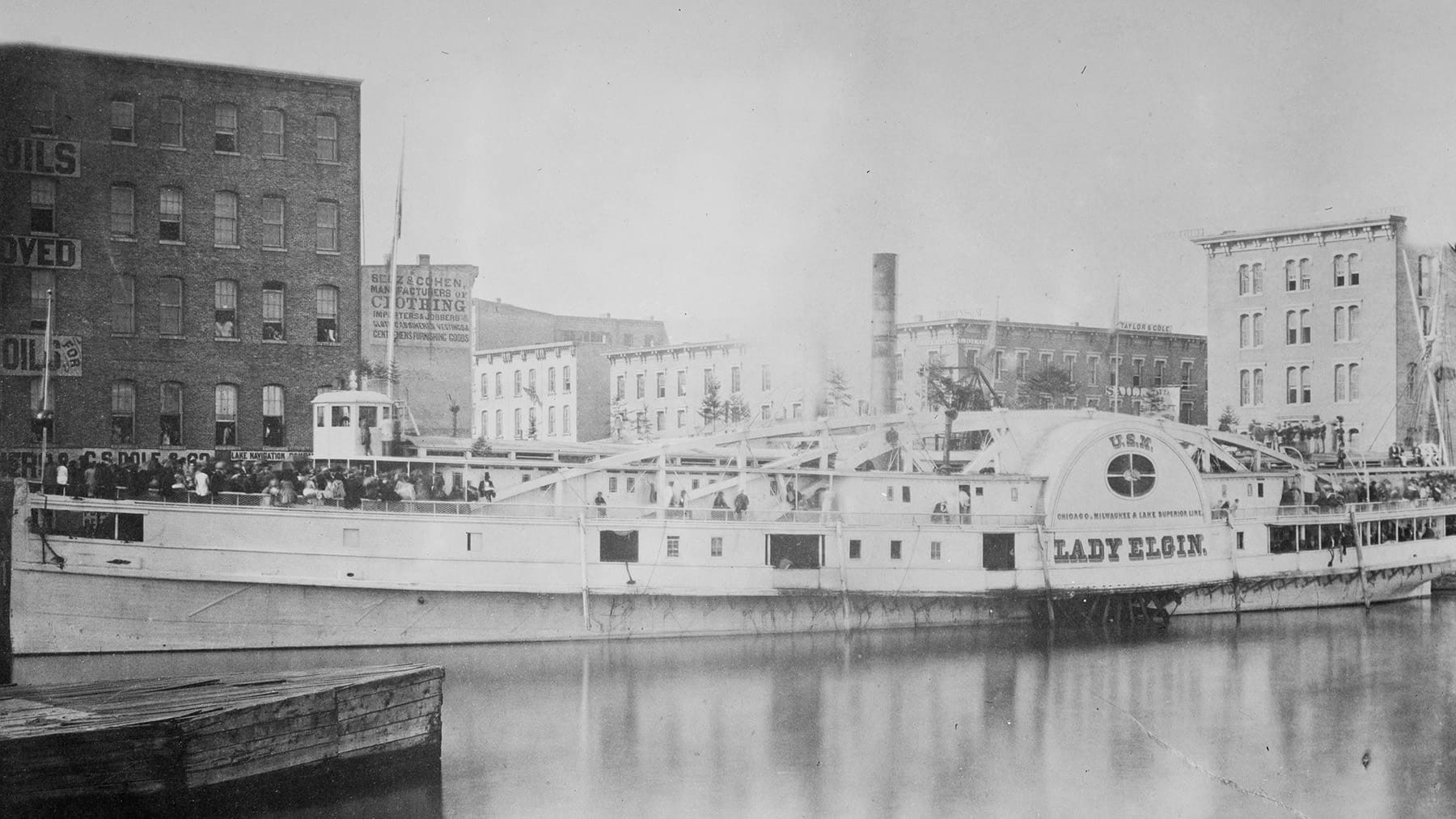
Lady Elgin
The sinking of the passenger steamship the Lady Elgin was the deadliest shipwreck in Lake Michigan proper – and in fact the Great Lakes more broadly. It occurred just north of Chicago off the coast of Winnetka on September 8, 1860. The ship was transporting members of the Milwaukee Irish Union to and from a political rally in Chicago.
The doomed return trip from Chicago to Milwaukee began on September 7. Around 2 a.m. on the morning of September 8, a schooner called Augusta collided with the Lady Elgin. Meagan McChesney, curator at the Winnetka Historical Society, said there were several factors that contributed to the collision and its deadly result.
“During the return journey, there were reportedly really high winds and really heavy rains, which obviously impacted visibility and likely made it really difficult for the Augusta to turn to avoid crashing into the Lady Elgin,” McChesney said. “Also, the Augusta was reportedly very under-lit. Reports we have in our collection say there was only a single light on its bow.”
The Augusta was also carrying lumber, making it heavy and more difficult to steer. Its crew was concerned for its own safety, so it continued on to Chicago. But the collision had left a large hole in the Lady Elgin. McChesney said some sources indicate that it sank in under an hour. To make matters worse, there were only three lifeboats. “Only 18 or 19 people on the lifeboats actually made it to shore alive,” McChesney said.
Many people struggled in the water for hours. As they got close to shore, they were pulled under by the rough surf or pulled back out by the undertow. In a letter to his siblings, survivor Edward Mellon described his experience.
“I with a few others was fortunate enough to reach the shore, and with the assistance of the people on the beach, was hauled up the high bluff, 40 feet, with a rope around my body, after being in the water about 8 or 9 hours. I don’t think I will ever forget the crash of the boat when she was going down, and the shrieks of the people, the peals of thunder and the flashes of lightning which continued sometime after the boat went down. My God, it was perfectly awful.”– Edward Mellon, courtesy of the Winnetka Historical Society
Though the passenger manifest was lost in the accident, sources indicate that there were approximately 400 passengers on board. An estimated 300 people died in the wreck.
“Some people have called it the Titanic of the Great Lakes,” McChesney said.
Amid the tragedy, the heroic actions of one Northwestern University student saved 17 lives. Student Edward Spencer reportedly tied a rope around his waist and repeatedly entered the water to help the survivors, stopping only after he collapsed from exhaustion. It was said that Spencer was never the same after the incident and was ill for the remainder of his life.
In 1989, the wreckage of the Lady Elgin was discovered 10 miles north of the collision site near Highwood, Illinois. The wreckage is privately owned.
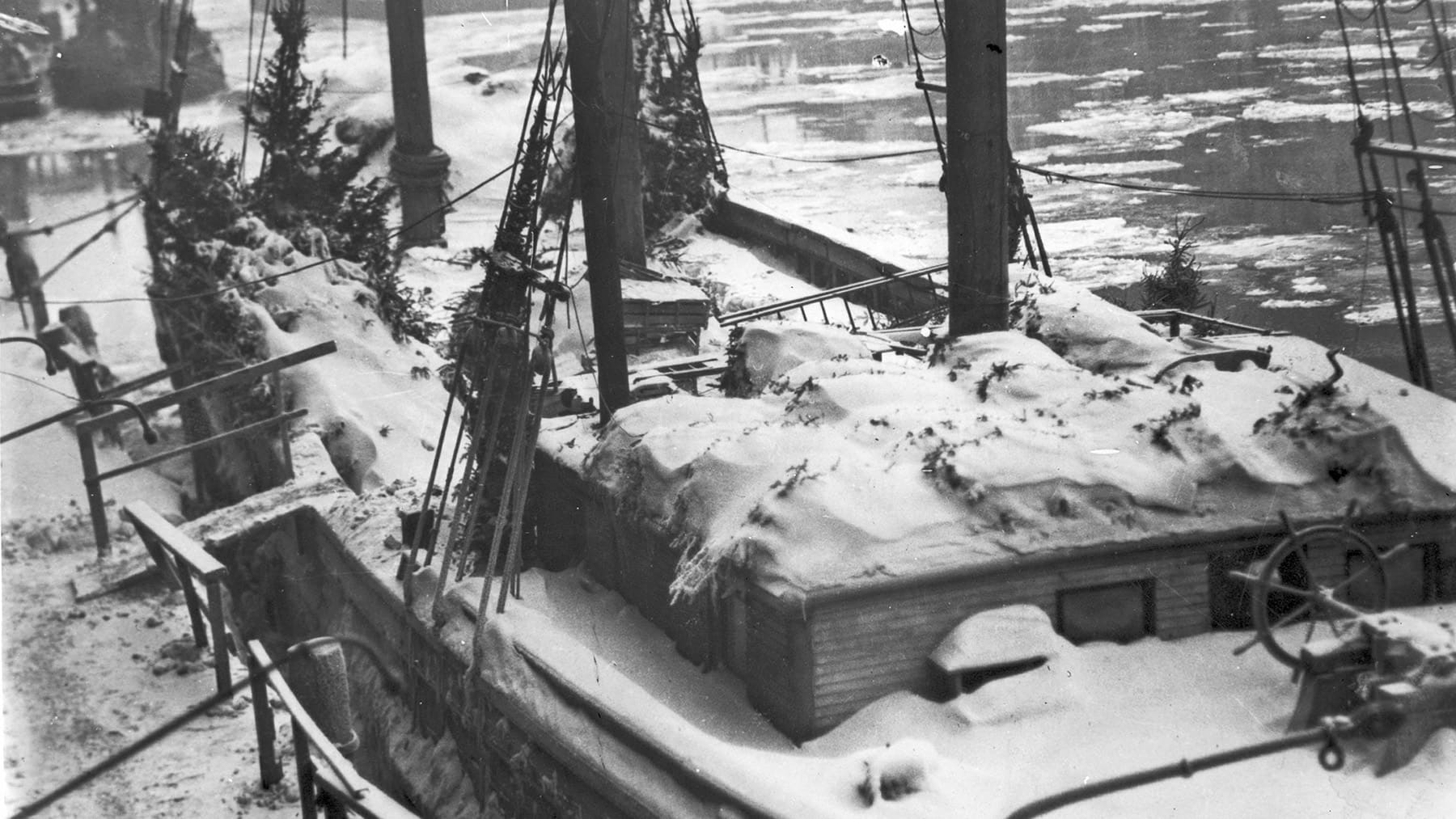
Rouse Simmons
In 1912, a Chicago Christmas tradition turned into another maritime tragedy. For years, Captain Herman Schuenemann’s schooner, the Rouse Simmons, made the journey across Lake Michigan from northern Michigan to Chicago carrying Christmas trees. The Rouse Simmons was one of several ships that transported trees from Wisconsin and Michigan to Chicago around the holidays, but Schuenemann was the best known, earning the nickname “Captain Santa.” He tied a Christmas tree to the main mast, decorated the vessel with electric Christmas lights, and docked along the Chicago River, where he would sell trees directly off the boat.
Herman’s brother, August, was also in the Christmas tree trade. In November 1898, August died when his schooner, the S. Thal, sank near Glencoe while transporting Christmas trees. The ships like the ones the Schuenemann brothers operated, said Karamanski, were “well past their prime,” having been built in the 1860s and 1870s. The Christmas tree ventures were often an attempt to make more money at the end of the season, pushing their already-taxed vessels to the limit.
“It was really a recipe for disaster because legends of the Great Lakes always talk about the gales of November. We start getting stormy weather around Thanksgiving or even a little earlier,” Karamanski said. “It was really a lottery with death.”
In November 1912, the Rouse Simmons departed from Thompson, Michigan in the state’s Upper Peninsula en route to Chicago. The ship encountered a bad storm, and according to a report from the Wisconsin Historical Society, it was last seen flying a distress flag near Kewaunee, Wisconsin. A rescue boat sent to help the ship couldn’t locate it, and Schuenemann and his crew never made it to Chicago. Despite losing another family member to the Christmas tree trade, Schuenemann’s wife and daughters carried on the tradition for several years, though they eventually switched to transporting the trees by train.
In 1971, a diver discovered the wreckage of the Rouse Simmons 165 below the surface off the coast of Two Rivers, Wisconsin. There were still Christmas trees in the ship’s hold. Many of the shipwrecks throughout the Great Lakes have become popular spots for experienced divers. As researchers learn more and discover new wreckage sites, public fascination with these stories endure.
“People love disaster stories because, for the same reason that they like war movies, in extreme moments, people’s character is also often revealed negatively or strongly. If you think of the movie Titanic, there’s Jack being heroic, and then there’s the rich guy, Cal, showing how craven he is to save his miserable skin,” Karamanski said. “That’s part of the fascination of shipwrecks – they are stories of people in extreme situations.”