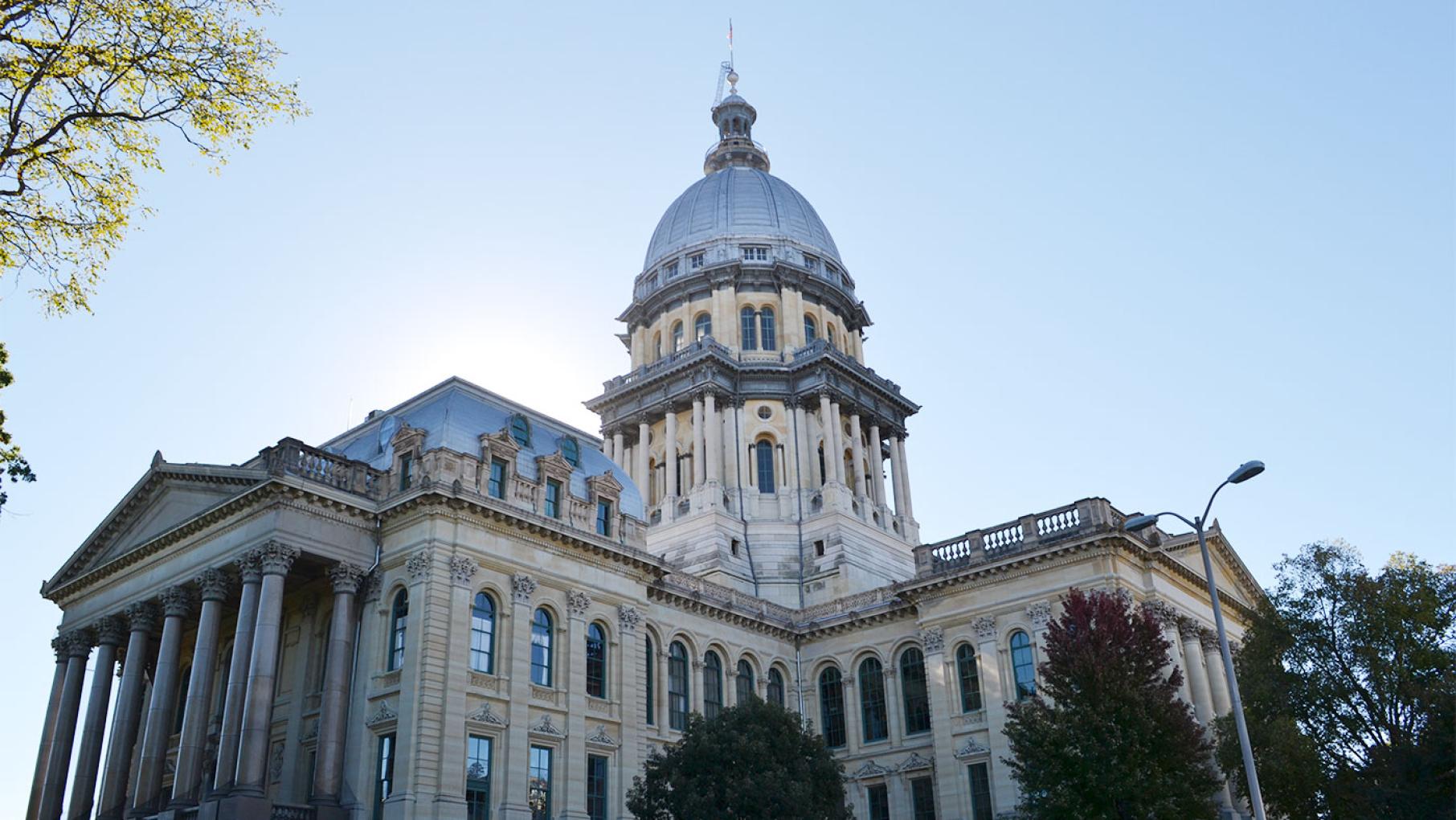




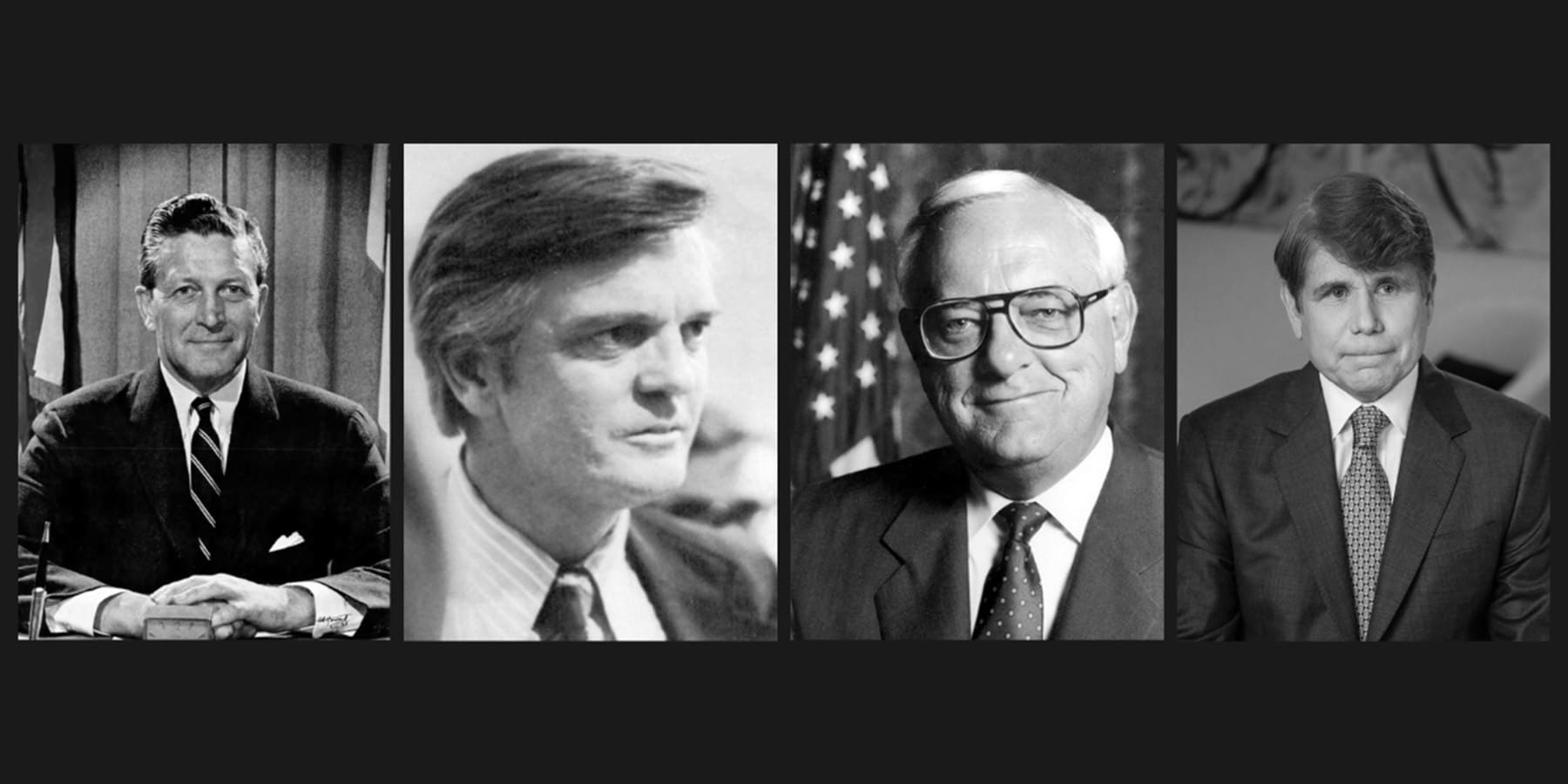
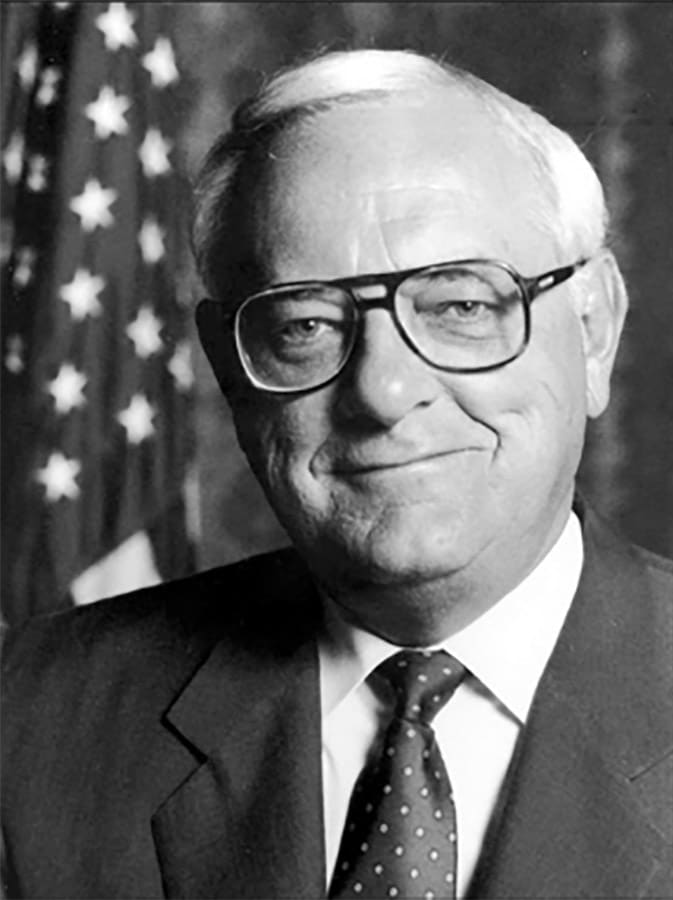
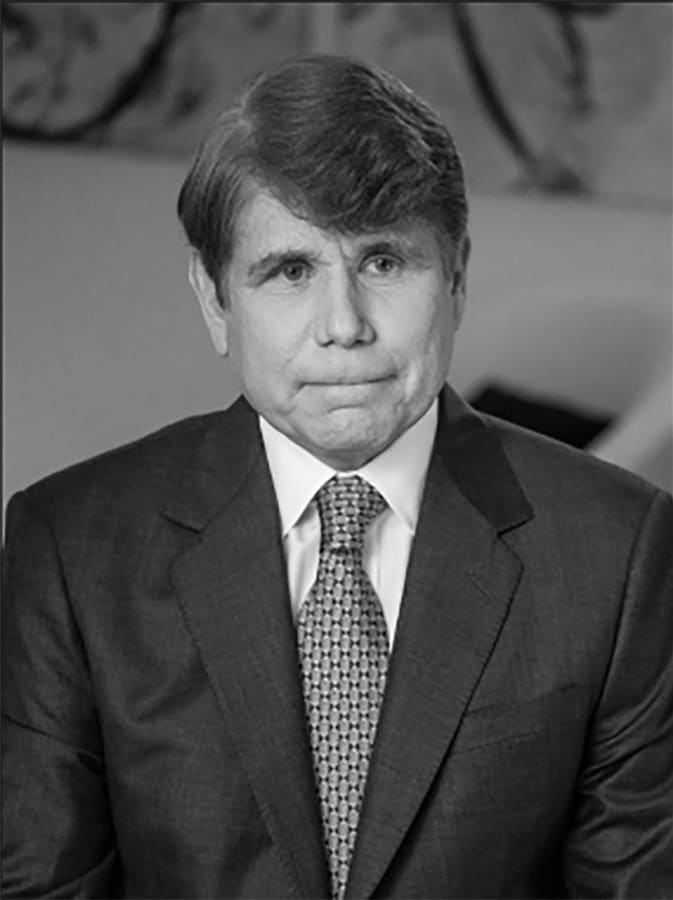
Illinois has a reputation for political scandal – and with good reason. According to one 2023 study from the University of Illinois Chicago’s political science department, Chicago was named America’s most corrupt city for the fourth year in a row and Illinois the third-most corrupt state. Headline-making political corruption has spanned decades in the state, and with it has come the downfall of several political leaders – including four governors who served time in prison.
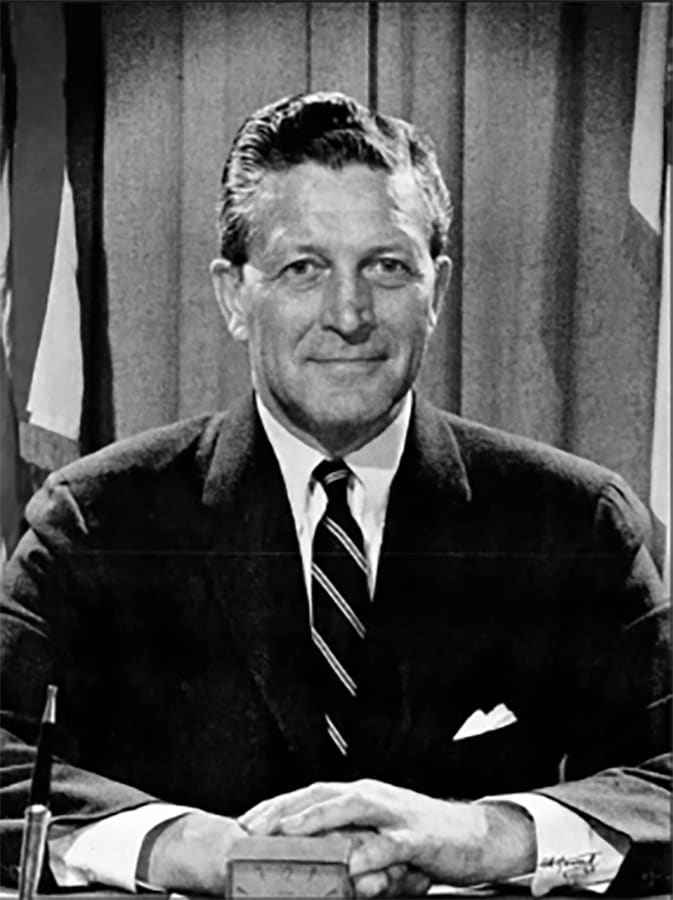
Otto Kerner
Democrat Otto Kerner Jr. was the 33rd governor of Illinois, serving two terms from 1961 to 1968. He served in the Illinois National Guard and served in World War II. He married Helena Cermak, the daughter of influential Chicago mayor Anton Cermak. Before serving as governor, he was U.S. district attorney for the Northern District of Illinois and a Cook County judge. While in office as governor, he pushed reforms of education, mental health, racial justice, and the criminal justice system. He even garnered the nickname “Mr. Clean” – an honest politician, free from corruption.
Most notably, President Lyndon B. Johnson asked Kerner in 1967 to lead the National Advisory Commission on Civil Disorders (often referred to as the Kerner Report) – an 11-member commission tasked with understanding the root causes of the unrest that swept Black communities in the 1960s. Kerner participated in closed hearings with scholars, law enforcement, J. Edgar Hoover, Martin Luther King Jr., and others. The commission also visited neighborhoods that had been devastated by uprisings and spoke to residents. The resulting report stated, “Our nation is moving toward two societies, one black, one white – separate and unequal.” To address the conditions that had led to riots in Black communities, it called for sweeping changes: 2 million new jobs, 6 million new units of affordable housing, an overhaul of the welfare system, diversification of the media, a guaranteed income program, and police reform. None of the recommendations were ever acted upon.
In 1968, Kerner was appointed a United States circuit judge of the United States Court of Appeals for the Seventh Circuit. It was in this role and after his time as governor that he found himself in legal hot water, and his otherwise good reputation took a major hit. Kerner was accused of taking bribes in the form of racetrack stocks in exchange for political favors while he was governor. In 1973, a jury found him guilty of mail fraud, conspiracy, perjury, and other corruption charges. Kerner was sentenced to three years in jail but served only seven months due to a terminal lung cancer diagnosis. Kerner died in 1976. He always maintained his innocence.
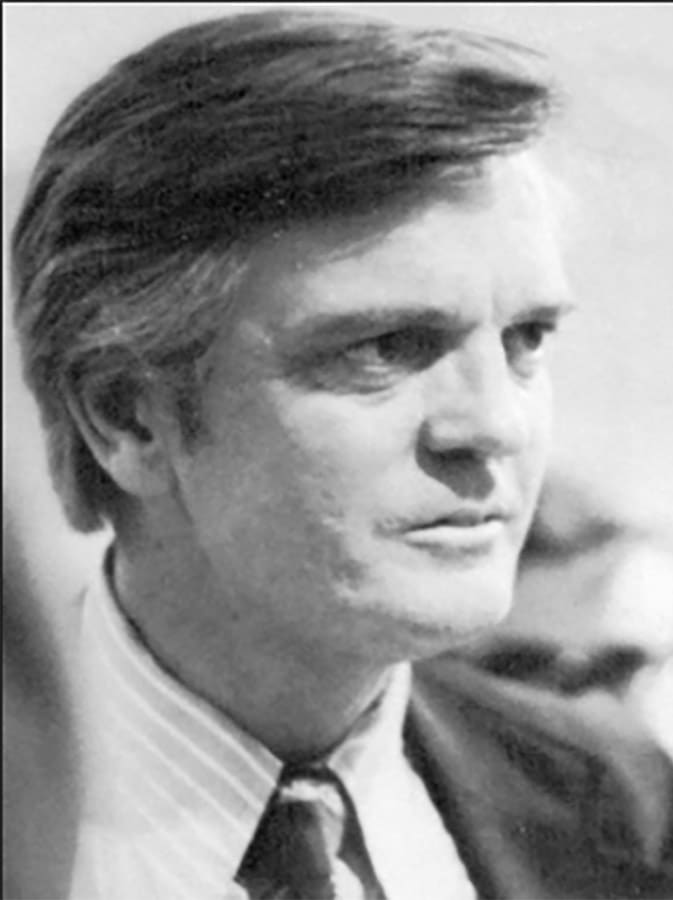
Daniel Walker
Democrat Daniel Walker was the 36th governor of Illinois, serving one term from 1973 to 1977. Walker was born in Washington, D.C., raised in San Diego, California, and first came to Illinois to attend law school at Northwestern University. He also served as a naval officer at the end of World War II and in the Korean War. Prior to entering politics, he worked as a clerk for U.S. Chief Justice Fred Vinson; an aide to the 31st governor of Illinois, Adlai Stevenson II; and was a corporate lawyer for Montgomery Ward. He also led a study team that investigated the violence outside the 1968 Democratic National Convention, which produced Rights in Conflict, also called the Walker Report. The report criticized the outsized police response and “indiscriminate police violence” toward the protestors.
In 1971, Walker launched an unusual, populist campaign for Illinois governor. According to his New York Times obituary, he made headlines for 116 days as he walked nearly 1,200 miles across Illinois, sleeping in farmhouses along the way. In 1972, he beat the Democratic machine’s candidate in the Democratic primary and went on to unseat incumbent governor Richard Ogilvie. In office, Walker did not mesh with Republicans or Democrats, since Richard J. Daley, the head of the Democratic machine, did not support Walker. Machine-backed candidate Michael Howlett beat Walker in the 1976 Democratic gubernatorial primary (though James R. Thompson won the general election).
After his time in office, Walker entered the private sector, running a savings and loan in Oak Brook. It was in this role that Walker ran into legal trouble. In 1987, Walker was charged with bank fraud. According to his obituary in the Chicago Sun-Times, the judge overseeing the case said Walker treated the savings and loan as “‘a personal piggy bank’... to maintain a lavish lifestyle, including an 80-foot yacht, The Governor’s Lady.” He pleaded guilty to fraud, filing false financial statements, and perjury and served 18 months in federal prison. Walker died in 2015.
George Ryan
Republican George Ryan was the 39th governor of Illinois, serving one term from 1999 to 2003. Born in Iowa and raised in Kankakee, Ryan had a long career in state politics. Starting in 1973, he served in the Illinois House of Representatives, eventually rising through the ranks to become House minority leader and then speaker of the house. When Republican Governor James Thompson’s lieutenant governor resigned, Thompson added Ryan to the ticket for the 1982 election. In 1990, Ryan was elected as Illinois Secretary of State, a role he would serve in until he was elected governor in 1999.
As governor, Ryan was known for investing money in the state’s infrastructure, but his most notable action came on January 31, 2000 when he declared a moratorium on the death penalty in Illinois. Ryan said at the time that Illinois had a “shameful record of convicting innocent people” and putting them on death row. A man named Anthony Porter had led to Ryan’s change of heart on the issue. Porter was on death row for the murder of two South Side teenagers and was exonerated after a professor and students from Northwestern University’s Medill School of Journalism uncovered new evidence (though their investigation was the subject of some controversy when another man who confessed to the murders later recanted his confession). In a 2020 Chicago Tonight interview, Ryan said, “I was sitting in the [governor’s] mansion, watching the news from Chicago on the television when I look up and here’s little Anthony Porter coming out with a big grin on his face after spending 16 years on death row only to be found innocent of his charges. I said to my wife, ‘How does that happen in America?’ Put a fella on death row for 16 years, and he wakes up every morning and says, ‘I wonder if today is the day they’re gonna throw the switch on me.’” While some victims’ families were unhappy with Ryan for halting executions, death penalty opponents across the country praised the governor.
Ryan’s political career took a turn toward the end of his governorship, when a corruption scandal nicknamed “Operation Safe Roads,” which dated back to his time as Illinois Secretary of State, resurfaced. In 1994, six children from the same family were killed in a car accident involving a semi-trailer; their parents were badly burned in the accident. An investigation into the accident revealed that the truck driver was not properly qualified and that Ryan’s office was providing truck licenses in exchange for bribes. Ryan fired the investigators and halted the investigation. But a later investigation uncovered broader corruption. Ryan opted not to seek reelection as more than 70 officials and lobbyists were arrested and convicted on corruption charges in the related probe. In 2003, Ryan was indicted, too, charged with bribery, racketeering, extortion, tax fraud, and money laundering. Ryan was accused of directing state contracts to friends, using campaign funds for private purposes, and covering up the earlier investigation. In 2006, Ryan was convicted and spent more than five years of his six-and-a-half year sentence in prison. He died in 2025 at the age of 91.
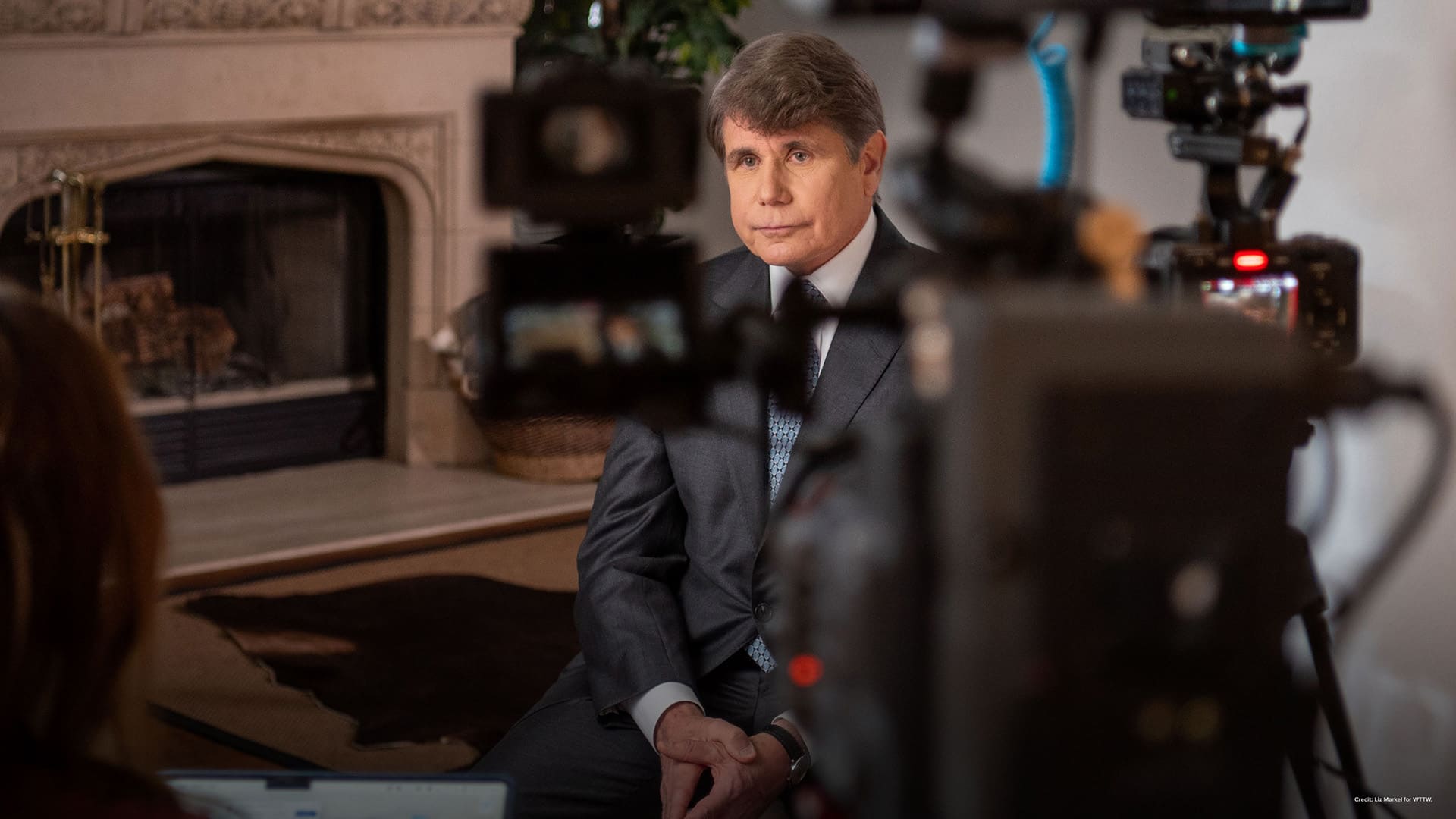
Rod Blagojevich
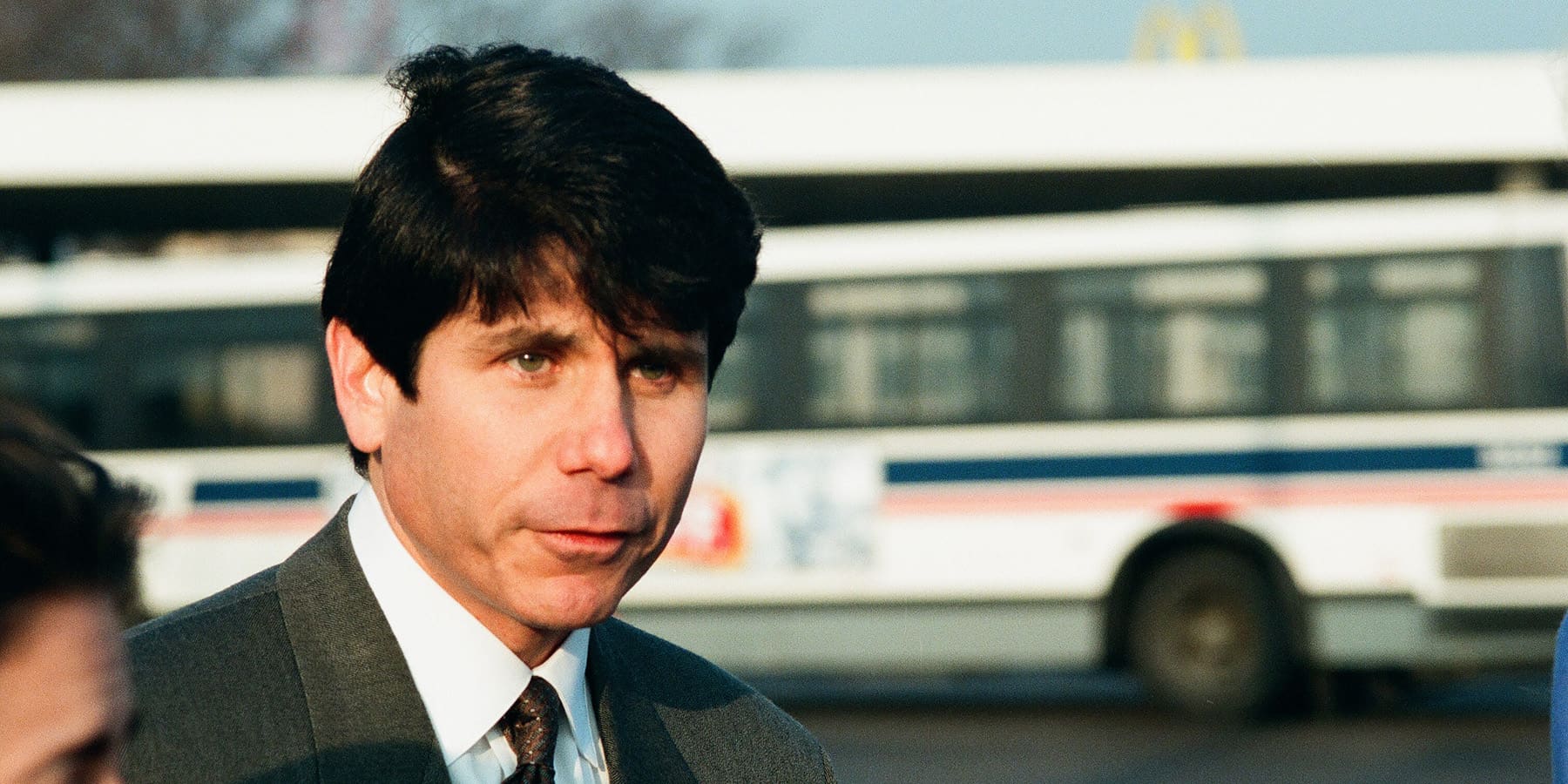
Democrat Rod Blagojevich was 40th governor of Illinois, serving two terms from 2003 to 2009. Born to Serbian immigrants, Blagojevich grew up on the Northwest Side of Chicago. He married Patricia Mell, whose father, Richard Mell, was an influential Chicago alderman. He first entered politics in 1992, securing a surprise upset in the primary against an incumbent for the 33rd state house district of the Illinois House of Representatives. In 1996, he won a seat in the U.S. House of Representatives. He served three terms in Congress. While in Congress, he traveled to war-torn Serbia to free three U.S. soldiers being held captive. Blagojevich served as a translator to help the delegation negotiate the soldiers’ release.
Blagojevich won the gubernatorial election in 2002 over Republican Jim Ryan (no relation to the previous governor, George Ryan), the first Democrat to become governor in nearly 30 years. In office, he emphasized policies that expanded access to health care and signed a bill that amended the Illinois Human Rights Act to ban discrimination based on sexual orientation. But the governor reportedly had few allies in the state legislature, even among his own party. Rumors of corruption also began to swirl, but Blagojevich was reelected in 2006.
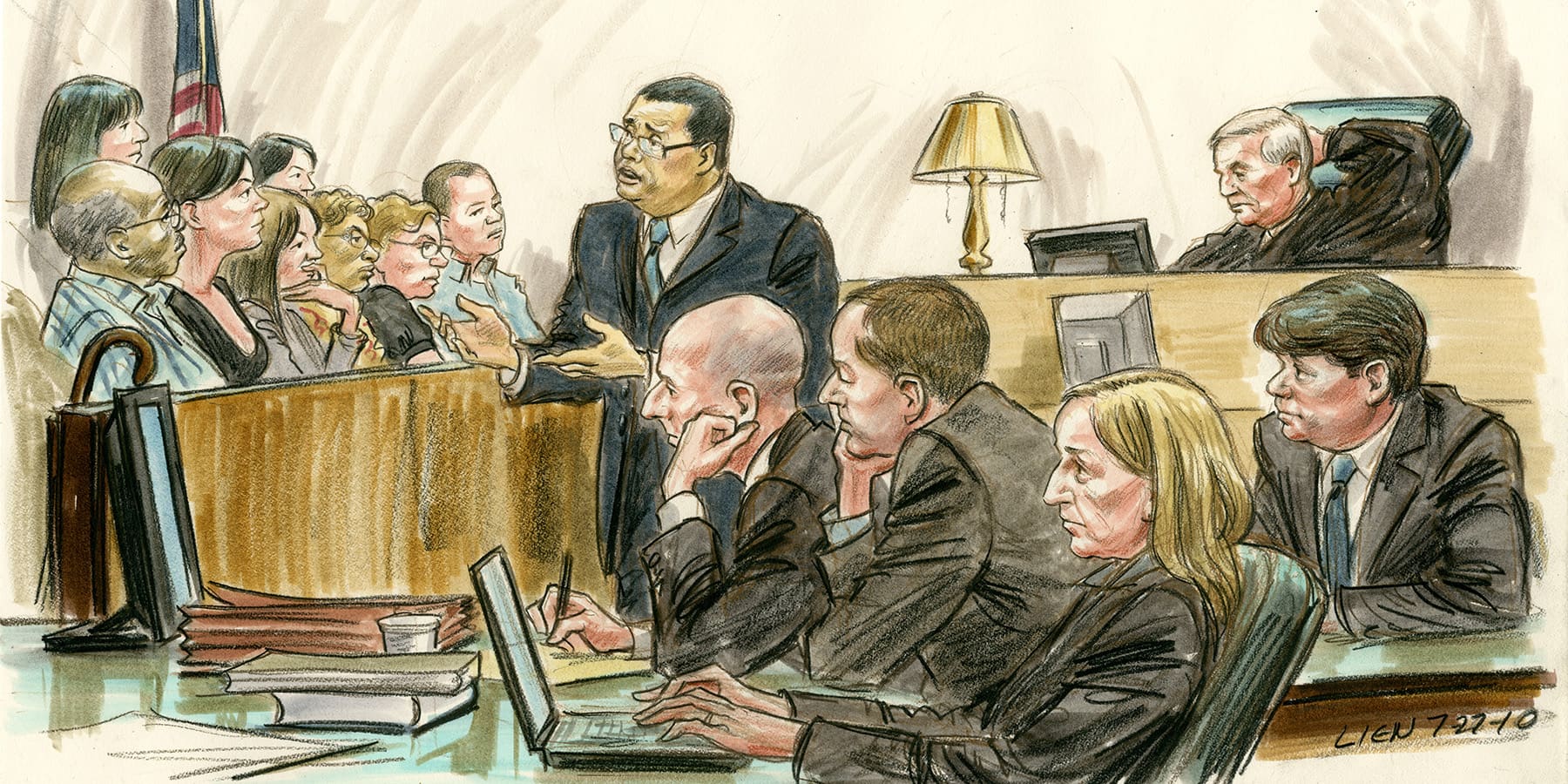
Then in 2008, federal agents arrested Blagojevich on federal corruption charges, including a “pay-to-play” scheme to allegedly sell President Barack Obama’s former senate seat. In early 2009, he was impeached, removed from office, and formally indicted. In 2010, Blagojevich was found guilty on one count of lying to federal agents, but the remaining charges were declared a mistrial due to a deadlocked jury. In the 2011 retrial, Blagojevich was found guilty on 17 counts, including wire fraud, bribery, attempted extortion, and conspiracy. He was sentenced to 14 years in prison. He spent eight years in a federal prison in Colorado before President Donald Trump commuted his sentence. He was released that day. In 2025, Trump issued Blagojevich a full and unconditional pardon, erasing his conviction.
Related