A Vegan Lemon Saffron Cake from a New Cookbook by a Chicago-Based Physician and Recipe Developer
Daniel Hautzinger
August 18, 2026
Get more recipes, food news, and stories at wttw.com/food or by signing up for our Deep Dish newsletter.
When he published his first cookbook, Plant-Based India, Sheil Shukla was a practicing physician in the Chicago suburbs with an infant who somehow found time to develop vegan South Asian recipes and photograph them for his cookbook and Instagram. Four years later, he’s a practicing physician with a toddler and young twins who still cooks new recipes, photographs them, and shares them, now in another cookbook, Kari, out August 18.
His approach to food as “an art form” has not changed with the arrival of two more children, Shukla says, but “having kids at that age, it’s tough to really do anything, let alone explore creativity through food.” Kari reflects that reality by showing how Shukla and his wife manage to get home-cooked meals on the table while also working and raising children. They’re still beautiful and ambitious dishes, especially for a working doctor with three children.
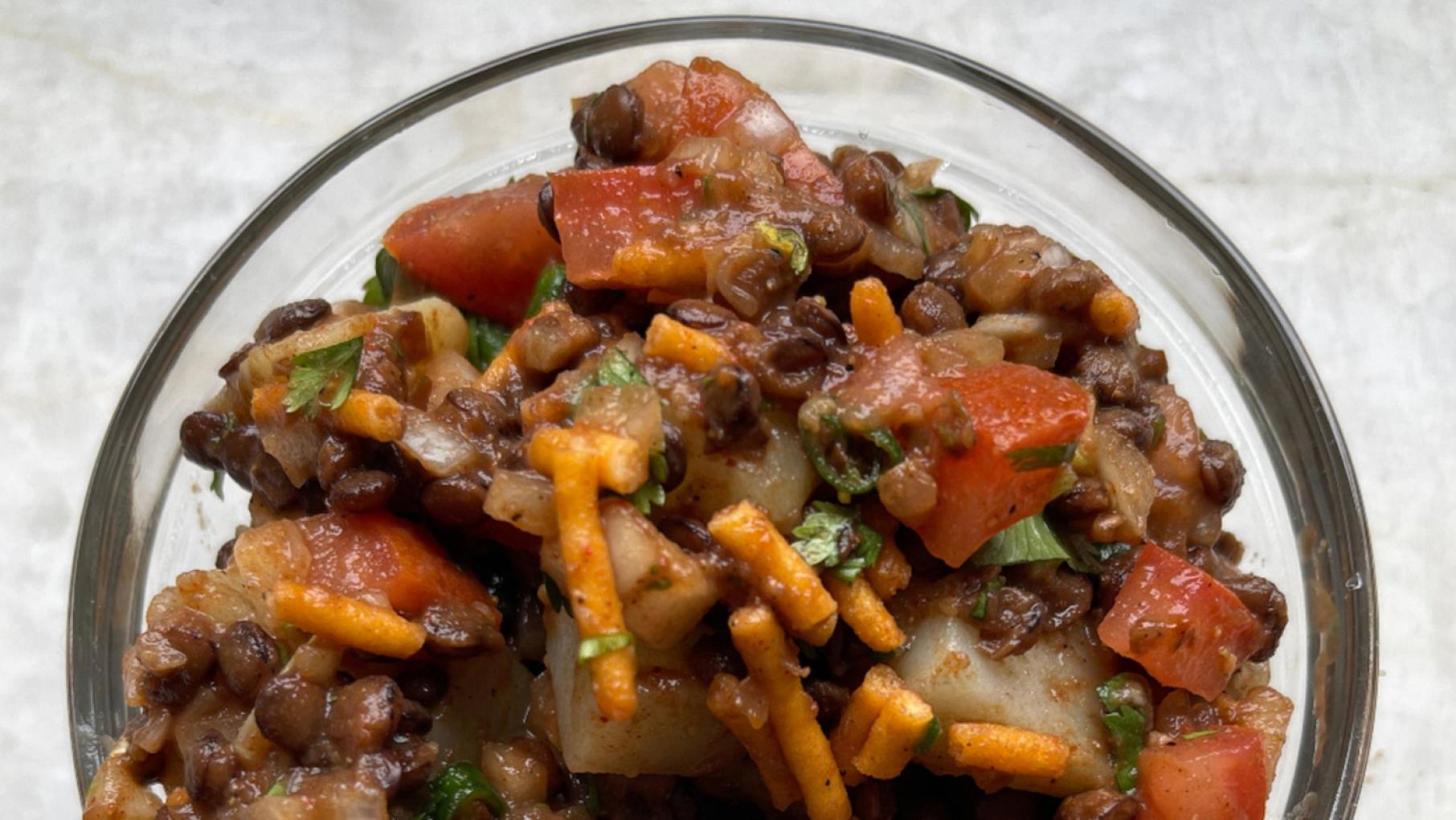
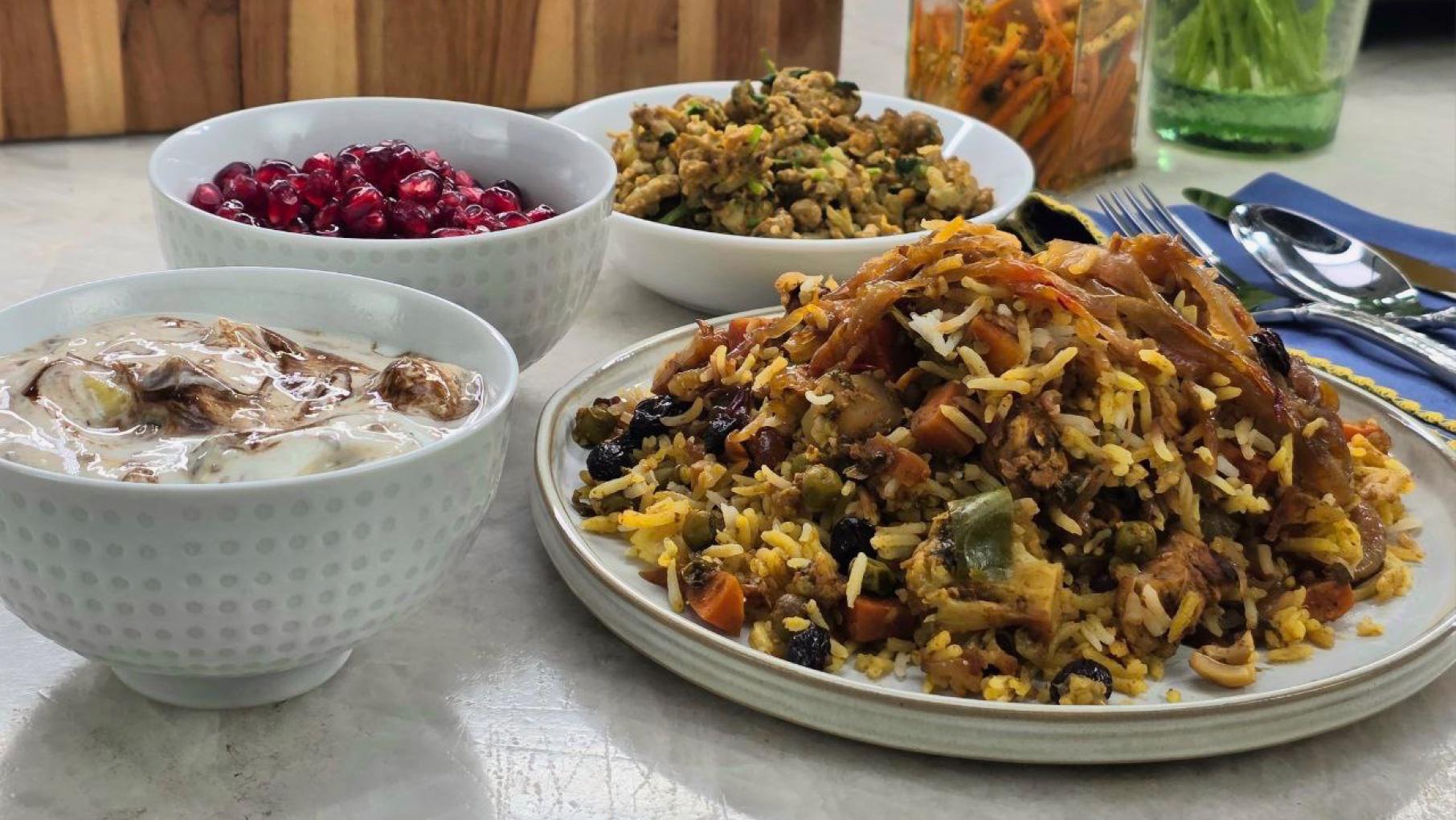
Focused on the diverse world of curries that encompasses spice-heavy sauces and stews from around Asia, Kari showcases a mode of cooking familiar to many harried parents and professionals: adding vegetables and proteins to a flavorful sauce. But Kari offers recipes for those sauces instead of having you buy them from the store: makhani or peanut coconut curry in which to serve potatoes or breaded tofu katsu, or top nachos; mango miso masala chutney or creamy five spice sauce with which to dress fried vegetable pakoras or a vegetable-filled rice bowl.
There’s a “more practical lens to my cooking, in that I need to meal-prep in an efficient way and get dinner on the table,” Shukla says. He and his wife now create “flavor bases” like those sauces over the weekend so they’re ready to pull from the fridge or freezer for an easy meal using fresh produce, like that from their CSA, during the week.
As is evident from some of those recipes – katsu, miso, nachos – Kari also reflects Shukla’s embrace of more global flavors and his willingness to mix them together. Whereas Plant-Based India highlighted adaptations of his family’s Gujarati recipes in particular, Kari ranges further afield, from Japan to Thailand and beyond.
It also emphasizes the healthful aspects of its recipes less than Plant-Based India, even while remaining vegan and prioritizing fresh produce and whole grains. “I wanted this book to be me more as a cook, as a parent, as an artist, as opposed to me being just a physician,” he says.
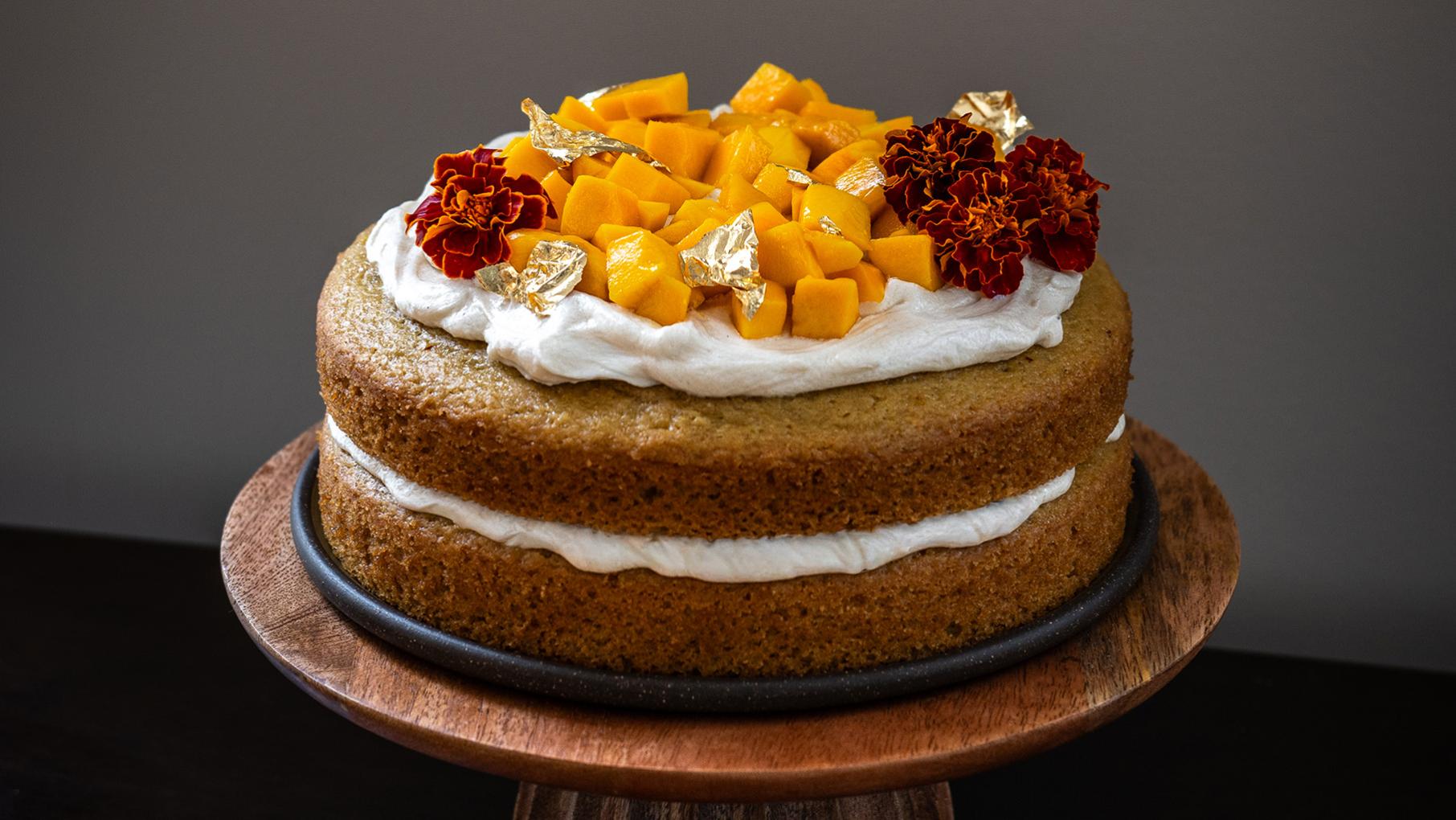
Both the artistry and parenting are evident in Kari’s recipe for lemon saffron cake, which you can try below. Cakes are a celebratory food brought out for family parties and birthdays, and Shukla’s recipe is adaptable to various tastes and occasions; just omit the lemon zest, saffron, and rose water to add in different flavors to the base cake, or switch up the fruit for the topping. The decoration allows for artistry: Shukla tops his cake in the book with not just fresh fruit but also edible flowers and gold leaf.
“Baking is a great way to extend that artistic expression,” says Shukla.
Lemon Saffron Cake
Reprinted with permission from Kari by Sheil Shukla, copyright © 2026 by Sheil Shukla. Published by DK, a division of Penguin Random House, LLC.
This is my all-time favorite homemade cake recipe. I use olive oil and almond flour to give it a tender and moist crumb. After tasting this cake (and several avor variations of it), my family has unanimously agreed that I will be the designated cake-baker for all birthdays in the family. The lemon offers a wonderful brightness that complements the floral notes and rich color of saffron. I’ve used two 8-inch (20 cm) round pans here, which allows me to make a simple layer cake with ease. I top this cake with a not-too-sweet vegan buttercream and fresh fruit. Use this recipe as a starting point and feel free to play around with the flavors.
If you want enough buttercream to coat the sides of the cake and to decorate the top with a piping bag, simply double the recipe.
Ingredients
For the cake:
275 grams (1 1/4 cups) cane sugar
2 teaspoons lemon zest (from about 2 lemons)
1/2 teaspoon saffron
280 grams (2 1/4 cups) all-purpose flour
50 grams (1/2 cup) almond flour
1 teaspoon baking powder
1/2 teaspoon baking soda
Salt
360 ml (1 1/2 cups) unsweetened plain soy milk
120 ml (1/2 cup) olive oil
2 tablespoons lemon juice (from about 1 lemon)
2 teaspoons vanilla bean paste or extract
1 tablespoon rose water
For the vegan buttercream:
150 grams (1 1/4 cups) sifted powdered sugar
113 grams (1/2 cup) salted vegan butter, softened
1/2 teaspoon rose water
1/2 teaspoon vanilla extract
For decorating:
Fresh fruit (such as diced mango or whole berries)
Edible flowers, optional
Edible gold leaf, optional
Directions
1. Preheat the oven to 350°F (180°C). Line two 8-inch (20 cm) round baking pans with parchment paper.
2. Place the cane sugar and lemon zest in a large bowl and rub them between your fingers to combine until evenly distributed and very lemony in fragrance, about 1 minute. Crush the saffron between your fingers and add it to the sugar mixture. Then, sift in the all-purpose flour, almond flour, baking powder, baking soda, and 1/4 teaspoon salt, and whisk to combine.
3. Whisk together the soy milk, oil, lemon juice, vanilla, and rose water in a medium bowl.
4. Slowly add the liquid to the dry mixture and combine with a spatula to form a batter. It’s okay if some small lumps remain; it is more important not to overmix the batter.
5. Distribute the batter between the two lined baking pans. Use a spatula to spread it out evenly.
6. Bake for 20 minutes, rotate the pans, and bake for 10 to 15 minutes more, until an inserted toothpick comes out clean or with dry crumbs.
7. Allow the cakes to cool for about 5 minutes and then invert onto a wire rack. Let cool completely, about 1 hour.
8. Once the cakes are nearly cooled, prepare the buttercream: Whisk together the powdered sugar, vegan butter, rose water, and vanilla extract until light and fluffy, about 5 minutes.
9. To assemble the cake, spread about half of the buttercream on top of one cake and top with the second cake. Top with the remaining buttercream and the fruit, and decorate with edible flowers and gold leaf, if using.
10. The cake will keep in an airtight container in the refrigerator for 3 to 5 days. Remove from the refrigerator 1 to 2 hours before serving; the taste and texture are best at room temperature.