




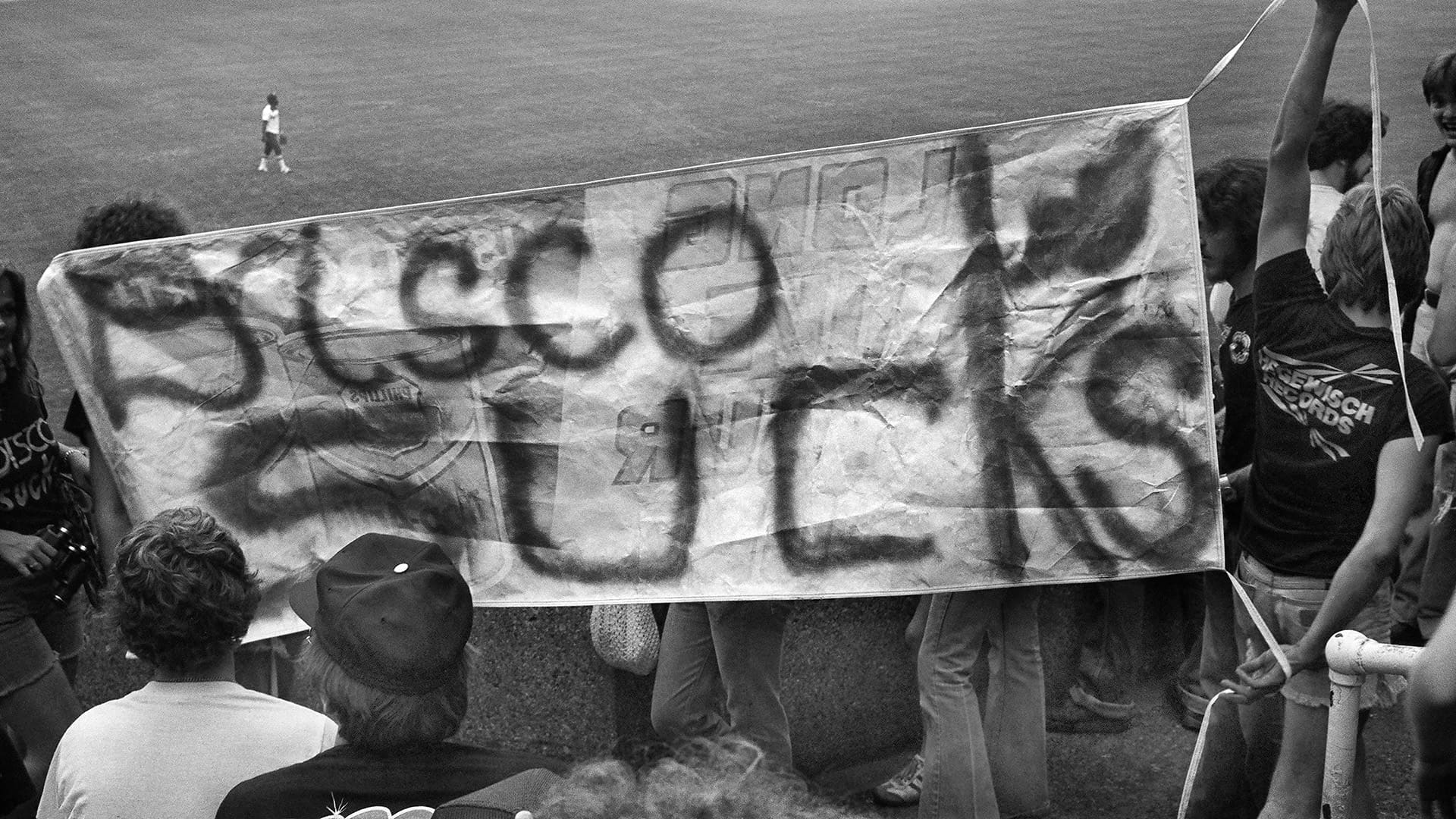
When a radio DJ blew up a pile of disco records at a White Sox game at Comiskey Park as part of a promotional event called “Disco Demolition Night,” an aggressive crowd stormed the field, setting fires and wreaking havoc. It was a backlash against disco music, but many saw it as a violent outpouring of racist and homophobic sentiment.
In the late 1960s and ’70s, disco music was at its peak as a dance music genre. The disco clubs that had emerged in American cities became safe havens for Black, Latino, and gay Americans.
“If these club musics – disco and then house – are about establishing a place of sanctuary, enjoyment, togetherness, youthfulness, all these things, then we shouldn’t be surprised that queer Black people are leading the charge to create that kind of space,” Fredara Hadley, ethnomusicology professor at the Juilliard School, told Chicago Stories. “If queer Black people are safe, then everybody else is going to be safe.”

But movies such as the 1977 box office hit Saturday Night Fever – about a young white man from Brooklyn in the disco club scene – pushed its popularity into the mainstream.
“Saturday Night Fever becomes the emblem of disco, because with Black music, America does what it always does: It loves the music of Black people, but it does not always love and embrace the actual Black people who create it,” Hadley said. “Saturday Night Fever takes this music – this urban music, this New York City music…and it presents it with its protagonist played by John Travolta, a straight, white man who is an acceptable totem of this edgy ‘urban’ [character].”
A backlash against that wider popularity was building, however, and exploded on July 12, 1979 at Comiskey Park. Radio DJ Steve Dahl had lost his job at WDAI when the station switched from rock music to disco. After starting a new job at WLUP, Dahl began a “Disco Sucks” campaign. He worked with the White Sox to host a promotion called “Disco Demolition Night” during a doubleheader. Patrons got discounted tickets if they brought a disco record to be destroyed in a controlled explosion between games. They were hoping to get 20,000 people to attend, but nearly 50,000 showed up.
Many of the spectators – mainly young, white men – became rowdy, throwing empty bottles, firecrackers, and other things onto the field. Amid chants of “disco sucks,” when Dahl set off explosives to blow up the records at centerfield, thousands of people stormed the field, lit fires, and damaged the batting cage and the field. They caused enough damage that the White Sox had to call off and forfeit the second game. Harry Caray, who was calling the game, pleaded with the crowd over the PA system to leave the field, but it took 40 minutes for police to remove everyone.
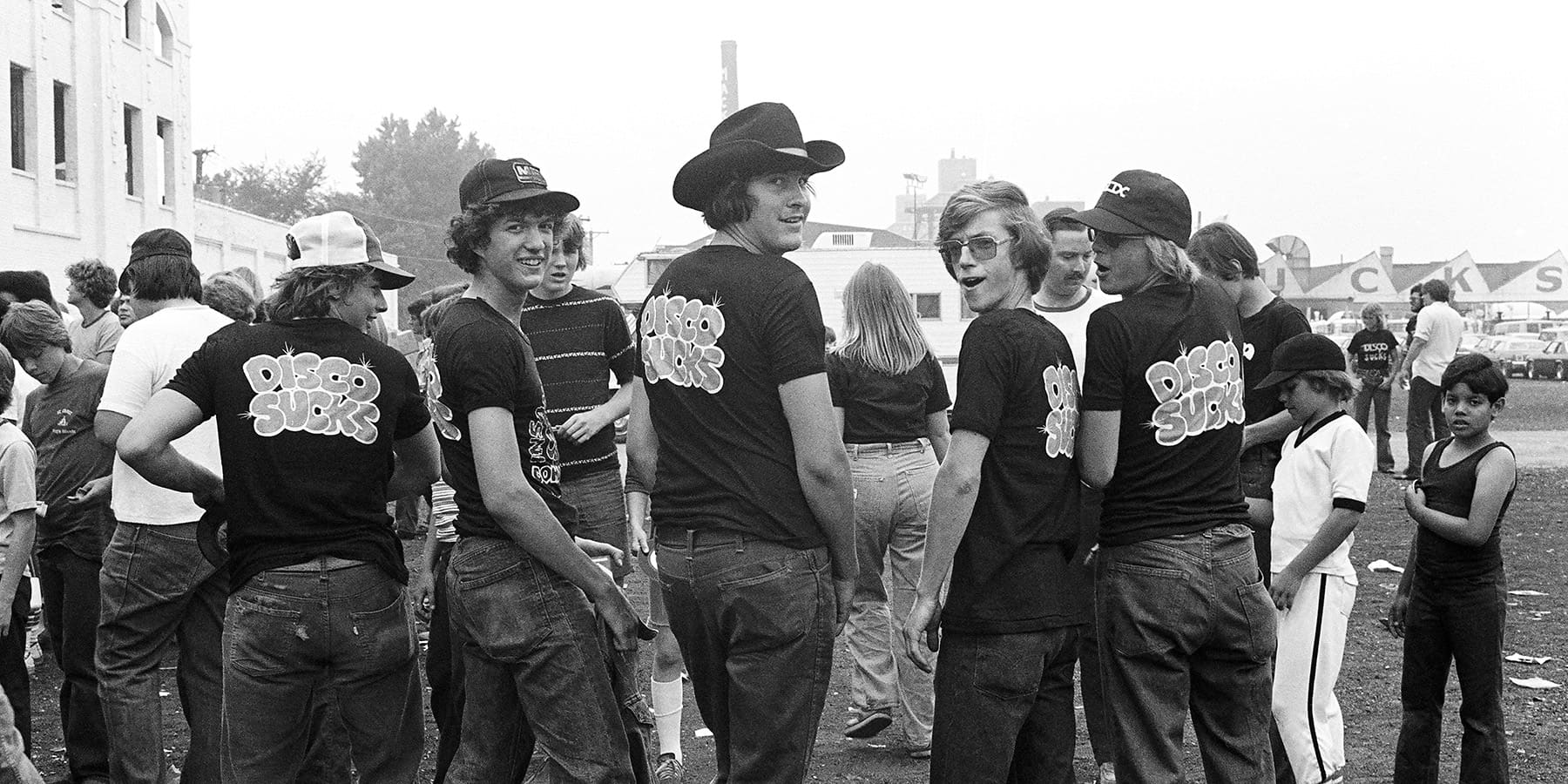
Dahl told Chicago Tonight in a 2016 interview that for him personally, the event was about vengeance. “It was only me being mad that I lost my job,” he said. But Dahl denied the event was homophobic or racist. “We didn’t burn any Jimi Hendrix records, we didn’t burn any David Bowie. It was just a rock and roll versus disco thing.”
Regardless of Dahl’s intentions, fans of disco received a different message. Marguerite Harold, author of Chicago House Music: Culture and Community, told Chicago Stories that she remembers feeling scared watching the event unfold, because “disco records were Black records.”
“Watching it on television, it was like watching a Klan rally. It was terrifying,” Harold said. “People who knew, knew that this wasn’t about disco. This was an effigy of burning us, a way to make us unalive, a way to take away something that you feel threatened by in a very violent way, because it started a riot.”
Robert Williams, who was behind popular Chicago house music clubs the Warehouse and the Muzic Box, said that up until Disco Demolition Night, disco dominated the music world. But after such a violent backlash, the genre sunk into oblivion. Disco was forced underground, but it reemerged as something else.
“[Disco Demolition Night] created the underground scene because all the DJs went underground with their music,” Williams said. “The DJs then manipulated the music by editing it…and creating a whole new sound. That was the beginning of house music right there.”
House music DJ Ralphi Rosario told Chicago Stories that the influx of people who did not like disco after Disco Demolition Night was “a blessing and a curse in disguise.”
“Disco was the inspiration that actually made house what it is,” Rosario said. “I think that Frankie [Knuckles] said it best when he said that ‘house music is disco’s revenge.’”
Related