












On the morning of September 29, 1982, at her home in northwest suburban Elk Grove Village, 12-year-old Mary Kellerman took Tylenol to ease her cold symptoms. She collapsed on the bathroom floor and died just hours later. Three members of the Janus family – Adam, Stanley, and Theresa, all in their 20s – took Tylenol, and they, too, collapsed and died. Three more would meet the same fate in a little more than 48 hours: 27-year-old Mary Reiner, who had just had her fourth child about a week prior; 31-year-old Mary McFarland of Lombard; and 35-year-old Paula Prince, who was found dead in her Chicago apartment.
When Arlington Heights public health nurse Helen Jensen searched the Janus family home for a possible cause, she found a bottle of Tylenol on the counter. “There were six capsules missing, and there were three people dead. I said, ‘It’s got to be the Tylenol,’” Jensen told Chicago Stories. Though she says some at the hospital were initially skeptical of her theory, she was quickly proven correct by county health officials, who discovered that the pills contained cyanide, a fast-acting poison that, when ingested, causes a sudden loss of consciousness, convulsions, and cardiac arrest.
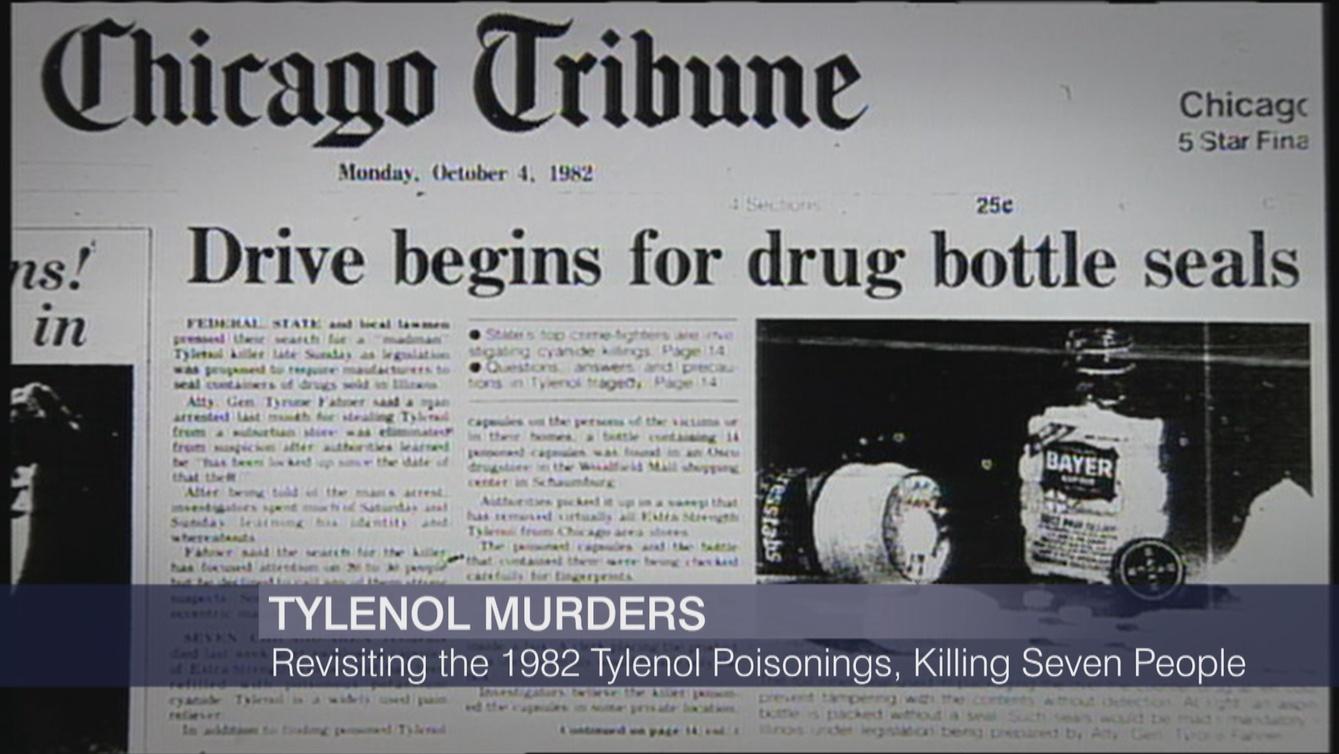
Tylenol was removed from store shelves, first in Chicago by city officials, and then more broadly in a mass recall by Johnson & Johnson, the company that manufactures the common over-the-counter pain reliever. What most unsettled the public and authorities was the sheer randomness of the act. Aside from having taken Tylenol and living in the same general region, the victims had nothing in common.
“Most murderers have a target in mind, or they want to see it happen. They want to be there. They want to experience it. They have a motive. But the person who did this was not in the room when those people died,” journalist Joy Bergmann, who has written about the case, told Chicago Stories. “He didn’t know who he was going to kill. That is an extraordinarily unique aspect of this case, and it continues to haunt everyone who’s touched it.”
It was unknown whether the person would strike again.
The Early Stages of the Investigation
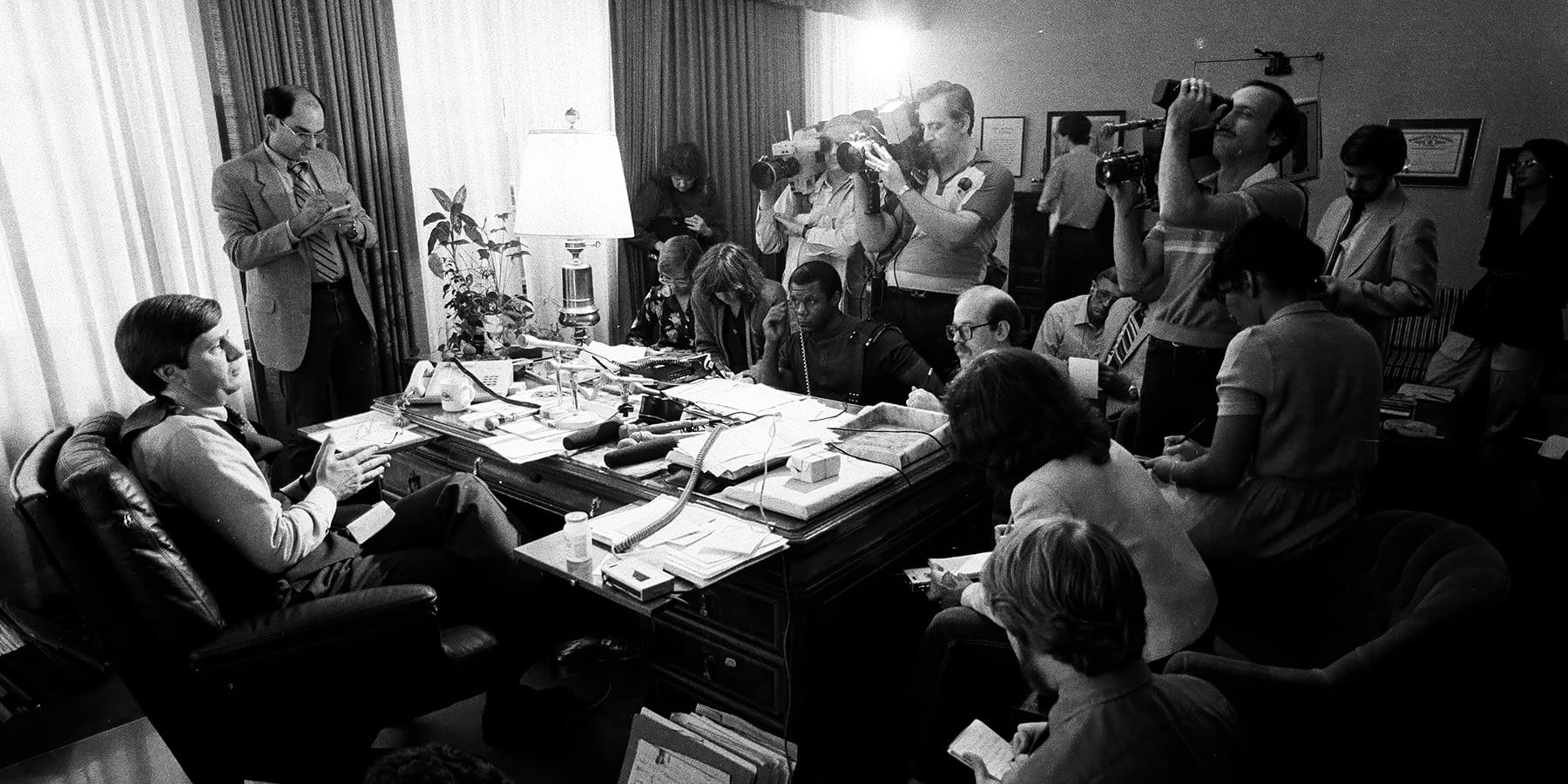
Shortly after the murders, Illinois Attorney General Tyrone Fahner convened a special task force to investigate. “The number of people involved in the investigation was just big – a couple hundred people when it was all said and done,” Fahner told Chicago Stories.
The first question that emerged: Who could have committed such an act? The FBI’s behavioral analysis unit built a criminal profile of the killer. FBI Agent Roy Lane, who investigated the case over several decades, told Chicago Stories that while such analysis was new at the time, he found it helpful. For starters, the profile suggested that the killer was likely a man, not a woman.
“There’s a great likelihood the person who is responsible thinks he got away with this, he tricked law enforcement, and it’s very much a high. But over time, that high is going to diminish,” Lane said. “He’s going to want to get involved in the investigation so that he can see all the information and that he hasn’t been charged or caught yet, but he can resume that high.”
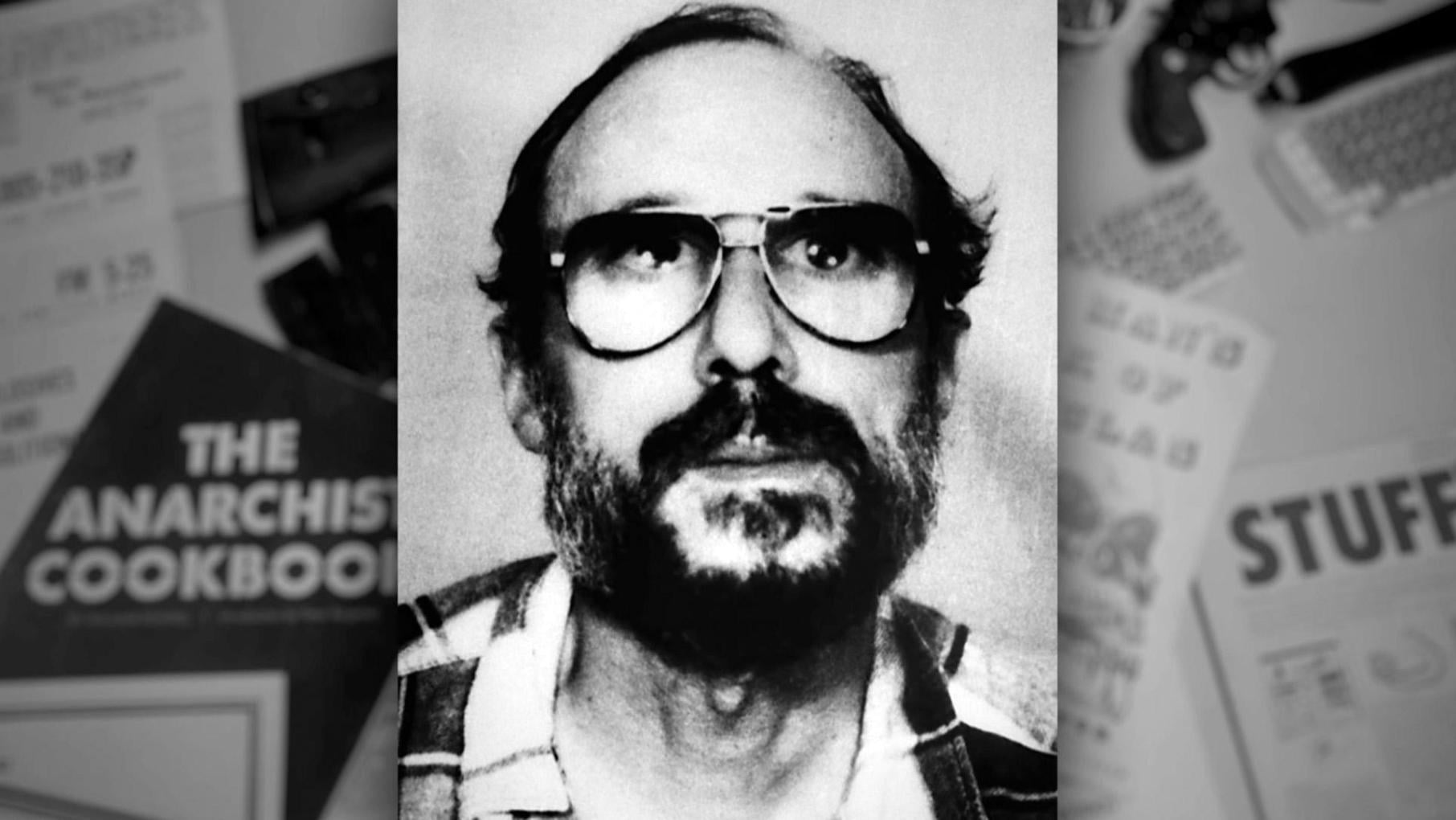
The first notable suspect to emerge came from a tip from a local bartender, who knew of a patron, 48-year-old Roger Arnold, who claimed to possess cyanide. According to the Chicago Tribune, detectives searched his home and found several firearms, chemistry equipment, and a book on making bombs. They found a bag of white powder that turned out not to be cyanide, but Arnold did have a few suspicious connections. He frequented bars near the Walgreens where Paula Prince purchased her bottle of Tylenol; he worked at a Jewel grocery store warehouse (two contaminated bottles had been purchased at that chain); and he worked with the father of Mary Reiner.
“Roger Arnold was very angry that the finger had been pointed in his direction, and he was going to get his revenge,” Bergmann said. “So he started stalking those bars and trying to find the guy he believed had turned him in as a possible suspect. One night he saw that person leave the bars.”
Arnold shot and killed the man. But it wasn’t the bartender who had tipped off the police. Arnold had killed the wrong man – 46-year-old Josh Stanisha, a computer consultant who had three daughters and zero connection to the Tylenol case.
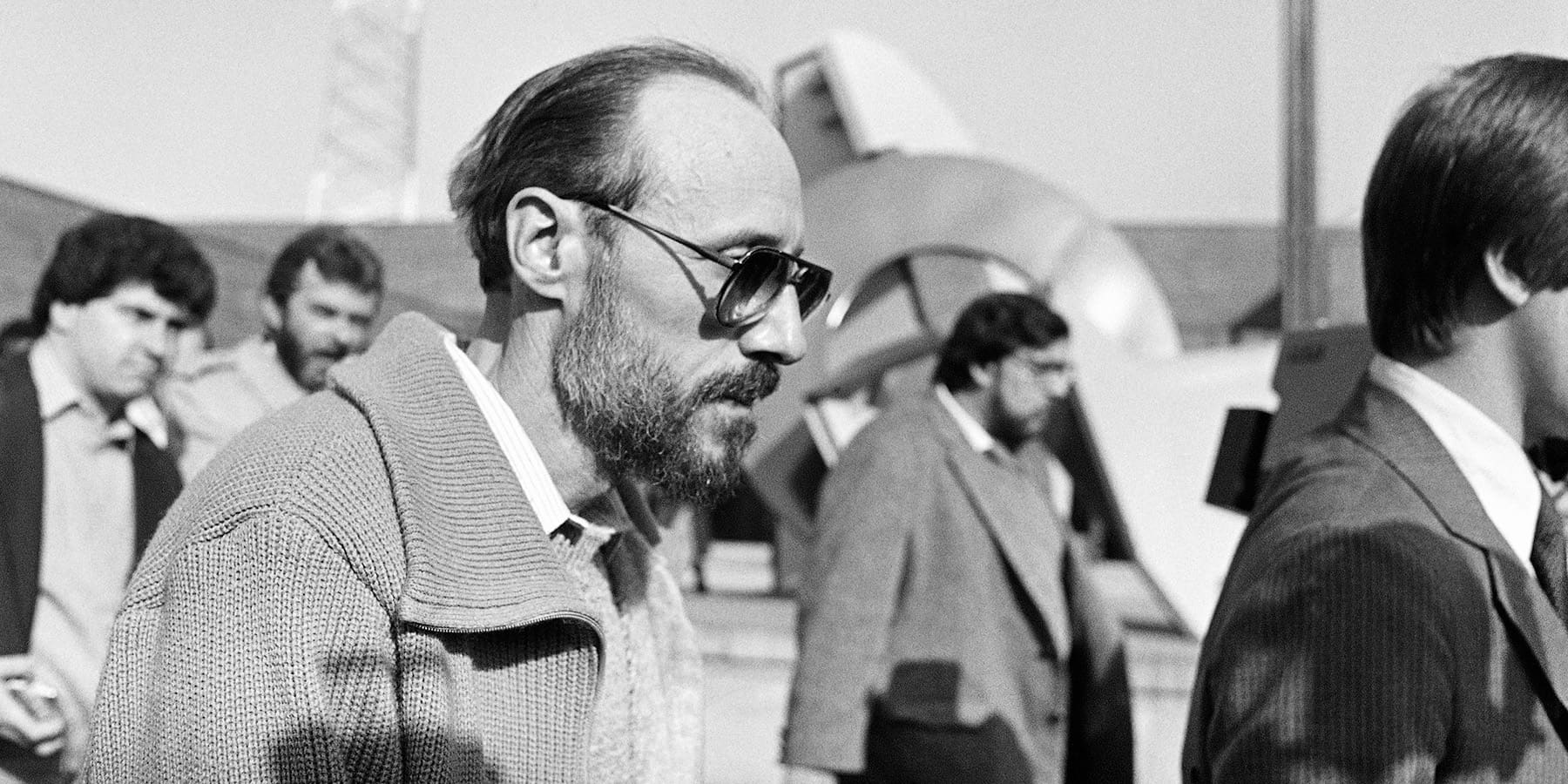
“Some people called John Stanisha the eighth Tylenol victim, because as a result of the Tylenol murders, he ended up dead on the sidewalk,” Bergmann said.
Arnold was convicted of Stanisha’s murder and sentenced to 30 years in prison, but he was never charged with the Tylenol murders. Jimmy Gildea, a homicide detective for the Chicago Police Department, worked the Tylenol case and interviewed Arnold after he shot Stanisha.
“People say, ‘Do you think he did it?’ The only thing I can say is, ‘I can’t say that he didn’t do it,” Gildea told Chicago Stories.
A startling break in the case came on October 6, when Johnson & Johnson received a letter from someone claiming to be the killer. In the letter, the writer claimed how “easy” it was to put cyanide into capsules, threatening to “kill a bunch more” if the company did not meet the writer’s demand for $1 million. Then, a second letter, addressed to President Ronald Reagan, threatened to kill more people if the president raised taxes.
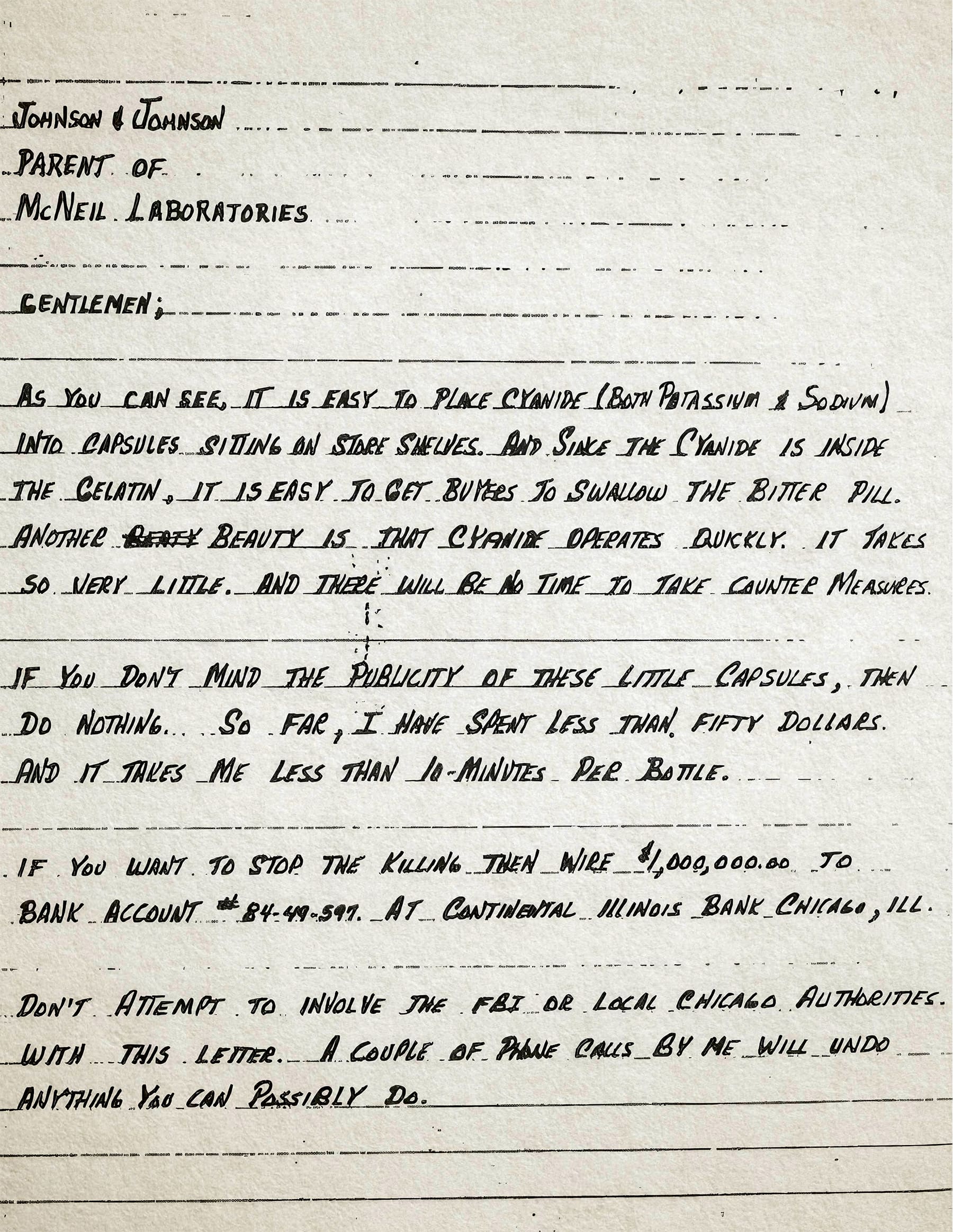
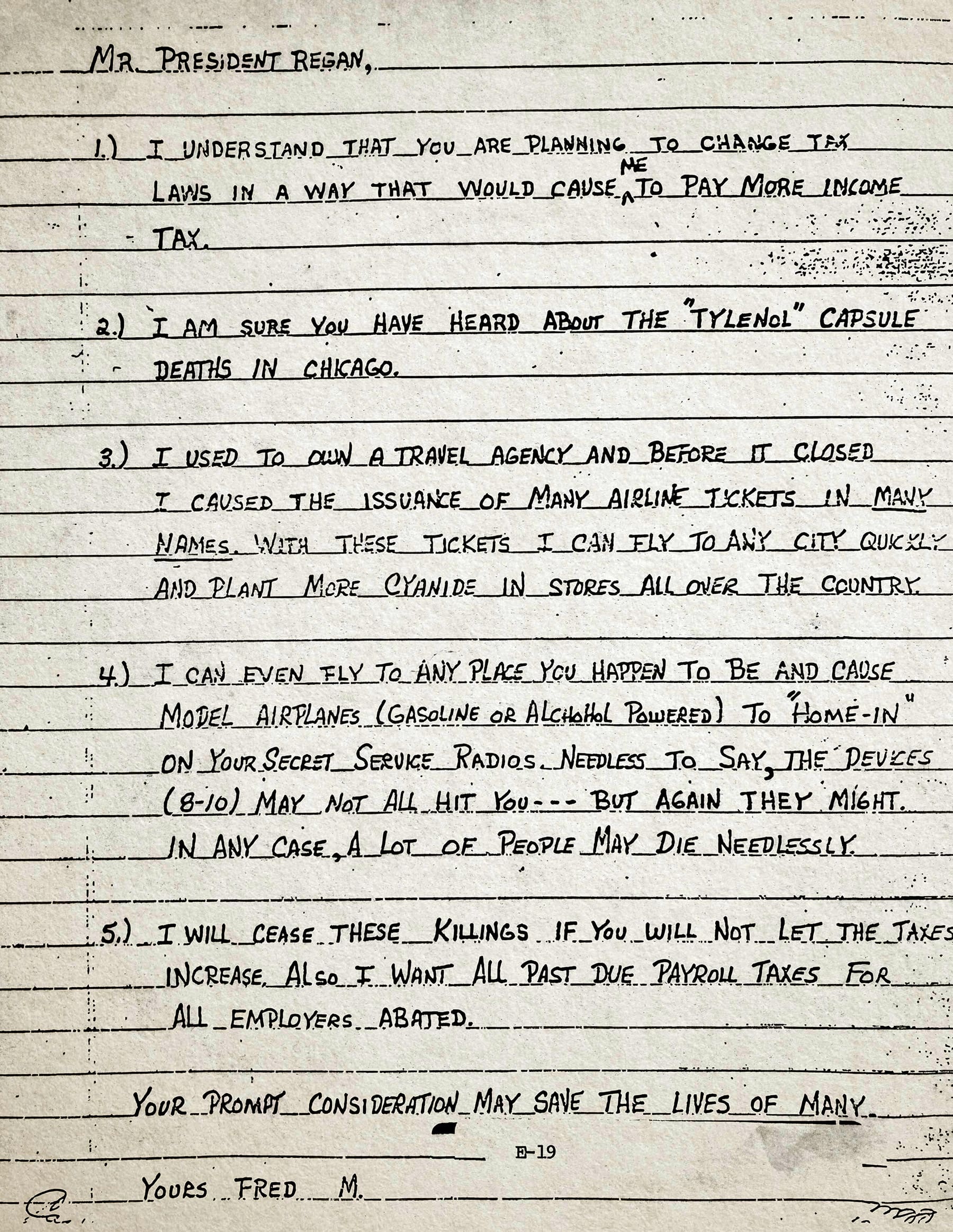
Investigators were able to trace the letters’ postage meter stamps to the owner of a Chicago area travel agency, but he was ruled out. Investigators asked the man if there were any people in his life who would want to frame him, and he offered up a name: Robert Richardson, the husband of a former travel agency employee who claimed his wife was owed $500 in back wages. Richardson and his wife had left Chicago on September 4 – weeks before the murders – and informed neighbors they were moving to Texas.
Investigators found a photo of Richardson in a column he penned for the Chicago Tribune, and circulated it, along with a federal arrest warrant, around the country. It caught the attention of David Barton, a Kansas City police sergeant, while he was watching the CBS Evening News. However, Barton recognized the man by his real name.
“I jumped out of the couch and I said, ‘That’s g--damn James Lewis!’” Barton told Chicago Stories.
The Suspect That Stood Out to Authorities
Before he adopted the alias Robert Richardson in Chicago, James Lewis had a difficult life. According to Bergmann’s reporting from her Chicago Reader article from 2000, Lewis was abandoned by his parents as a young child and was later adopted by a couple in southern Missouri.
“As he grew into a teenager, he showed a lot of emotional problems and a little bit of volatility to the point where his mother was even a little bit afraid of him,” Bergmann said. As a teenager, Lewis reportedly chased his mother and stepfather with an ax and assaulted the latter. He attempted suicide and spent time in a state psychiatric facility. In college, Lewis fell in love with a woman named Leann. They got married and had a child together – a little girl named Toni who was born with Down syndrome and a hole in her heart. She died when she was just five years old, after the sutures used in a surgery to repair her heart tore.
James and Leann ran a tax preparation business out of their home, which was then in Kansas City. One of their clients, a 72-year-old man named Raymond West – a friendly retiree well-known in his neighborhood – disappeared suddenly in 1978. His body was discovered in the attic of his own home. The scene that police found was grotesque.
“The body had been dismembered, then hoisted up into the attic by way of a triple pulley game hoist – a hoist that would be used by deer hunters to strip a deer in the field,” Barton said.
Local authorities honed in on Lewis as the prime suspect after Lewis tried to cash a $5,000 forged check from West’s bank account. Barton said the police also discovered boxes of cancelled checks from West in Lewis’s car, along with cords and ropes with knots similar to the ones used in the attic hoist. Lewis was arrested and retained a lawyer, who discovered that the police who initially interrogated Lewis failed to read him his Miranda rights. The case was dismissed on the procedural error, and Lewis walked free. But he didn’t exactly lay low.
“He just embarks on a fairly widespread credit card fraud scheme,” said Bergmann, in which he took out credit cards in his tax clients’ names. When Barton’s team showed up at Lewis’s home to arrest him, they discovered he and his wife had skipped town. He dropped off the radar, but by the fall of 1982 on the heels of the Tylenol poisonings, a nationwide manhunt for Lewis began.
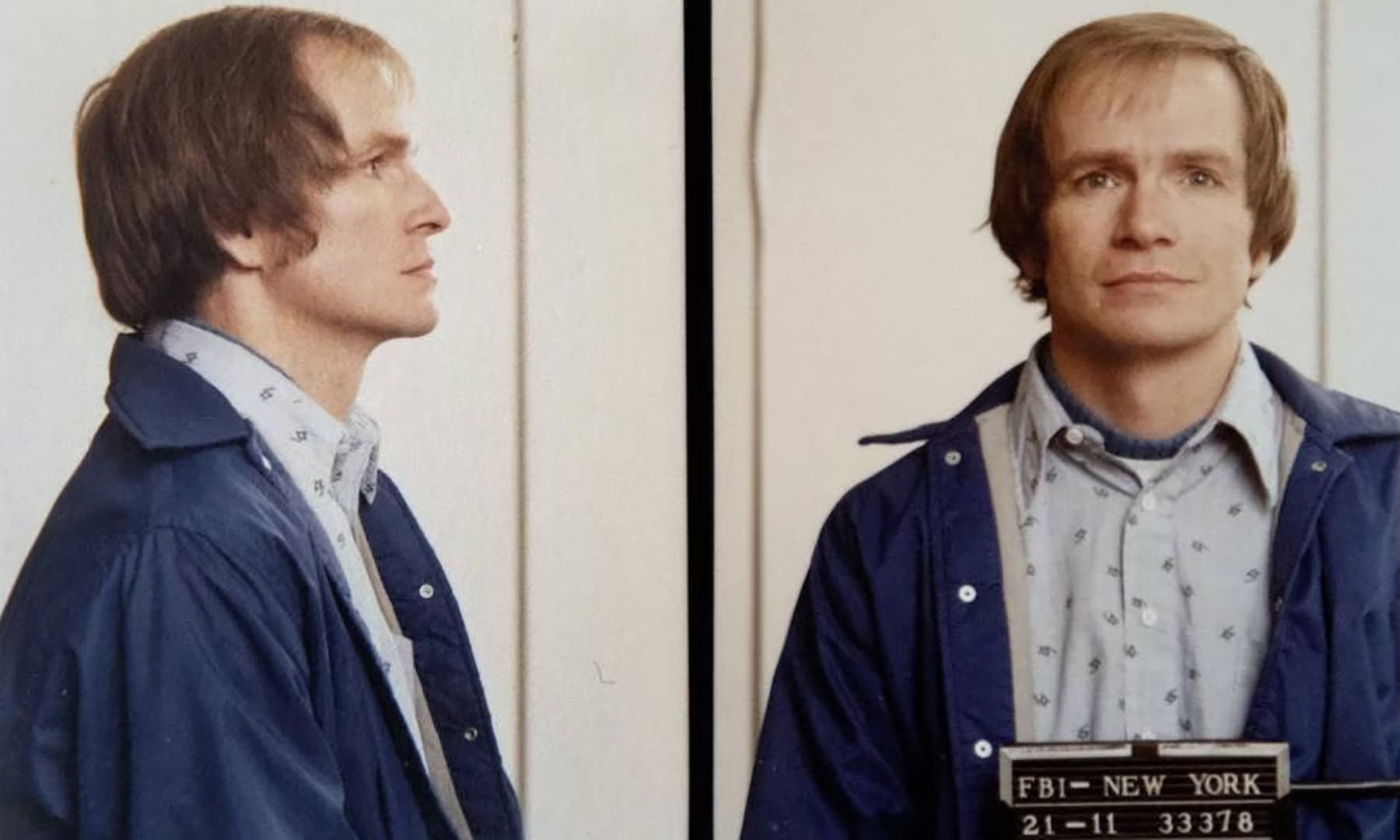
Lewis evaded capture for two months, but on December 13, 1982, FBI agents arrested him after a tip from a librarian, who spotted him reading in a New York public library. Leann also turned herself in the next day on a warrant for using a false Social Security number. But if she knew anything about her husband’s activities, she refused to tell the authorities. The task force struggled to come up with concrete evidence that Lewis was responsible for the poisonings.
“One of the most frustrating parts of the investigation was not being able to identify that James Lewis was in the Chicago area [at the time of the murders] and not being able to identify a means of transportation for him from New York to Chicago, and then Chicago back to New York,” said FBI agent Lane.
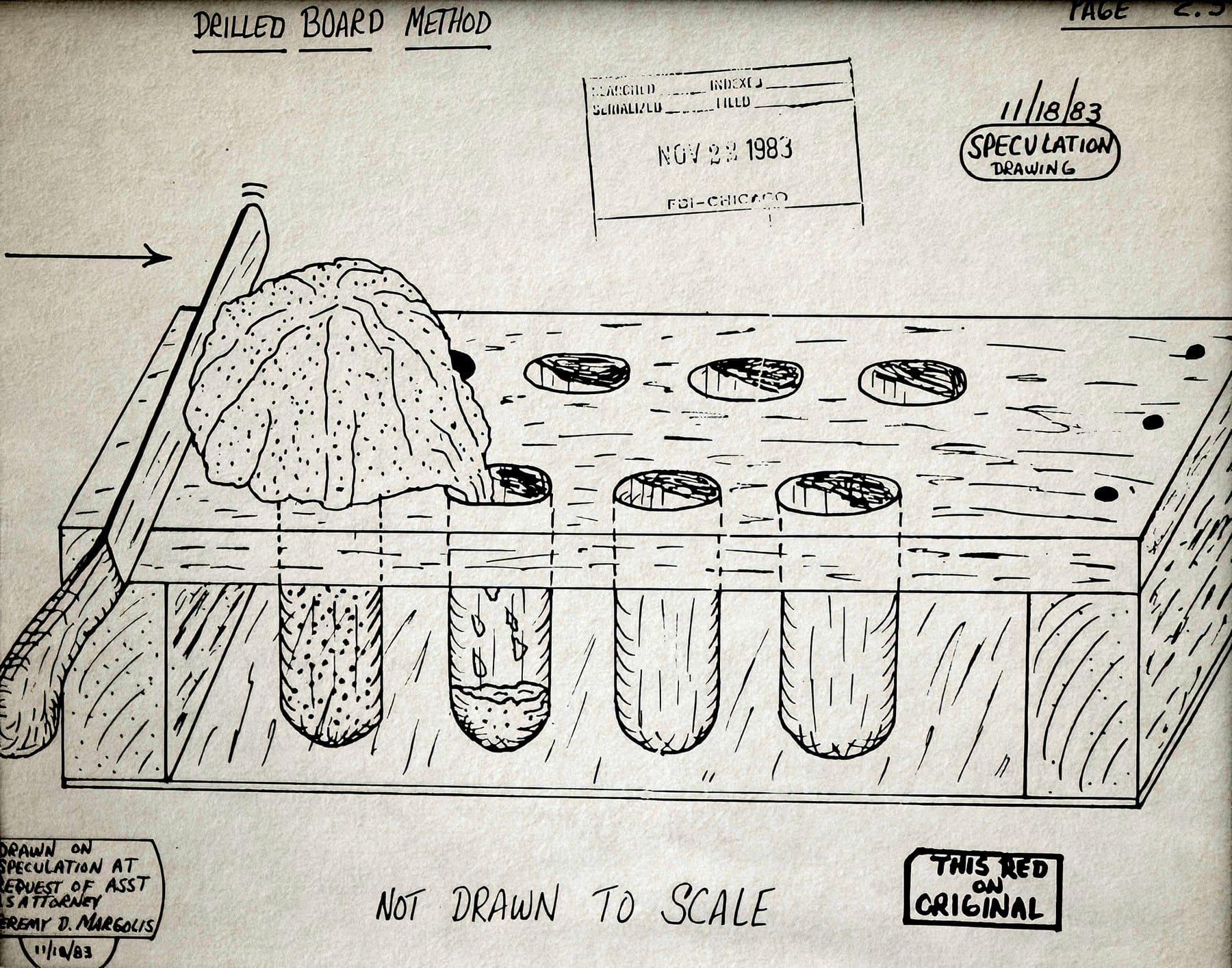
They couldn’t charge Lewis with the murders, but they did pursue attempted extortion charges. Lewis admitted to writing the letters to Johnson & Johnson and the president, though only as a means to frame his wife’s former employer. A jury convicted him on the extortion charges. While Lewis awaited sentencing, he reached out to FBI Agent Lane and offered to help with the investigation – the very behavior that the FBI criminal profile predicted. Lane met with Lewis on multiple occasions.
“I didn’t see psychopathic rage. What I saw was a lack of concern for anyone other than himself,” Lane said.
Lewis shared theories about how the murderer may have gone about disassembling the capsules, adding cyanide, and reassembling them – even sharing detailed drawings with then-Assistant U.S. Attorney Jeremy Margolis.
“[Lane] and I consistently asked ourselves and asked each other, ‘What on earth would possess a human being to spend this much time pontificating on these various methods of creating this diabolical murder scheme?’” Margolis said.
According to Lane, Lewis suggested he could get investigators “close” to the person responsible, but Lewis asked for immunity, which they could not give him. So the meetings ended. A judge sentenced Lewis to 10 years in a federal prison on the extortion charges. But the poisonings went unsolved, and the case went quiet.
A Second Task Force
Years passed. Families grieved. Johnson & Johnson’s Tylenol sales rebounded with time, and the company reached a confidential settlement with the victims’ families. Companies began to add tamper-proof safety seals to medicine and food. But still, no one was charged with the murders.
Lewis was released from prison in 1995 and moved to Cambridge, Massachusetts. He routinely denied involvement with the poisonings, but he continued to give interviews to the press, including to WLS reporter Chuck Goudie, who told WTTW that Lewis appeared to enjoy the cat-and-mouse game with authorities and journalists. Lewis often called Goudie to complain.
“James Lewis was one of those criminals who thought that he was the smartest guy in the room,” Goudie said. “He would call me angry about stories that we aired, didn’t like that we presumed he was the Tylenol killer even though he put himself right in the middle of it.”
In 2004, Lewis was arrested again, this time on kidnapping and sexual assault charges. He spent three years in jail awaiting trial, but journalist Christy Gutowski, who, along with Stacy St. Clair, wrote an extensive investigative series and podcast for the Chicago Tribune on the Tylenol case, told Chicago Stories that charges were dropped because the victim was “so traumatized” that she couldn’t testify in court.
Then in 2006, the FBI and the Arlington Heights Police Department created a second task force to awaken the dormant Tylenol murder case. Authorities still focused on Lewis as the prime suspect. Lane, who at the time of the revived investigation had retired from the FBI, was brought back to work the case. With Lewis still behind bars awaiting trial on the kidnapping and sexual assault charges, investigators thought Lewis might be willing to talk.
“James Lewis wanted to be the center of attention,” Lane said. “He wrote me a letter saying I could interview him, and I could ask any question that I wanted.”
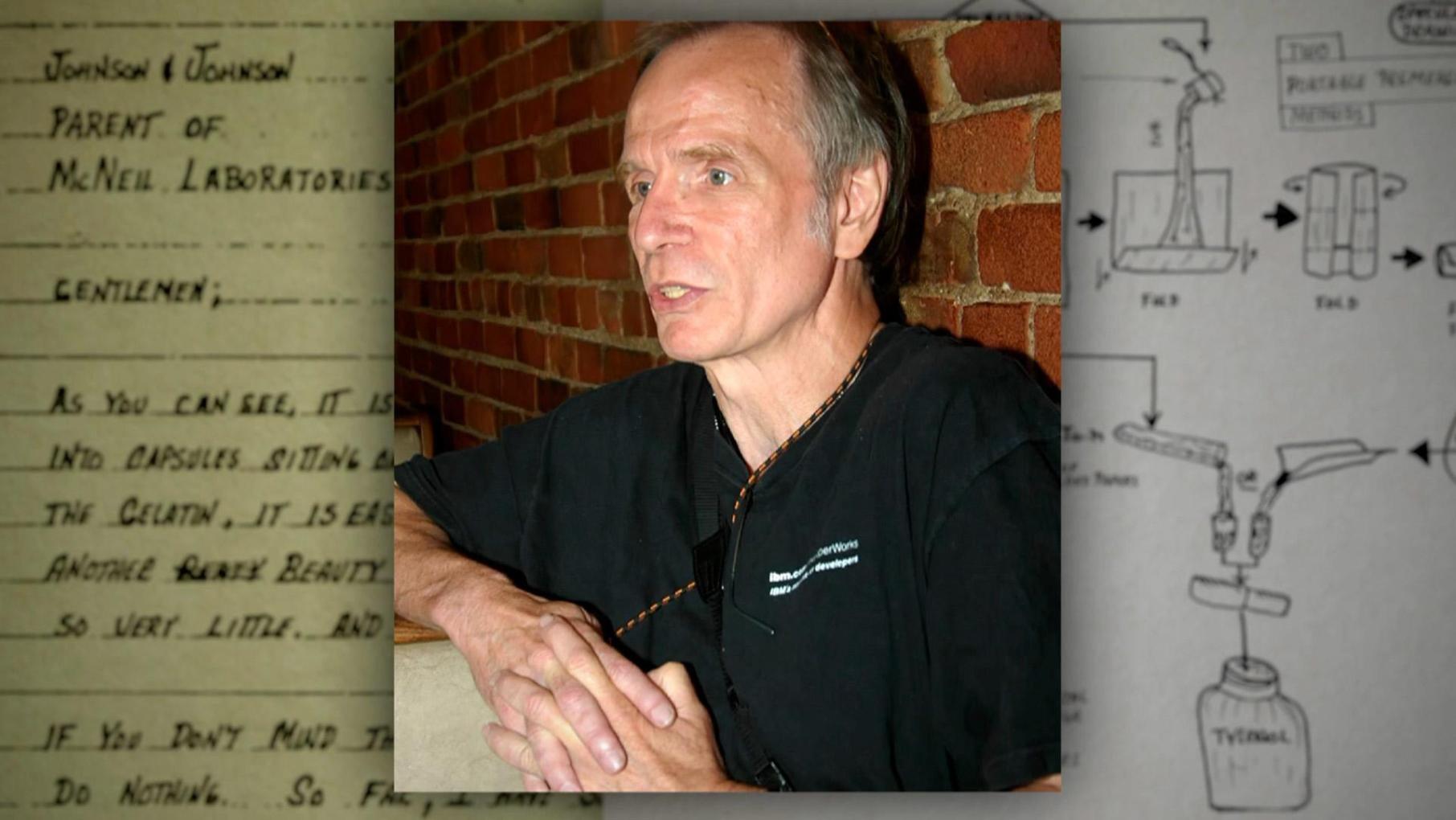
In a complex sting operation that Gutowski and St. Clair reported, Lane asked Lewis to help a “journalist” – who was really an undercover FBI agent – with research for a book she was writing about the Tylenol murders that would supposedly clear his name. They met with Lewis and Leann dozens of times, recording their conversations. Lewis once demonstrated how to open a Tylenol box without leaving fingerprints and, according to Lane, Lewis became animated when they brought him to the Walgreens where Paula Prince had purchased her tainted bottle of Tylenol.
“He was so excited he almost knocked over the handicapped person trying to get in the store, and then he had to stop because he had a pain in his stomach and he said, ‘I haven’t been this excited since I met my birth mother,’” Lane recounted. Lewis reportedly went directly to the shelves where the Tylenol had been stocked in 1982.
During one meeting, Lane cornered Lewis about statements he had made in the past. Due to technological advances since the 1980s, the second investigation had uncovered that Lewis’s extortion letters were mailed on October 1, 1982. Lewis claimed that he spent three days writing the Johnson & Johnson extortion letter – meaning he would have started writing the letters before the deaths became public. This revelation led to a search warrant of Lewis’s home. Also due to technological advances, investigators were able to get DNA from some of the Tylenol bottles. But the DNA did not match Lewis’s, and the search warrant did not provide any hard evidence. Investigators presented 50 pages of circumstantial evidence outlining why they believed Lewis to be the culprit, including a motive going back to his daughter Toni’s death.
“The theory was that James Lewis had done the Tylenol poisonings to avenge his daughter because the company that had trademarked those sutures – it was trademarked by Johnson & Johnson,” Gutowski told Chicago Stories. But in the end, prosecutors would not charge Lewis because of the lack of hard evidence. “There is no physical evidence connecting James Lewis to the Tylenol murders,” Gutowski said.
The case remains open with the Arlington Heights Police Department, which prevents the public release of evidence and case files. As of 2025, no one has ever been charged with the Tylenol murders. James Lewis died in 2023. Leann is still alive, but did not respond to Chicago Stories producers’ request for comment.
“The Tylenol murders is a baffling case that still haunts the memories of people who lived through it and people who are just learning about it now, because it’s unsolved and it doesn't make a lot of sense. There wasn’t a clear motive,” said Bergmann. “We didn’t know where this killer was coming from or why he did it, and that remains to this day.”
Related