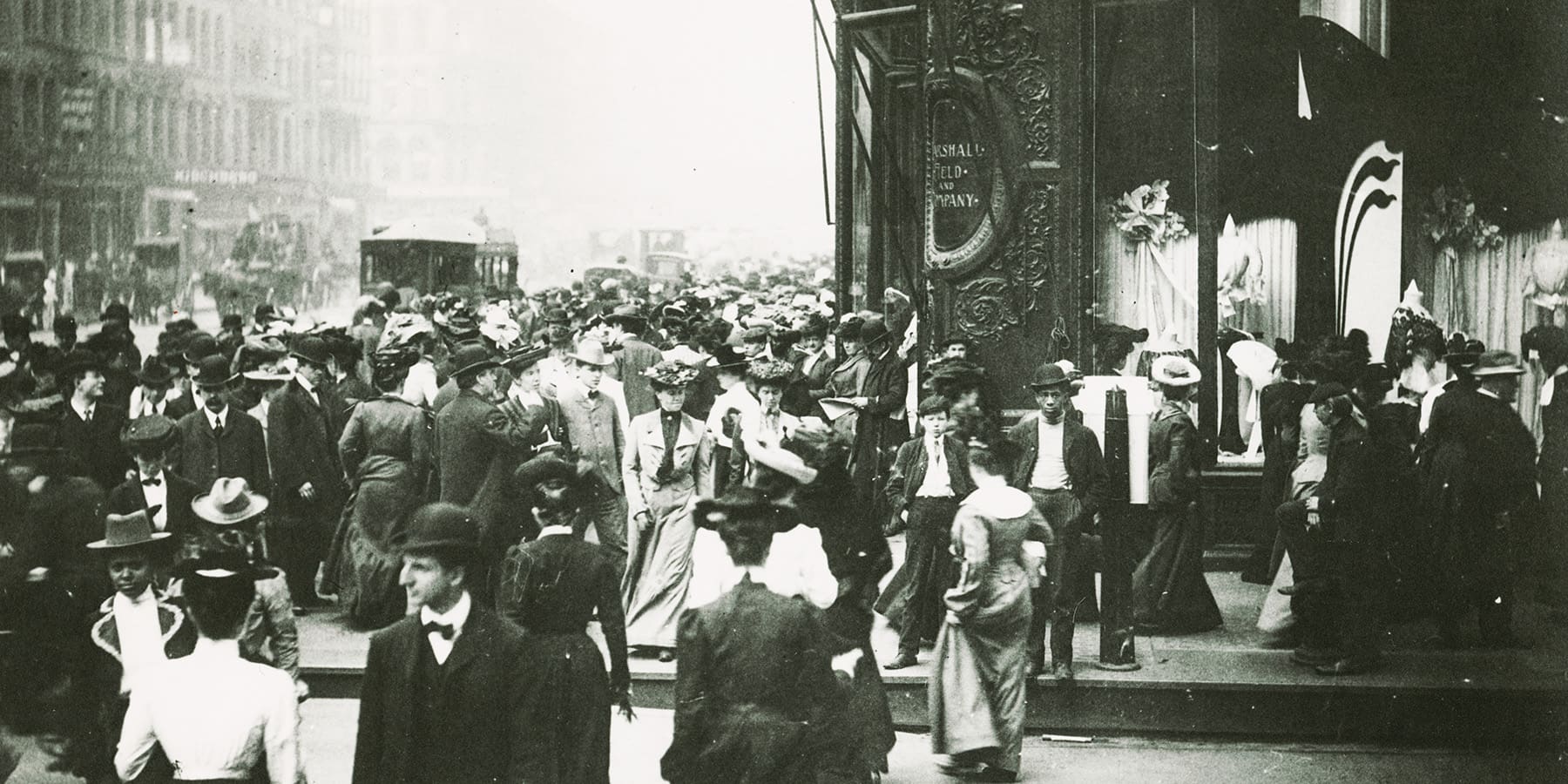

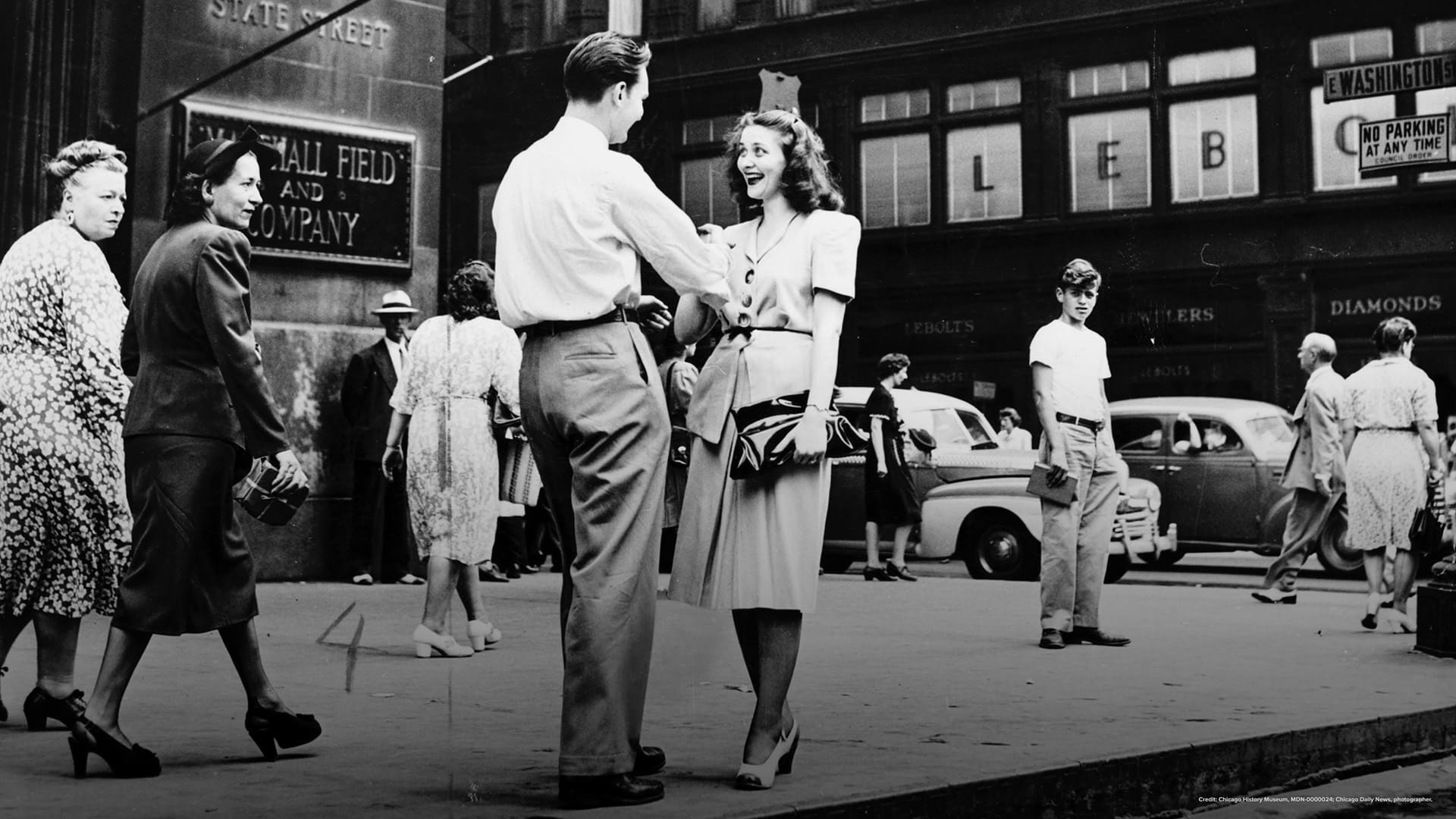









Legend has it that around 1897, Marshall Field learned that Chicagoans were leaving notes on the window of his store at the corner of State and Washington streets. It had organically become a meeting point, and people left notes in case they missed their rendezvous.
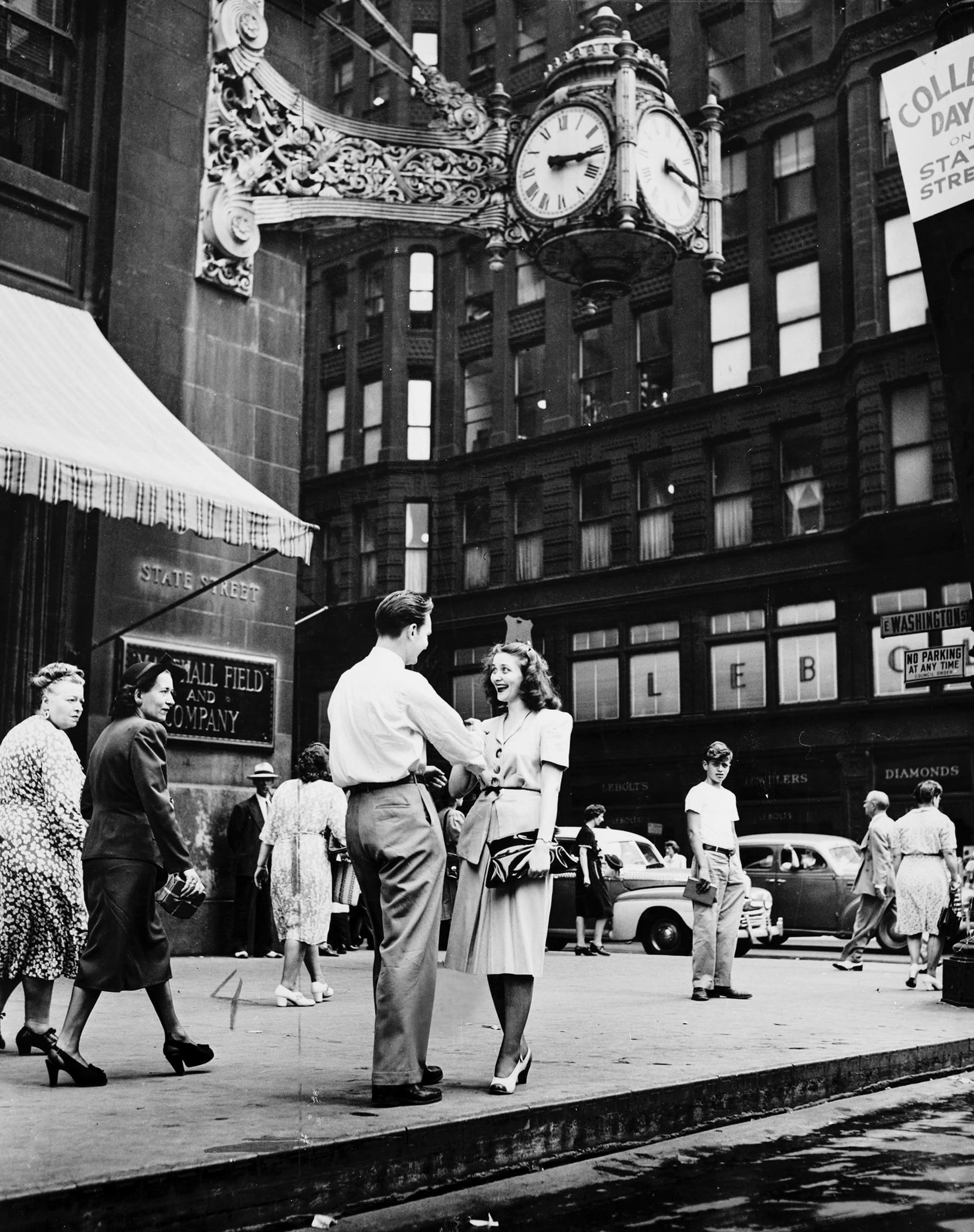
“That just shows you how much it already had become a central point here in Chicago,” architectural expert James McKay told Chicago Stories. “Rather than have all these notes, he thought by having a clock, people could know what time it is. After all, not everybody had a timepiece at this time, let alone a smartphone.”
So, in 1897, Field had his “Great Clock” installed on that corner. It was a 500-pound, iron landmark affixed to the side of the building.
“From that day forward, people would say, ‘Meet me under the clock,’” McHenry County College history and business instructor Sarah Sullivan told Chicago Stories. “It became a very popular symbol in Chicago.”
In the early 1900s, a massive expansion of the Marshall Field’s building was underway. (The building’s expansion wasn’t completed until after Field’s 1906 death, but when it was finished, it occupied an entire city block between State, Washington, Wabash, and Randolph.) In 1904, a second, 7-ton bronze clock was added to the corner of State and Randolph. The clocks didn’t match until the original one at State and Washington was replaced in 1907 with another 7-ton clock. According to this Chicago Tonight “Ask Geoffrey” segment, the clock faces are 46 inches across, and the hands are made of wood. They were designed by Pierce Anderson and Ernest Graham for the store’s architect, Daniel Burnham.
The clocks became an iconic representation not just of Marshall Field’s but of the city of Chicago. In 1945, Norman Rockwell cemented that status with his painting The Clock Mender, which depicts a man perched atop a ladder, apparently synchronizing the Great Clock with his own pocket watch. (The painting, which first appeared in the Saturday Evening Post in 1945, is part of the Chicago History Museum’s permanent collection.) Before a GPS system was installed in 2009 to synchronize them four times per day, the clocks were controlled by a master clock in the building.
Related