






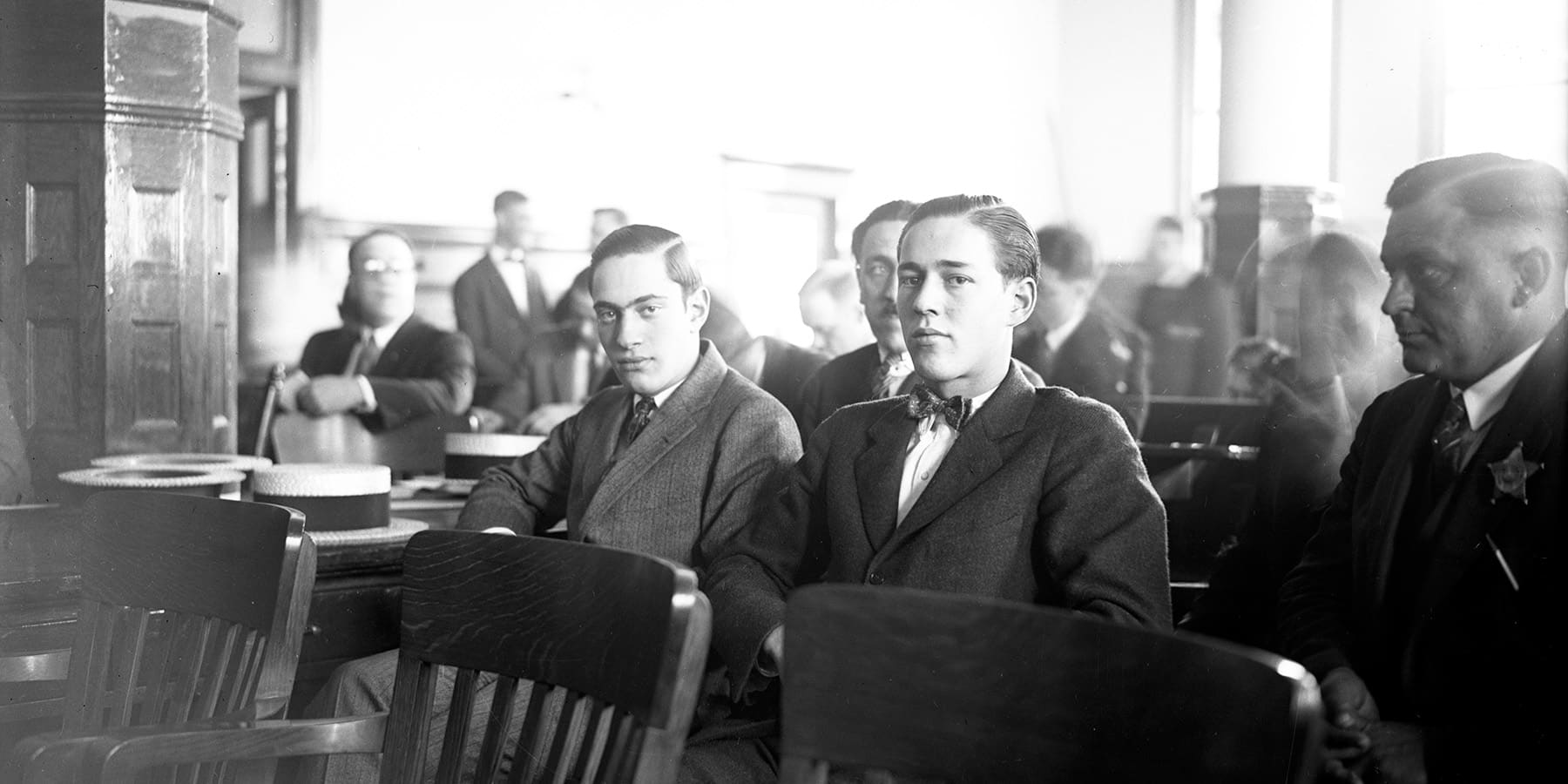
On the morning of May 22, 1924, a factory worker on his way home discovered the body of a young boy lying in a culvert near the Illinois and Indiana border outside Chicago. It was the body of Bobby Franks, a 14-year-old boy from a wealthy family in the city’s Kenwood neighborhood. Bobby’s death was instantly front-page news. Police and journalists zeroed in on two key clues – a pair of glasses and a typewriter with two defective keys. The glasses led them to a young man named Nathan Leopold and his close friend, Richard Loeb. During their lengthy police interviews, their alibi unraveled, their so-called “perfect crime” exposed just 10 days after the murder. While the pair seemed to relish the limelight brought on by the onslaught of media attention, a famous attorney stepped in to defend the arrogant young men who admitted to police: “We intended to murder him.”
“They Have Everything…And They’re Bored”
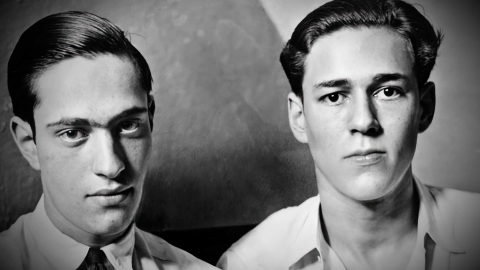
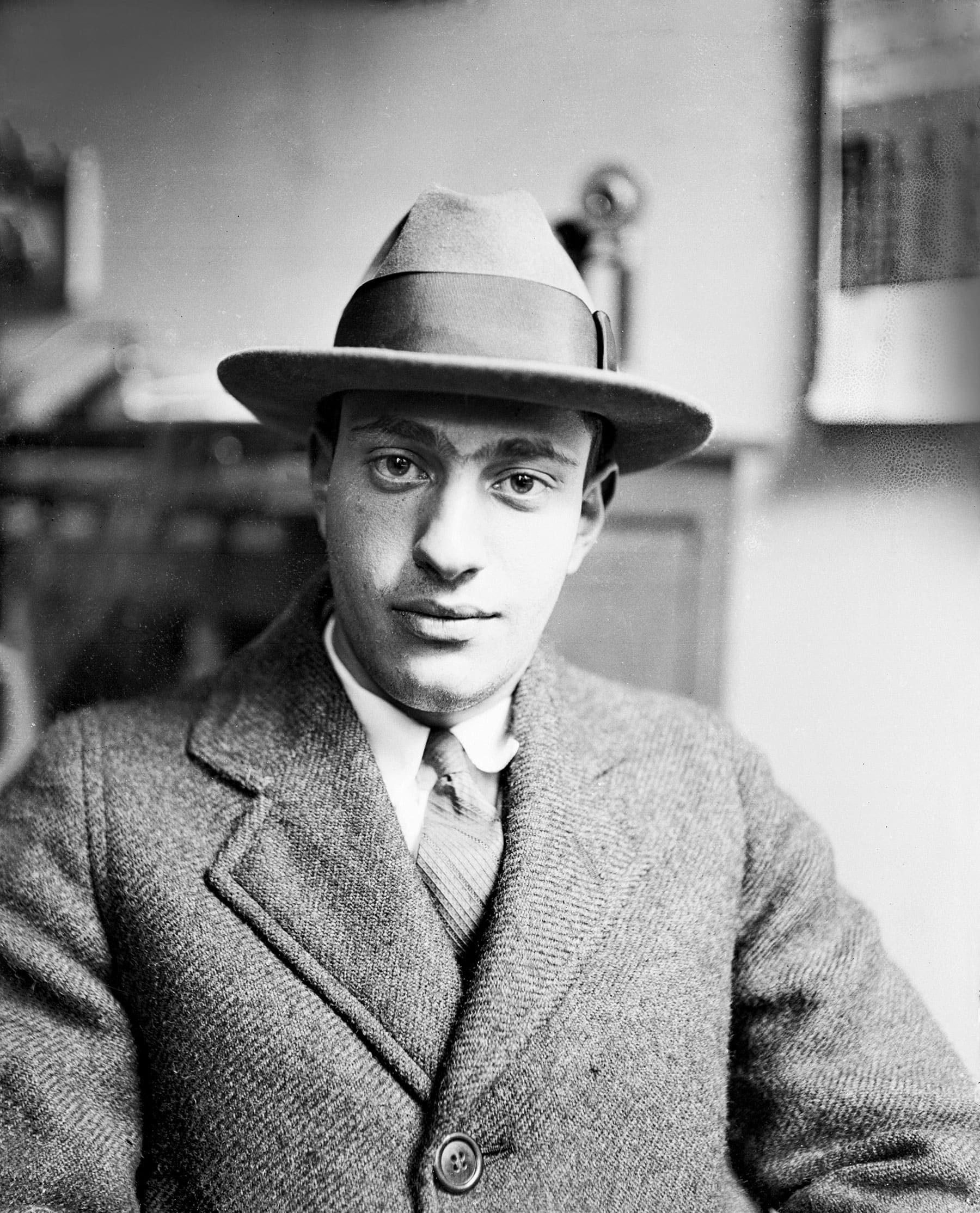
Their names are now synonymous with the crime they committed. But before 1924, Nathan Leopold and Richard Loeb were privileged teenagers from wealthy, Jewish families living in Chicago’s Kenwood neighborhood – both brilliant young men who, on paper, seemed to have everything going for them.
At the age of 19, Nathan Leopold Jr. had already graduated from the University of Chicago and was planning to attend Harvard Law School. “His IQ was soaring,” Candace Fleming, author of Murder Among Friends, told Chicago Stories. He spoke multiple languages, and he was also an enthusiastic amateur ornithologist. But Leopold was also described by many of his peers as arrogant, and he subscribed to German philosopher Friedrich Nietzsche’s “Übermenschen” (superman) concept, the idea that “there are certain people that are so superior that they’re above the law, that they’re above the constraints of society. And he actually believes that he is a superman,” Fleming said.
Even his love of birding had a dark twist. Leopold made a name for himself in the birding community when he found a rare bird called the Kirtland’s warbler. “We have this beautiful, sweet video of Nathan sweetly, lovingly feeding these beautiful birds. It was this amazing discovery.” Fleming said. “The next day, he goes out and he kills those warblers, along with the nest, and he digs up even the tree that it’s on because he wants to add it to his collection.”
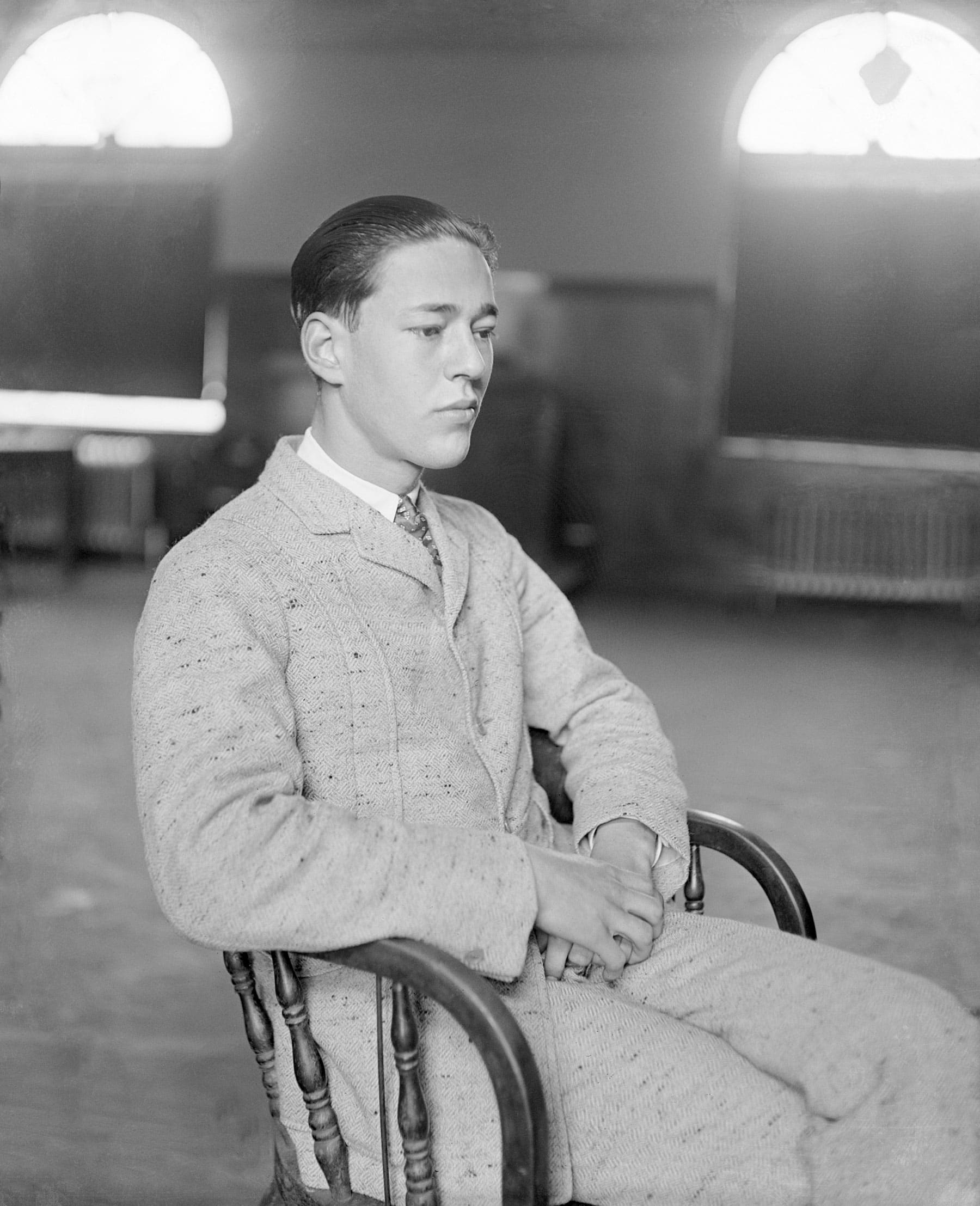
Richard Loeb was the third of four sons born to Anna and Albert Loeb, the latter of whom was a vice president at Sears, Roebuck, and Co. Where Leopold was haughty and standoffish with his peers, Loeb was popular, handsome, and charismatic. But he was also reckless, according to Erik Rebain, author of Arrested Adolescence: The Secret Life of Nathan Leopold. “He went drinking and gambling,” Rebain said. “He was just very wild, but also very immature because he was 14 when he entered college. He was extremely young, so he never really got that chance to grow up.”
The two met at the University of Chicago in 1920. At first, they did not like one another. “Richard looked at Nathan and said, ‘Oh, he’s superior. He’s just a jerk.’ Nathan looked at Richard and thought, ‘Oh, he’s just too much of a pretty boy. He thinks he’s just so handsome and so charming, and I think he’s so fake.’…But they keep coming across each other, and eventually they recognize something within each other,” Fleming said.
“Together, the two are like the perfect storm, the two halves that make this whole.”– Candace Fleming, author of Murder Among Friends
Their friendship developed into something more. At one point in their friendship, as the two traveled on a train to the Loeb family summer estate in Charlevoix, Michigan, Leopold confessed to Loeb that he had sexual fantasies about men, including Loeb. “This is a big confession because it’s the early 1920s, and homosexuality is illegal,” Fleming said. “Not only could you go to jail, but if anyone found out about these tendencies, you would have no position. You would have no job. You would have no reputation.” Loeb had a confession of his own: He wanted to become a master criminal and had already committed crimes such as stealing.
Loeb wanted to take his crimes to the next level. “What Loeb wanted was a partner – literally. He wanted a partner in crime. He wanted somebody to come out and secretly commit these wonderful crimes with him. And what Leopold wanted, apparently, was sex,” Nina Barrett, author of The Leopold and Loeb Files, told Chicago Stories. Their sexual relationship and their criminal partnership began on that train.
“They have everything. They’re intelligent. They have money. They have wild freedom that teenagers would never have in the 21st century,” Fleming said. “And they’re bored. They decide that…they’re going to create the perfect crime. They’re going to kidnap and murder a child. They don’t specify the victim. They think they’ll just figure that out on the day of. But what they look at that crime is – it’s a fun game. It’s fun for them.”
The Murder of Bobby Franks
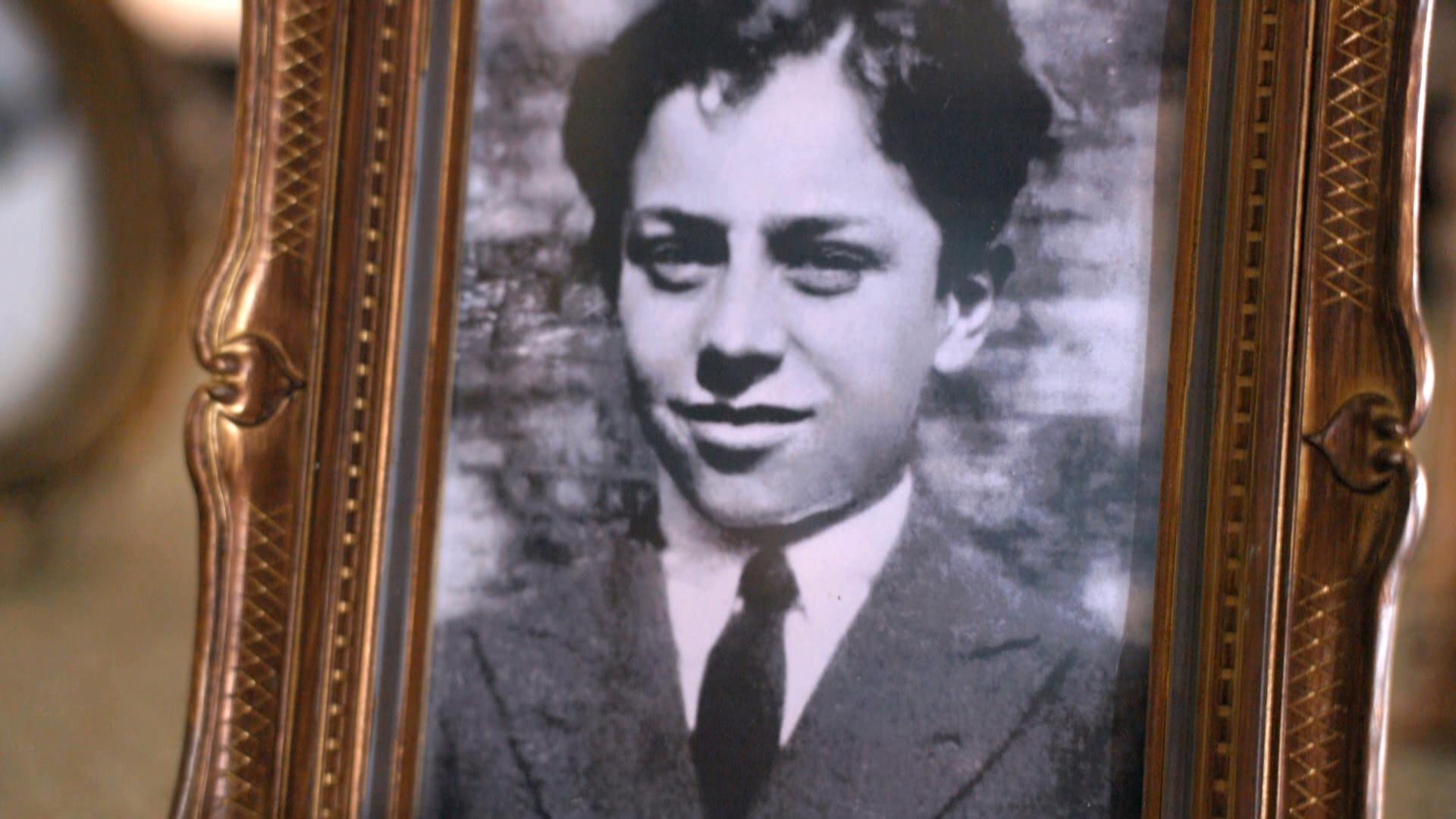
One spring afternoon in 1924, the lives of Leopold and Loeb dramatically collided with a 14-year-old boy named Bobby Franks. Bobby was a Kenwood boy, too, and was distantly related through marriage to the Loeb family. Loeb had even played tennis with Bobby. Bobby lived with his brother, sister, and his parents, Flora and Jacob, in a stately mansion. Jacob was the wealthy former owner and president of the Rockford Watch Company. Bobby was adored by his family, and he was on the cusp of young adulthood.
“There was a ritual at that time that if you were a young guy, you wore these short, pantaloon-like pants and knee socks,” Barrett said. “They had just been talking about taking Bobby to buy his long pants.” But Bobby never got the chance.
As the Franks family sat down for dinner on May 21, Bobby didn’t come home. Eventually, as the time passed and the anxiety over his absence escalated, Jacob went out looking for his son. While he was out, Flora received a phone call. On the other end of the line, a man’s voice informed her that her son had been kidnapped and was still alive. If they awaited further instruction, they could get Bobby back for a ransom.
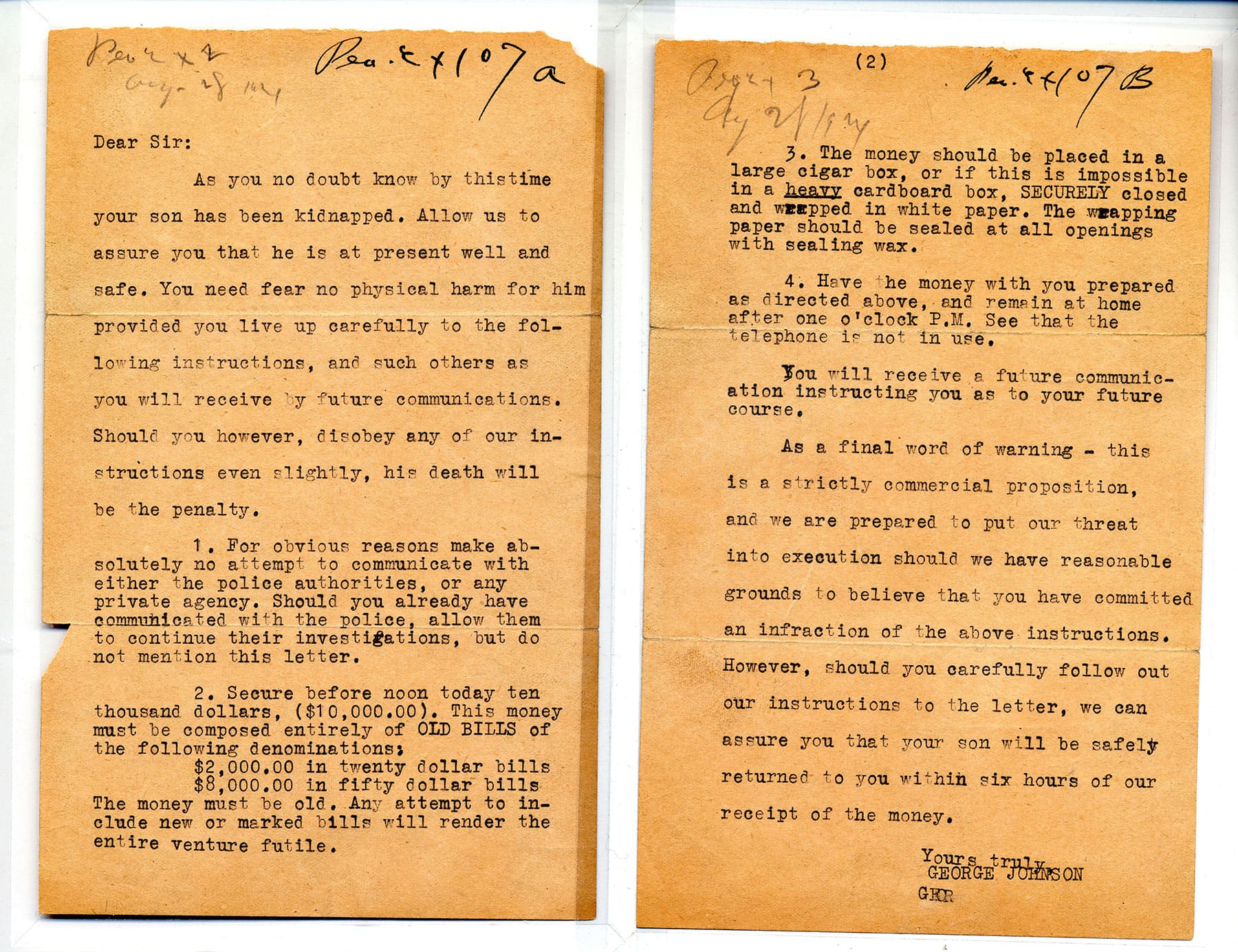
The next morning, the postman delivered a ransom note demanding $10,000 and signed “George Johnson.”
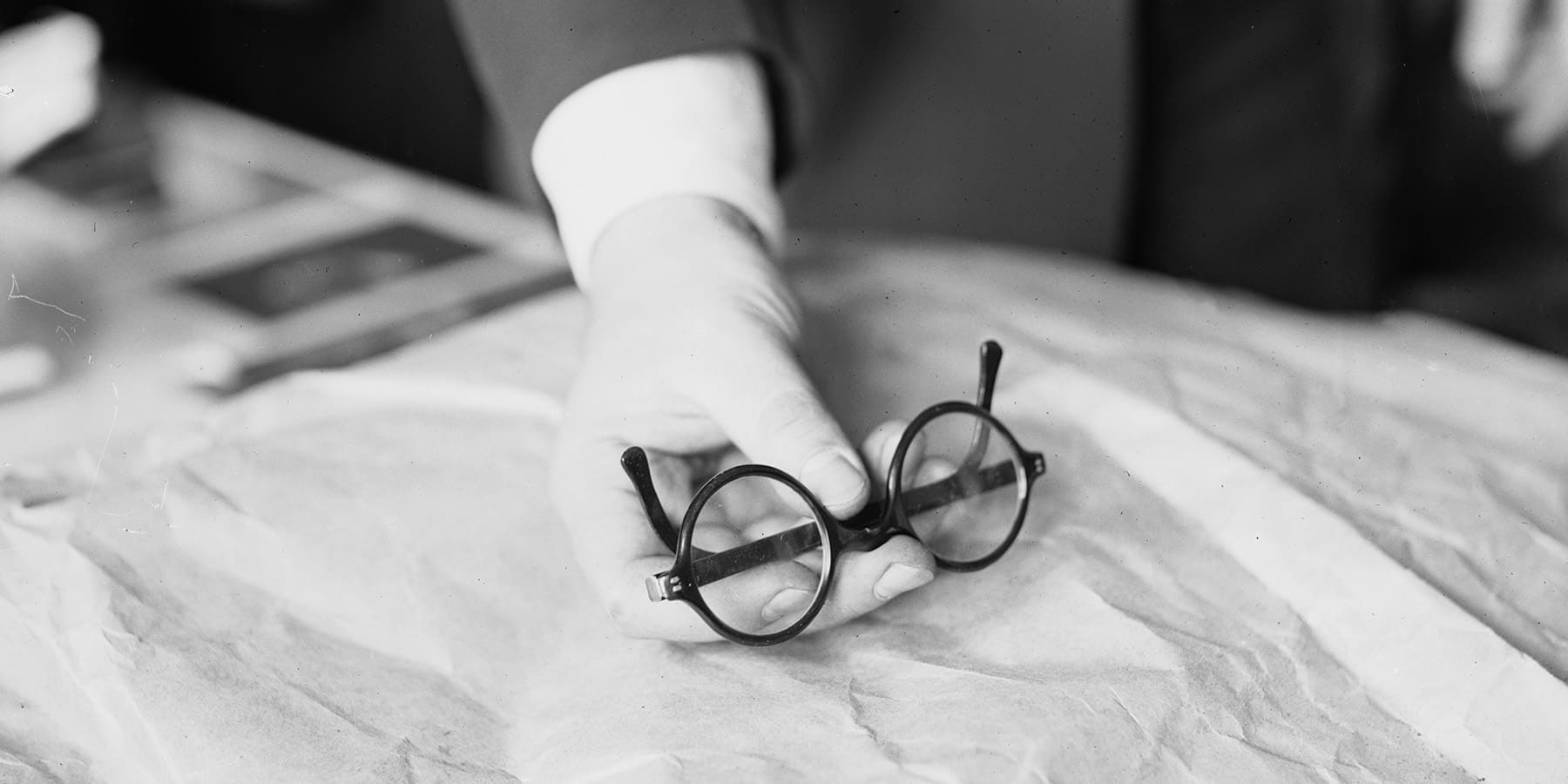
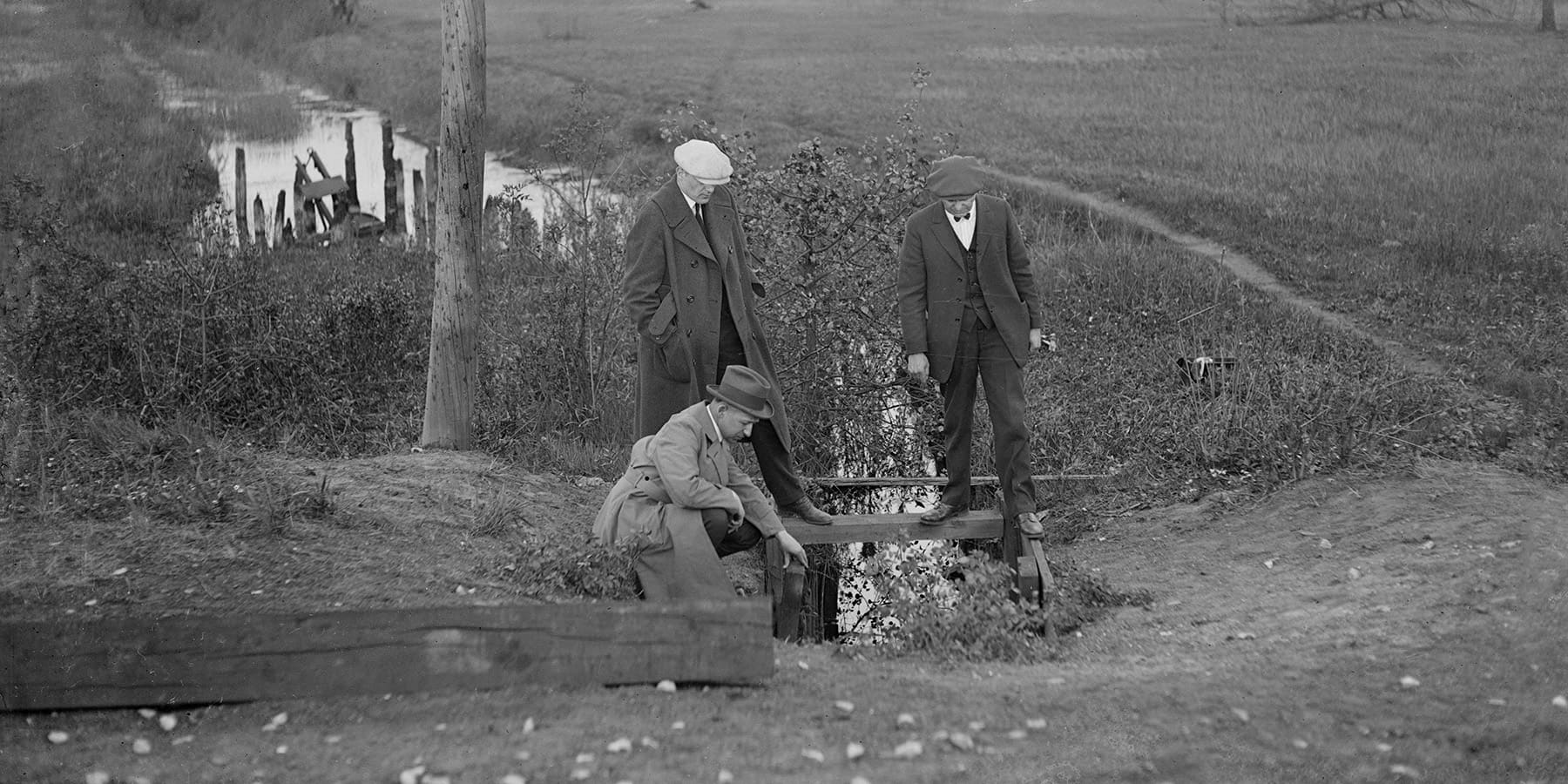
Meanwhile, near Wolf Lake on the border of Illinois and Indiana, a factory worker was on his way home when he discovered the body of a young boy in a culvert. When police arrived on the scene, they discovered that the boy was nude, had brown stains on his face and genitals, and had a head wound. Authorities searched the area, but they discovered only a pair of tortoise-shell eyeglasses, which they erroneously believed belonged to Bobby. When police learned that a boy was missing from a wealthy family in Kenwood, they contacted the Franks, telling them a boy with glasses had been found. But Bobby didn’t wear glasses, so it couldn’t be him, the family thought. Still, one of Bobby’s uncles went to the morgue to be certain and discovered that Bobby Franks had indeed been the victim.
The Franks, now utterly devastated by the loss of Bobby, received a second phone call from the kidnappers, giving Jacob complex instructions on how to deliver the ransom. “It involved getting Jacob Franks onto a moving train and picking up a second note that…instructed him to throw the ransom off the train when he got to a certain point,” Barrett said. But by then, the family knew Bobby was dead.
“Why would somebody kidnap this boy and not even wait to get the ransom before killing him?” Barrett said.
The search for the culprit was on.
Solving the Crime
The murder of Bobby Franks immediately became front-page news in Chicago and quickly spread to national papers. It was a media frenzy. Reporters and investigators alike began to search for clues.
Because Bobby was found without clothes, police assumed that the killer was a gay man, reflecting the prejudice at the time that homosexuality was linked to criminality. “It must have been someone who was gay who was trying to molest him. And they went to Bobby's teachers. They arrested several of his teachers,” Rebain said. But two key clues emerged.
The first was the ransom note. An expert helped investigators determine that it was written on a portable Underwood typewriter and that the lowercase T and F keys were defective. It would, in theory, be possible to match the letter to the typewriter, but only if the typewriter was miraculously found.
The second clue was the pair of glasses found near Bobby’s body. Paul Durica, director of exhibitions at the Chicago History Museum, said police were able to narrow down the search for the owner of the glasses thanks to a particular hinge on the frame made by only one company in the city. One of the “unsung heroes” of the case was Jacob Epstein, an employee of the glasses company who went through 50,000 records to find the glasses that matched the prescription and the hinge.
“He narrows it down to three people in the city of Chicago. One is a woman who the police immediately disregard as a suspect,” Durica said. “The other is a promising young attorney by the name of Jerome Frank. And the third person owning that pair…of glasses is Nathan Leopold Jr.”
The woman still had her glasses, and the attorney was out of the country at the time of the murders, so the police questioned Leopold. But he had an excuse: He had been birding in the area a week prior, and he must have lost them there.
“Nathan is facile, he’s fast, but he’s also superior. I think part of the reason they looked even closer at him is the fact that they just didn't like him too much,” Fleming said. “They begin to become suspicious. So they send some police officers to do a search of his room, and they find a letter from Richard.” There was enough in that letter to raise suspicions that Leopold and Loeb had a sexual relationship, which, because of the homophobic views of that time, police saw as evidence of criminal behavior. So they brought in Loeb to ask him questions about his friend. Loeb told the same story, backing up Leopold’s alibi – that the two of them had been out most of the night together drinking and partying with girls, driving around in Leopold’s red Willys Knight sedan.
While the police interviewed Leopold and Loeb, another University of Chicago duo was at work investigating the murder. James Mulroy and Alvin Goldstein were both graduate students and reporters for the Chicago Daily News. The reporters knew that police were looking for a typewriter, and so they asked around and found Leopold’s study group, eventually locating the notes that Leopold had typed up for the group. They consulted the typewriter expert, “and what they realize is it’s the same typewriter with that faulty lowercase F and T,” Fleming said. Mulroy and Goldstein, who would go on to win the 1925 Pulitzer Prize for their work, had made a major break in the case and shared their findings with authorities.
Leopold and Loeb continued to stick to their story until a crack in their alibi broke the dam. The break came in the form of the Leopold family’s chauffeur, Sven Englund, who brought food and a change of clothes to the boys at the LaSalle Hotel where the police interviews were taking place. Thinking the information would clear their name, Englund told police that they couldn’t have driven a body to Wolf Lake, because he had the car the entire night.
It was Loeb who cracked. When the investigators told Leopold that Loeb had confessed – and that he said Leopold was the one who committed the murder – Leopold was determined to set the record straight.
“Once they start to tell it, they really want to tell it,” Barrett said. “You would think that once they knew they were in big trouble like this, they would just shut up. They would just stop talking. But they don’t know that. They, in a very teenage-boy, arrogant way, almost begin to brag about their brilliant plan. And they each describe it in incredible detail.”
Their “Brilliant Plan” Revealed
Leopold and Loeb had planned the crime beginning the previous November. While they considered other victims in the months before the murder, they decided to wait until the day of to select “the most likely looking subject that came our way,” said Leopold in his statement to the Cook County state’s attorney. “We intended to murder him,” Leopold said, so that they could collect the ransom and the victim couldn’t later identify them. They had planned to keep the ransom money in a safe deposit box or some other secure location for a year before spending it “very carefully.” In the days before the murder, they created gags, purchased a chisel and rope from a hardware store, and hydrochloric acid from a drug store.
On the day of the murder, they picked up a rental car under the name of Morton D. Ballard – a fake identity they spent weeks creating – and they cruised around to search for their victim. After a few hours, they stumbled upon Bobby Franks, and Loeb lured him to the car with talk of a tennis racket. Once Bobby was in the car, they began to execute their plan. It’s notable, however, that Leopold said Loeb committed the actual murder, while Loeb pointed a finger at Leopold:
“As soon as we turned the corner, Richard placed his one hand over Robert’s mouth to stifle his outcries, and with his right beat him on the head several times with a chisel, especially prepared for the purpose. The boy did not succumb as readily as we had believed, so for fear of being observed, Richard seized him, pulled him into the back seat. Here he forced a cloth into his mouth. Apparently the boy died instantly by suffocation shortly thereafter.”– Nathan Leopold’s statement, May 31, 1924
“Leopold reached his arm around young Franks, grabbed his mouth and hit him over the head with the chisel. I believe he hit him several times, I do not know the exact number. He began to bleed and was not entirely unconscious, he was moaning…At this time Leopold grabbed Franks and carried him over the back of the front seat and threw him on a rug in the car. He then took one of the rags and gagged him by sticking it down his throat, I believe.”– Richard Loeb’s statement, May 31, 1924
“The plan had been to strangle him to death, that they would wrap a rope around his neck and both of them would pull on one end of the rope so they would be equally culpable of this murder. But he had suffocated without them realizing,” Rebain said.
While they waited for darkness to dispose of the body, they needed to pass the time. A chilling detail emerged from Leopold’s statement: “We even stopped to buy a couple of sandwiches for supper,” with Bobby’s body still in the car, covered by a rug or blanket. Leopold and Loeb then drove Bobby’s body out to the culvert near Wolf Lake, disrobed him, and doused parts of his body in acid in an attempt to make him unidentifiable. They pushed Bobby into the culvert, although his feet remained visible.
After they had disposed of Bobby’s body, Leopold and Loeb mailed their ransom note. Leopold called the Franks household to tell them their son had been kidnapped. They disposed of the boy’s clothes, and cleaned the blood stains out of the car. When Englund, the chauffeur, offered to help the boys clean the car, they told him the stains were from red wine.
The next day, they attempted to collect the ransom from Mr. Franks, but called it off when they found out that newspapers were reporting Bobby’s death. They disposed of the portable Underwood typewriter in the Jackson Park lagoon. (The chisel had been tossed out the window of the rental car the night before.) Ten days after the murder, the pair confessed to their so-called perfect crime.
Though each accused the other of committing the actual act of murder, their statements described the events leading up to and after the murder almost identically. But Loeb’s statement ends by blaming Leopold entirely. He said, “I just want to say that I offer no excuse; but that I am fully convinced that neither the idea nor the act would have occurred to me, had it not been for the suggestion and stimulus of Leopold. Furthermore, I do not believe that I would have been capable of having killed Franks.”
Their confessions and the gruesome details of the murder were splashed across the front pages of newspapers around the country. “It becomes a national sensation,” Fleming said. “Every aspect of this crime is looked at.”
The Sentencing of Leopold and Loeb
The public was captured by the frenetic energy and anticipation of a highly publicized trial. Reporters and onlookers swarmed the Franks family home as they grieved and buried their son. The public also turned their attention to Leopold and Loeb and every element of their lives, including their upbringing, their sexuality, and their personal philosophies and psychology. “A lot of the newspapers called on phrenologists to study their facial features and the shapes of their heads to see if there was any clues,” Rebain said. “These studies [supposedly] showed that Loeb was weak, Loeb was feminine, and Leopold was strong and sex-craved and masculine.”
After confessing, Leopold told authorities that what “prompted Dick to want to do this thing and prompted me to want to do this thing was a sort of pure love of excitement,” and the “imaginary love of thrills.” The pair seemed to enjoy the attention.
“They took the police reporters on a murder tour. They took them to all of the sites where everything happened, where they killed Bobby Franks, where they hid everything. I can only imagine what a circus that must have been like,” said Stephen Dolginoff, a playwright and composer behind a musical version of the story.
But while they relished the limelight, there was no doubt that their fate was serious. State’s Attorney Robert Crowe sought to hang Leopold and Loeb for the murder. The boys’ families hired Clarence Darrow, a renowned attorney who had established himself as a leading labor lawyer. Initially, Darrow was reluctant to take on the case.
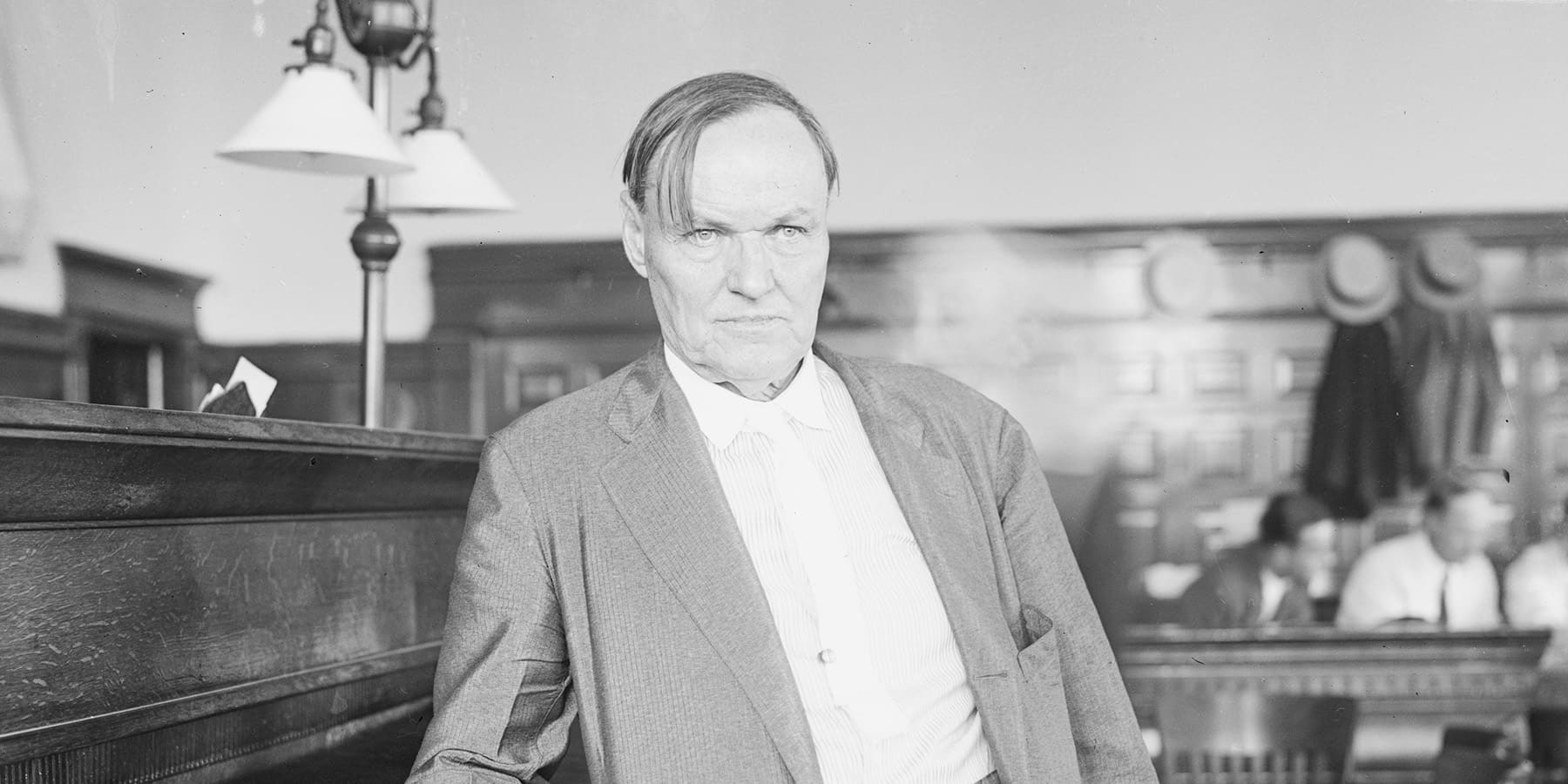
“The boys have already confessed. The press is definitely against them,” Fleming said. “But ultimately, it’s the capital punishment that [changed his mind]…Darrow is opposed to capital punishment.” Darrow saw the trial as an opportunity to make a public statement about the death penalty.
Leopold and Loeb had already pleaded not guilty, but in a courtroom packed full of people wanting to bear witness to the spectacle, Darrow stunned the crowd when he announced his clients would reverse their plea to guilty. There would be no trial, but a sentencing hearing. And instead of having to face a jury, Leopold and Loeb’s fate would be determined by Judge John Caverly.
Darrow’s defense took a new legal approach for the time: emphasizing the psychiatry of his clients. His goal was to remind the judge that the two arrogant young men were still human beings. He couldn’t use insanity as a defense, so he called on experts to explain how Leopold and Loeb’s childhoods had affected their behavior, making them not fully responsible for their actions. They were raised by nannies and governesses, and their parents hadn’t paid enough attention to them. Leopold’s governess had sexually abused him, too.
“Surely this had some impact on who they became as teenagers and the crime that they ultimately committed,” Fleming said of Darrow’s argument. Darrow’s impassioned closing argument lasted 12 hours spread over two and a half days.
“Do you think you can cure the hatreds and the maladjustments of the world by hanging them? You simply show your ignorance and your hate when you say it. You may here and there cure hatred with love and understanding, but you can only add fuel to the flames by hating in return…For God’s sake, if the state in which I live is not kinder, more human, more considerate, more intelligent than the mad act of these two mad boys, I am sorry I have lived so long.”– Clarence Darrow’s closing argument
Two weeks after the conclusion of the month-long hearing, Caverly sentenced Nathan Leopold and Richard Loeb to life in prison for the murder of Bobby Franks, plus 99 years for the kidnapping charge.
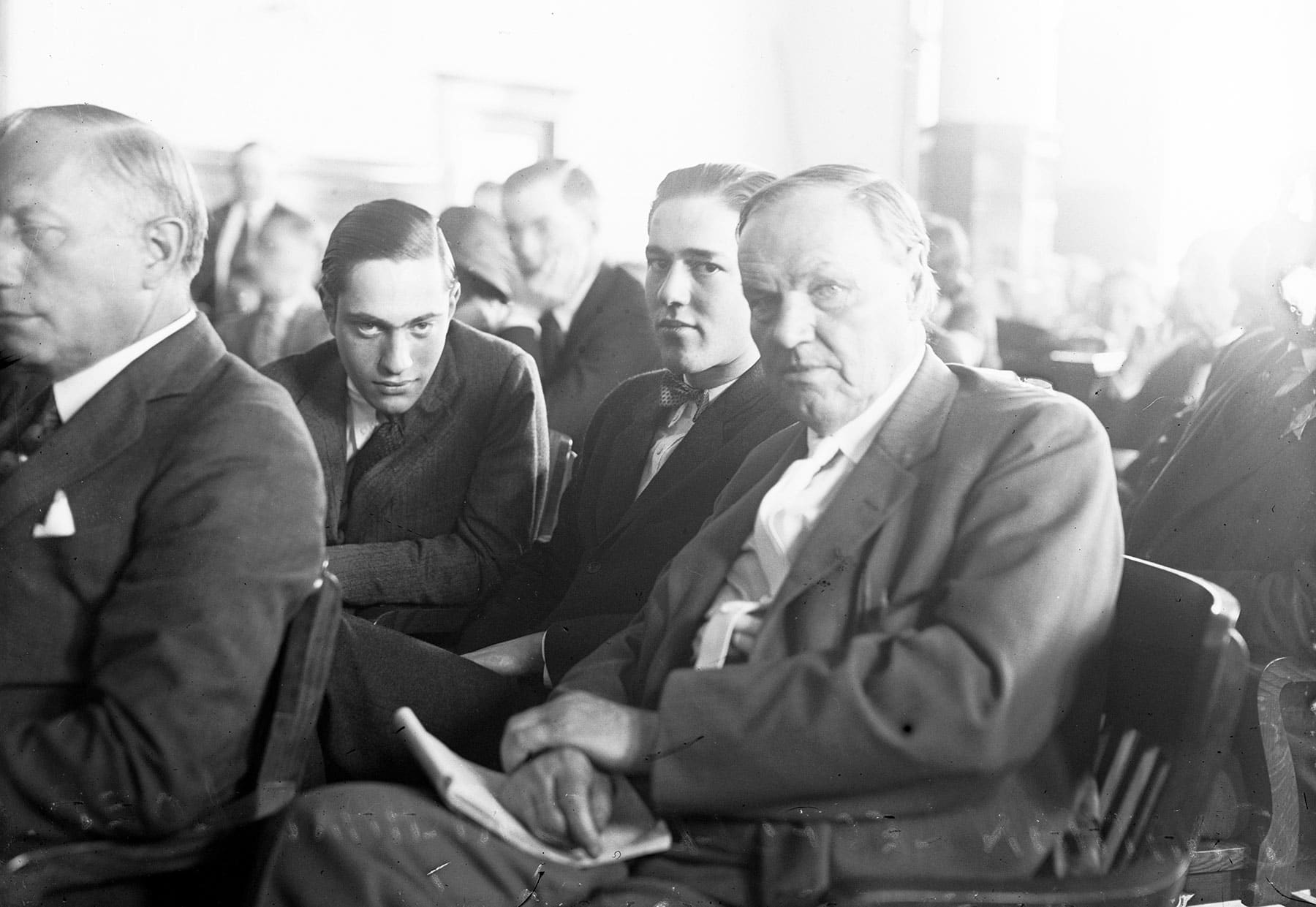
Leopold and Loeb were sent to Joliet State Prison. Leopold was moved to Stateville Prison, and the pair were kept apart for six years until Loeb joined Leopold at Stateville. They created a school for inmates together and were generally regarded as well-behaved, intelligent inmates. In 1936, another prisoner stabbed Loeb in the shower 56 times. Leopold rushed to donate his blood to his friend, but Loeb died at the age of 30.
In 1958, after multiple attempts, Leopold was granted a release from prison. He claimed to be a changed man, saying that he was under Loeb’s influence as a young man. He moved to Puerto Rico, married, and later died in 1971 at age 66.
As for the Franks family, Jacob Franks died four years after Bobby. In his will, he set aside $100,000 for the Robert E. Franks Memorial of the American Boys’ Commonwealth – a clubhouse for young boys in the neighborhood. In his will, Jacob wrote that he wanted the place to be “a fitting memorial to perpetuate the memory of my boy, who would desire that any memorial in his name be one that would give pleasure, help and encouragement to boys.” Flora Franks and her son, Jack, were there to dedicate the building.
The murder of Bobby Franks revealed the public’s capacity to be captured by a grisly, true-crime story.
“I think the biggest question is this: Were Nathan and Richard just sort of aberrant monsters, or is their behavior somehow a reflection of our American culture?” Fleming said. “I think that’s what still resonates with us a hundred years later.”
Related