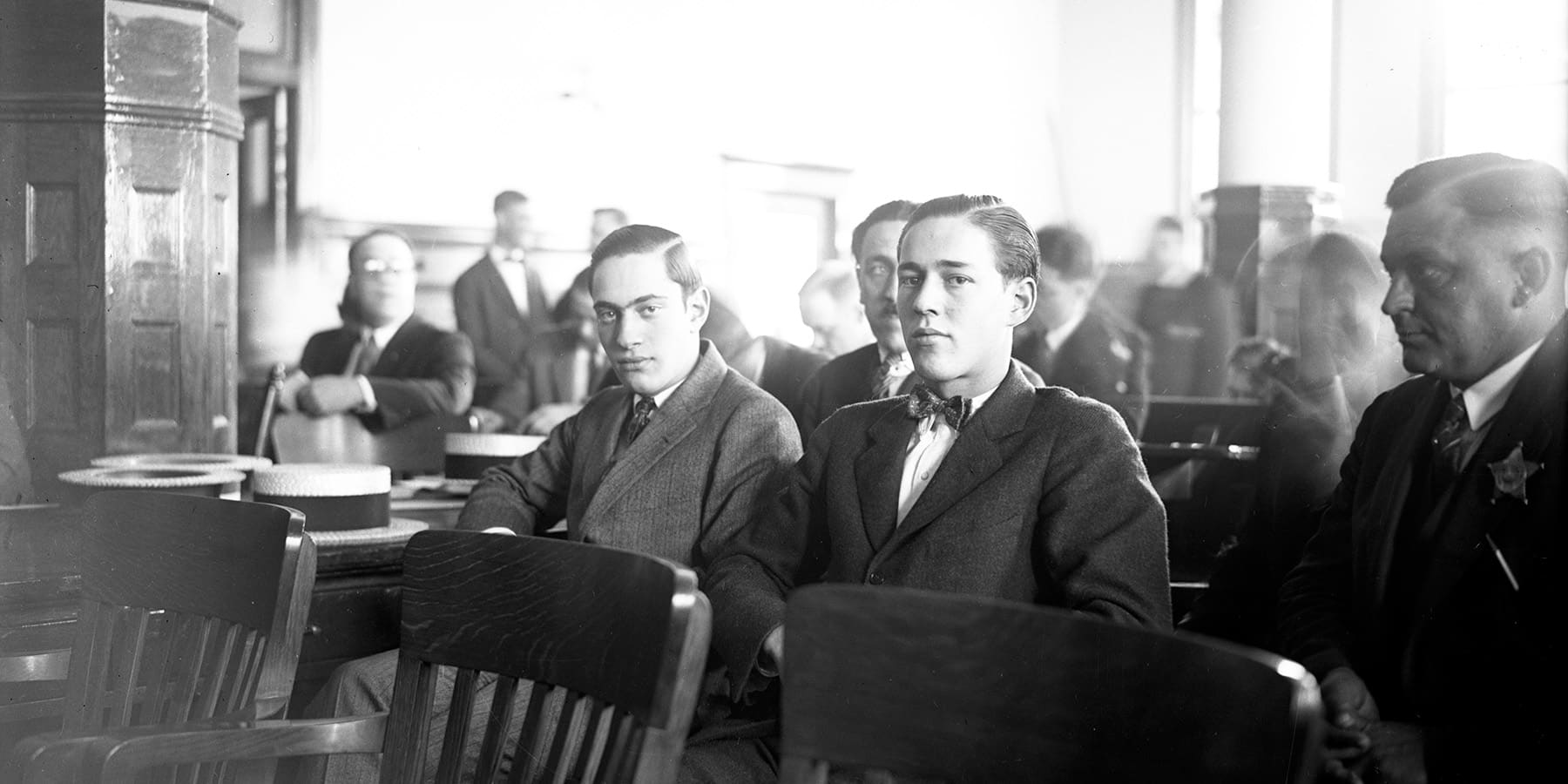





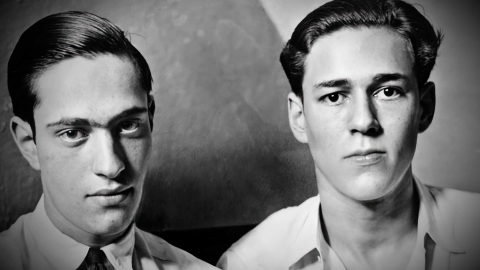


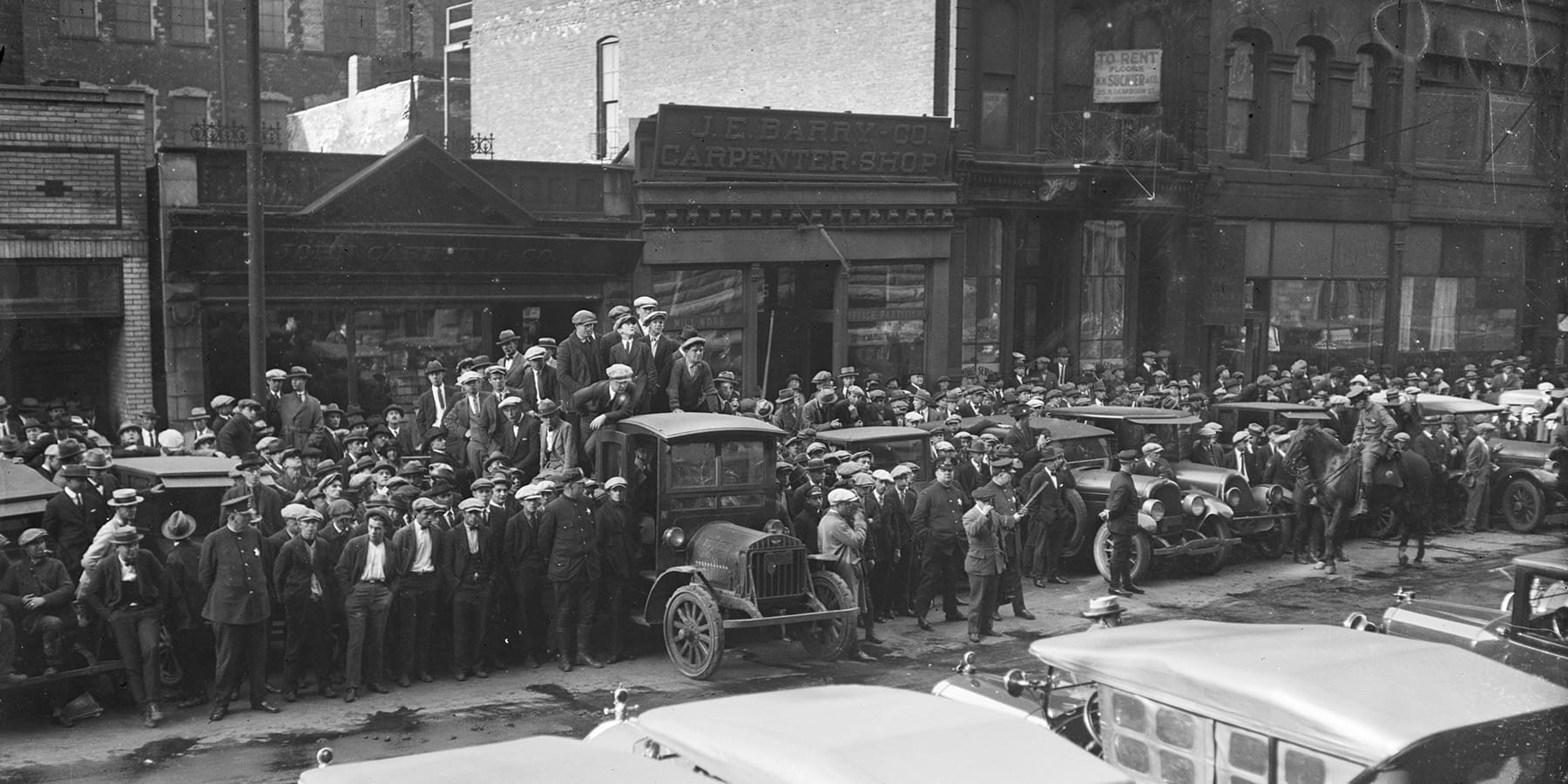
As police interrogated Nathan Leopold and Richard Loeb about the 1924 kidnapping and murder of 14-year-old Bobby Franks, rookie reporters James Mulroy and Alvin Goldstein of the Chicago Daily News made a major discovery that would help break the case and win them the Pulitzer Prize in journalism. Thanks to two defective keys on a portable Underwood typewriter, the reporters linked the ransom letter with the notes Leopold had typed for a study group.
But the press, both local and national, also fed the frenzy that began from the moment it was discovered that a wealthy, young boy had been kidnapped and killed.
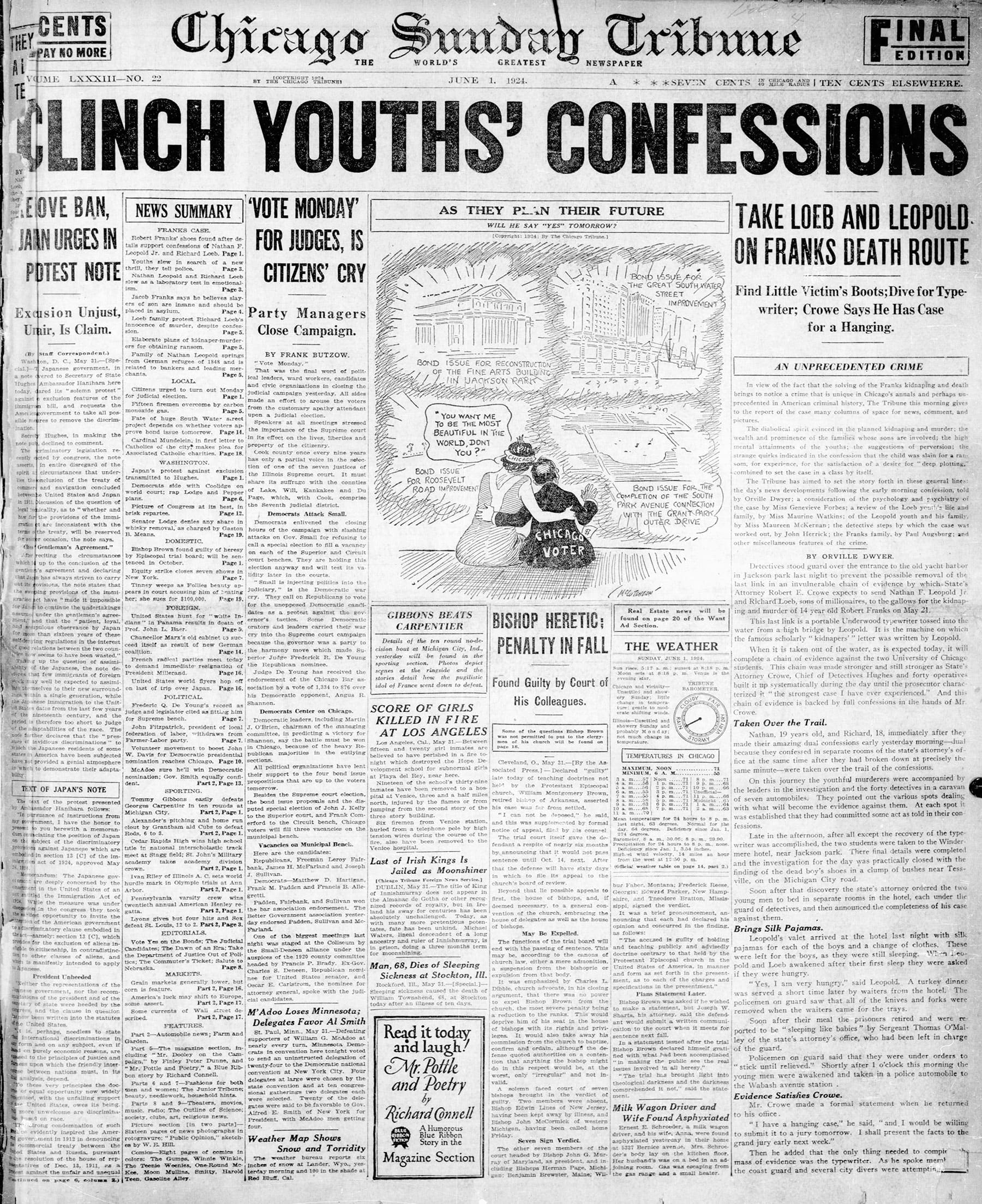
“This hit the papers, and it was immediately sensational,” Nina Barrett, author of The Leopold and Loeb Files, told Chicago Stories. “It went beyond Chicago. It was not just in Chicago papers, it was in the New York papers and the Boston papers. It immediately became a national crime.”
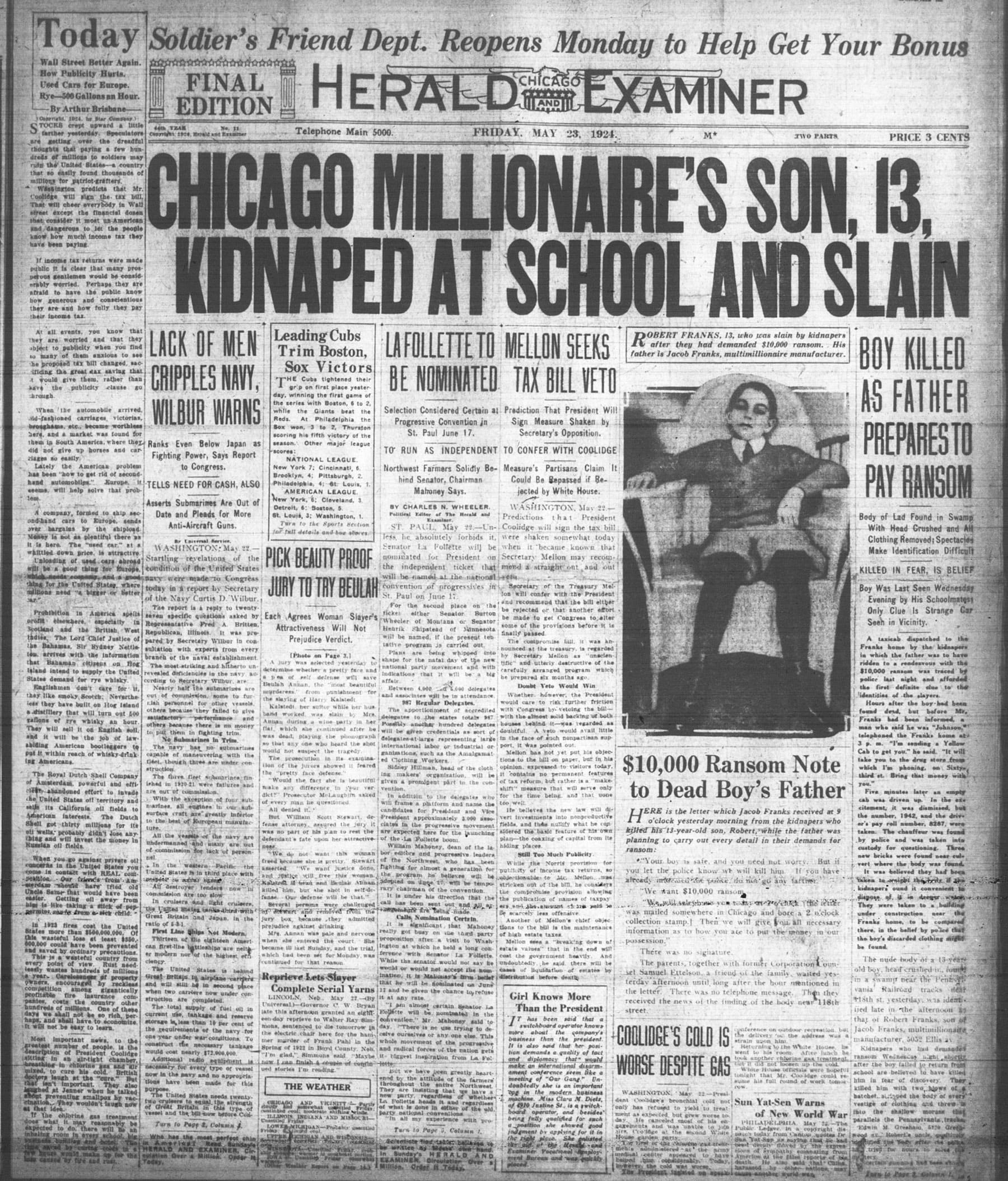
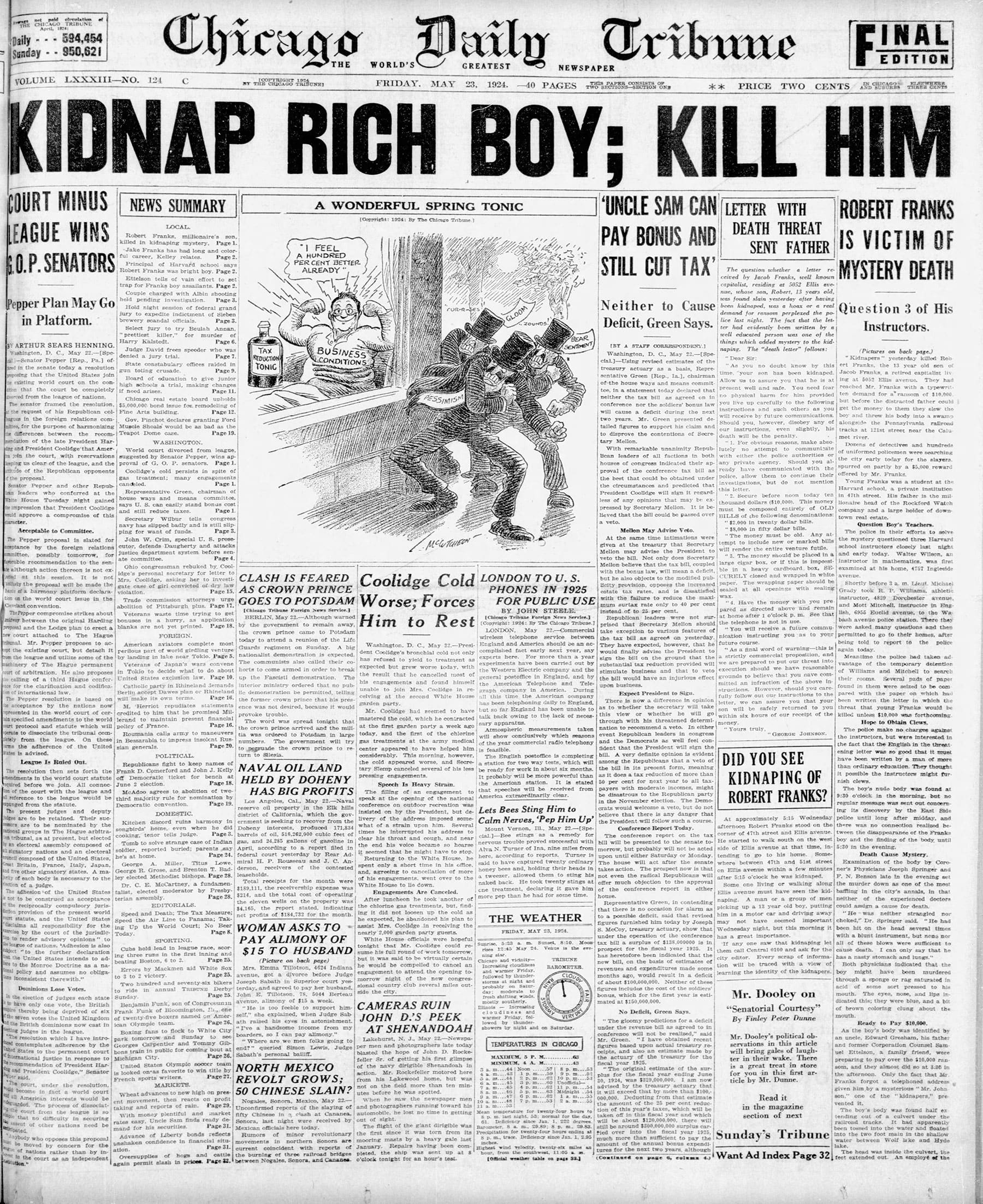
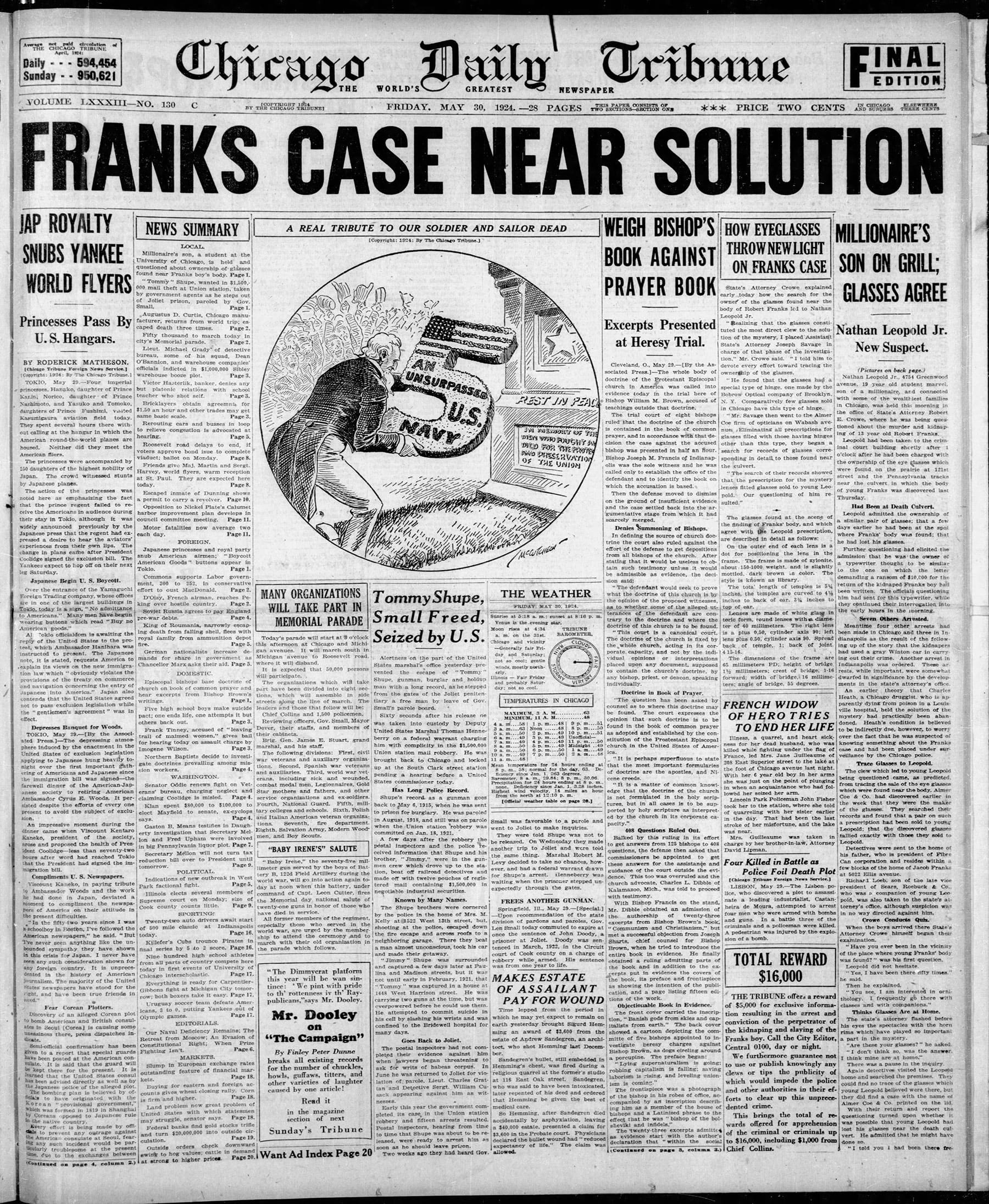
(2) A bold headline from the Chicago Tribune and the right two columns of the paper detail the mystery of Bobby’s death. Credit: Chicago Tribune, May 23, 1924
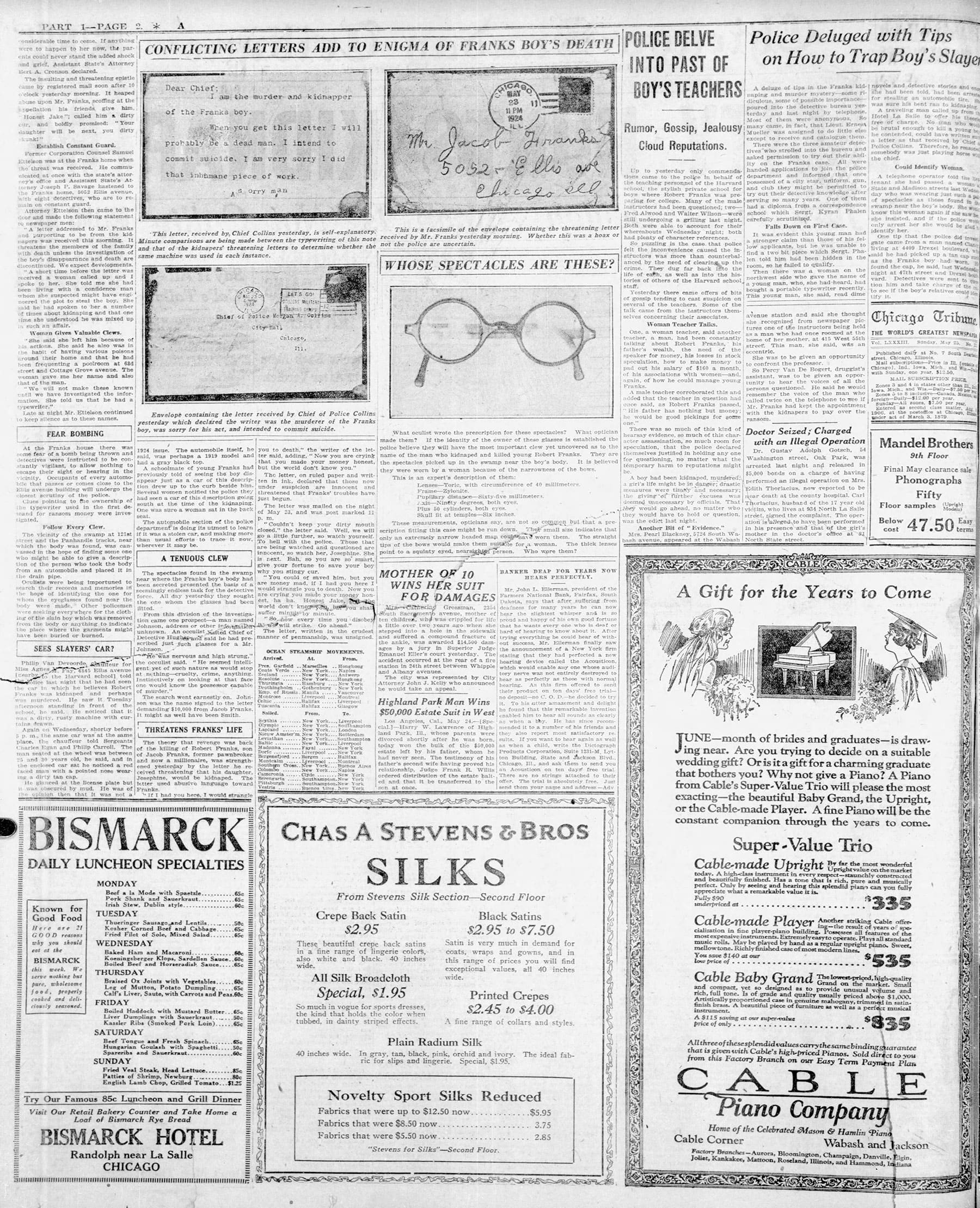
(3) Page 2 of the Chicago Tribune on May 25, 1924 shows some of the evidence collected in the case. Credit: Chicago Tribune, May 25, 1924
The crime itself raised a lot of questions from the start, and the newspapers covered every angle as the investigation unfolded. Why would somebody kidnap a boy and not wait to get the ransom before killing him? Who could pen such a formal-sounding letter? The immediate suspicion fell on some of Bobby’s teachers, with the implication that sexual abuse must be involved – the kind of salacious details that would have captured and shocked readers. While the police and reporters searched for the killers, the Franks family mourned. But in their grief, their lives had become a public spectacle.
“There was nonstop traffic past this house of tourists and people walking by on the sidewalk,” Barrett said. “Not only was this family in tremendous grief, but they were now in this fishbowl of public gawkers who just wanted a glimpse inside the house of this boy who had been murdered.” A courthouse reporter named Maurine Watkins, who went on to write the play Chicago on which the popular musical was based, even “crashed the funeral” when reporters were not supposed to be there.
Reporters resorted to just about any tactic to find more information about the case.
“The newspapers…had reporters everywhere,” Candace Fleming, author of Murder Among Friends, told Chicago Stories. “They have no journalistic standards whatsoever. So if they can peer through a keyhole, they will. If they can climb through an air duct to listen, they will. They have reporters that basically just sit around the police station waiting for a hot tip.” It was impossible to keep a secret, so the reporters knew when the police had begun to investigate Nathan Leopold and Richard Loeb as suspects in the murder.
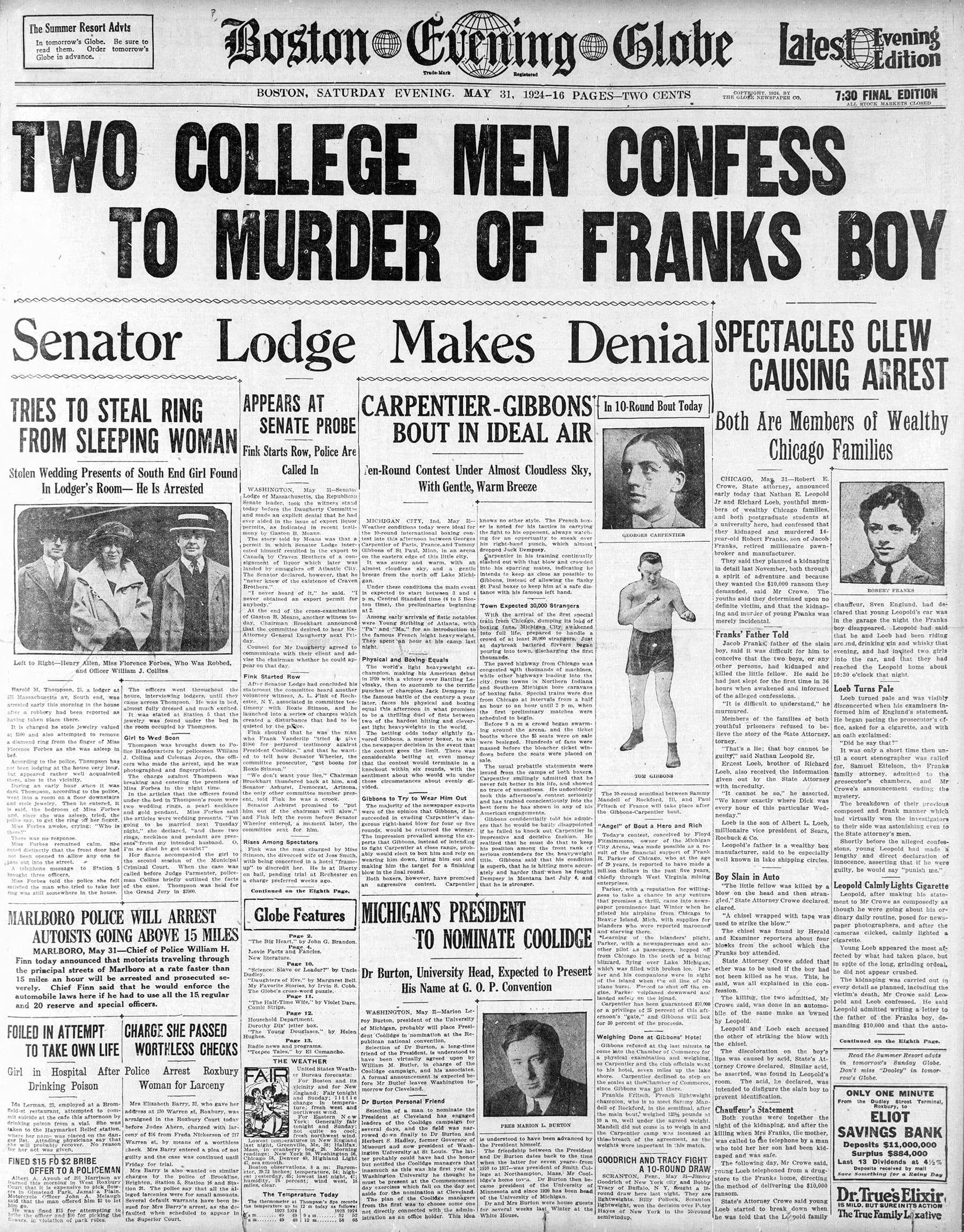
(2) News of the Leopold and Loeb confession made the front page of the Boston Globe evening edition. Credit: Boston Globe, May 31, 1924
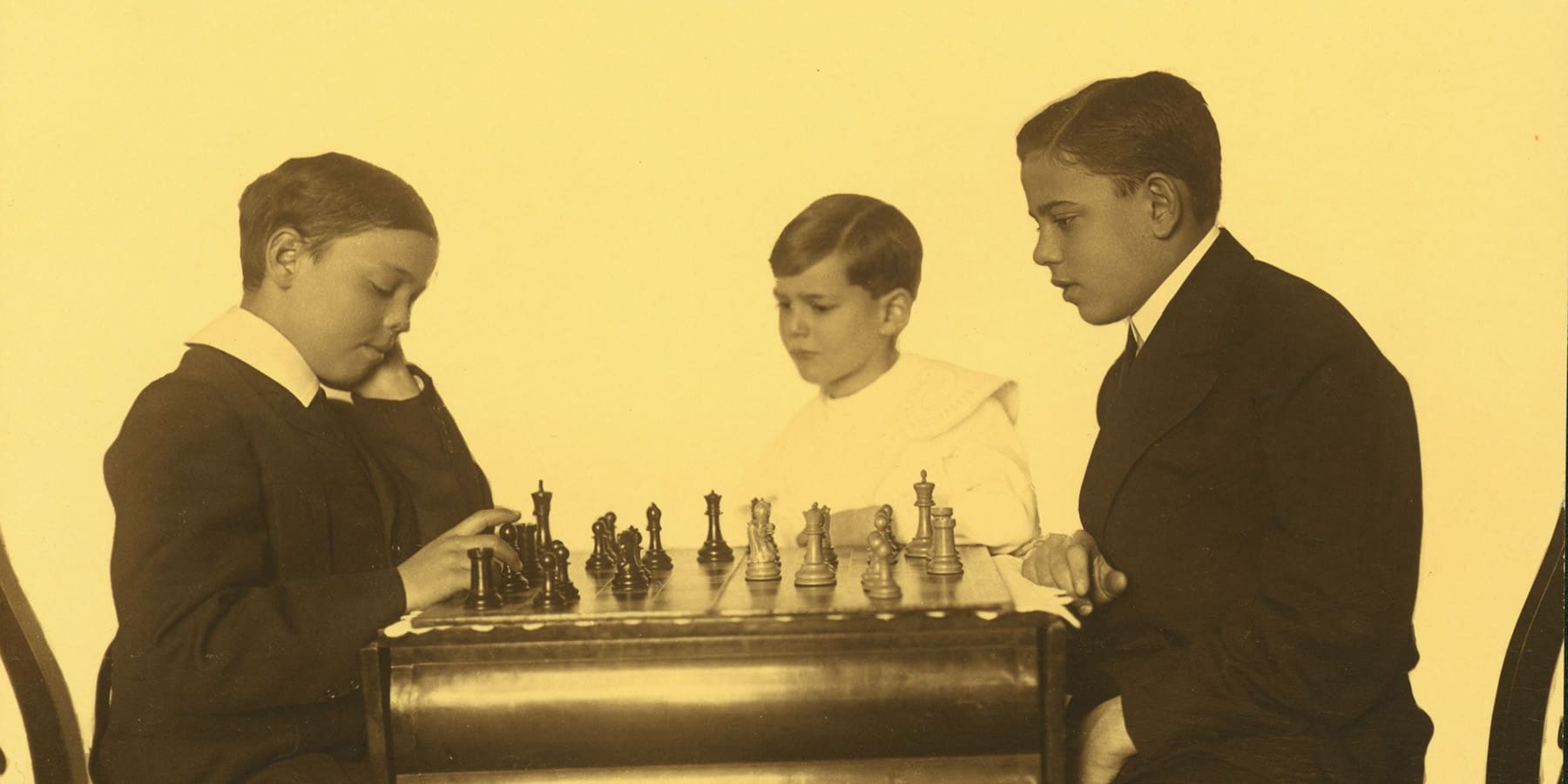
After Leopold and Loeb confessed, the newspapers fixated on every detail of their lives leading up to and during the trail. Their wealthy background, their families, their childhoods, their academic prowess, and their friendship all made for article fodder. Reporters even went on a kind of “murder tour” as Leopold and Loeb took police to the significant locations they visited on the night of the crime.
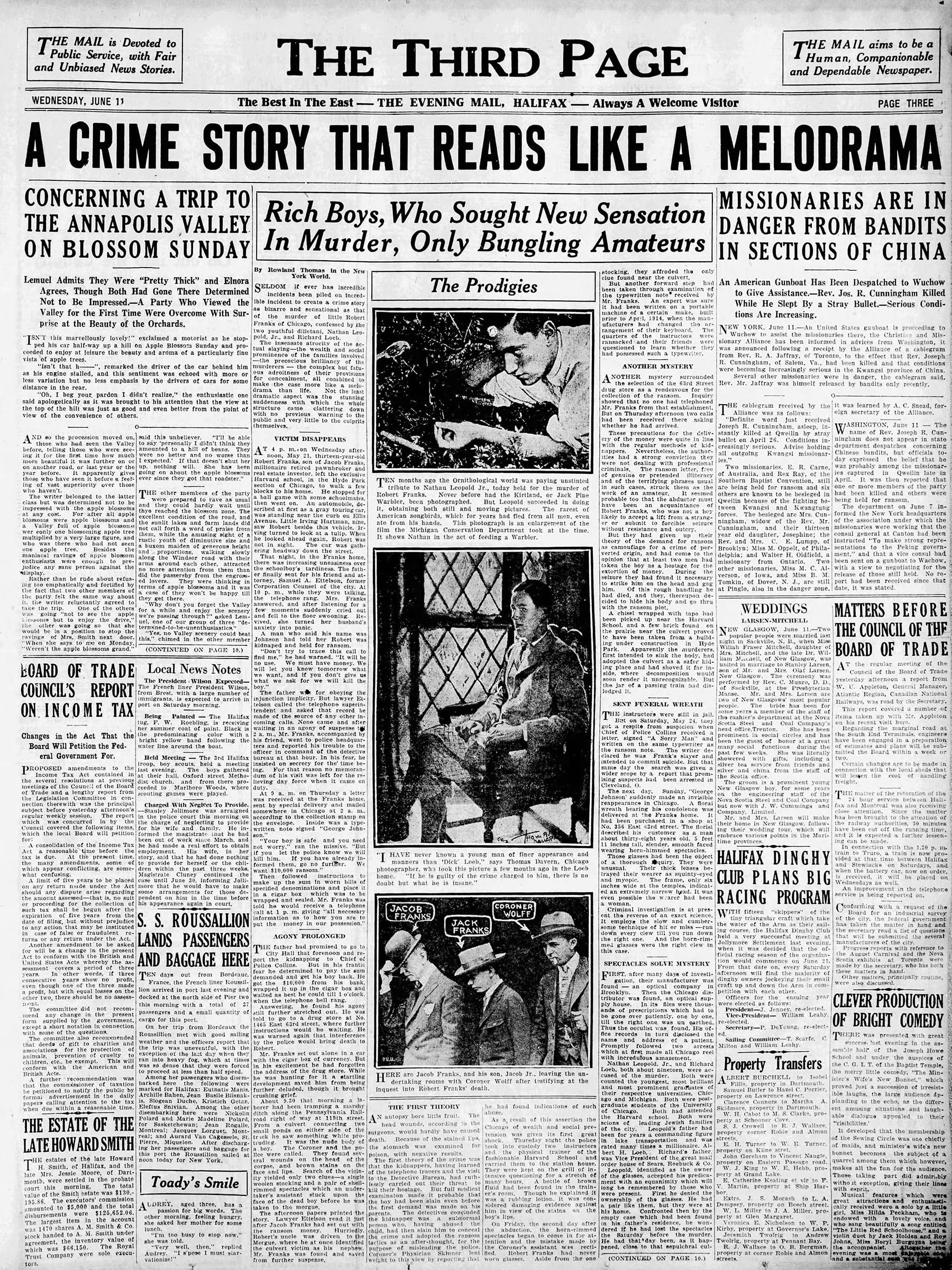
(2) A headline from a Halifax newspaper likens the murder case to a melodrama and refers to Leopold and Loeb as “The Prodigies.” There is also a photo of Bobby’s dad and brother with the coroner. Credit: The Evening Mail, June 11, 1924
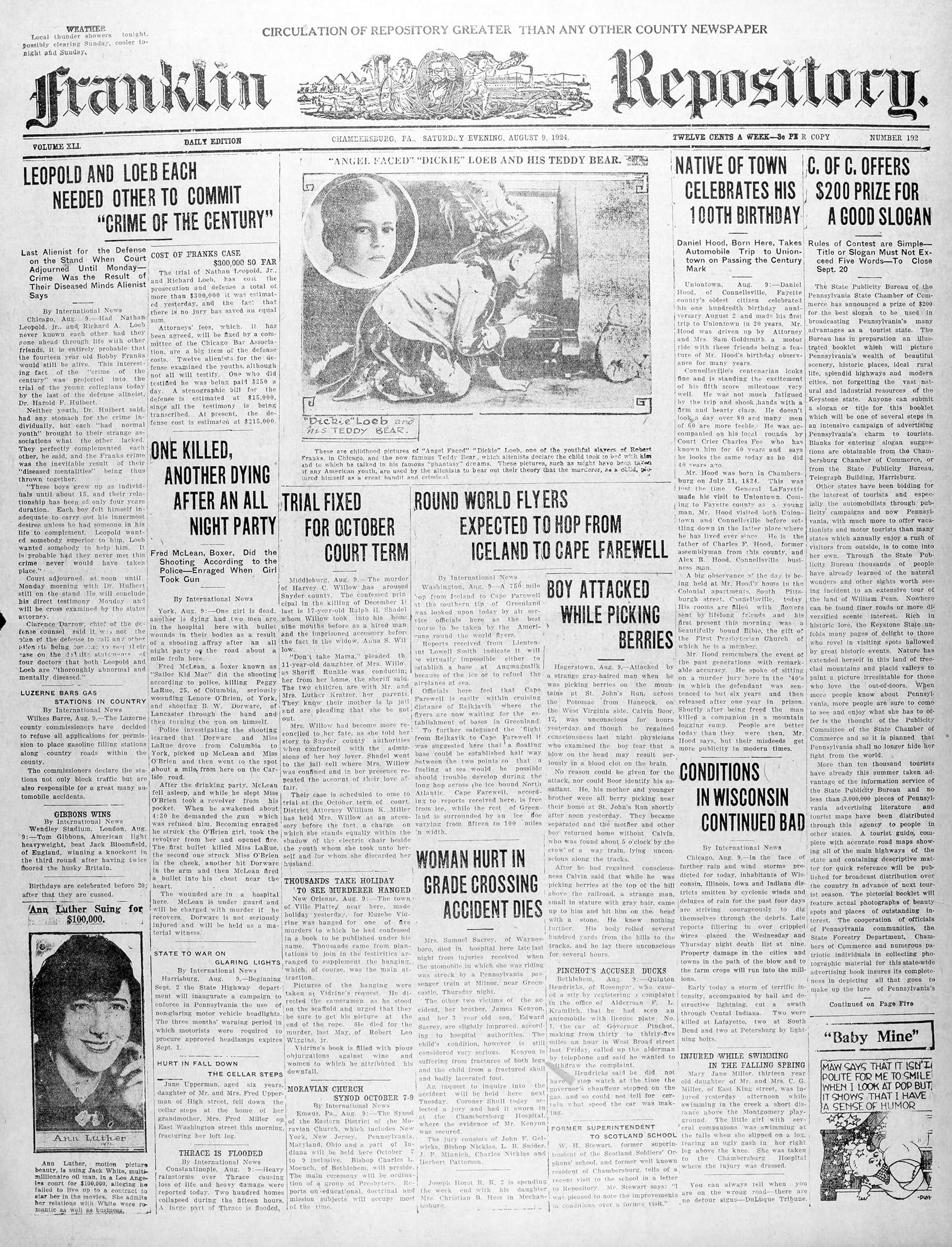
(3) A Pennsylvania newspaper printed an image of a young Richard Loeb “and his teddy bear” and refers to “the crime of the century.” Credit: Franklin Repository, August 9, 1924
“You had six newspapers in the city. Every single one was vying for readership. They came out twice a day,” Fleming said. “They gobbled up every detail and wanted more.”
And the papers delivered. Because the trial called “alienists” (an old-fashioned term for psychologists) to testify, analysis of Leopold and Loeb’s psyches was common in the papers. The press also published the findings and drawings of “phrenologists,” a pseudoscience from the time that claimed particular facial characteristics could be evidence of certain personality traits.
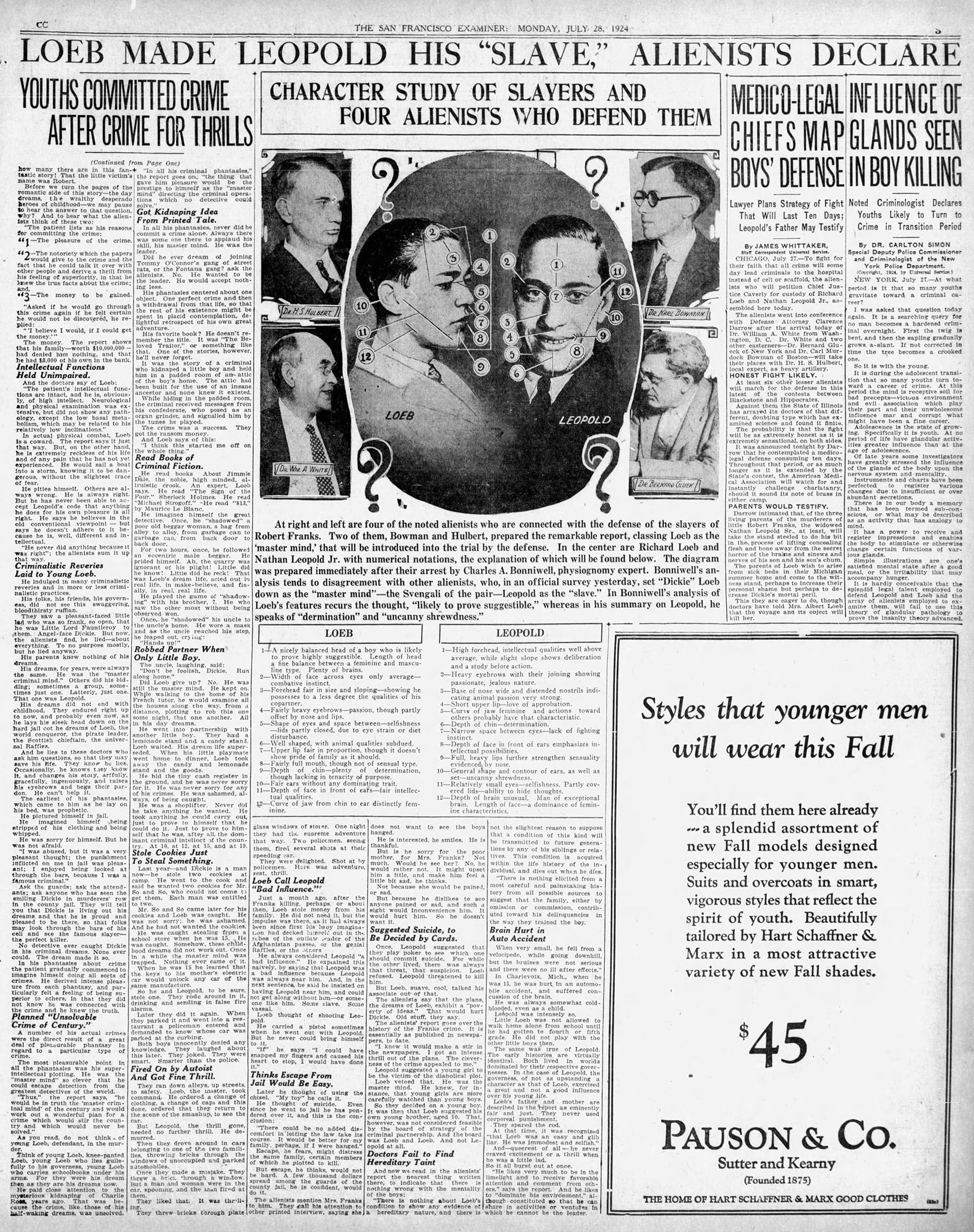
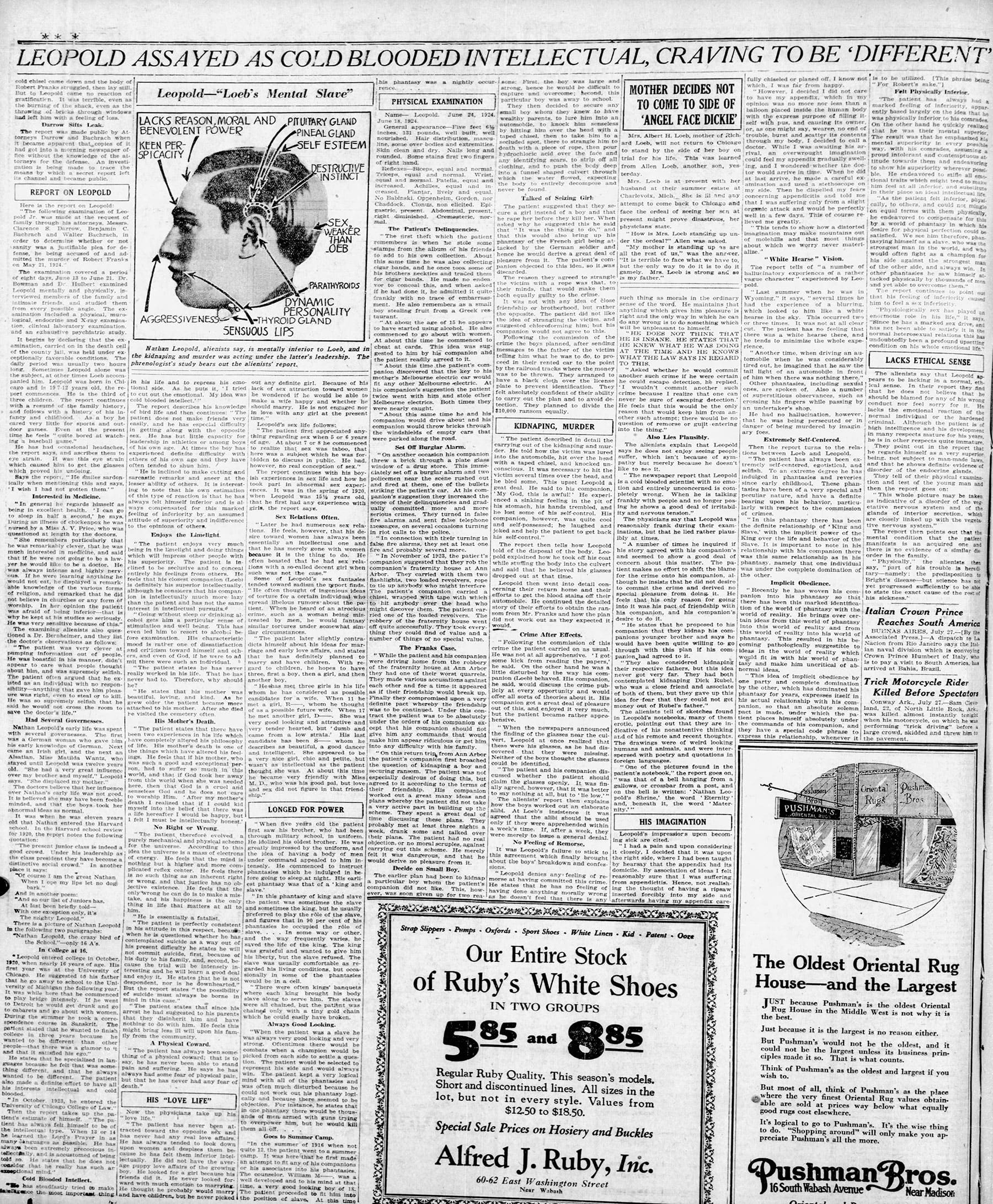
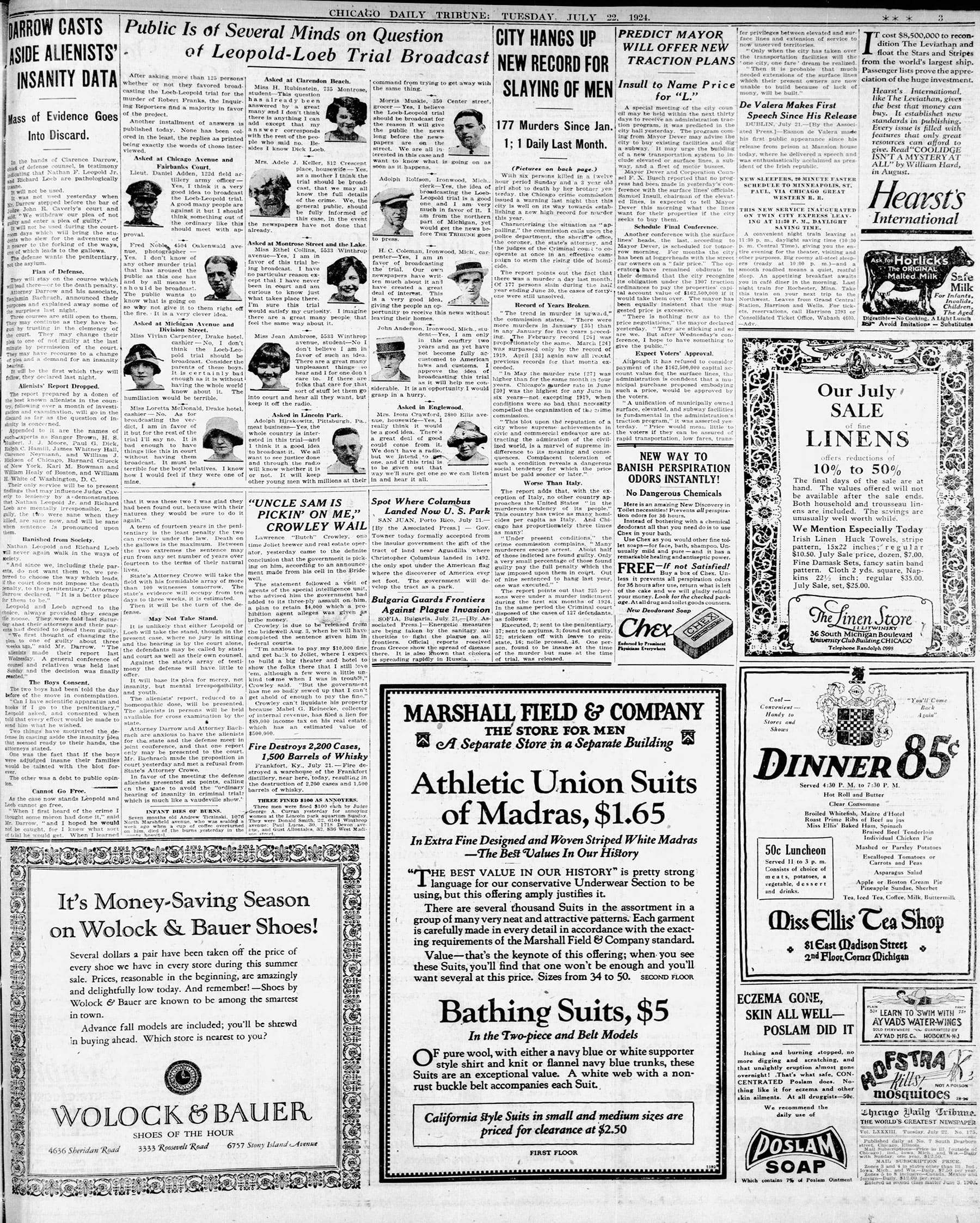
To further engage the public, “they published the IQ puzzlers and tests to which Leopold was subjected and challenged readers to do them in the record time of Leopold, ‘the genius,’” writes Paula Fass in a journal article on the subject. They also polled readers on various issues, including whether or not they believed the trial should be broadcast over the radio.”
Leigh Bienen, author of Crimes of the Century, likened the Leopold and Loeb trial to the media sensationalism of the O.J. Simpson trial in the 1990s.
“Not only did they become celebrities, they became super celebrities,” Bienen said. “One of the newspapers ran a contest: ‘Who would like a date with Dickie Loeb?’…People just signed up like crazy and couldn’t wait to enter the contest, which again, shows the kind of media frenzy that characterized the trial.”
Once Leopold and Loeb were convicted and behind bars in Joliet and Stateville prisons, the frenzy died down. Occasionally, their names would reemerge in headlines. In 1936, when Richard Loeb was stabbed to death by another inmate in the showers, papers suggested that there was a sexual motive, though that was never proven. When Nathan Leopold was released from prison in 1958, he held a single press conference. “In my appearance before the [parole] board, I solemnly pledged that I would avoid every form of publicity. That pledge I will keep to the letter. Please make it easier for me by not asking me to break that pledge,” he said to reporters that day. He moved to Puerto Rico, where he wrote a memoir but otherwise lived a private life.
The Leopold and Loeb case inspired fictional works, too, including the play Rope that Alfred Hitchcock adapted into the 1948 film. The story has inspired novels, television episodes, and musicals.
“I don't think that public fascination with it will die,” Barrett said. “I think that there will be more storytelling about this case because it does have many of the elements of a myth about good and evil, and those are questions we can’t answer. We can only tell the story and ask the questions."
Related