











When early reports of multiple deaths in Arlington Heights, Illinois, first emerged in late September 1982, a young general assignment reporter named Chuck Goudie from Chicago’s ABC7 traveled to the northwest suburb to cover the story.
“As the sun is setting, you have ambulances and police cars cruising through the neighborhoods with their loudspeakers warning people that if they have Tylenol in their bathrooms, don’t take it because there's been a problem with it, and it’s been linked to people getting hurt,” Goudie, now a reporter at NBC 5, told WTTW. “That wasn’t normal. Even though I was a young reporter still in my early twenties at that point, I certainly had never heard anything like that.”
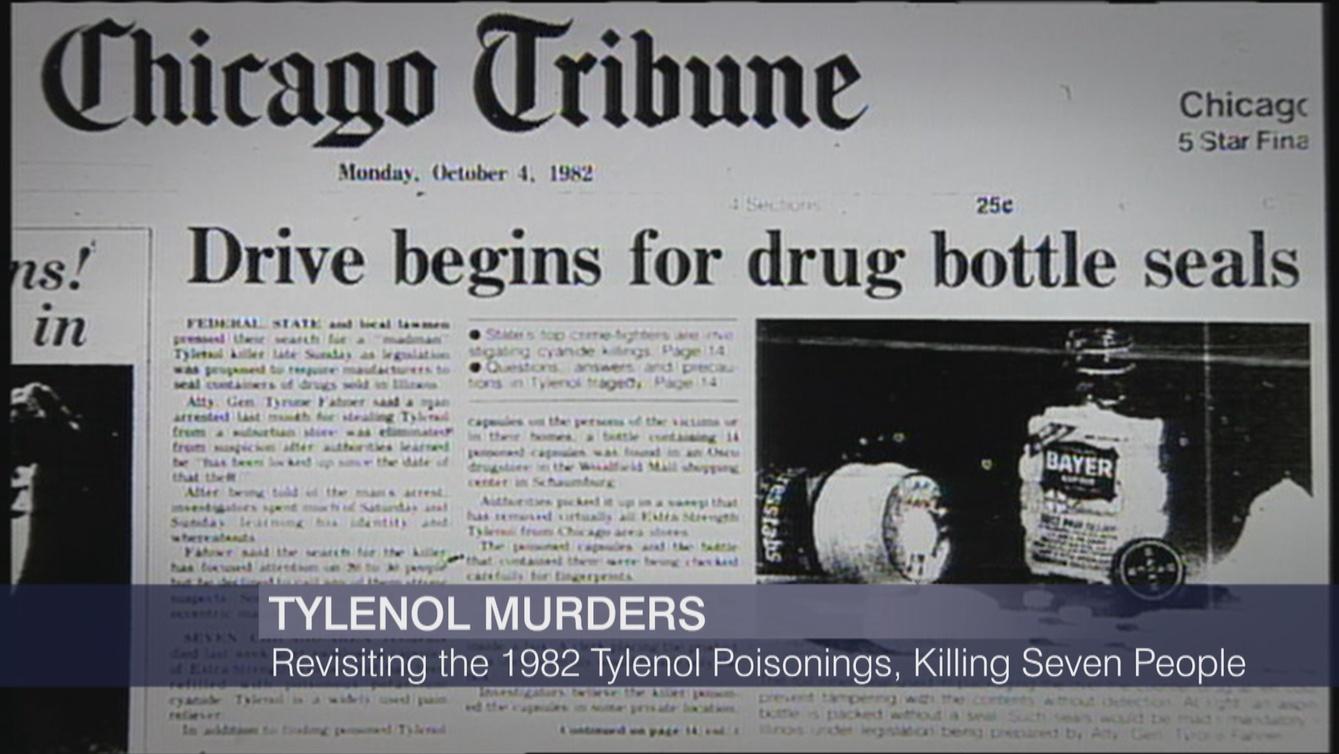
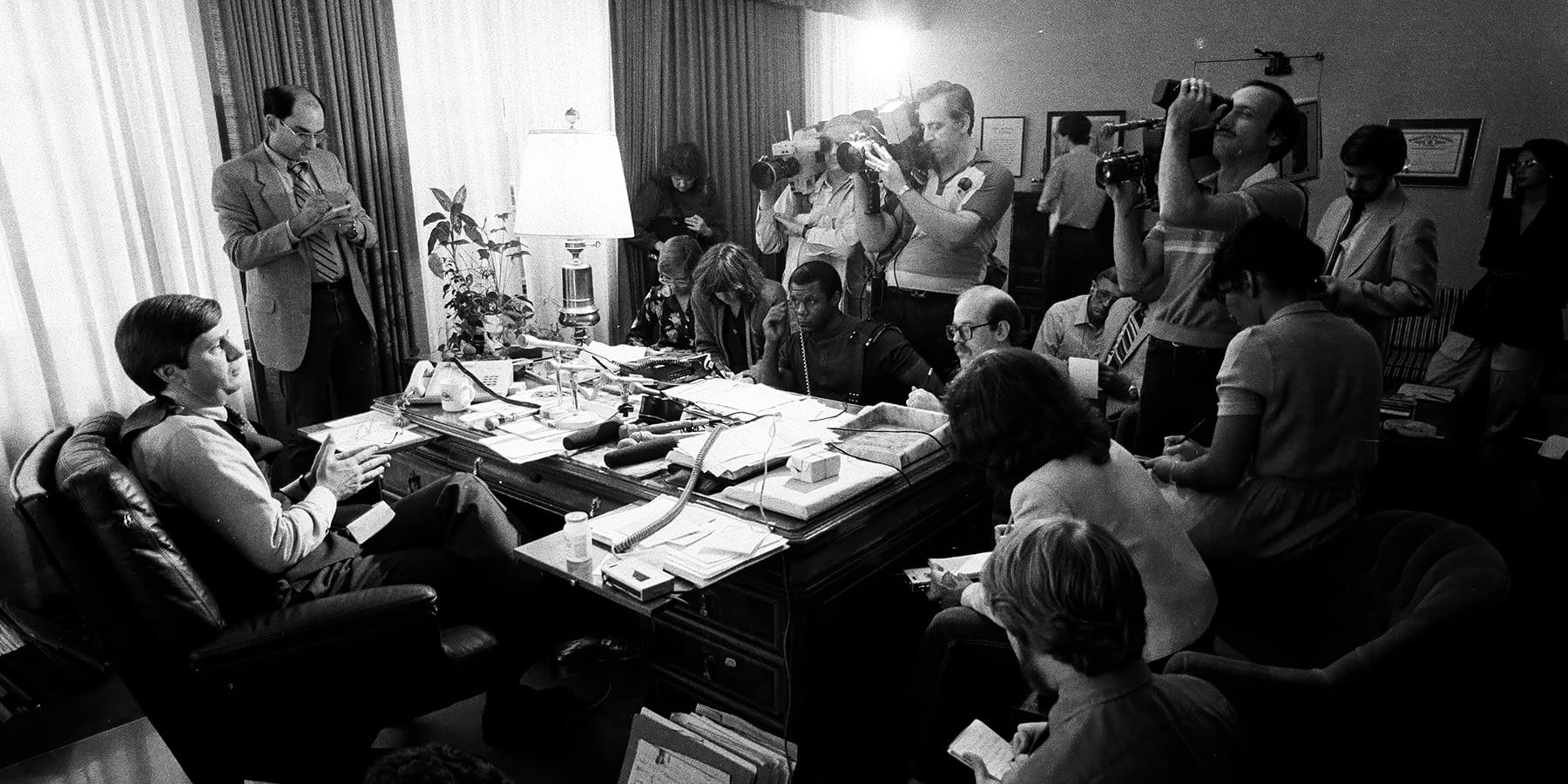
In the immediate aftermath of the so-called Tylenol murders which left seven Chicago-area people dead, including a 12-year-old girl, there were many unanswered questions that left the public with an undercurrent of fear. Was this the result of a production error or something more sinister? Was it just Extra-Strength Tylenol that was tainted with cyanide? And – after it was discovered that it was intentional – who would commit such a random act of violence? Journalists sought answers. Goudie recalled the media frenzy, with reporters chasing down leads and wall-to-wall newscasts.
“This story was driven by television news. It was a time when there were many more viewers of TV news than there may be now. People didn’t have all the options to find their information, and so they went to local TV news and that’s where they learned about it. It really was kind of a groundbreaking moment around here.”– Chuck Goudie
As authorities investigated the case, one particular suspect emerged: a man named James Lewis. Though he did spend a decade in prison for writing extortion letters to Johnson & Johnson (which manufactures Extra-Strength Tylenol) and President Ronald Reagan, Lewis was never formally charged with the deaths of the seven individuals. Nor was anyone else; the case is still considered open. In the absence of a trial with a definitive outcome, journalists have followed developments in the case for more than four decades, particularly as those developments pertained to Lewis. Goudie met Lewis and interviewed him several times.
“Over the years, he would call me angry about stories that we aired – didn’t like that we presumed he was the Tylenol killer, even though he put himself right in the middle of it and explained the entire series of attacks,” Goudie said. “He certainly was enjoying it. He appeared to enjoy the cat-and-mouse game. Basically, James Lewis was one of those criminals who thought that he was the smartest guy in the room.”
In 2000, journalist Joy Bergmann authored an in-depth feature for the Chicago Reader on Lewis, his background, and investigators’ particular focus on him as the culprit.
“The Tylenol murders fascinated me as a kid. It was all over the news. It confused me. Something so banal as a medicine turned into a weapon of death, and it struck me when it happened as a child,” Bergmann told Chicago Stories. “As an adult, I struggled one day to open a bottle of medicine and I couldn’t get the safety seal off, and I sort of cursed at myself and I said, you know what? This is so hard to open because of the person who committed the Tylenol murders, and they never caught that guy.”
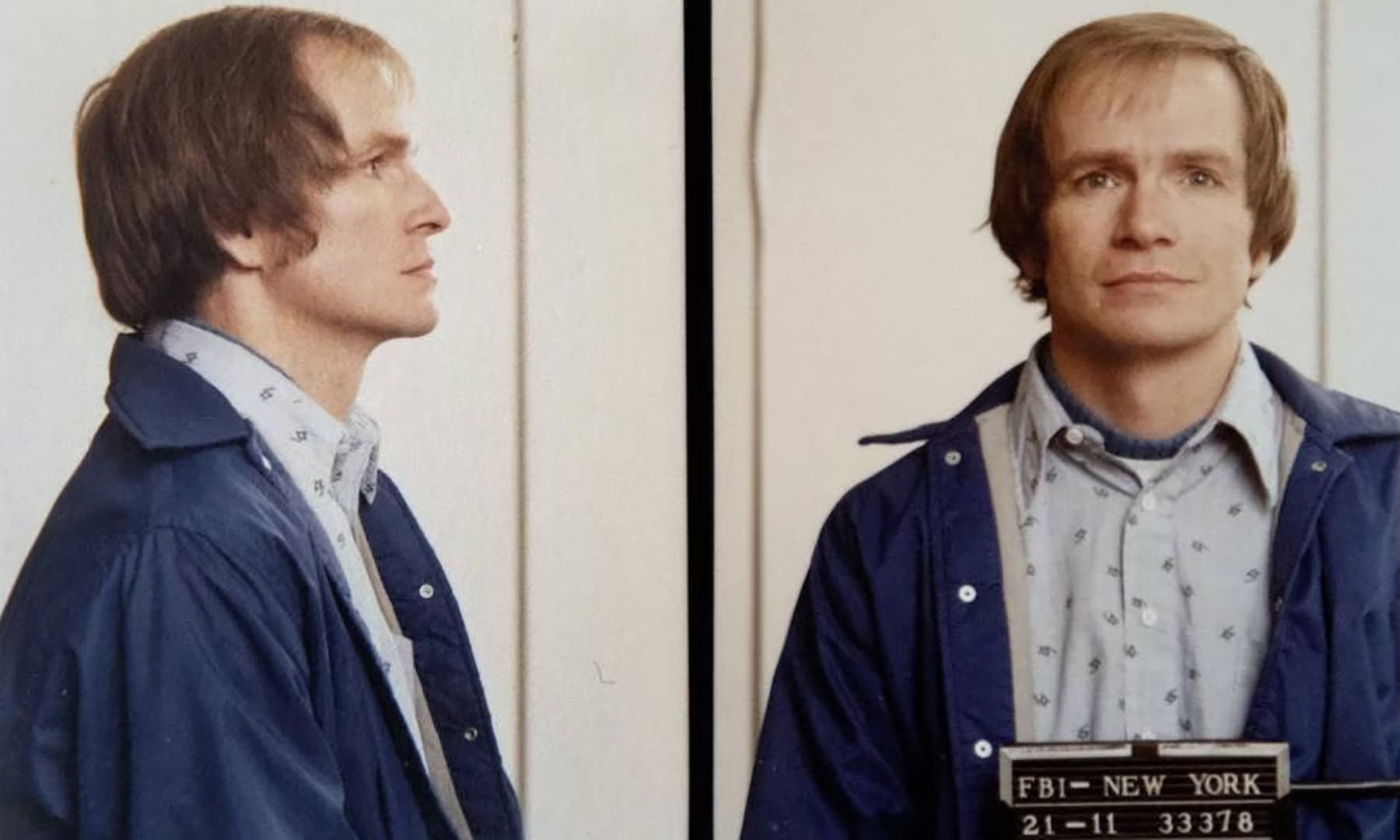
That inspired Bergmann to investigate the story. She began her reporting at the Harold Washington Library, sorting through newspaper clippings (“the actual physical clippings,” she said). In her story, she details what she learned about Lewis’s past – a personal history beset with tragedy and violence. Lewis was the prime suspect in the murder and dismemberment of a Missouri man, but the charges were dismissed when lawyers discovered Lewis hadn’t been read his Miranda rights. After Lewis sent the extortion letters, federal authorities focused on Lewis as a suspect in investigations that spanned decades.
“He is a great suspect, but they couldn’t prove it. They never brought [murder] charges. People need to remember that when James Lewis died and the obituaries ran, it was almost as if they had convicted him post-mortem,” Bergmann said. “I want the record to be clear that he was never charged with the Tylenol murders. The prosecutors whose names and reputations were on the line never felt confident enough to bring charges against him.”
Bergmann said that as a journalist, she approaches investigations thinking the reporting can reach a conclusion, if only she digs deeper, asks another person one more question, or uncovers a different piece of evidence.
“Nothing is clear about this case. It continues to confound journalists, investigators, families, and industries. No one understands this case fully, and I don’t think it will ever be solved. That’s very frustrating to anyone who likes to solve a mystery…You want the good guys to win, and you want the bad guys to suffer. When it doesn’t happen, it’s unsettling.”– Joy Bergmann
As the 40th anniversary of the Tylenol murders approached, Chicago Tribune reporters Stacy St. Clair and Christy Gutowski knew the paper (which covered the story extensively in the 1980s) would once again turn their attention to the topic.
“Memories fade, key witnesses die, documents, retention records – they get lost or they get destroyed. We knew it was now or never,” Gutowski told Chicago Stories. Initially, the two reporters thought they were going to be doing a simple retrospective, explaining the cultural context of the murders. Instead, they discovered a flurry of investigative activity.
“We thought we were going to be reporting on and writing about a cold case that had great societal impact, but that had been so cold, it was almost frozen,” St. Clair told Chicago Stories. “But very quickly we learned that wasn’t the truth. As we began our reporting, there were meetings going on between detectives and the Cook County State’s Attorney’s Office, and detectives were trying to bring charges against James Lewis.”
St. Clair and Gutowski worked to find out what investigators were doing in the present day and why they were still convinced 40 years later that Lewis was the killer. The result was a multi-part investigation and podcast.
“The biggest challenge that Stacy and I faced was time. You’re talking about 40 years ago, and it’s also an active investigation. Open records requests were not exactly being honored by the FBI. The FBI is always very hard to get anything out of, but we had to locate witnesses that were spread around the country or were deceased or were quite old.”– Christy Gutowski
One of the key pieces of their reporting was a PowerPoint that FBI agents were shopping around to Cook County and DuPage County prosecutors in an effort to convince them to charge Lewis. Sources showed St. Clair and Gutowski the PowerPoint, in which investigators presented 50 pages of circumstantial evidence outlining why they believed Lewis to be the culprit. The PowerPoint also included a video of an undercover FBI operation during which FBI agent Roy Lane (who investigated the case for decades) corners Lewis about statements he made in the past. Lewis claimed that it took him three days to write the Johnson & Johnson extortion letter. But due to technological advances since the 1980s, investigators had since learned that Lewis’s extortion letters were mailed on October 1, 1982 – meaning Lewis would have started writing the letters before the deaths became public.
“It felt very surreal to both of us to the point where we left our meeting, and we pulled into a Starbucks parking lot and sort of had to catch our breath for a minute and say, ‘Did we really see undercover FBI video in an uncharged case?’” St. Clair said.
As Gutowski and St. Clair reported, after that undercover video, investigators searched Lewis’s home, but found no concrete evidence, and DNA evidence obtained from the tainted Tylenol bottles did not match Lewis’s. Prosecutors declined to charge Lewis. “There is no physical evidence connecting James Lewis to the Tylenol murders,” Gutowski said.
The case is still open with the Arlington Heights Police Department, preventing the public release of evidence and case files. As of 2025, no one has ever been charged with the Tylenol murders. James Lewis died in 2023.
For all the headlines James Lewis generated, the heart of the story of the Tylenol murders remains the seven people who died and the families who lost loved ones in an instant and who have lived for decades without answers. Among them were 12-year-old Mary Kellerman; Adam, Stanley, and Theresa Janus – all from the same family and in their 20s; 27-year-old Mary Reiner, who had just had her fourth child about a week prior; 31-year-old Mary McFarland of Lombard; and 35-year-old Paula Prince, who was found dead in her Chicago apartment.
“As a reporter, you try just to be objective and fair and have some Teflon and not let it in. But it’s really hard when you’re interviewing people who’ve lost loved ones to something this tragic. It’s really hard not to feel that,” Gutowski said. “I’ll forever be moved by the people that I met in this story. I'll forever remember the Kellermans and the Janus family and all that they lost.”
Related