









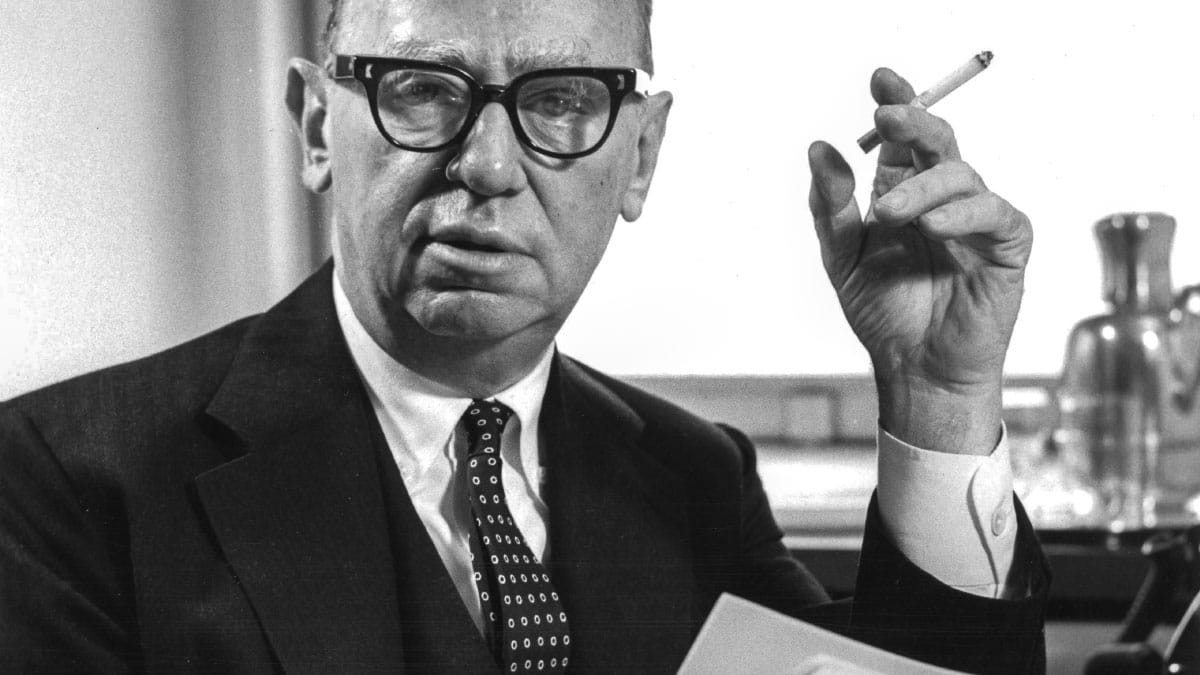


For a man who would go on to amass a great fortune from his elegant department store, Marshall Field had humble beginnings.
Born in 1834 in Conway, Massachusetts, Field grew up on a farm and worked in a dry goods store as a young man. In 1856, at the age of 21, he moved to Chicago – then a city on the rise, brimming with economic opportunity.
“My great-great-grandfather – his personality was really all New England. He was a firm believer in religion, so he had a Christian ethic. He’d been taught hard work because his parents were farmers, and so he knew how to struggle for money,” Marshall Field V told Chicago Stories. “He had an overreaching desire to get into a store to do something, and he didn’t think he could do it in Massachusetts. So he migrated to Chicago, which in those days was the Wild West.”
In Chicago, Field began work at a general store called Cooley, Wadsworth & Co., and, thanks to his prowess as a salesman, within four years was promoted from clerk to partner. He was known to be smart with money, attentive to women customers, and hard-working.
“There was one coworker who said he worked longer and harder than anyone else,” historian Leslie Goddard told Chicago Stories. “He, for a while, actually lived in the store, so he was always the first one in the office in the morning and last one to leave.”
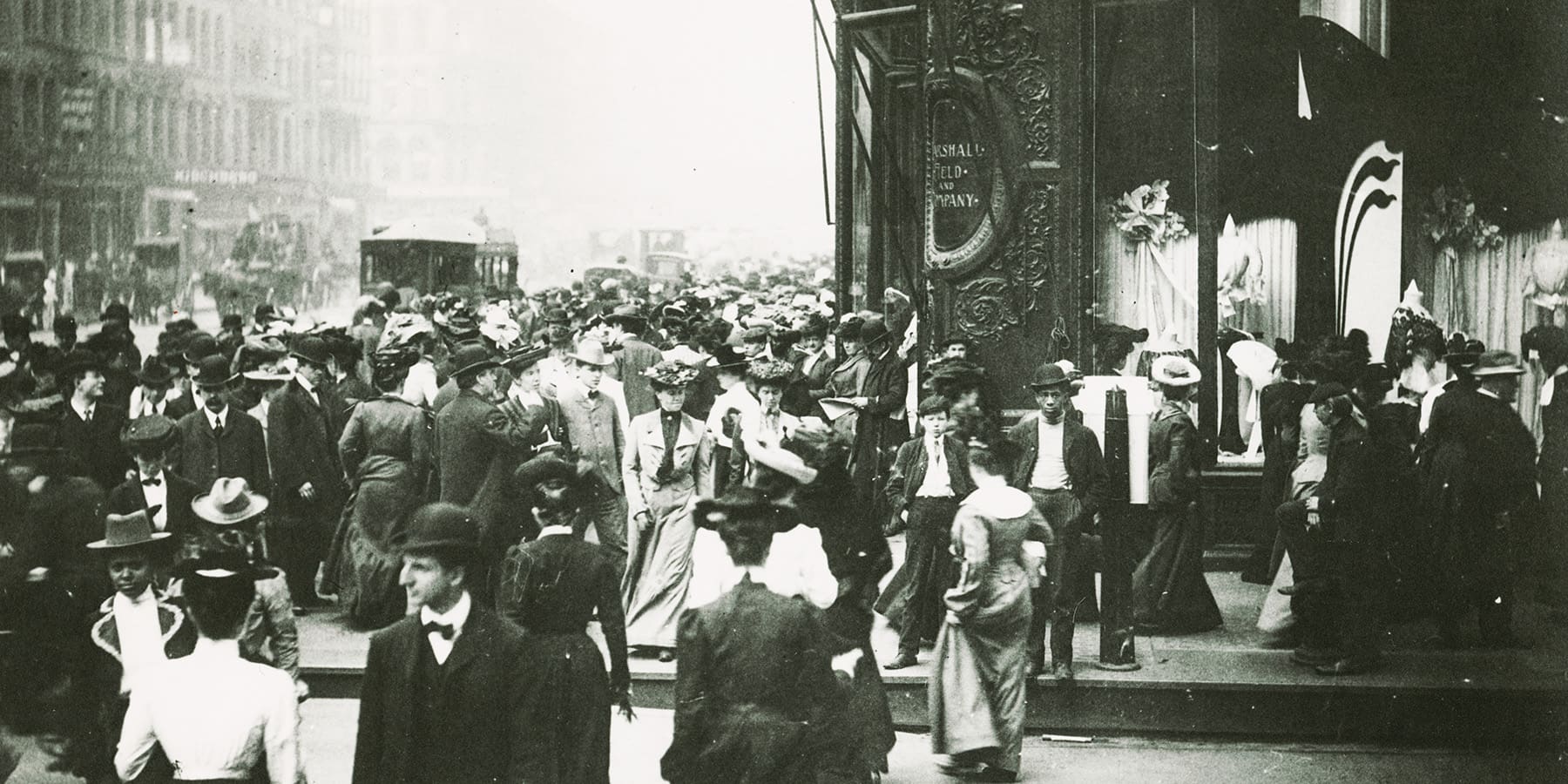
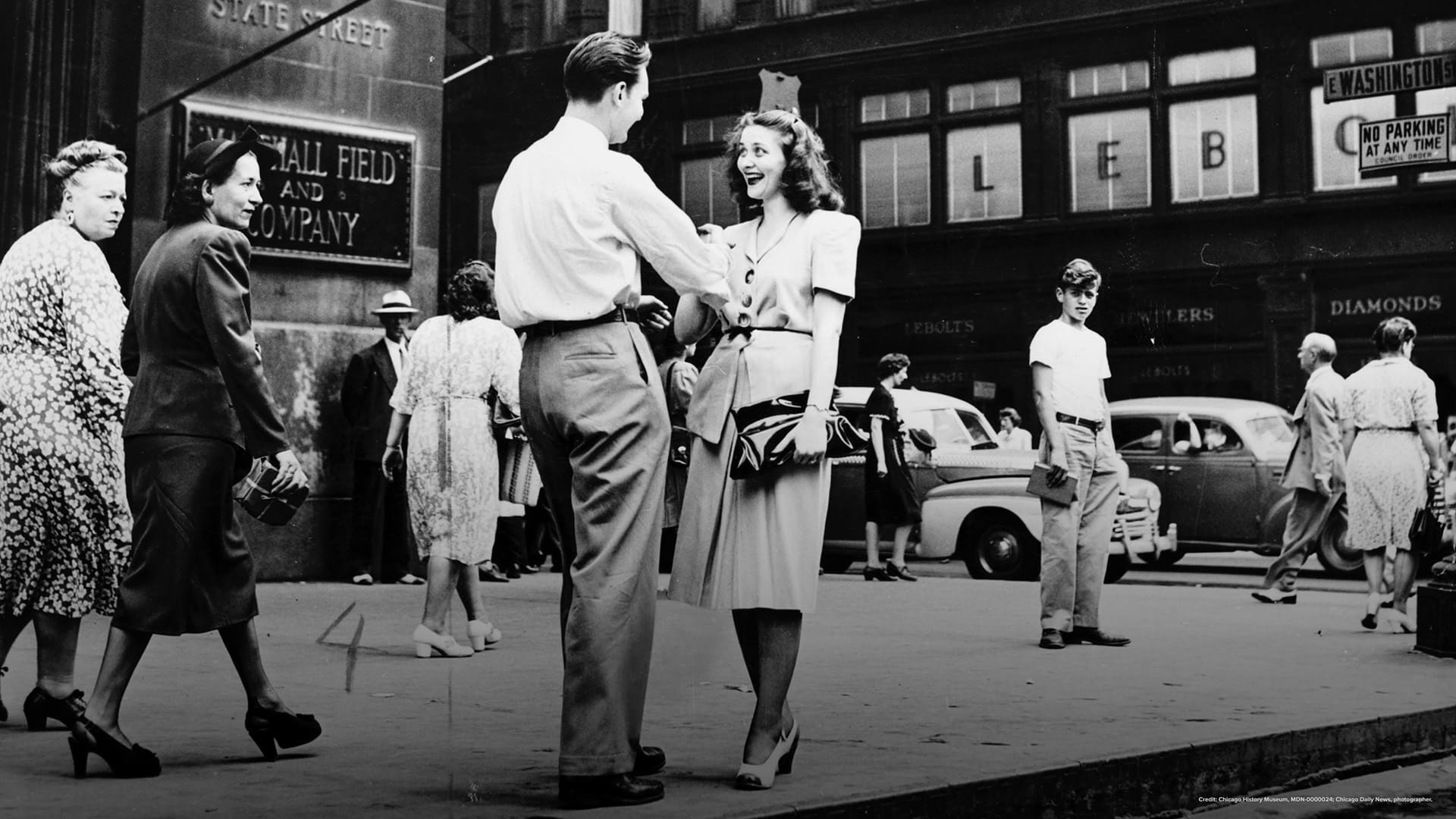
In 1865, Field joined forces with Chicago retail giant Potter Palmer, as well as Levi Leiter, to establish a new dry goods store called Field, Palmer, Leiter & Co. A few years later, Palmer sold his stake, and the company became Field, Leiter, & Company, with a new building (leased from Palmer) at the corner of State and Washington streets.
“The legend is that Marshall Field and Levi Leiter stood at the doorway, and there was a rose for every woman and a cigar for every man,” Goddard said. “They’re really making it a place where the customer feels really special.”
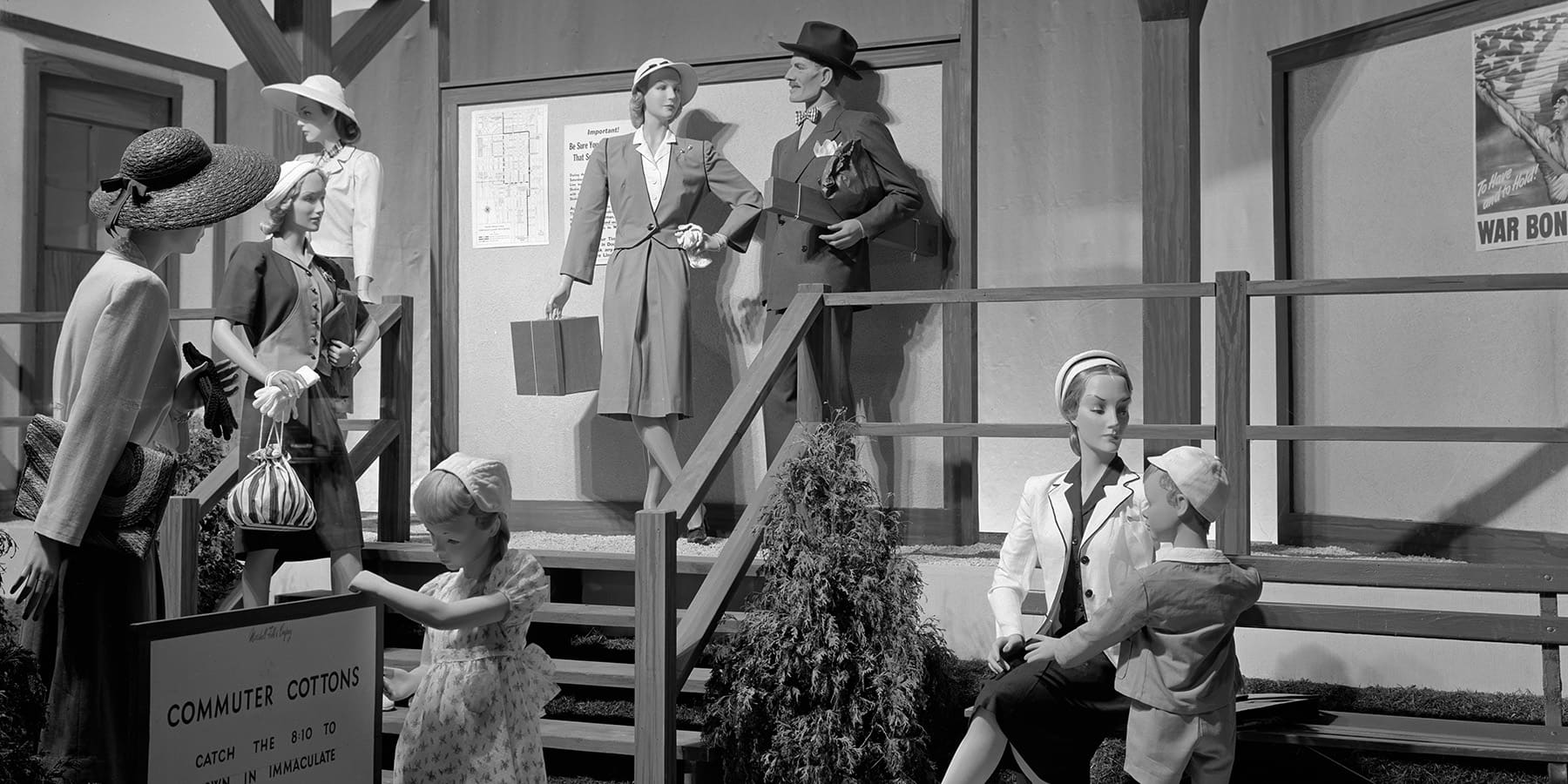
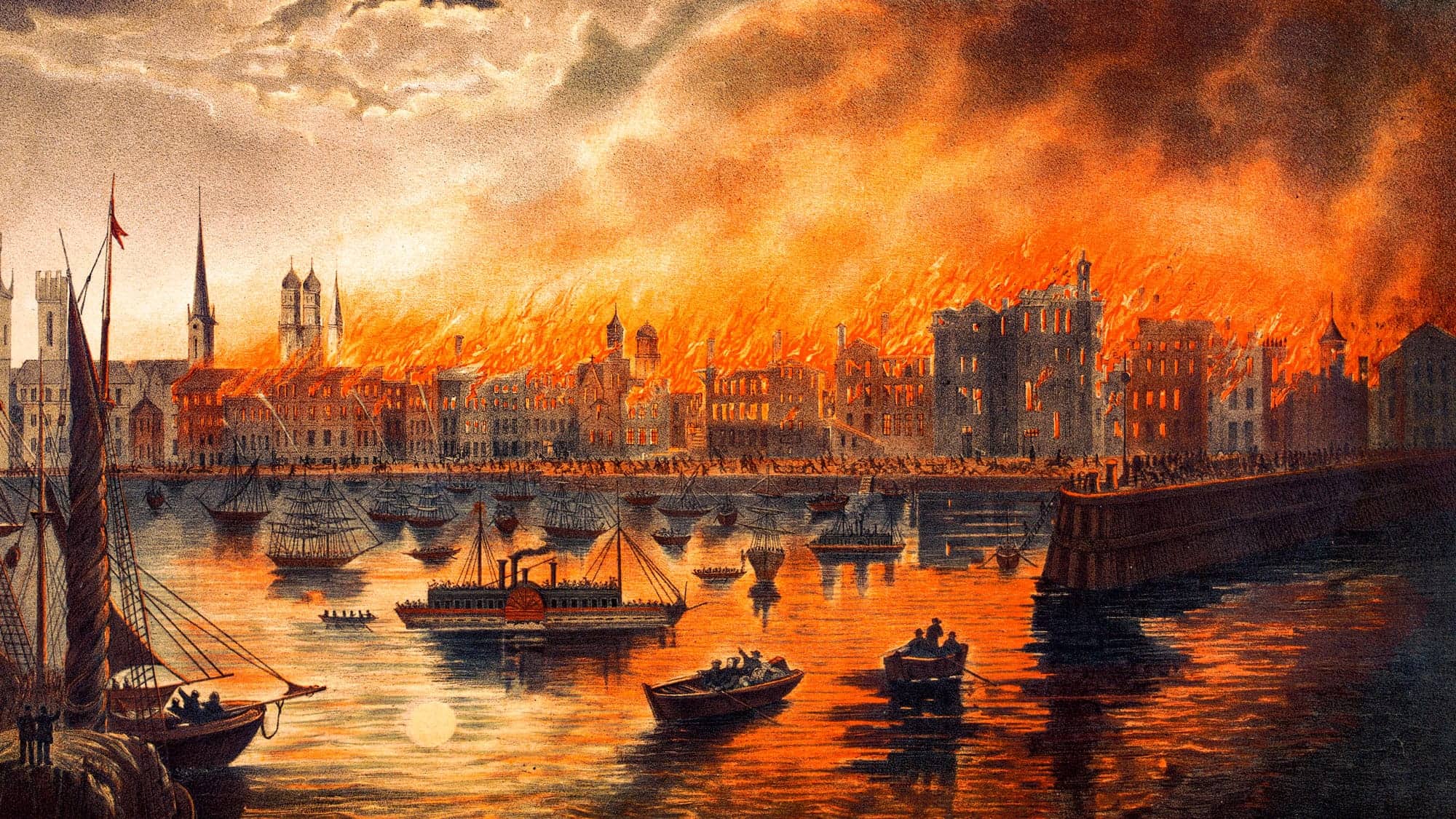
The Great Chicago Fire of 1871, however, nearly brought the company to its knees, were it not for the employees who managed to save $200,000 worth of merchandise. They rebuilt, this time with a larger building. In 1881, after business differences, Field bought out Leiter, and the company became Marshall Field & Co. At this point, the company’s wholesale division brought in five times what the store was earning, according to the Encyclopedia of Chicago. But by the turn of the century, that began to shift, as Field reimagined the shopping experience, particularly with women in mind.
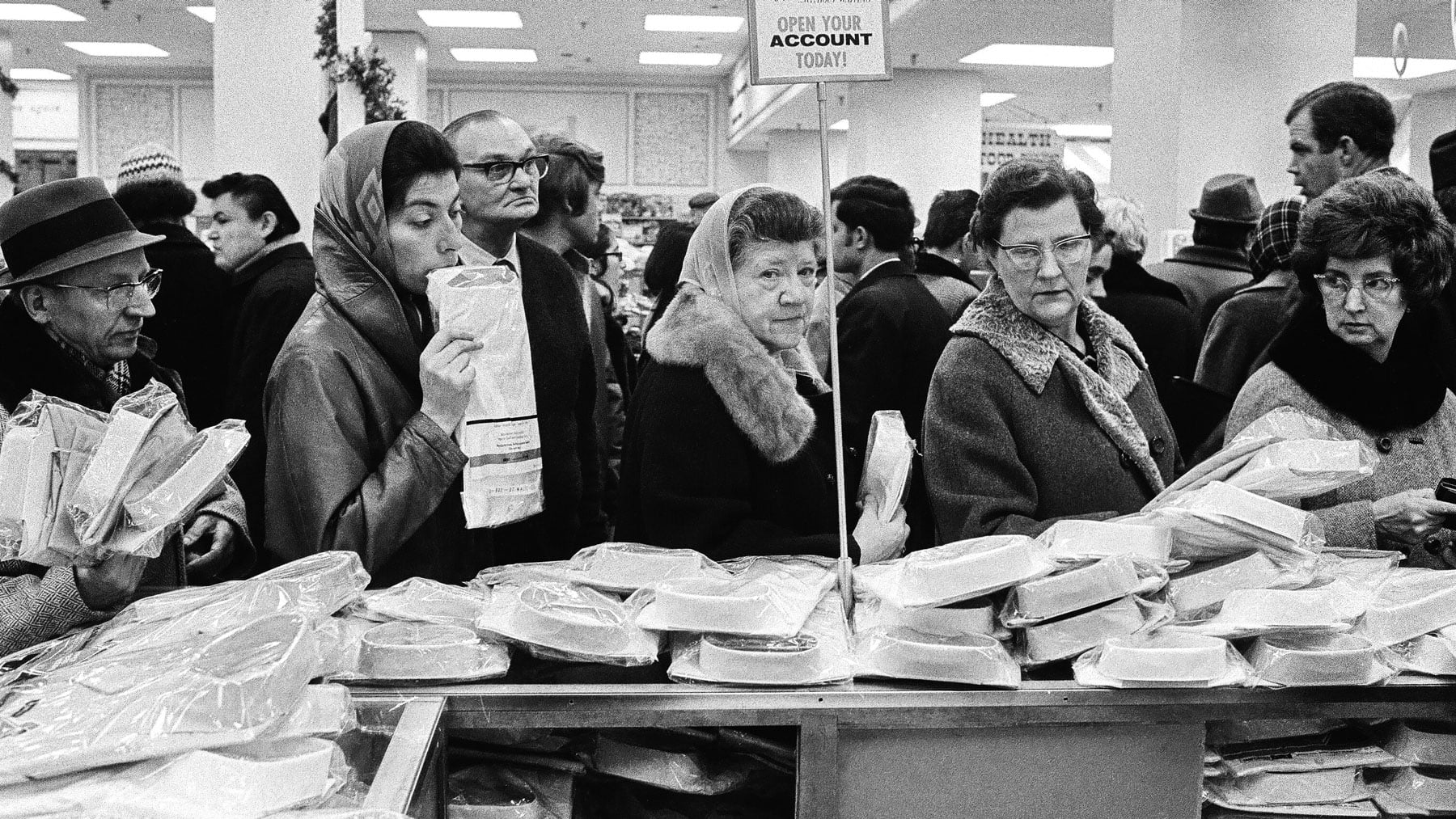
As popular legend has it, a sales clerk was debating with a customer about an item she wanted. Field corrected the clerk and reportedly said, “Give the lady what she wants” – a far cry from the “buyer beware” ethos that had previously defined some retailers. It became a motto and motivating force for the company – that attentive customer service would make for loyal customers. It worked, as retail sales skyrocketed at the dawn of the new century.
Field’s success wasn’t without controversy. He wasn’t supportive of employees who wanted to join unions, and according to one American Experience article, “If caught gambling or drinking – even off the job – [the employee] would be fired. Informers and spies riddled the payroll and reported to Field on the behavior of his employees – especially fraternization with union officials.” And while Field’s business model relied on caring for the women who shopped in his stores, the women who worked for the company were often not paid a livable wage.
“Early on, they faced a federal inquiry about their discriminatory pay towards their female employees,” archivist Julie Wroblewski told Chicago Stories. “They’re key to your business model, but you’re not willing to pay them.”
Despite becoming one of the wealthiest men in America with a 25-room mansion on South Prairie Avenue, a glittering corridor of Gilded Age wealth, Field did not have much interest in the spotlight. He was reportedly a workaholic with not much of a personal life. He married his wife Nannie in 1863, and they had two children, Marshall Field Jr. and Ethel. (A third child, Louis, died in infancy.)
“Marshall Field’s life has as much sadness as it has great success to it,” Goddard said, “[His relationship with Nannie] wasn’t necessarily a very happy marriage, and he was very committed to the work that was going on, didn’t have a whole lot of happiness in his private life, and didn't even really seem to enjoy his money to a tremendous extent.”
Nannie died in 1896, and Field married Delia Spencer in 1904. Marshall Field Jr. died of a gunshot wound (under mysterious circumstances – possibly an accident, possibly a suicide, or possibly during an incident at a brothel) in 1905.
In 1906, Field died suddenly of pneumonia. He was 71. By the time of his death, Field had amassed a fortune of more than $3 billion in today’s dollars. Toward the end of his life, he donated much of his fortune to philanthropic endeavors. In 1894, Field donated $1 million (more than $36 million today) to what became the Field Museum, despite initially being skeptical of the idea, according to the museum’s history. After his death, his will allocated another $8 million for the museum. He also donated to various Chicago cultural and educational institutions, including local schools, libraries, the Art Institute of Chicago, and the University of Chicago. For Field’s family, these were gifts to the city that allowed him to come so far.
“From my great-great-grandfather's first gifts in philanthropy, every member of the family has been told that Chicago is our home,” Marshall Field V said. “If it hadn’t been for Chicago, this never would’ve happened.”
Related