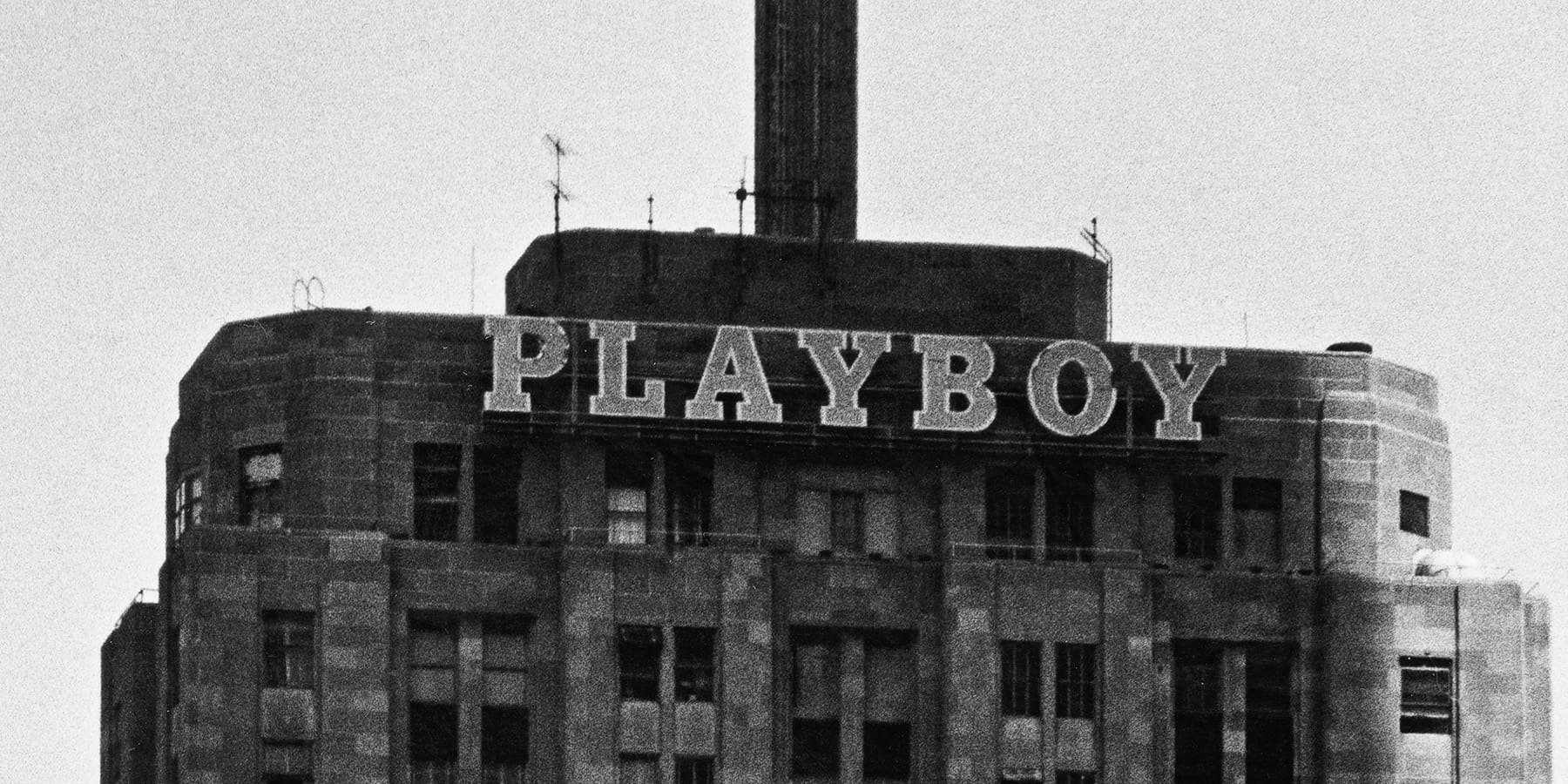





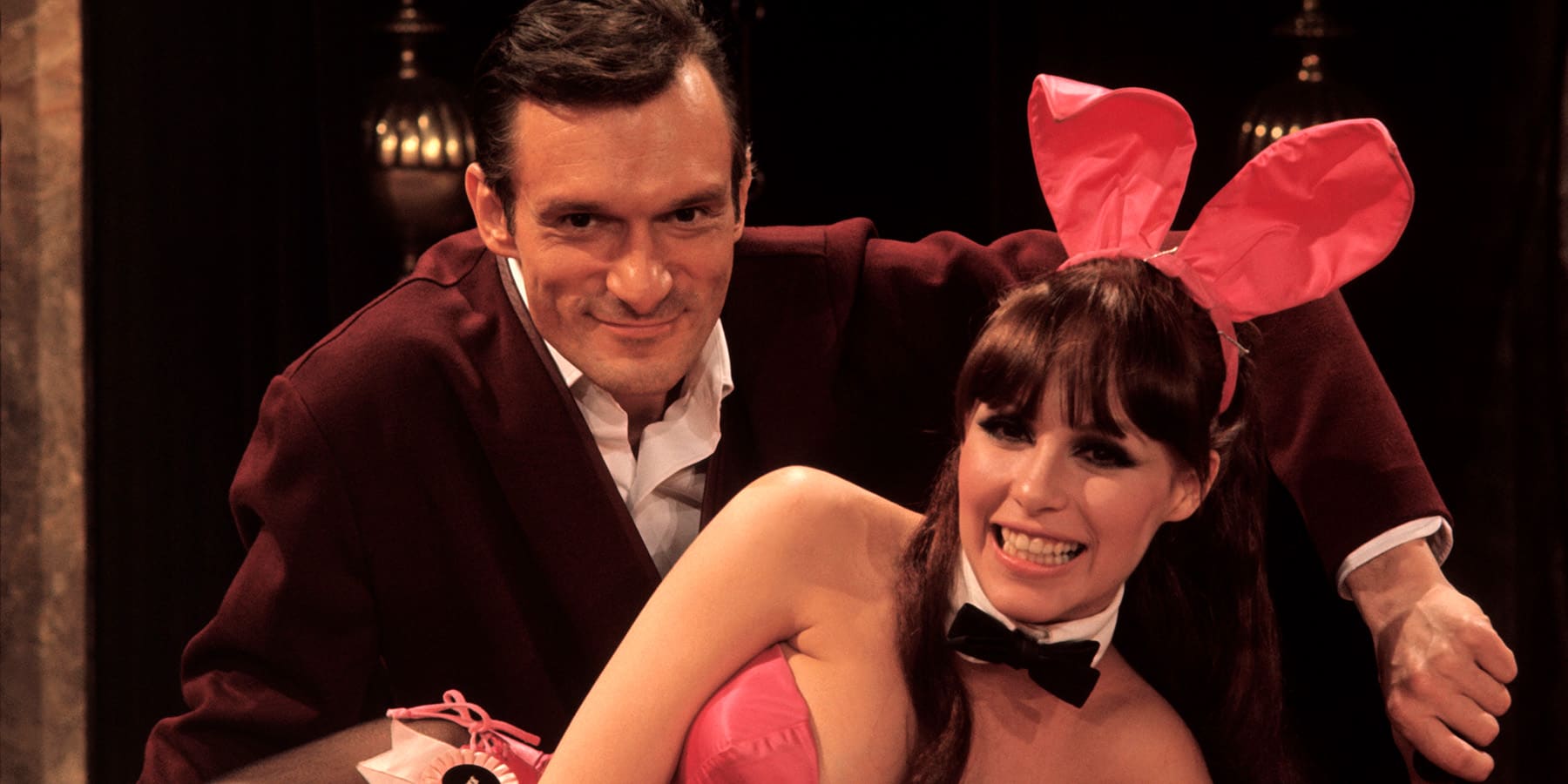
In the early days of Playboy magazine, the Playboy Club, and the Chicago Playboy mansion, founder Hugh Hefner’s star was on the ascendant. But the brighter the spotlight became, the harsher the glare. Hefner often found himself and his business at the center of legal troubles and social controversy. His biggest critics in those first years could be found in city government, the feminist movement, and even the U.S. Postal Service.
Mayor Richard J. Daley, the City of Chicago, and the Chicago Archdiocese
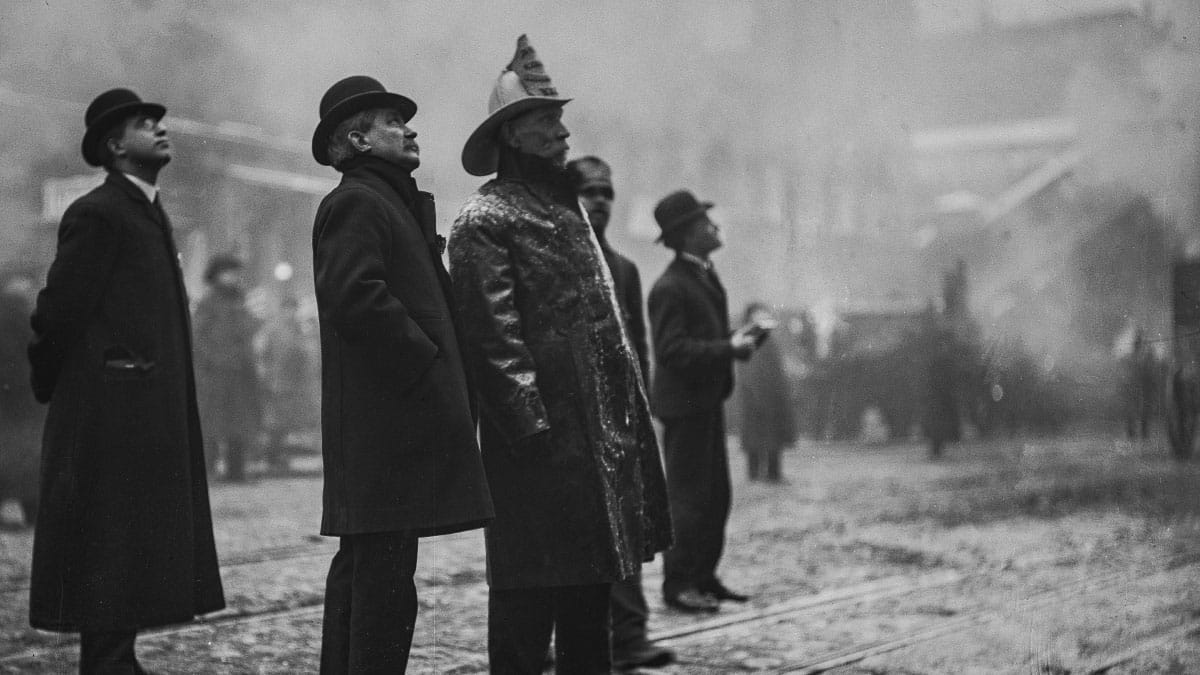
As Hefner’s Playboy Club and mansion were beginning to put Chicago on the map as a hip place to be, Mayor Richard J. Daley was in the midst of reshaping Chicago’s image not as a Tommy-gun-toting mobster town or a seedy city, but as a wholesome, leading, American urban center.
“Mayor Daley, basically from day one, felt like everybody’s father,” author Thomas Dyja told Chicago Stories. “Hefner’s role in this was to be that crazy big brother who would buy you beer and hand it to you in the background. He was that naughty part of Chicago, which has always been part of Chicago.”
Daley, who had been brought up in a devout Catholic family, did not take kindly to the nudity, open sexuality, and general debauchery that Hefner and his magazine celebrated. The Chicago Archdiocese also denounced them.
“There were a number of incidents in Chicago where the Catholic Church…utterly condemned Playboy and Hefner and described him as an agent of the devil, basically – and that any good, upstanding Catholic will have nothing to do with Hugh Hefner and his magazine,” Steven Watts, author of Mr. Playboy, told Chicago Stories.
In 1959, as Hefner and the Playboy brand were gearing up to host the Playboy Jazz Festival at Soldier Field, officials within the Catholic Church pressured Daley to withdraw his permission to use the stadium.
“They pulled the permissions at Soldier Field more or less at the last minute, and Hefner and his guys had to scramble around,” Watts said. “They found another venue at the Chicago Stadium, I believe it was, and actually pulled this thing off to the great acclaim of everyone.”
When Hefner wanted to open the Playboy Club in 1960, the city refused to grant a permit. Hefner sued and won, and the club and its scantily-clad Bunny waitresses became a popular hot spot in the city.
He had other legal woes, too. After publishing photos of actress Jayne Mansfield in 1964, Hefner was arrested for obscenity charges. Hefner once claimed that he was really arrested because the magazine had criticized the government for arresting comedian Lenny Bruce, who was arrested on obscenity charges for using explicit language and later for drug possession. Hefner was not convicted.
At best, the city learned to tolerate Hefner and Playboy.
“I think it was love-hate, really,” Barbara Nellis, a former editor for Playboy, told Chicago Stories. I don’t think that there were too many people either in politics or in the social life of the city who found Playboy an enhancement necessarily. They were happy to have the revenue.”
The U.S. Postal Service
When Playboy first began publication in 1953, censorship battles quickly followed. The United States Postal Service (USPS) refused to give Playboy a second-class mailing designation, which was a discount typically given to magazines and other publications. The USPS deemed the publication to be pornography and would therefore not distribute it.
“He believes the city government planted the seed for all of that,” Watts said. “It gets a lot of publicity, as you might imagine.”
Hefner sued the post office and won $100,000 in damages, and the judge determined that the post office cannot decide what can and cannot be distributed. All that publicity helped increase Playboy’s subscription base.
It was an important victory for Hefner, both culturally and financially.
“The censorship lawsuit with the post office in Chicago was very high stakes because there was not only the reputation of Playboy that was in play, but really the economic viability of the whole enterprise,” said Watts. If they had successfully labeled it pornography, “It would really dry up the distribution of the magazine.”
The Feminist Movement
One of chief criticisms of Playboy from the beginning has been that the magazine objectifies women – that it views a woman only as a sex object and nothing more. The most prominent voices behind this critique were those of the leaders of the feminist movement of the 1960s and ’70s.
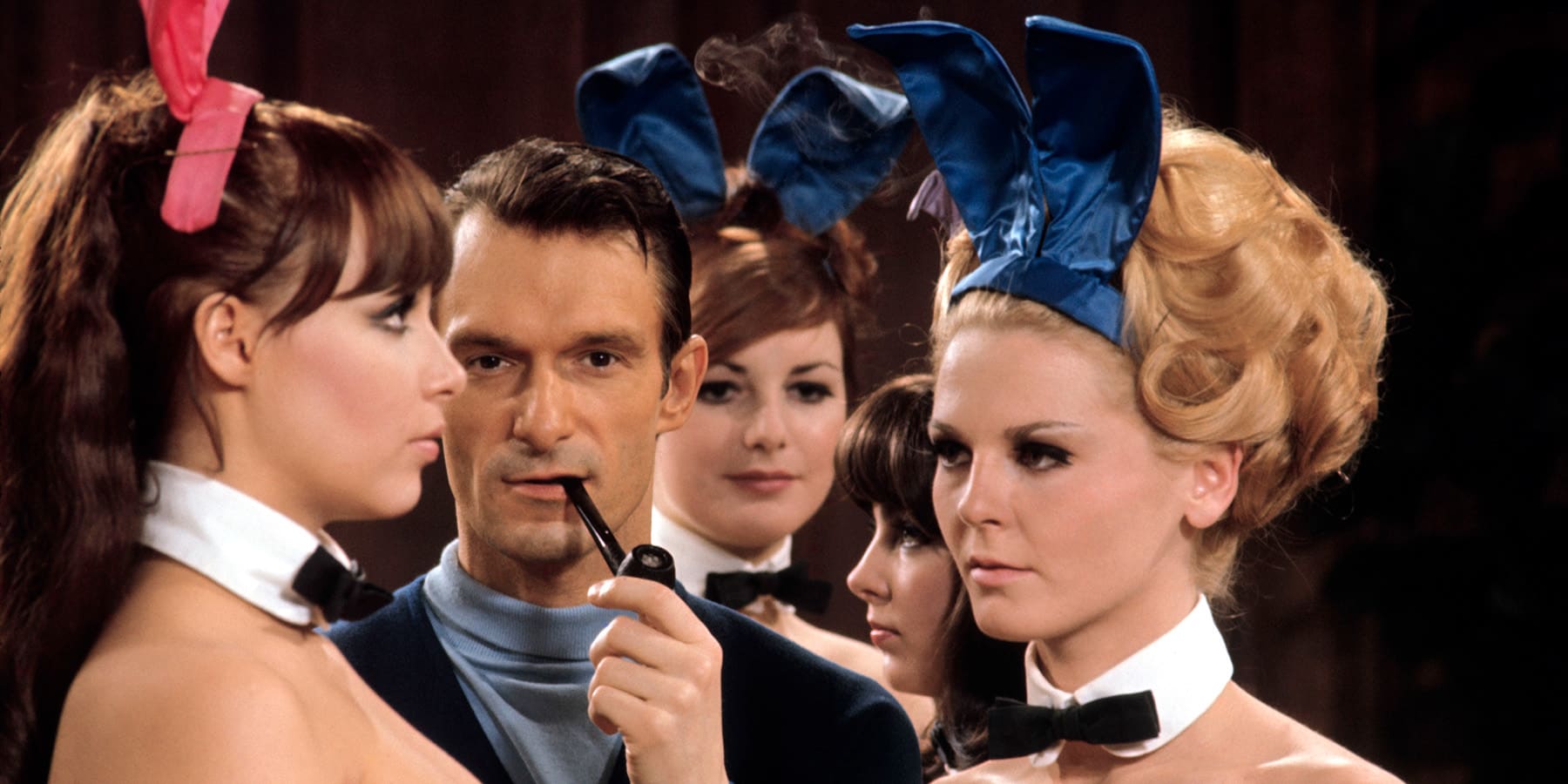
Feminist leader and journalist Gloria Steinem led the charge in 1963 with her exposé in which she posed as a Playboy Bunny at the club in New York. She wrote of working long hours at minimum wage, harassment from clubgoers, and mandatory gynecological exams to check for sexually transmitted diseases as outlined in the so-called “Bunny Manual” – a kind of code of conduct for the workers.
“It made a huge splash,” writer Amy Rose Spiegel said of Steinem’s article. “Hefner wrote her a letter after the article came out saying, ‘Okay, I’m taking [the STD testing] out of the Bunny Manual.’”

Spiegel said the response to Steinem’s article mirrors the public response to Playboy throughout the years – the push and pull between intrigue and disdain.
“[Steinem’s article] was seen very much as a lurid look behind the scenes, but also really importantly, why are we putting up with this sh--? It was a bit of both, and that’s what Playboy is,” Spiegel said. “It’s lurid and sexy and glamorous, but it’s also infuriating and backward and retrograde.”
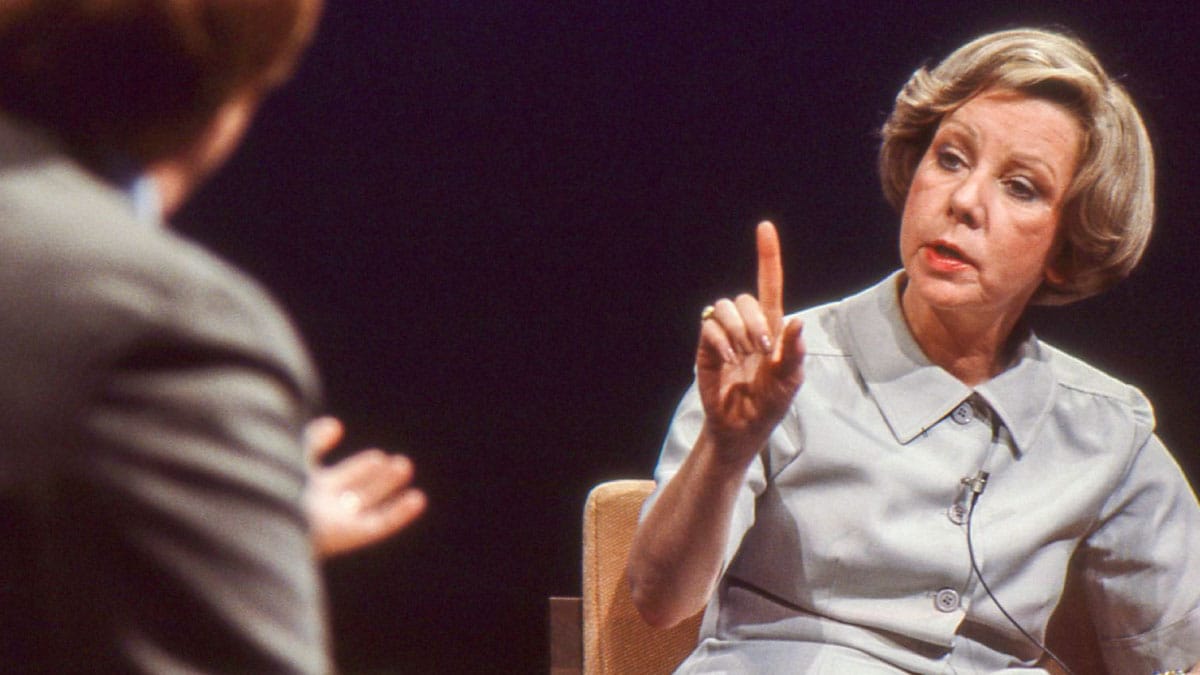
In 1970, Hefner appeared on The Dick Cavett Show along with feminist activist and writer Susan Brownmiller. On the show, Hefner does not come across well, referring to Brownmiller and another feminist leader as “girls.”
“How could you be so shortsighted that you would go to have a serious debate on The Dick Cavett Show about the feminist movement and be calling women ‘girls’?” Spiegel said.
On the program, Brownmiller confronted Hefner and said, “The role that you have selected for women is degrading to women because you choose to see women as sex objects, not as full human beings,” she said. “The day that you are willing to come out here with a cottontail attached to your rear end,” she began, but audience applause didn’t allow her to finish that thought.
Not everyone, including the people who worked for Hefner, saw it that way. Candace Collins Jordan, who appeared as a Playmate several times in the magazine and also worked in the clubs as a Bunny, told Chicago Stories that she thought it was “groundbreaking” for women to pose nude and do “what they wanted to do when they wanted to do it.” She personally never felt objectified.
“I felt empowered by being a Playmate. I felt empowered by being a Bunny back in the ’70s,” Jordan said. “These were chosen professions.”
Related