




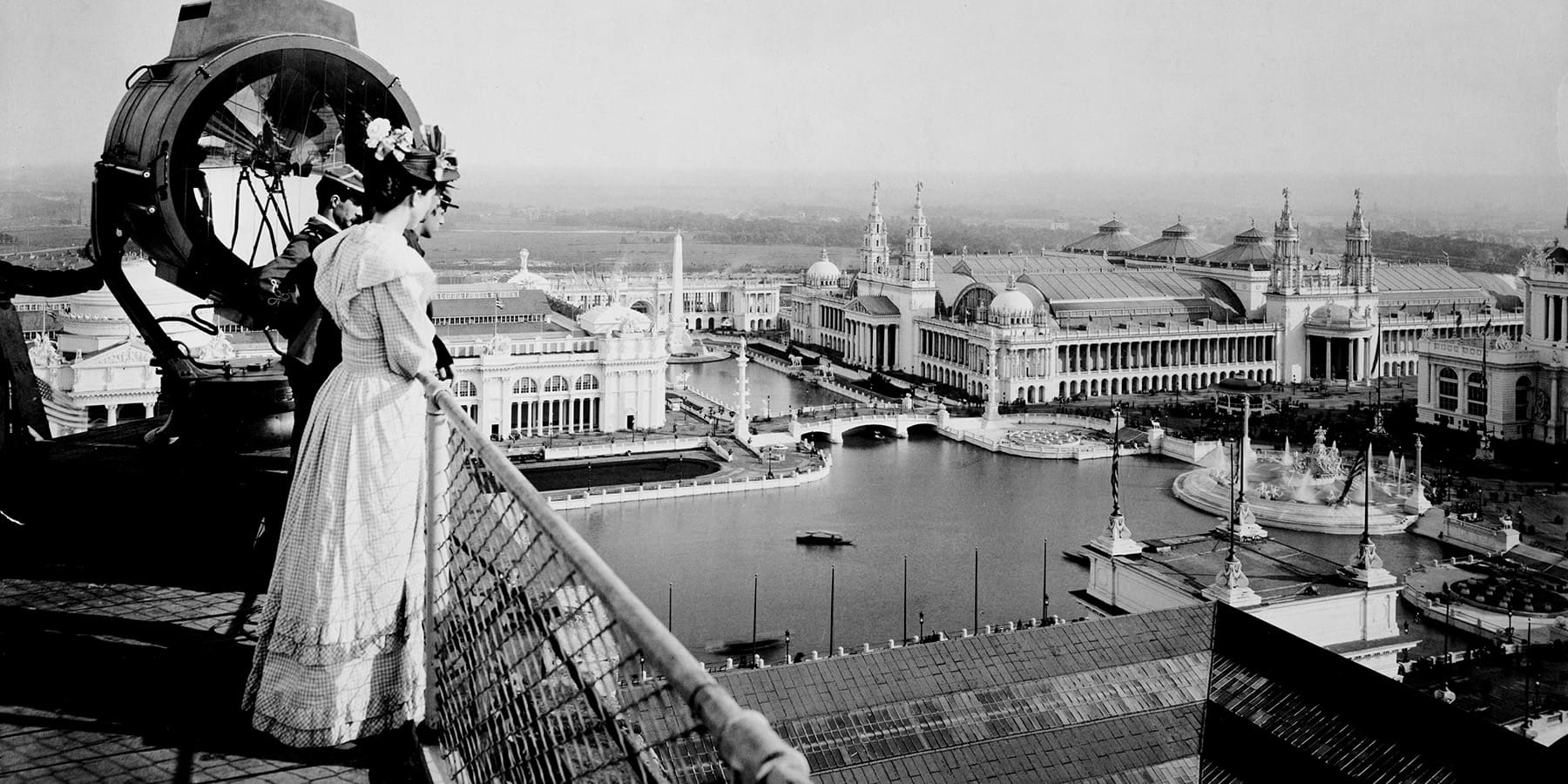
Before it became the dazzling White City that welcomed millions of visitors during the 1893 World’s Columbian Exposition, it was a swamp – thick with mud, battered by icy winds coming off Lake Michigan. It took quite the imagination to take an otherwise unimpressive swath of land and transform it into a wonderland of ingenuity, culture, art, and architecture. Luckily for Chicago – eager to prove itself as a great American city – Daniel Burnham, John Wellborn Root, Frederick Law Olmsted, and the laborers who built the fair had imagination and tenacity to spare.
The Architects
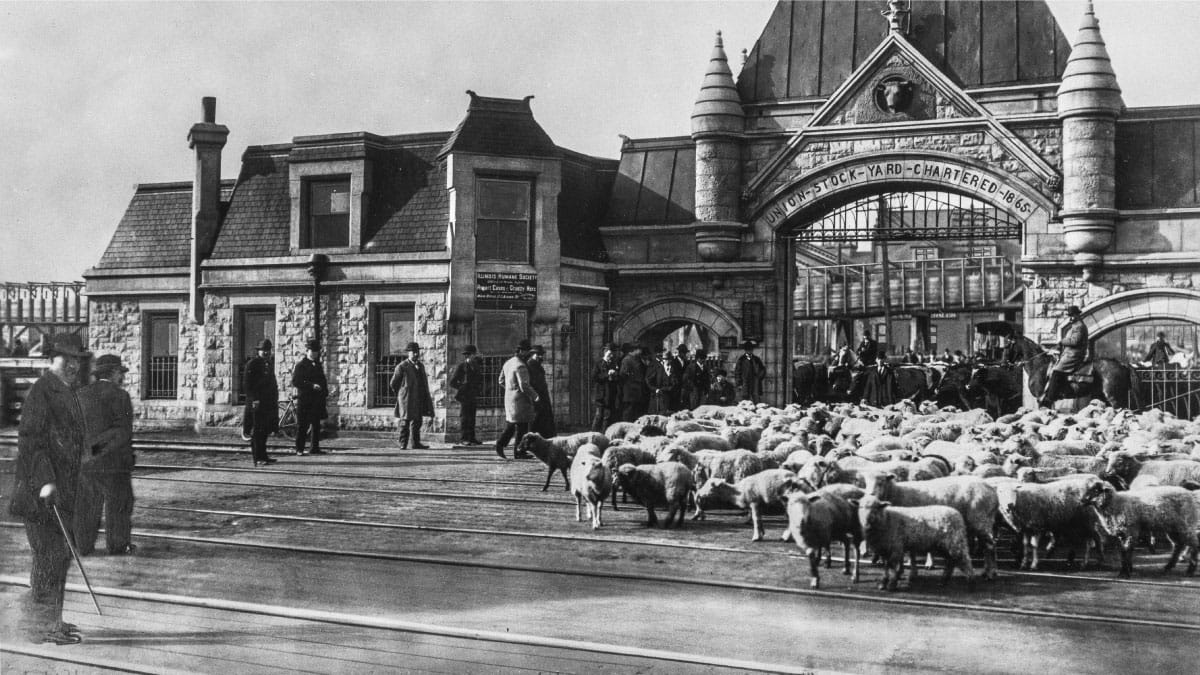
When Chicago was incorporated as a city in 1837, it had roughly 4,000 residents. By the time it was chosen five decades later to host the World’s Fair, the population had skyrocketed to 1 million. With towering new skyscrapers, sprawling rail lines, and bustling albeit filthy stockyards, Chicago was a boom town. But when the city first put its name in the running to host a fair that would mark 400 years since the arrival of Christopher Columbus, it had its doubters, the loudest of whom were New York newspaper editors.
“They were pointing their jabs at Chicago saying, ‘There’s no way the city can pull it off. It’s a cow town,” Scott Cummings, a researcher who published an in-depth website about the fair, told Chicago Stories.
New York may have been the obvious choice to many, but Chicago had something to prove. Several prominent Chicago businessmen formed a committee and went to work to lobby Congress, which would decide the host city. It was a powerful group, including Potter Palmer, George Pullman, Marshall Field, Philip Armour, Charles Tyson Yerkes, and Joseph Medill. In 1890, Congress named Chicago as the host city, thanks in part to the additional $4 million some of the boosters pledged.
“A generation before, most people probably hadn’t heard of Chicago. Now all of a sudden it was hosting the World’s Fair,” historian Adam Selzer told Chicago Stories.
The city and its civic leaders knew they had to deliver something spectacular. Paris had set a high bar with the Paris Universal Exposition of 1889, in which it debuted a stunning feat of engineering with the Eiffel Tower. Even showman P. T. Barnum penned an essay in which he wrote, “Make it bigger and better than any that have preceded it. Make it the Greatest Show on Earth.”
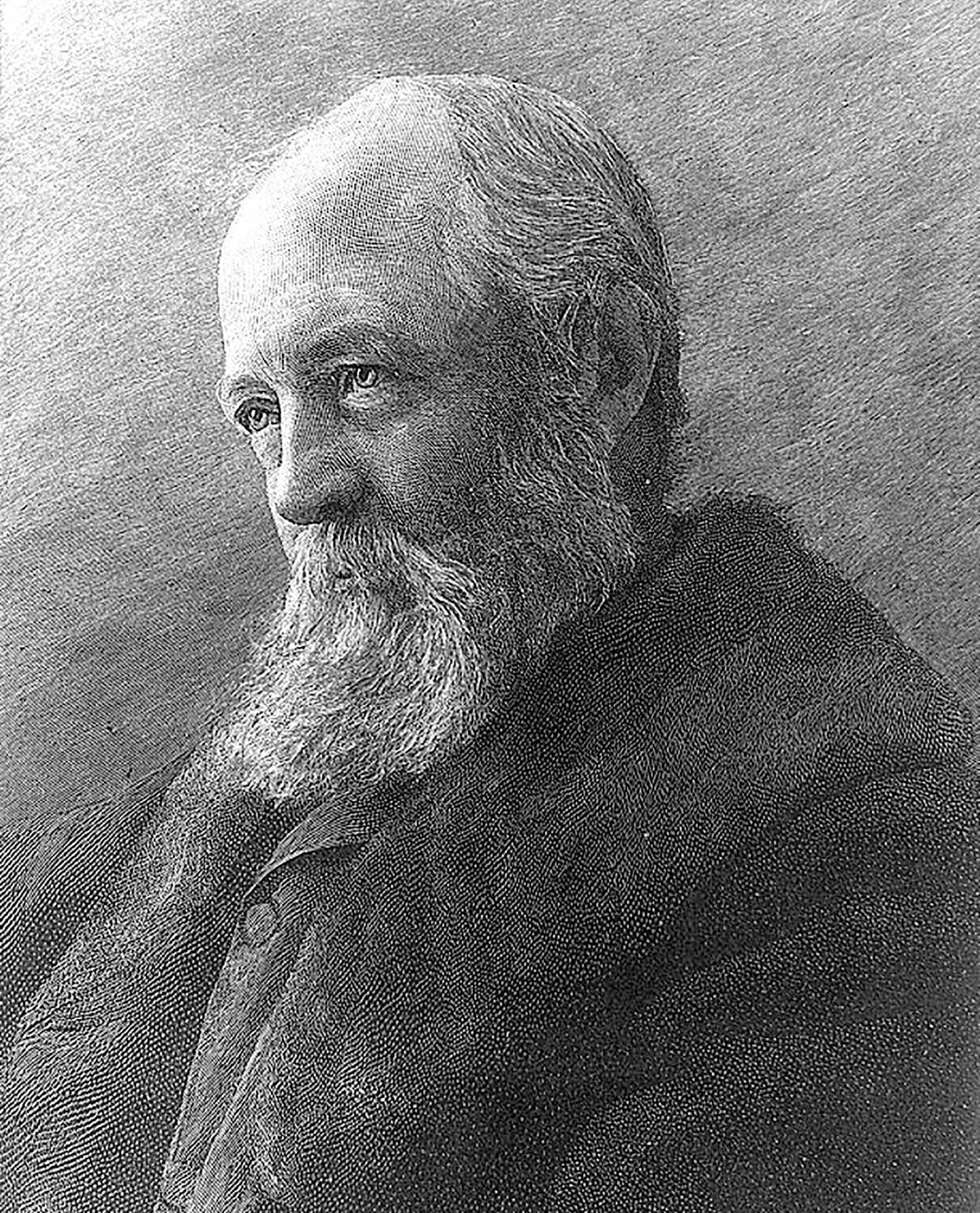
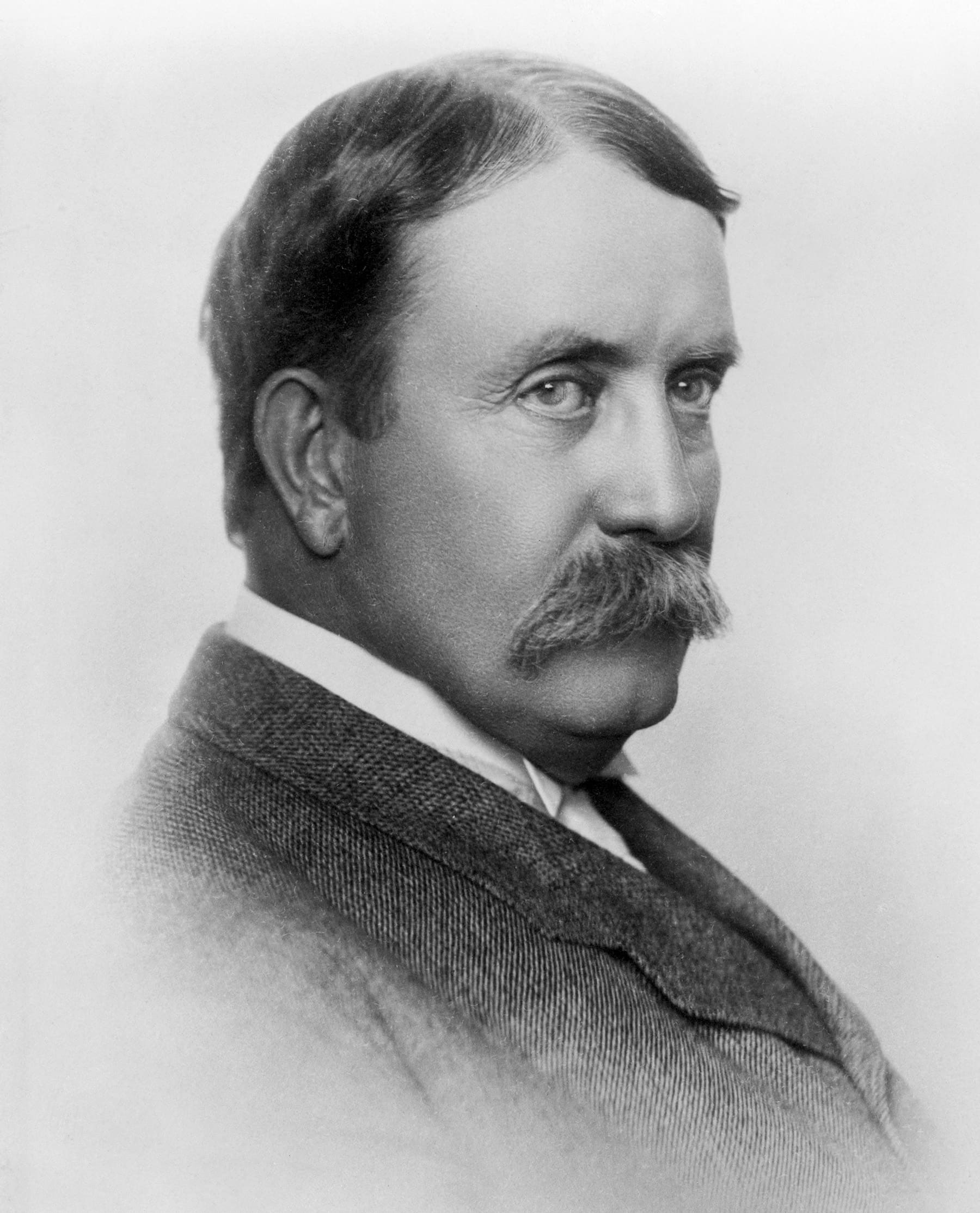
The pressure was on, and a location needed to be selected in the city. The committee recruited renowned landscape architect Frederick Law Olmsted, the visionary behind Central Park and Prospect Park in New York. Olmsted joined forces with architects Daniel Burnham and John Wellborn Root, whom the committee had selected to design the fair and determine the layout.
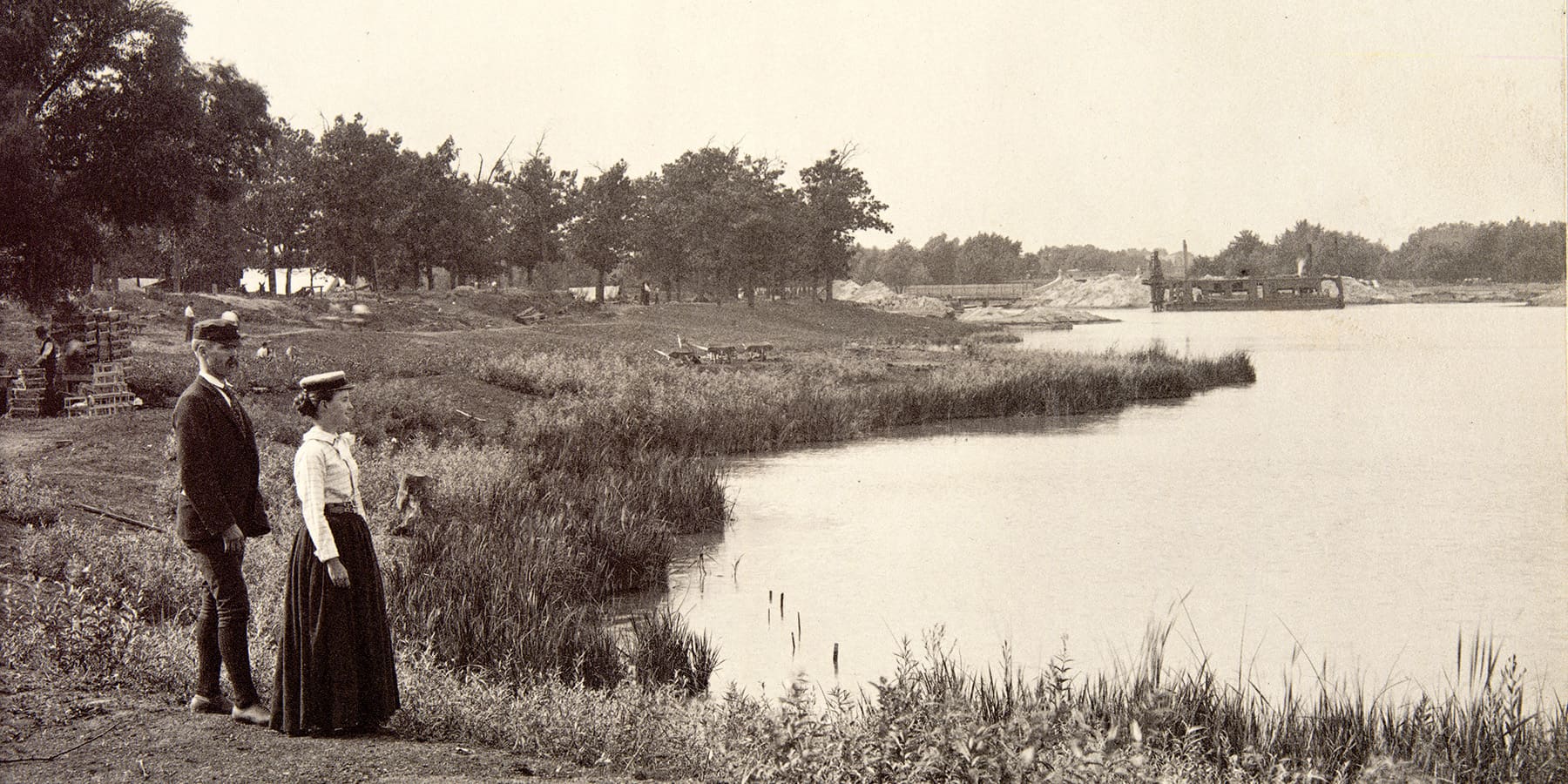
In poor health and 68 years old when he arrived in Chicago, Olmsted already had a plan for a marshy stretch of land 8 miles south of the Loop that he had developed before the Great Chicago Fire of 1871 but that had not yet come to fruition. While the committee considered multiple sites for the fair, Olmsted saw promise in Jackson Park, its backdrop the vibrant blues and greens of Lake Michigan. However, “The place was forbidding,” he said in one report. The land was marshy, subject to the springtime whims of the lake and the punishing wind. The lack of trees made the land appear “extremely bleak, the soil subject to be flooded…[The trees] were very feeble and many of them dilapidated through loss of limbs broken off by gales from the lake.” Work began on the site in 1891.
“It was a swamp. It was a bog. We have less than three years to get this in gear, convert it from a mud city into a temporary city that will fulfill all of these dreams,” historian Clarence Goodman said.
Accompanied by his collaborator Henry Codman, Olmsted was very involved with the project, often walking the grounds to watch the marsh begin to take shape. His design emphasized interconnected lagoons and canals, with a central basin around which the exhibition buildings would be built. Though it was engineered, Olmsted wanted the scenery to appear natural, with plenty of aquatic plants that would withstand water fluctuations from the lake. His design also included Wooded Island, which was to be “free from conspicuous buildings, and…have a generally secluded, natural, sylvan aspect,” he wrote.
“Olmsted was so particular about every single element,” Chicago Park District historian Julia Bachrach said. “He ended up being the person who actually decided on what the list of birds would be – 700 ducks, 700 pigeons, a hundred geese.”
While Olmsted was getting his ducks in a row, Burnham and Root had an entire city to design. The pair had made their names designing some of the city’s first skyscrapers, including the Montauk Building, the iconic Rookery Building, and the northern portion of the Monadnock Building, as well as the Prairie Avenue mansions of the city’s wealthy.
Burnham, who was selected as the fair’s director of works, was known to be disciplined and commanding, while Root was more instinctive and imaginative. With Root drawing on a large piece of brown paper, they sketched out a city among Olmsted’s weaving lagoons. Visitors would enter through the Court of Honor, flanked by five enormous exhibition halls. The buildings would be constructed in a neoclassical style, with the columns, domes, and symmetry that evoked ancient Rome and Greece.
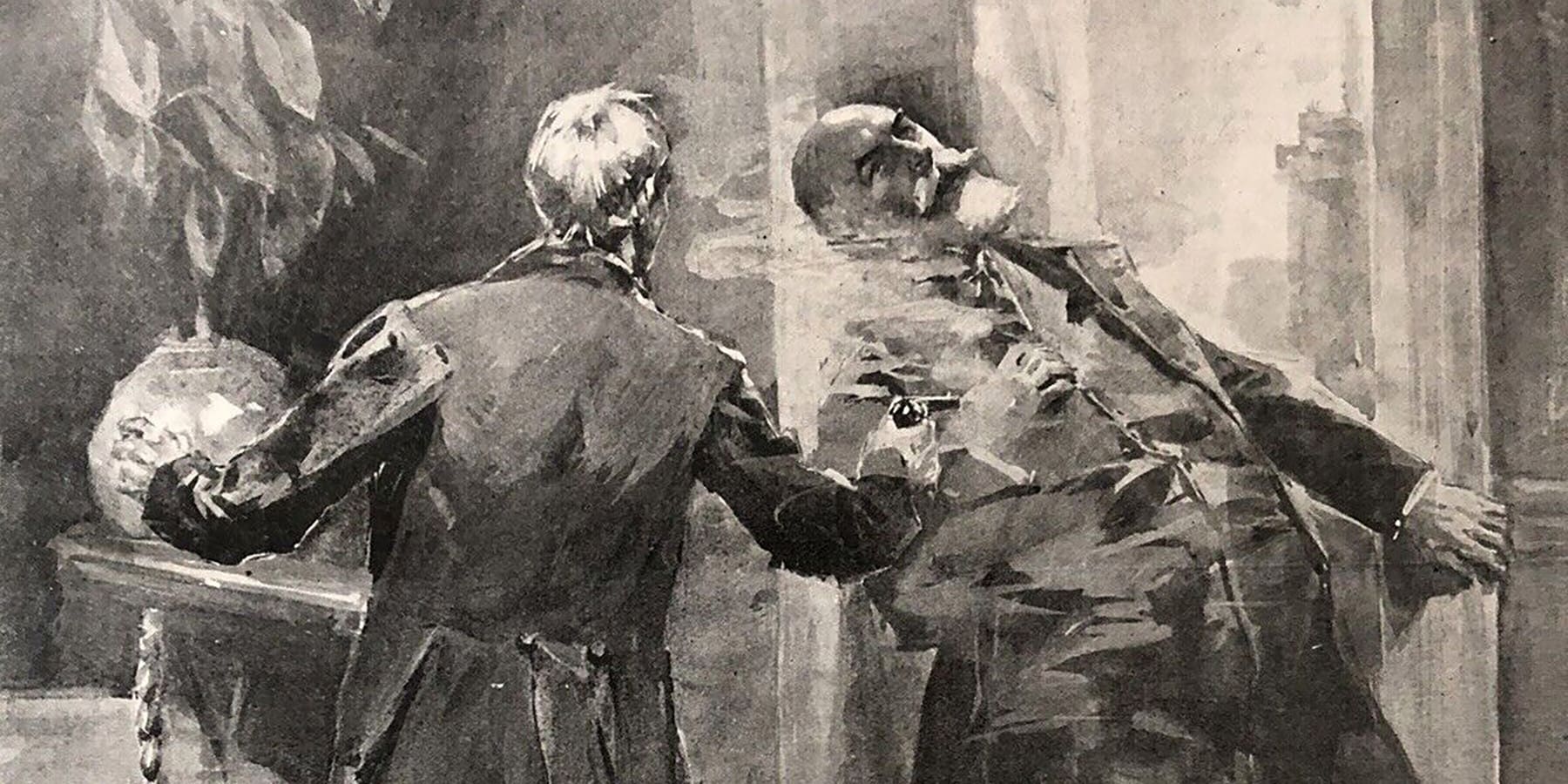
But Burnham and Root needed help. They set about recruiting architects Henry Van Brunt, Richard Morris Hunt, Charles McKim, George B. Post, and Louis Sullivan to design the major structures of the fair. According to Donald Miller in City of the Century, “Never in the country’s history had so many renowned artists and architects been brought together on a single project.” But just as plans were beginning to take shape and as Burnham and Root were convincing the initially skeptical architects to join their team, tragedy struck. Exhausted from the daunting work of planning the fair, Root fell ill. At age 41, Root died of pneumonia on January 15, 1891. It was a shock to Burnham, who was forced to carry on without his friend and partner.
Building the White City
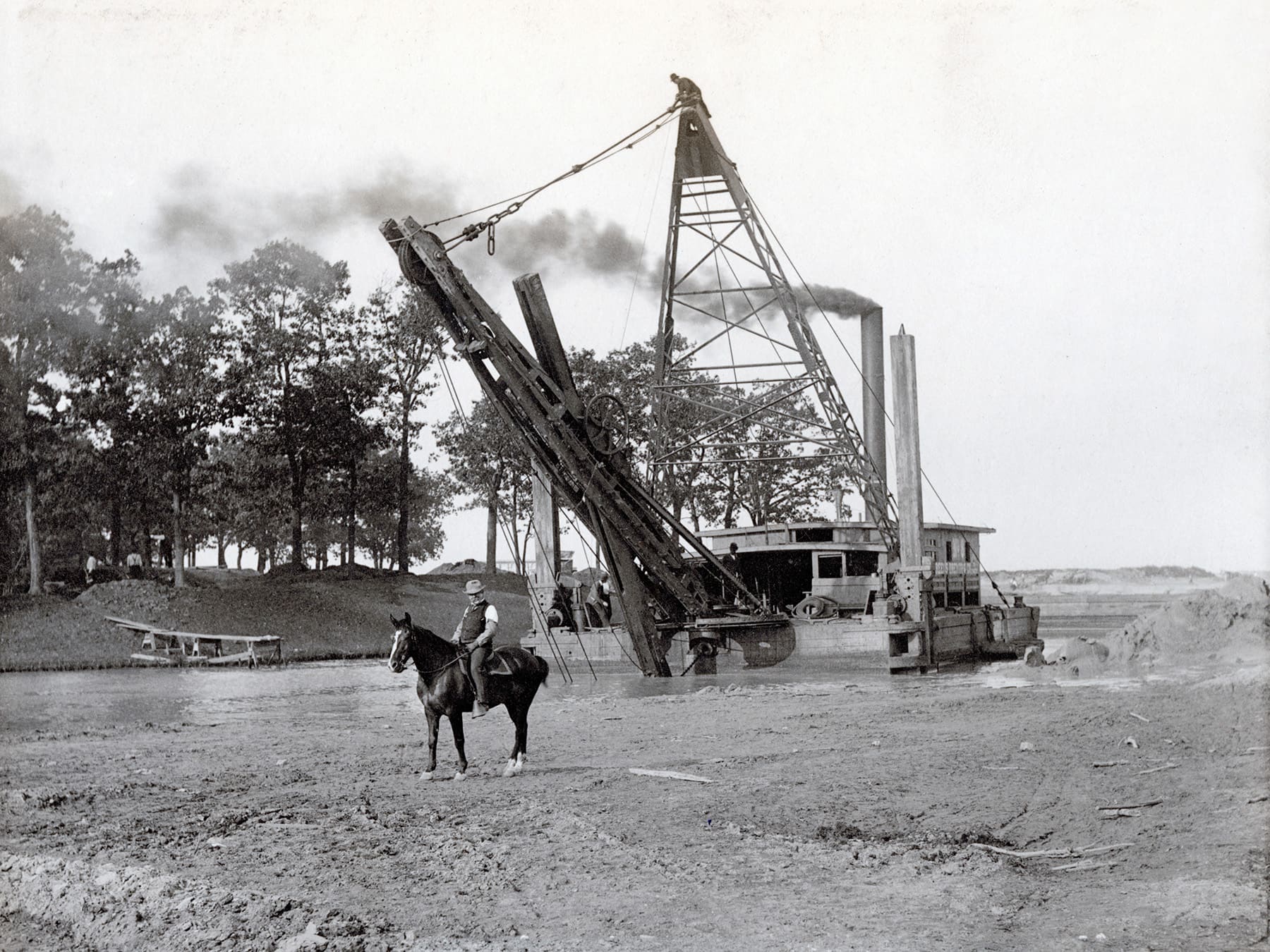
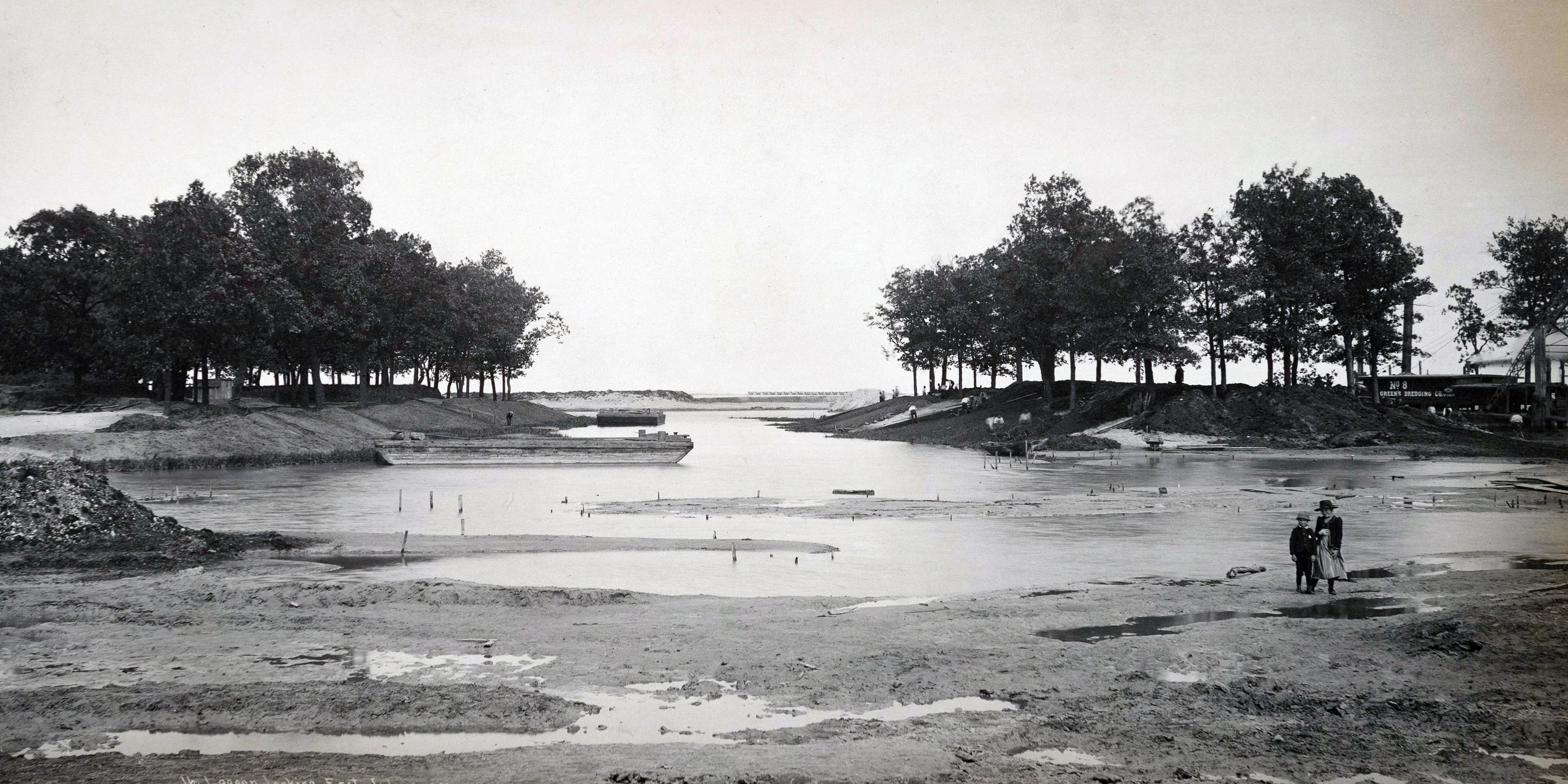
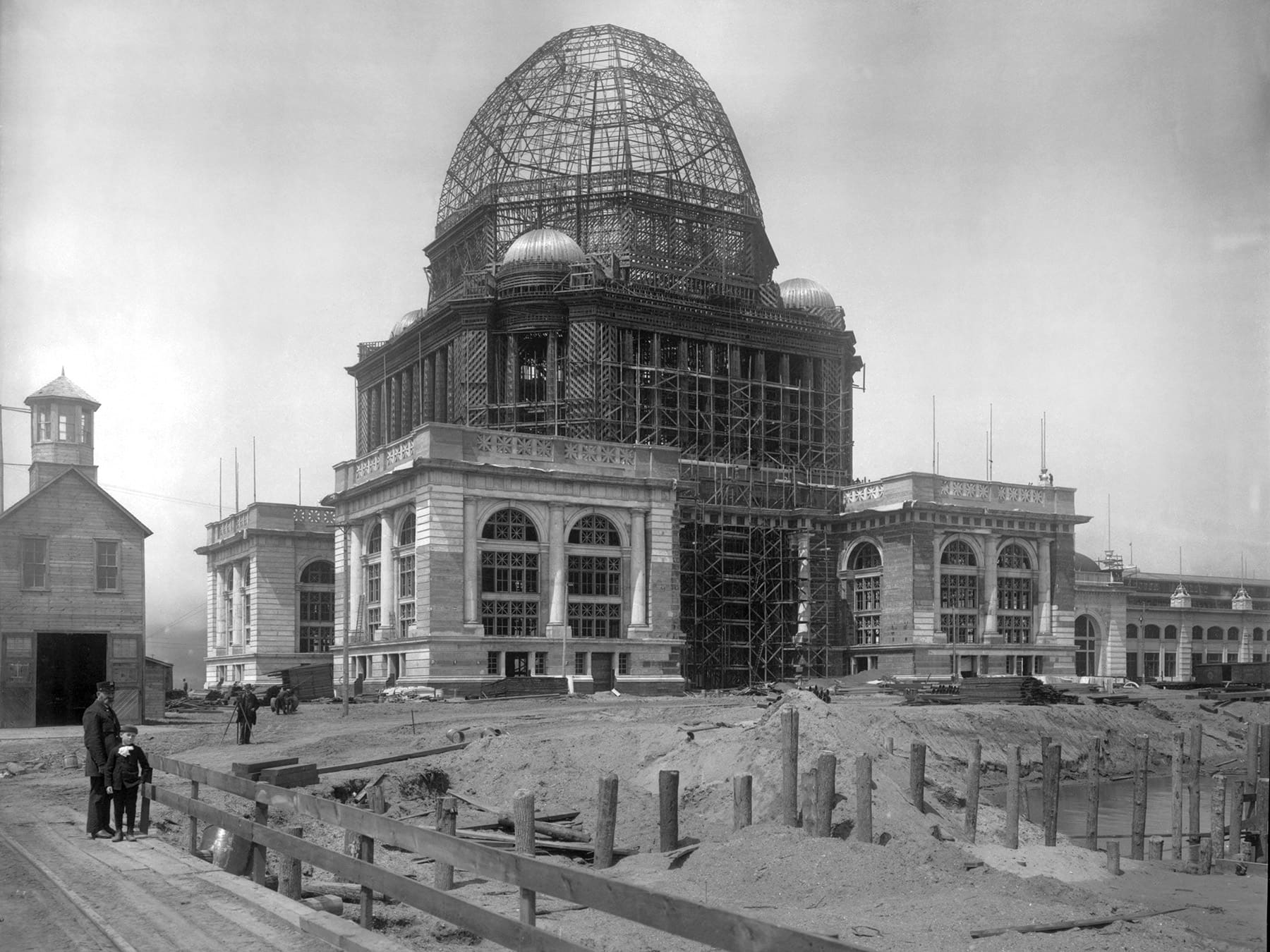
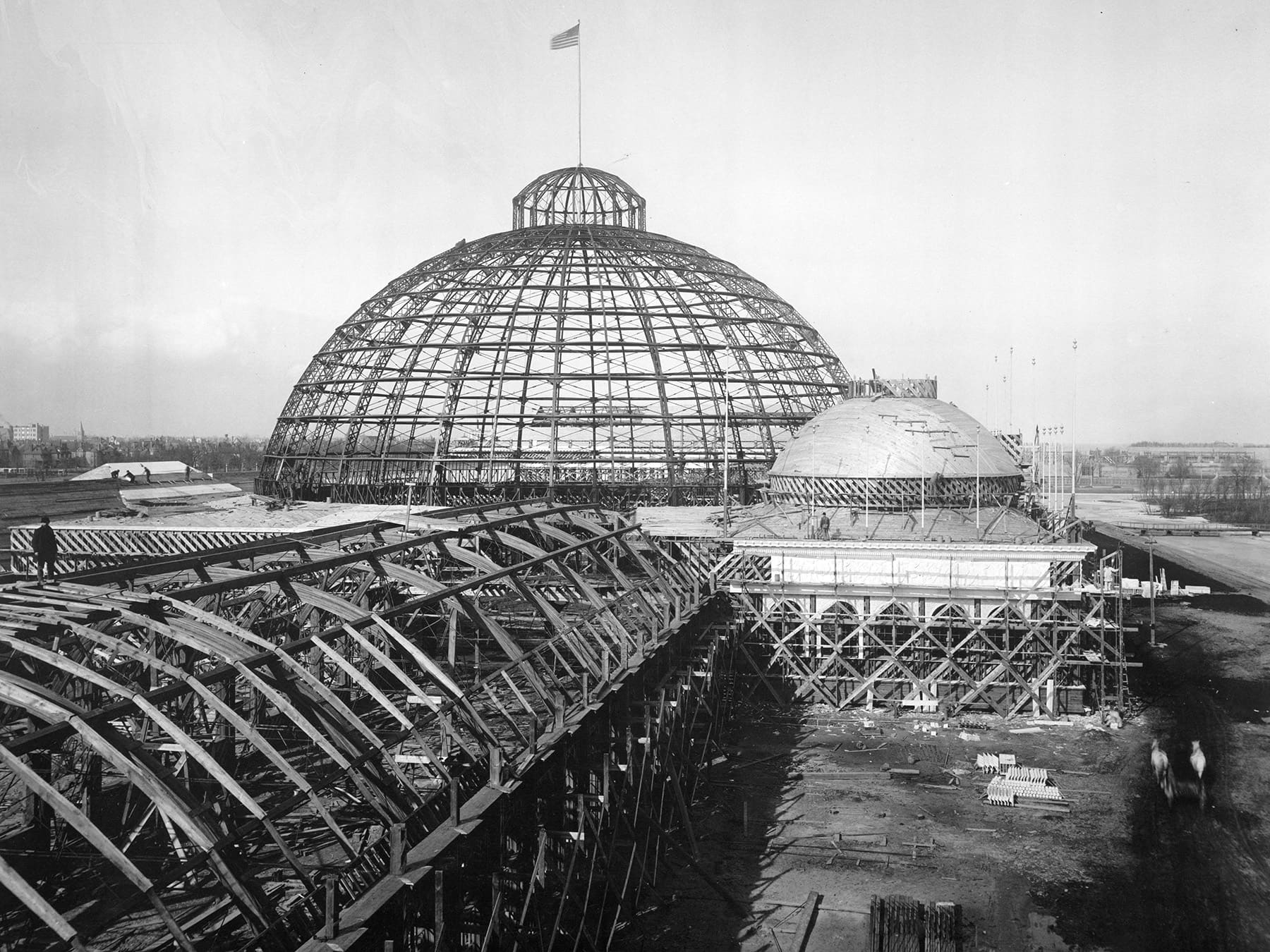
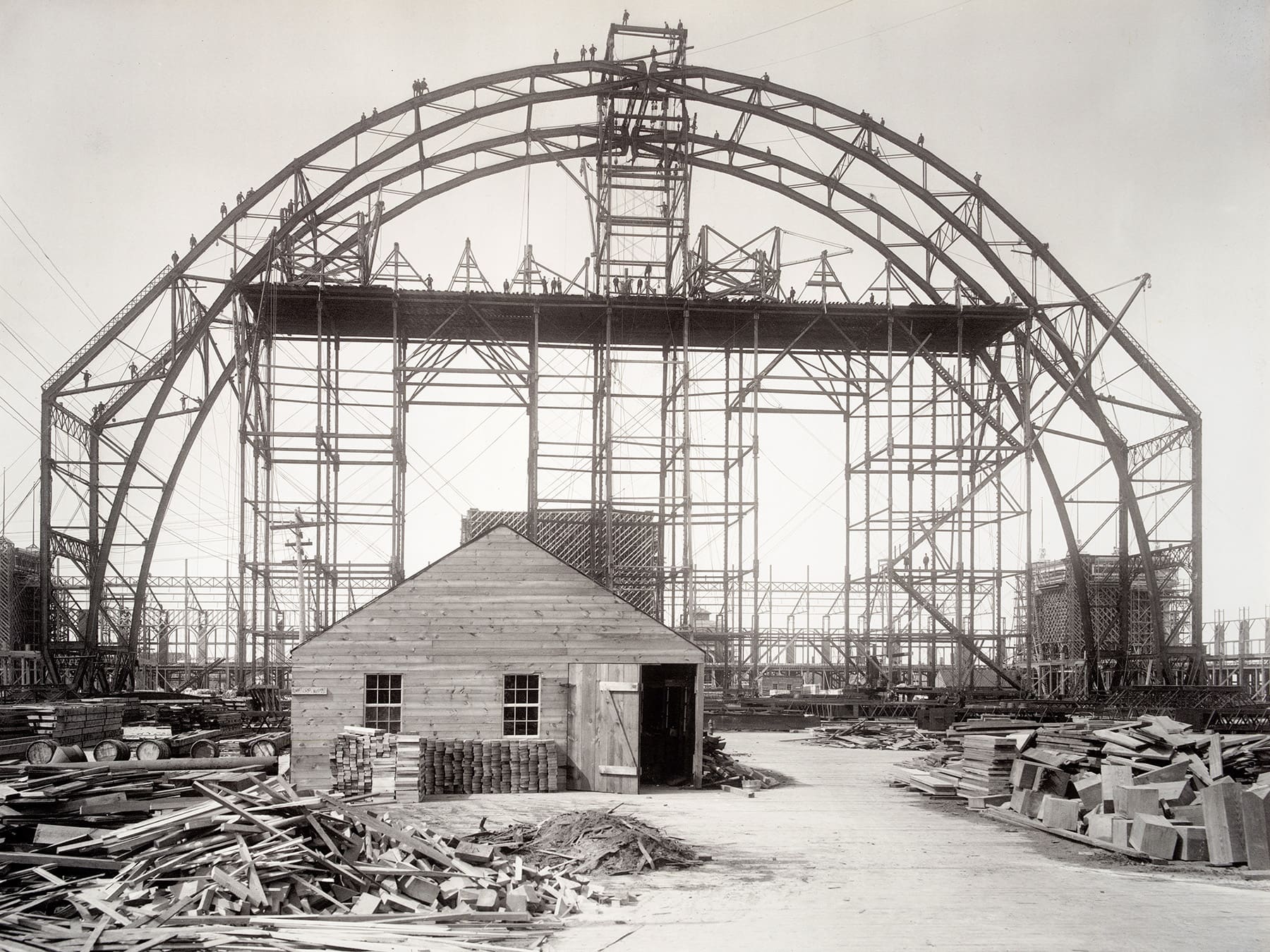
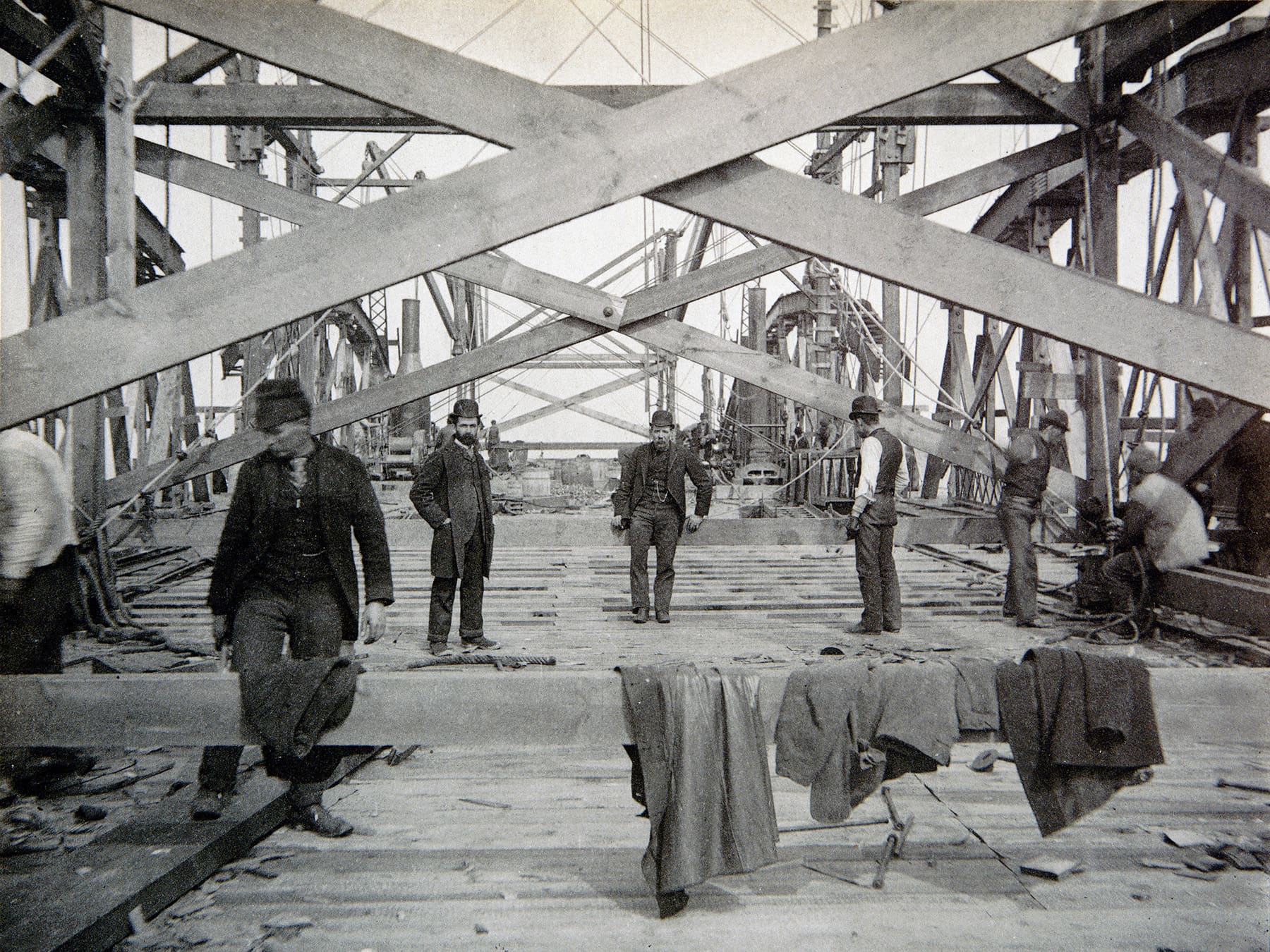
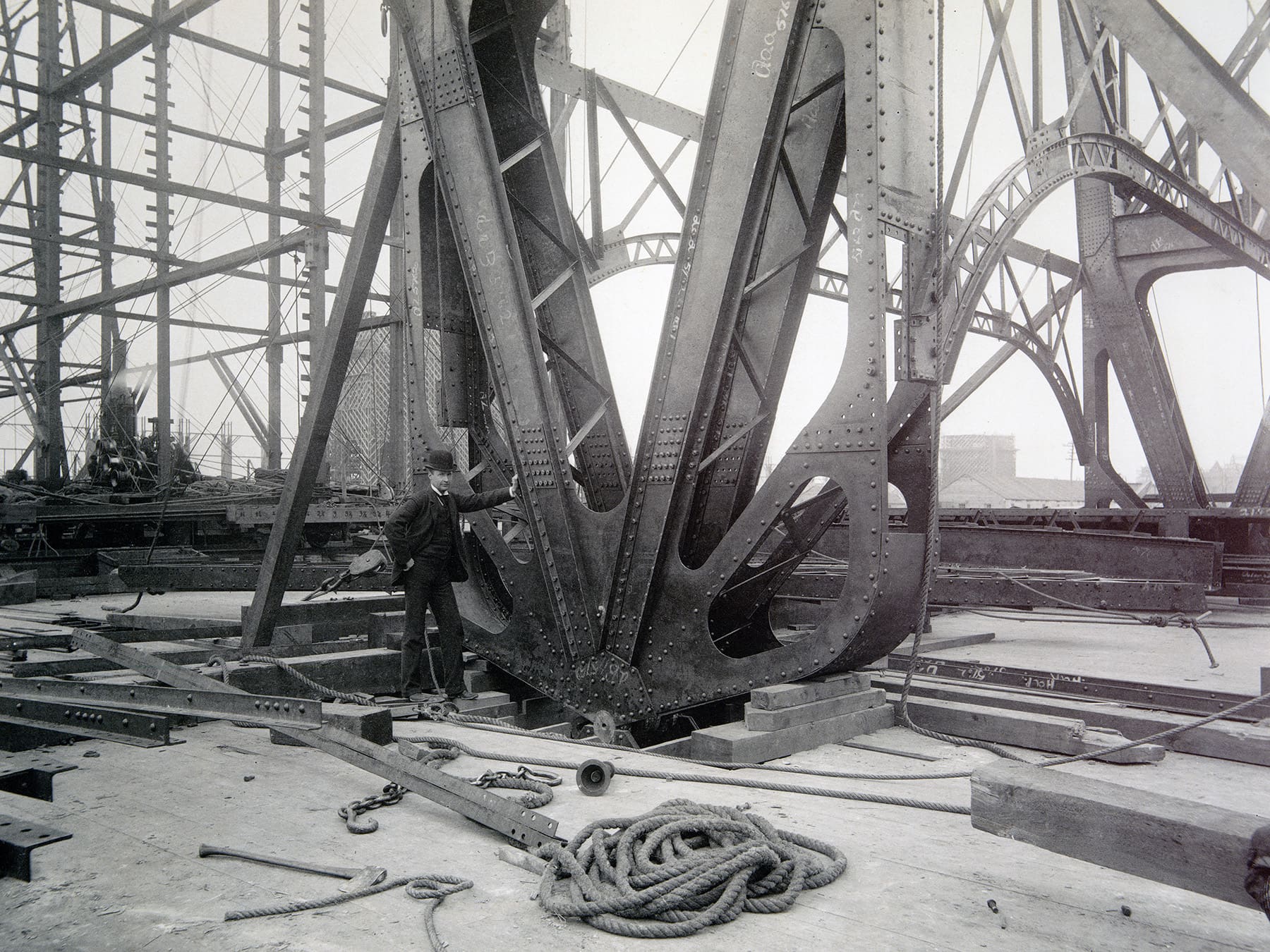
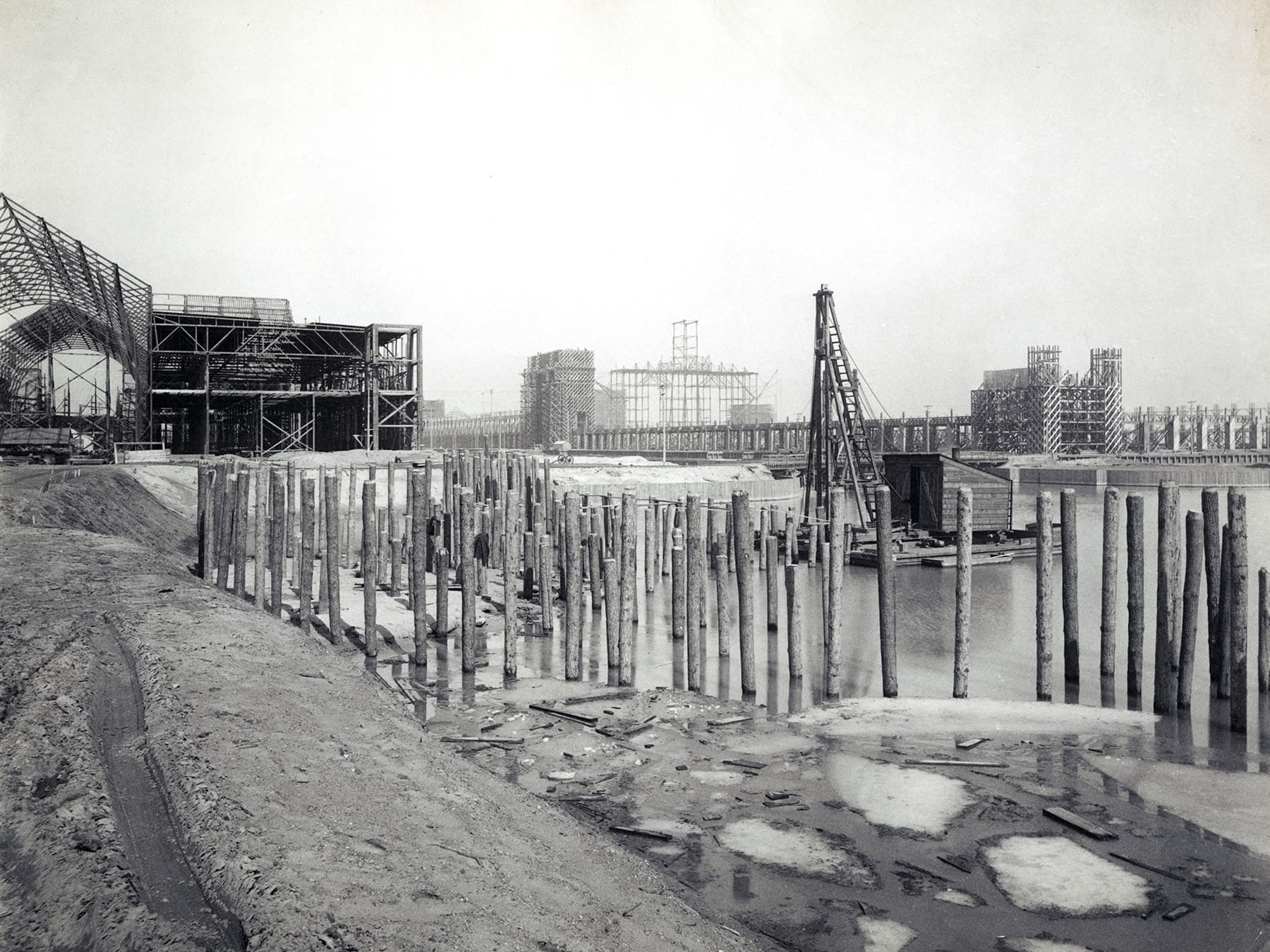
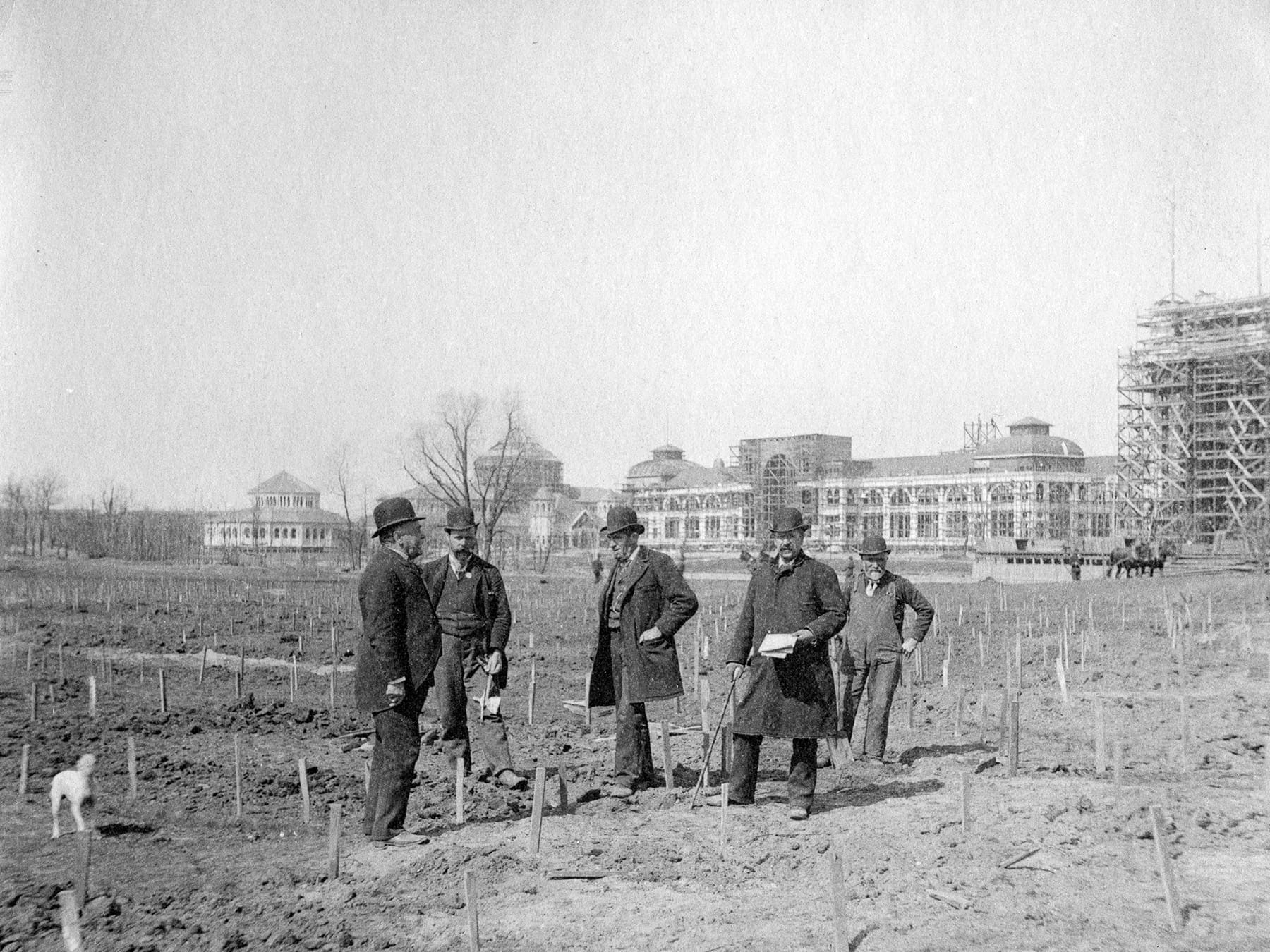
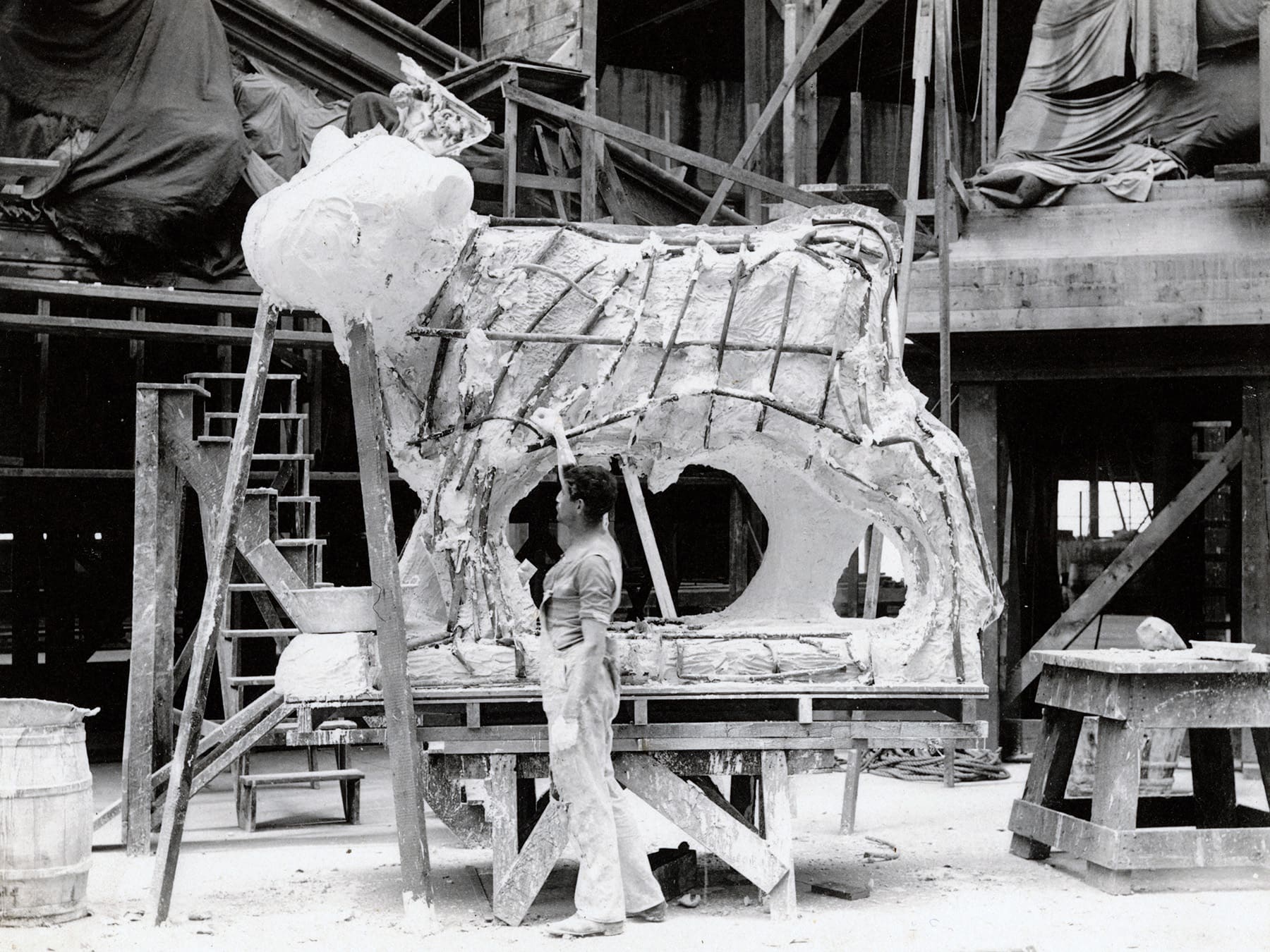
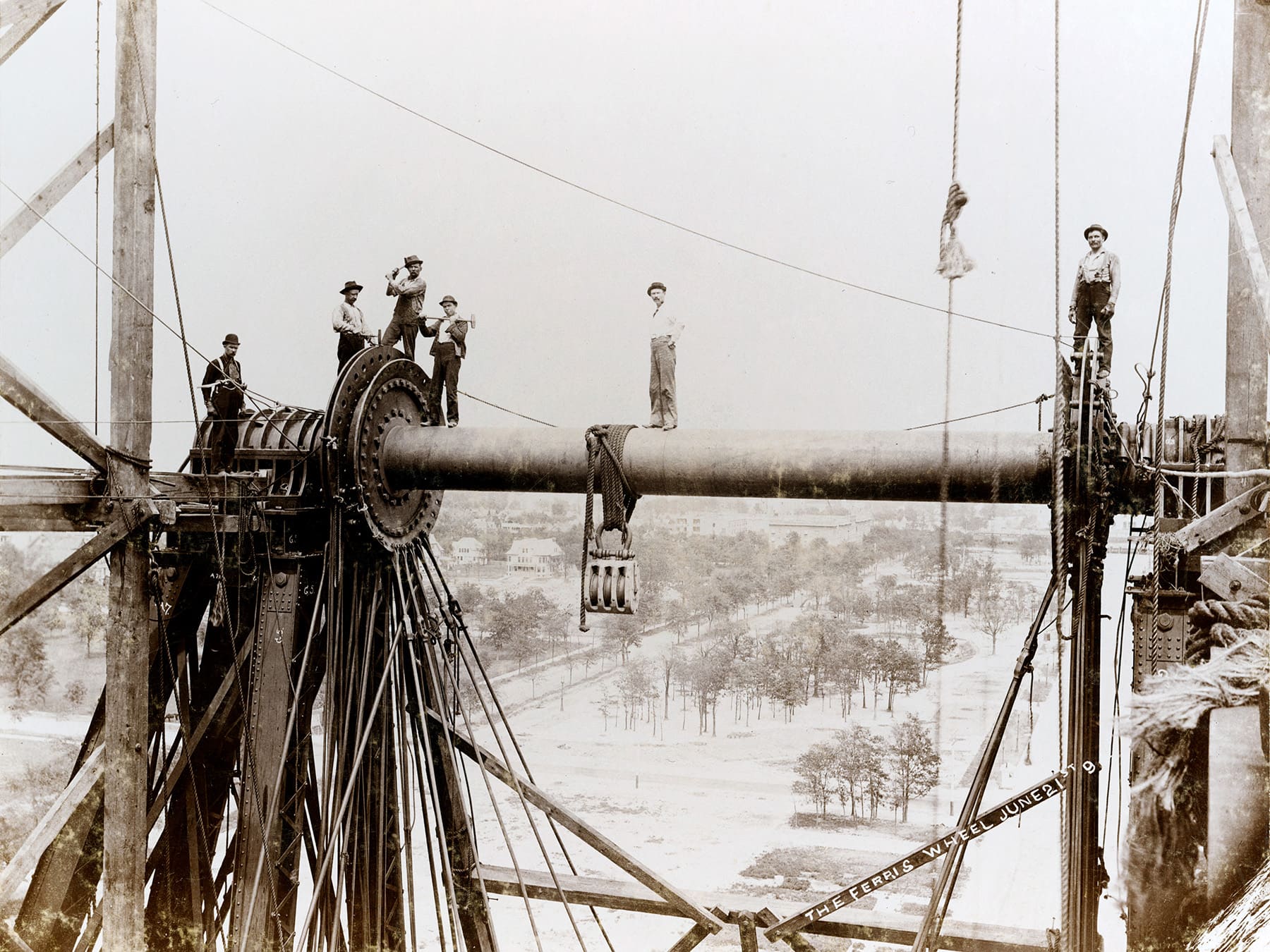
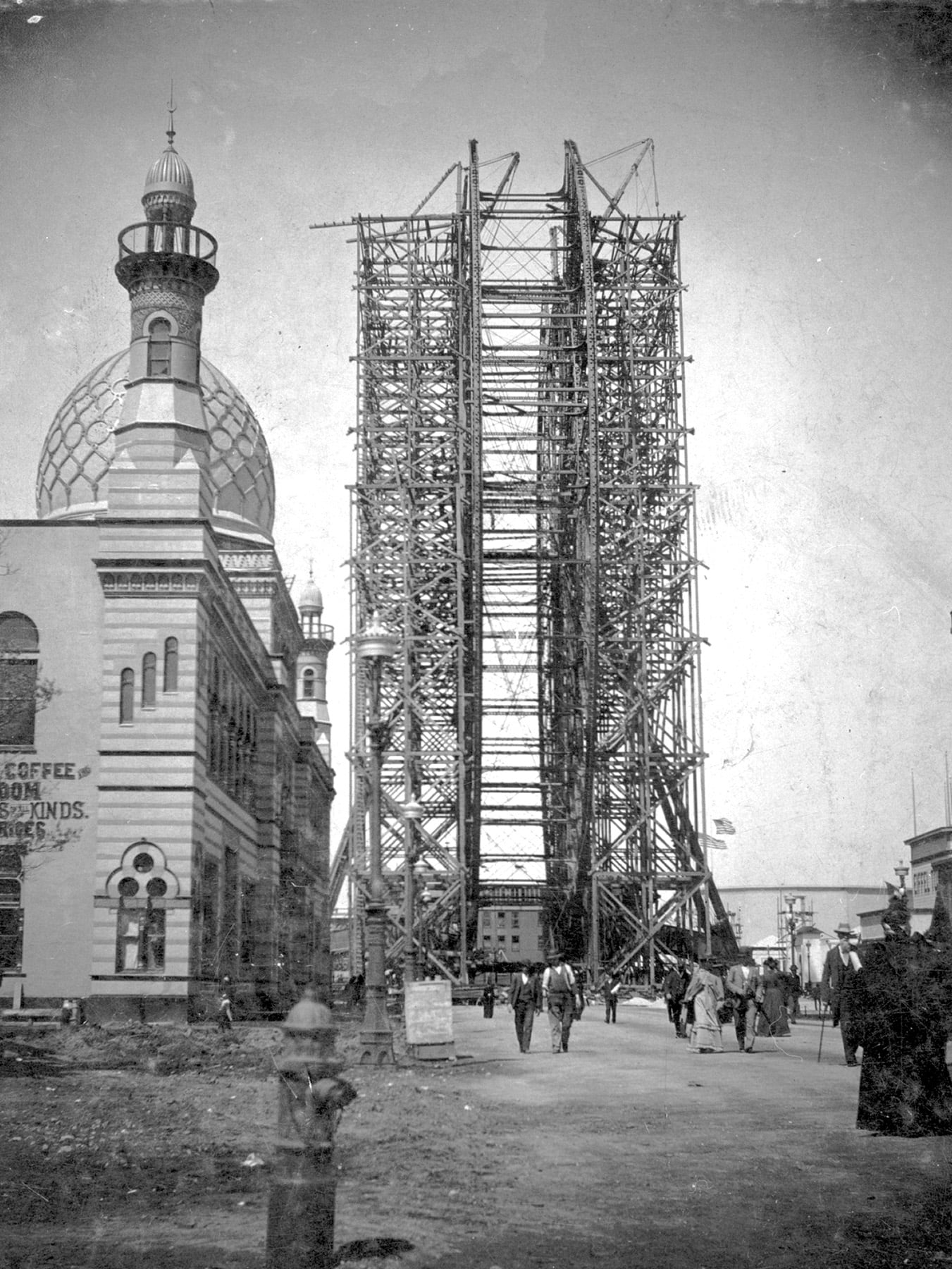
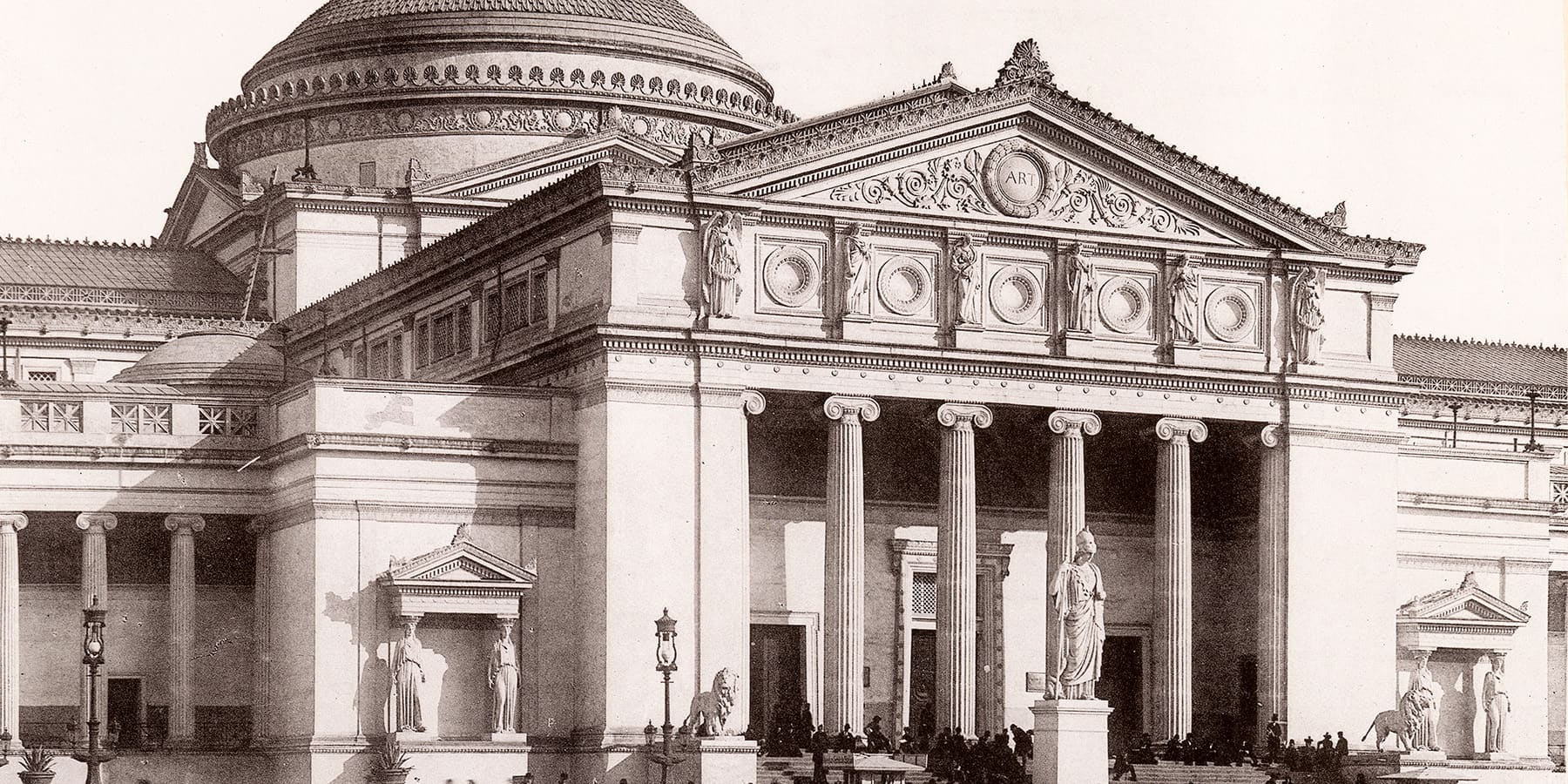
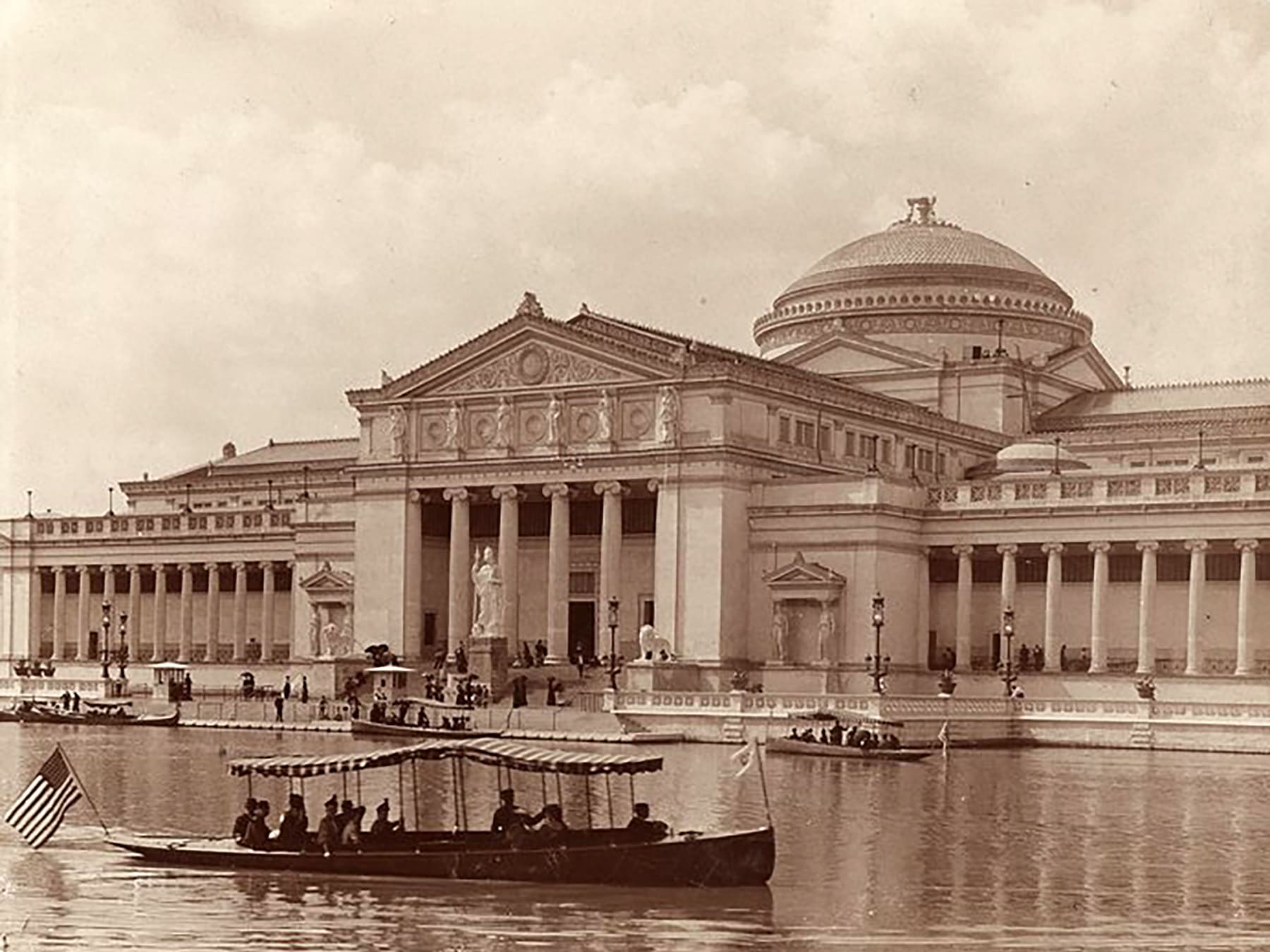
Construction began on the White City not long after Root’s death. Burnham brought in another architect, Charles Atwood, to design more than 75 structures for the fair, per Cummings’s website, including the Palace of Fine Arts, which still stands as the Griffin Museum of Science and Industry.
Supervising from a wooden “shanty” on the fairgrounds, Burnham oversaw the 40,000 workers it would take to build the fair in about two years. The fair’s opening was delayed to 1893, a year after the 400th anniversary of Columbus’s arrival to give the planners more time.
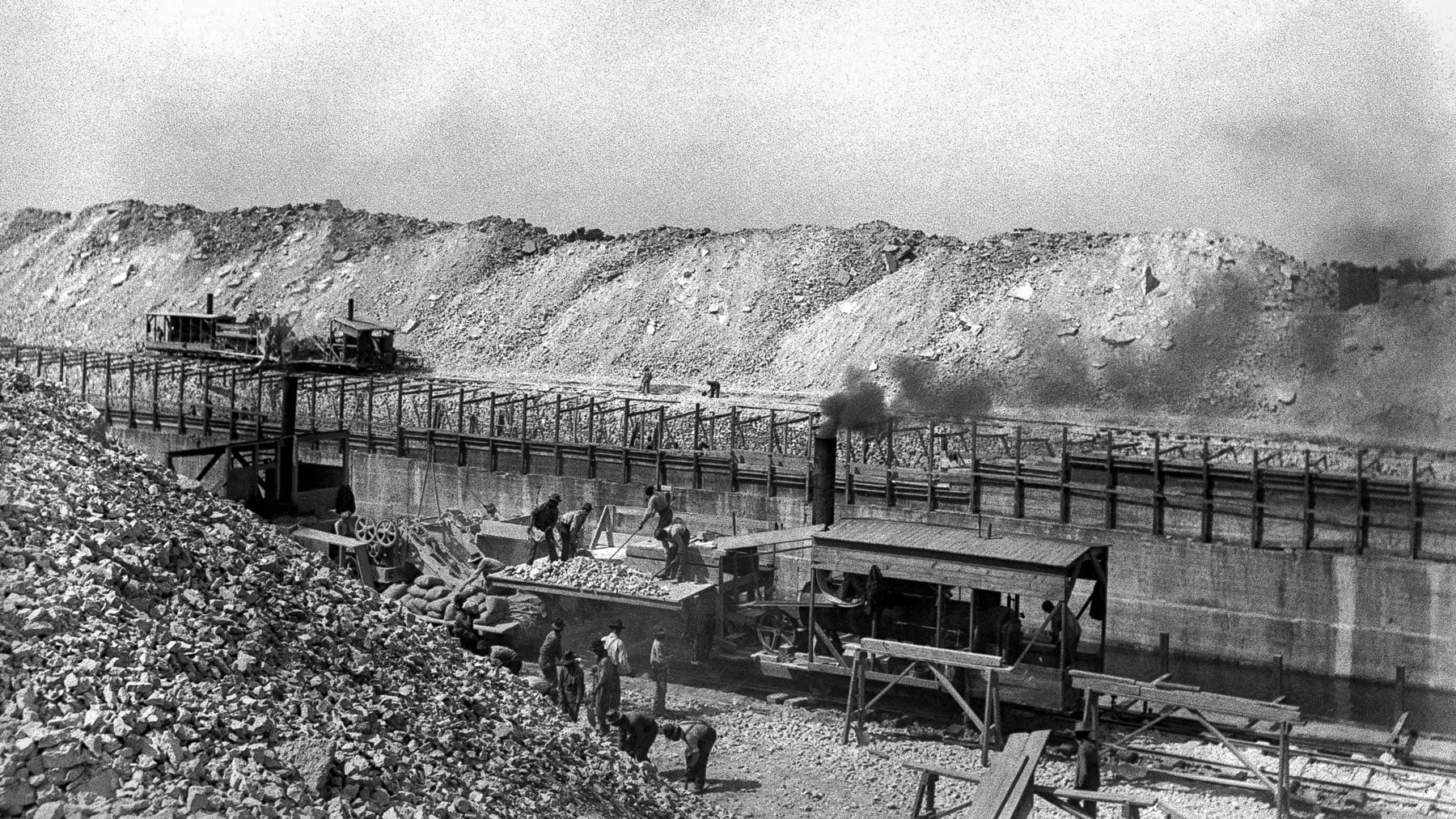
The construction became its own spectacle. “[A]s many as 10,000 visitors a day paid an admission charge to see the largest construction site in modern memory,” Miller writes. Across the 686-acre site, workers dredged the lagoons and canals for Olmsted’s design and prepared the swampy soil to support the large exhibition halls. Trains carried all manner of supplies and materials across the railroad tracks built specifically for the construction of the fair. American writer Henry Cuyler Bunner was struck by the scale of the city going up before his eyes.
“Iron-forgers, architects, truckmen, carpenters, painters, surveyors, glaziers, designers, moulders, joiners, masons, gardeners – men of every trade and art and handicraft, of every nationality, of every class and kind of humanity, working together in widely separate places for the accomplishment of one common purpose … He who goes to that lake-side desert a year from now will see, rising from a gracious and well-ordered garden, a white city of glass and iron, a system of structures gigantic in plan and scope beyond anything that science has hitherto held feasible or desirable for the sheltering of a multitude of pleasure-seekers.”– Henry Cuyler Bunner, “The Making of the White City,” Scribner’s Magazine, 1892.
The structures, however, were designed to go up quickly – not to last. Workers built the exhibition halls out of wood and iron frames, coated the exterior with a substance called staff (plaster of paris mixed with hemp fiber), and painted them white, making it cheaper and quicker to build.
“The outside of the buildings looked like palaces, but they’re just wood frame construction,” Cummings said. “Large machines would quickly spray paint the outside of the buildings white; having them all the same color would save time if they had to do any patchwork.”
That speed, however, posed significant safety risks for the workers. Construction continued throughout all of Chicago’s temperamental seasons, including winter. Men climbed unsteady scaffolding in the blustery, freezing winds. Steel beams fell and crushed workers. According to Miller, “There were over 700 accidents and 18 deaths in 20 months of labor, making work conditions in the Burnham compound less safe than those in a Pennsylvania coal mine.”
But Burnham continued to push the pace as the fairgrounds took shape. In addition to the laborers, artists were also recruited to create the sculptures, paintings, and other artwork that would be displayed at the fair. Mary Cassatt painted a mural for the Women’s Building. And sculptor Daniel Chester French, who would later design the statue of Abraham Lincoln at the Lincoln Memorial in Washington, D.C., created the Statue of the Republic, a gilded 65-foot sculpture which stood atop a 35-foot pedestal in the basin of the fair’s Court of Honor. What had been a windswept expanse of mud and marsh was transformed into something luminous.
What the World Saw on Opening Day
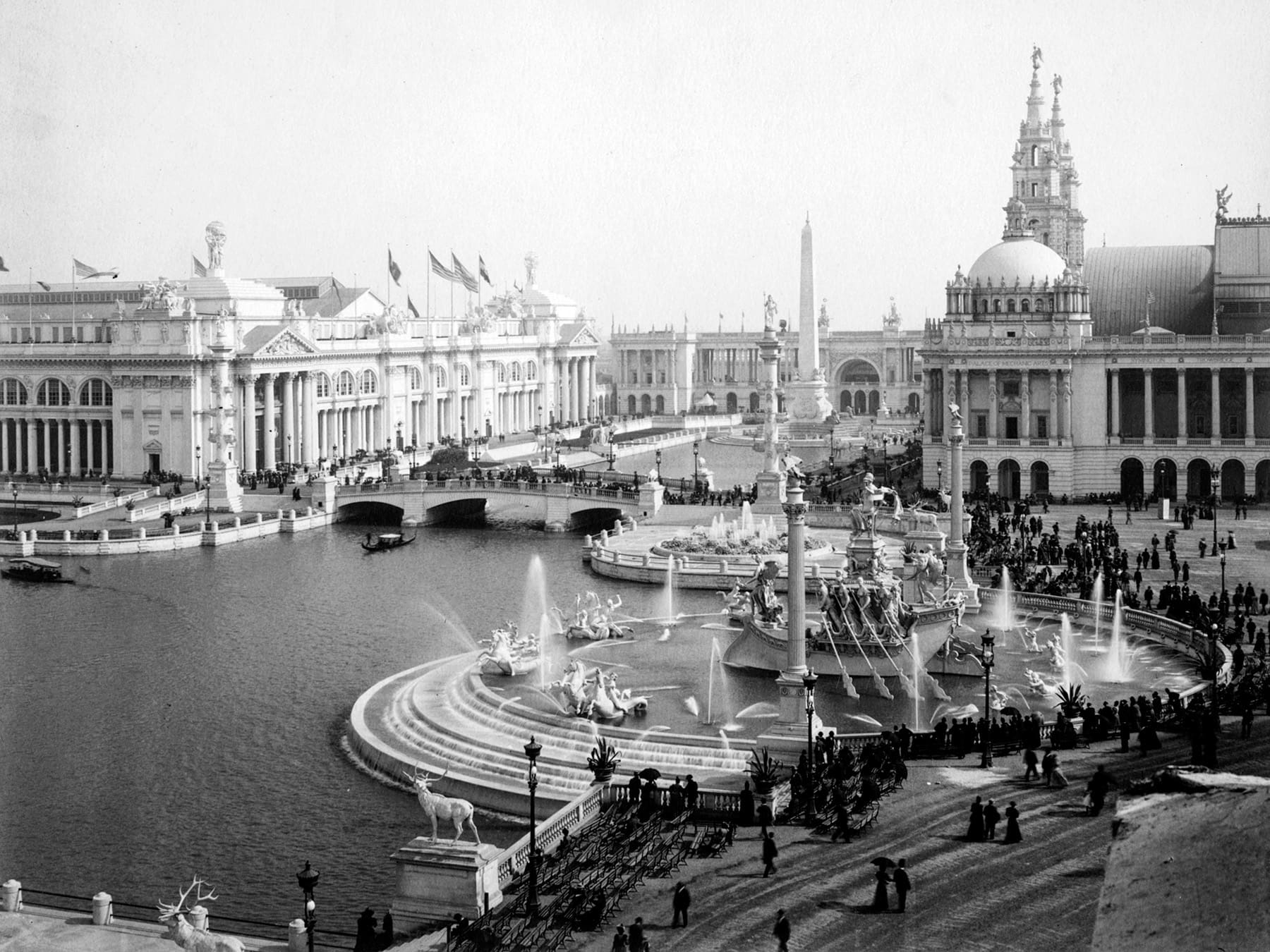
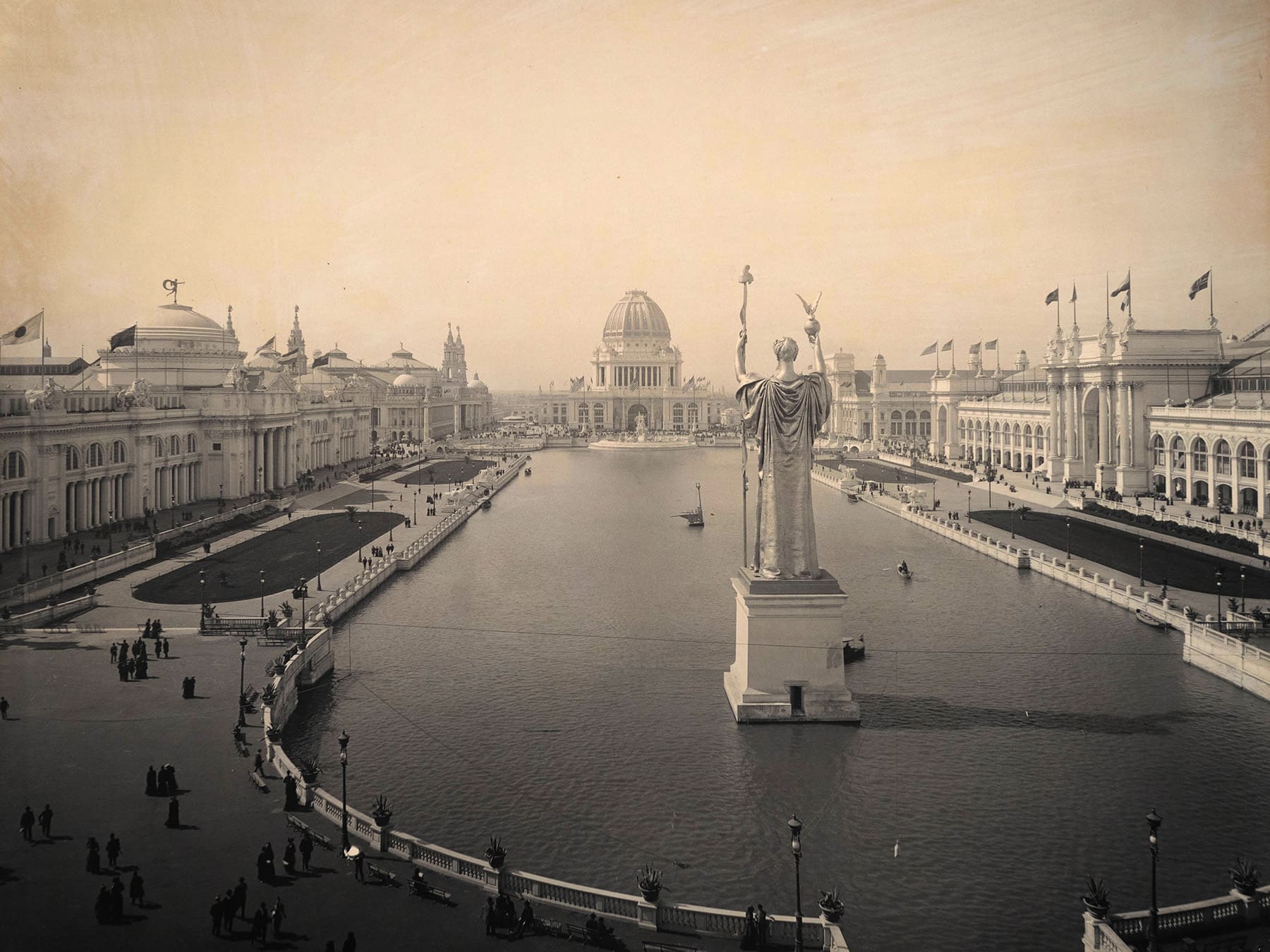
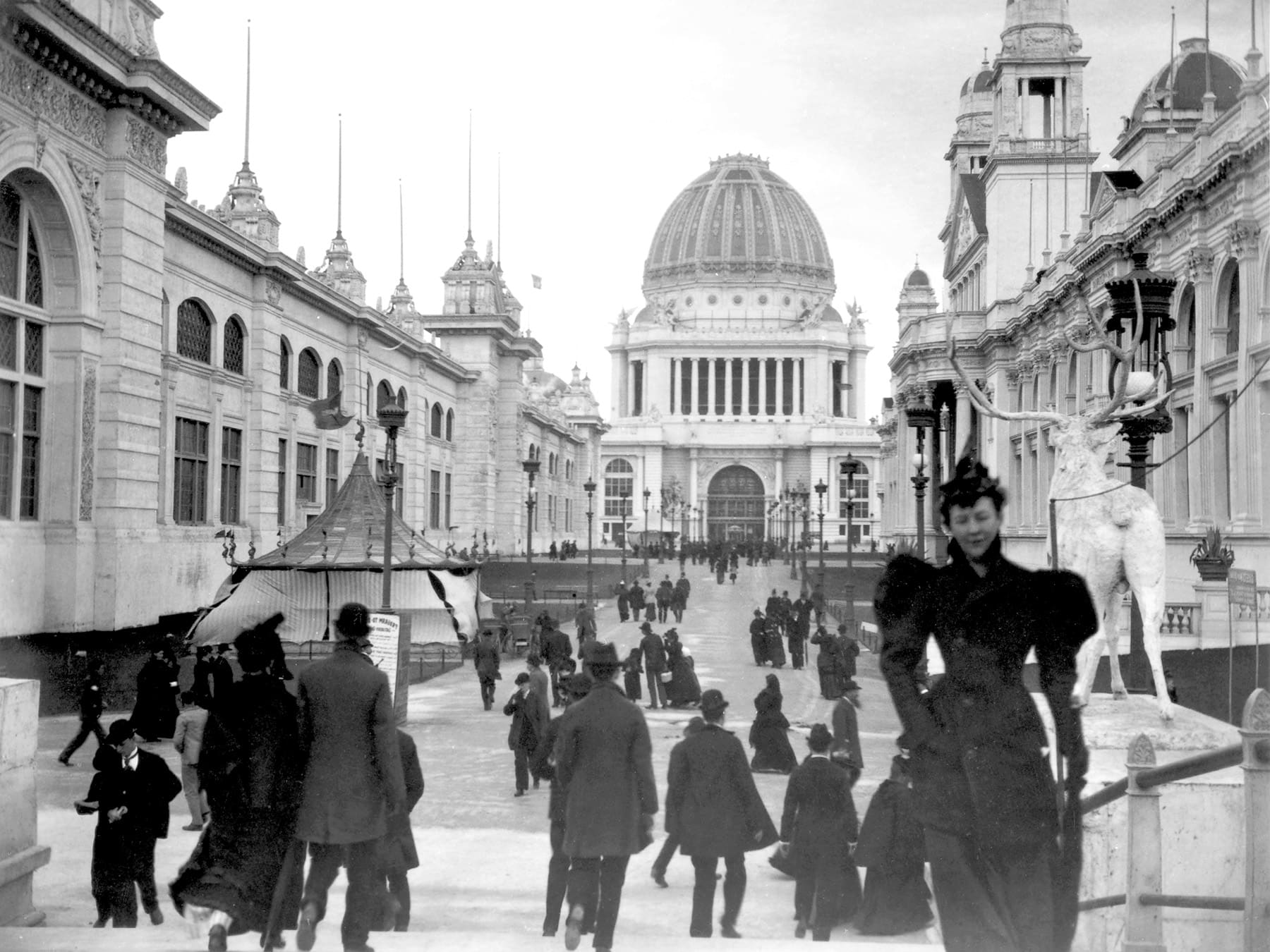
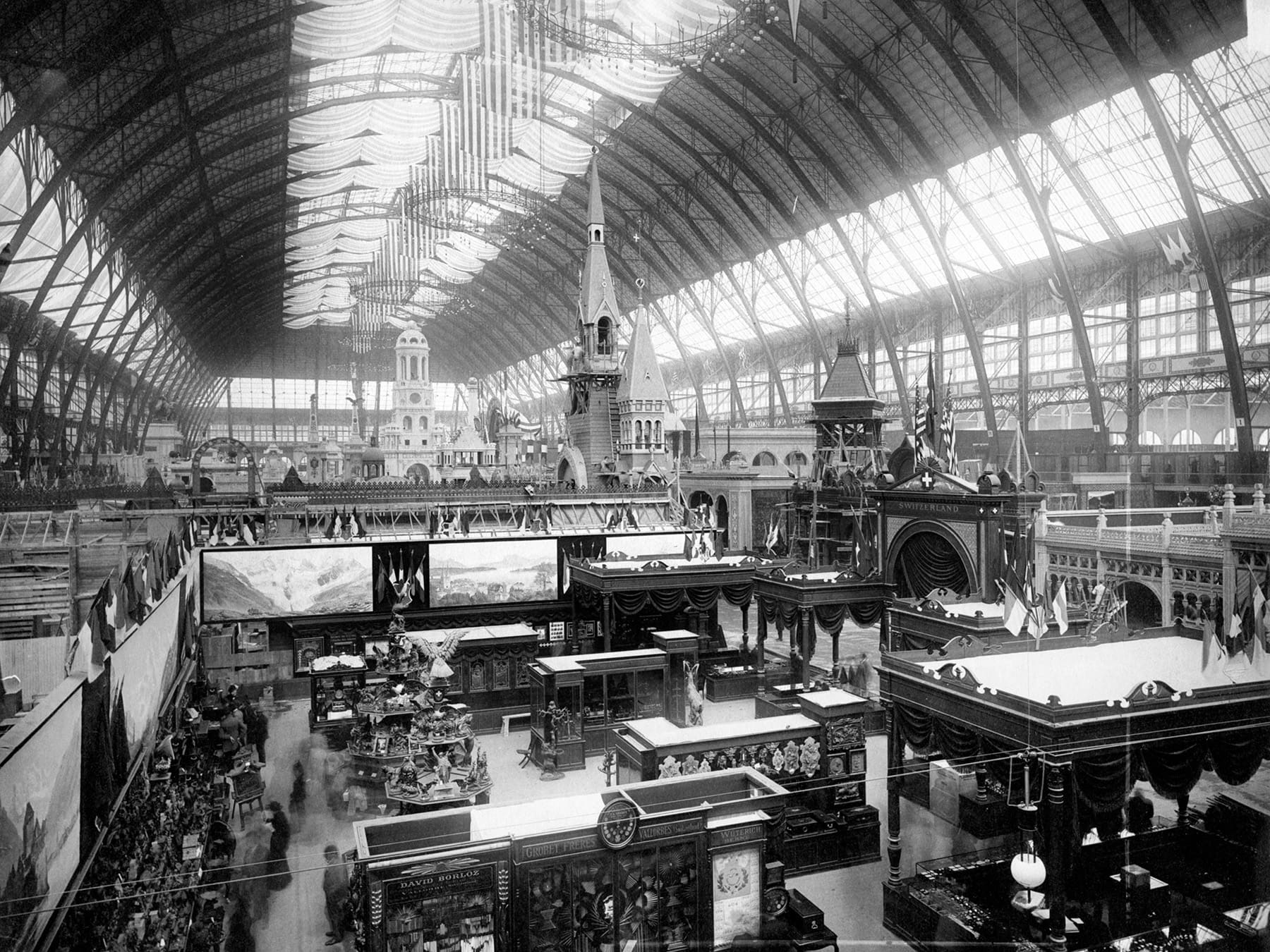
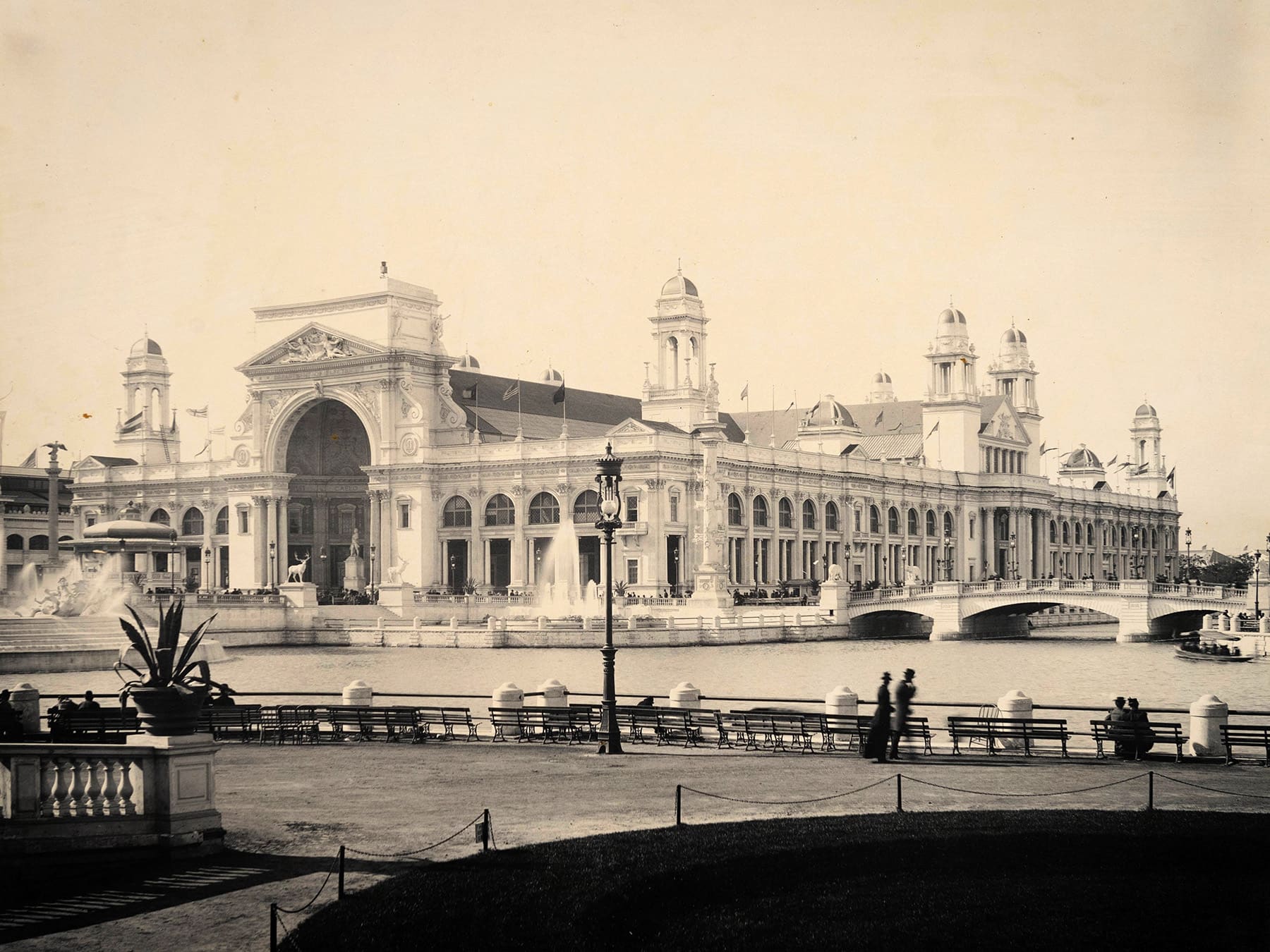
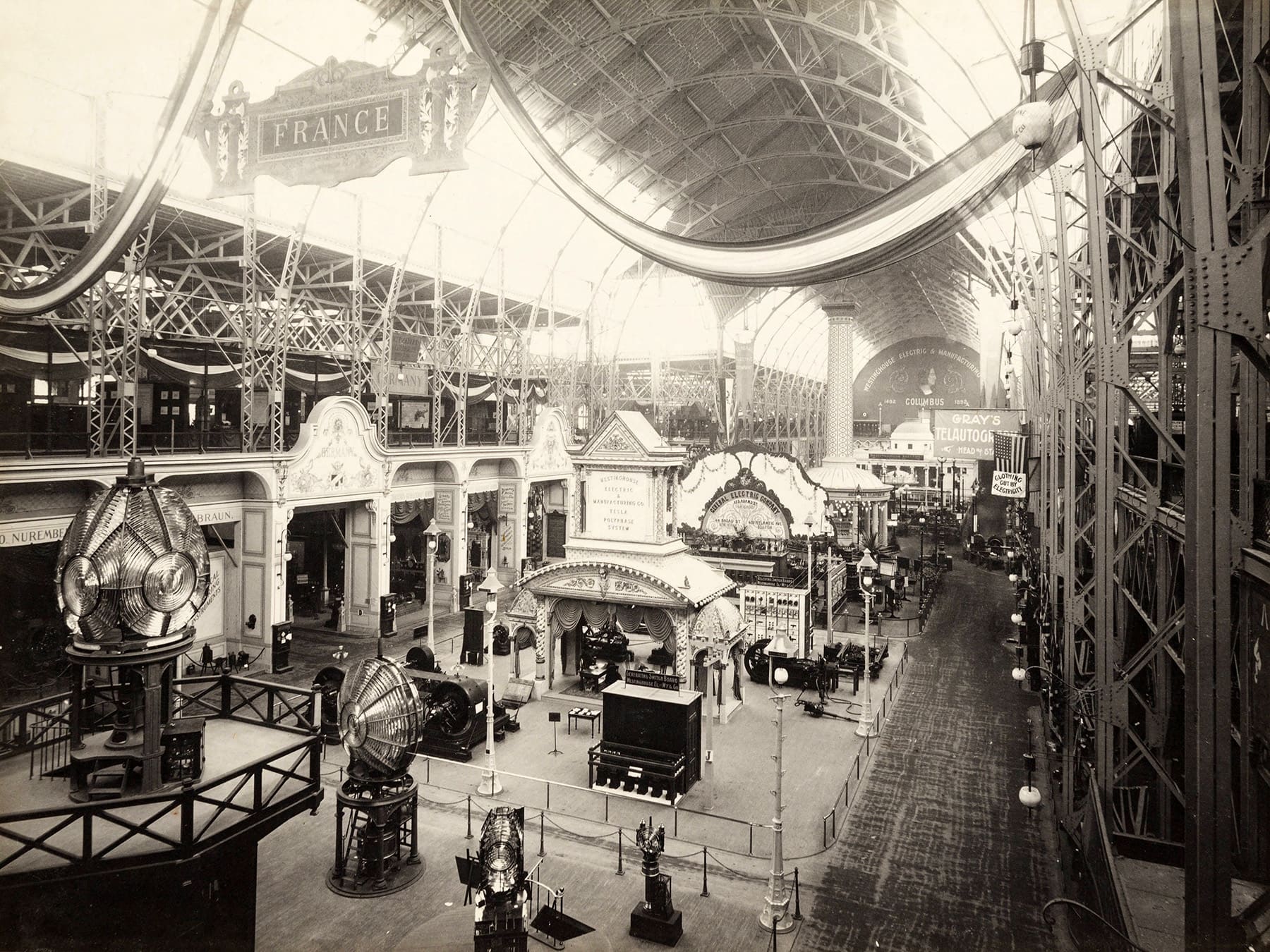
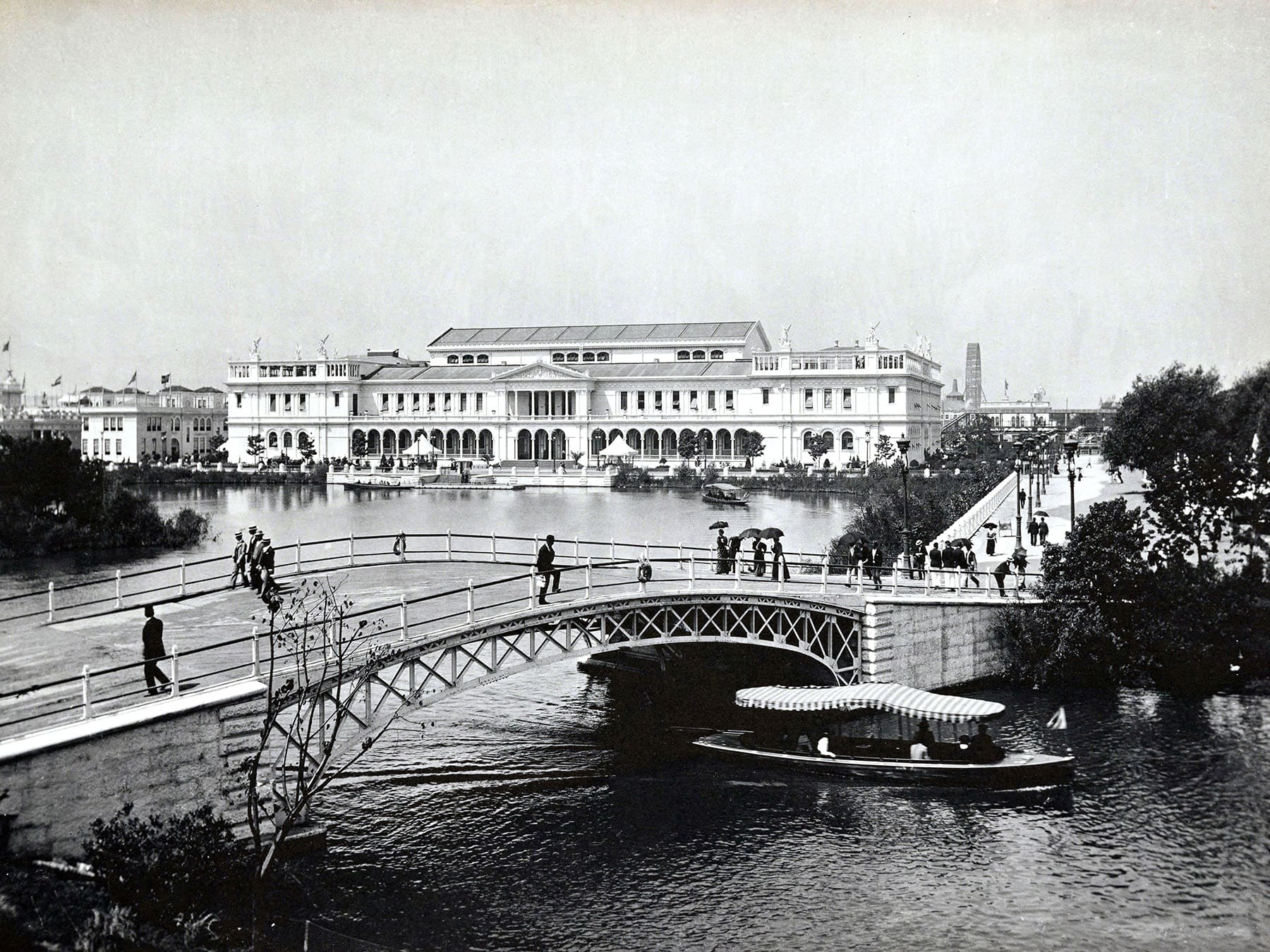
On May 1, 1893, as workers continued to put the finishing touches on the White City, a crowd of 200,000 people made their way to the opening ceremony. President Grover Cleveland stepped on stage in front of the fair’s Administration Building – an elaborate, domed building at the center of the Court of Honor, designed by Richard Morris Hunt to be one of the first things people saw as they entered the fair from the west. After a short speech, the president pushed a gold telegraph key, which sent a signal to turn on the fountains and to reveal the Statue of the Republic from beneath a drape.
“The electric current, which by the lightest touch in an instant had set the vast machinery of the vast Exposition in motion, was not swifter than the current of sentiment which leaped, like the lightning’s flash, from mind to mind. The occasion could not have been other than patriotic,” reported the Chicago Tribune. The fair had begun.
The crowds took in an entire city on the lake, with gleaming white, Beaux-Arts buildings and sparkling fountains set against the backdrop of Lake Michigan and Olmsted’s verdant landscape design. For fairgoers entering the White City aboard boats on Lake Michigan, a first-of-its-kind moving walkway carried visitors toward the grand columns of the Peristyle, welcoming people to the Court of Honor’s sprawling basin. Later that summer, a young woman named Jane Elliot Sever O’Reilly wrote about what she saw in a letter preserved at the Newberry Library.
“In front of me, on the opposite side of the basin, stands the golden Statue of the Republic against the deep blue of the lake, the white pillars of the peristyle stand out …Last evening we again went to the basin and saw the electric fountains. Words cannot describe [these]. First a pure shimmering white, then changing to rose, then a pale green, then blue, yellow…making a most wonderful sight. It seemed one must be in a fairy land.”– A letter from Jane Elliot Sever O’Reilly, 1893
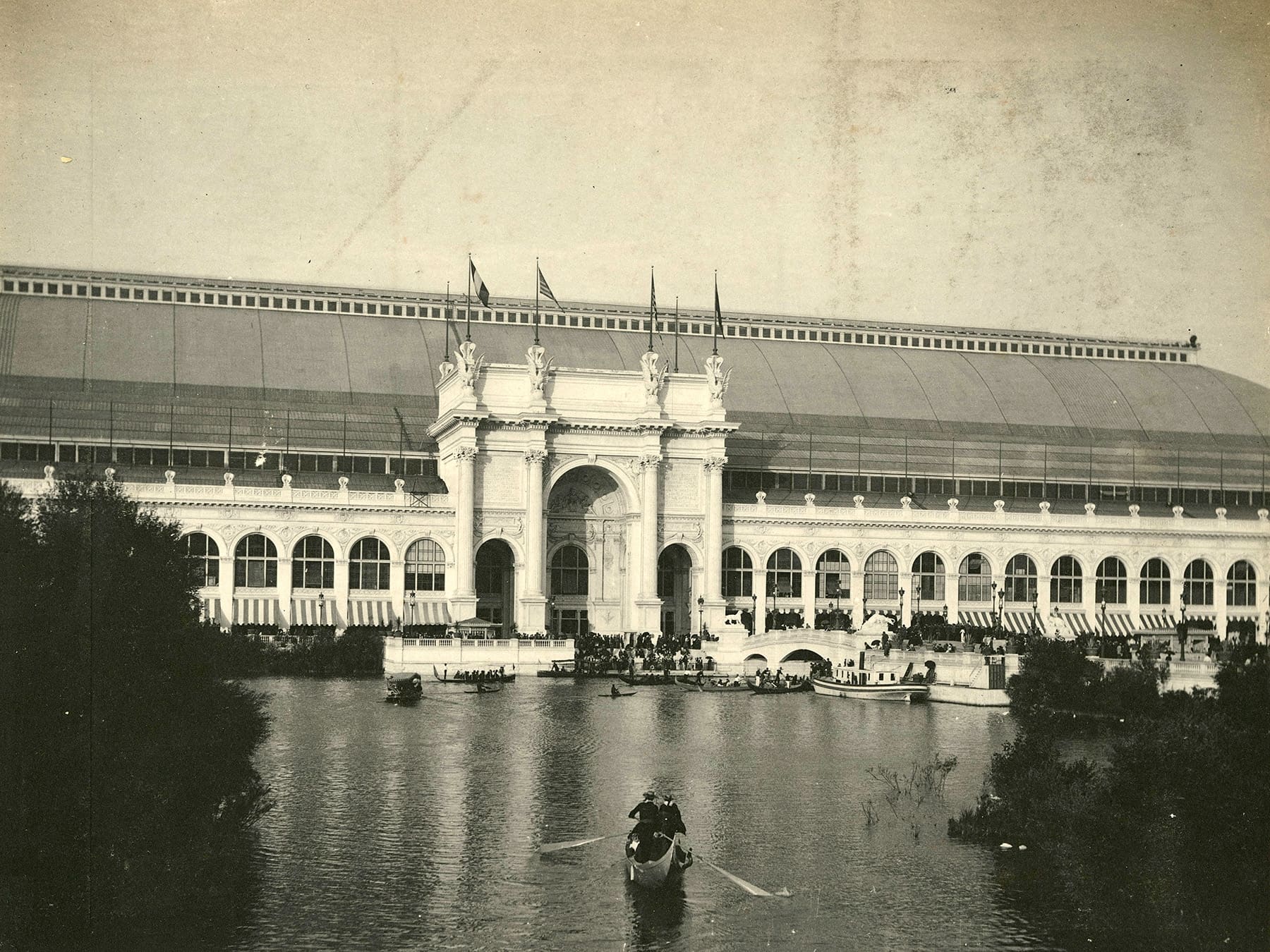
There was also the massive Manufactures and Liberal Arts Building, designed by George B. Post, filled with industrial products and consumer goods from all over the world. It was the largest building ever constructed at the time. Nearby, there were more exhibition halls such as the Machinery and Agricultural buildings, which displayed new technologies and farming innovations. Though the incandescent light bulb had been around for a decade, people who had not yet seen electricity got to experience it for the first time at Henry Van Brunt’s Electricity Building, along with other electrical inventions – including the electric chair. The Women’s Building, designed by Sophia Hayden for a fraction of the payment male architects received, showcased women’s achievements in art, science, literature, and more.
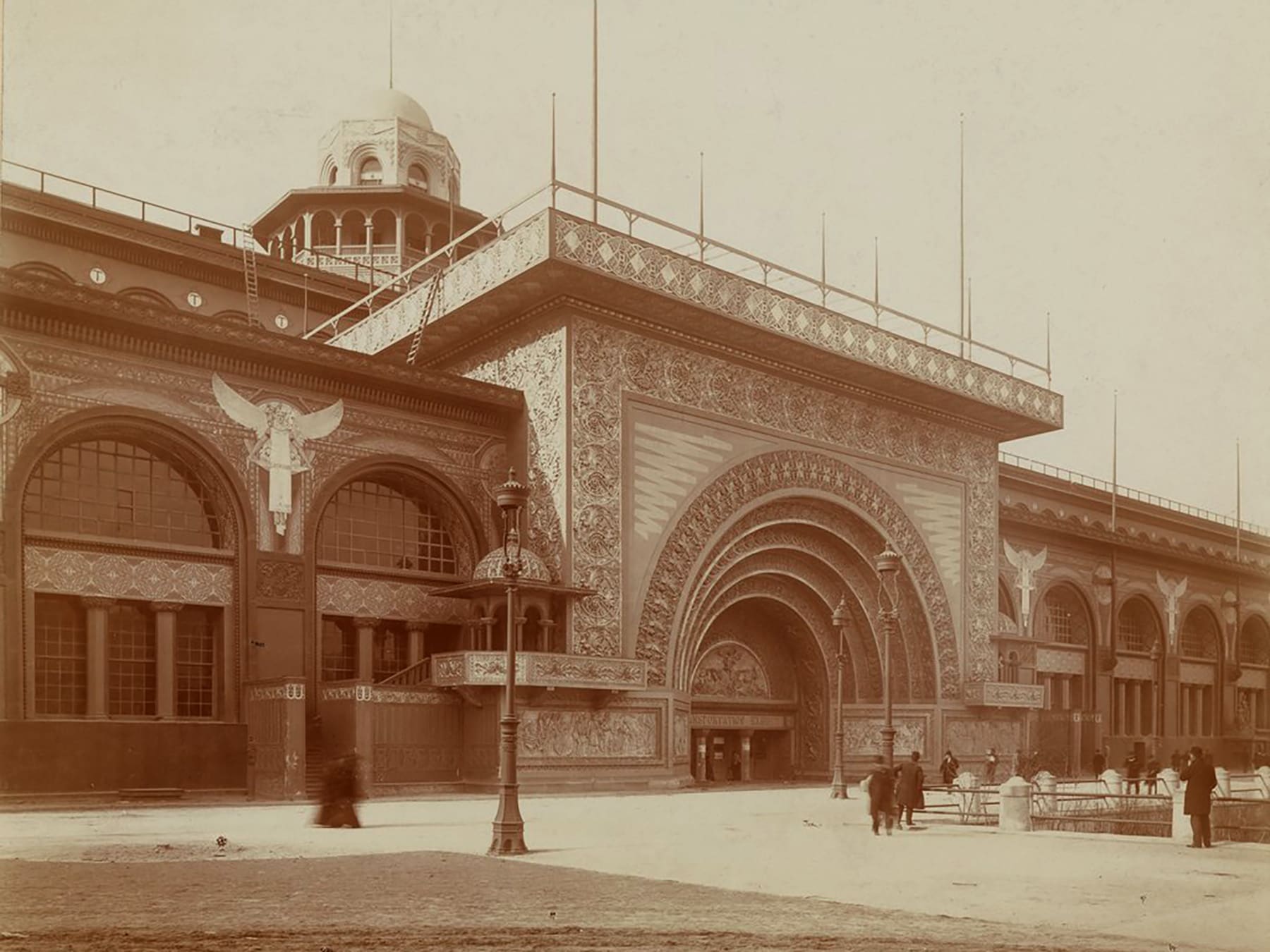
Two structures, however, stylistically stood apart from the rest of the core White City buildings. The Transportation Building, designed by Louis Sullivan, broke dramatically from the white, classically inspired uniformity of the Court of Honor. Instead of Beaux-Arts restraint, Sullivan embraced color and ornament, most famously in the massive, gilded “Golden Door” that served as its entrance. The Fine Arts Building, designed by Charles B. Atwood, was one of the few major structures at the fair built to last, constructed of more durable materials to protect the precious art inside.
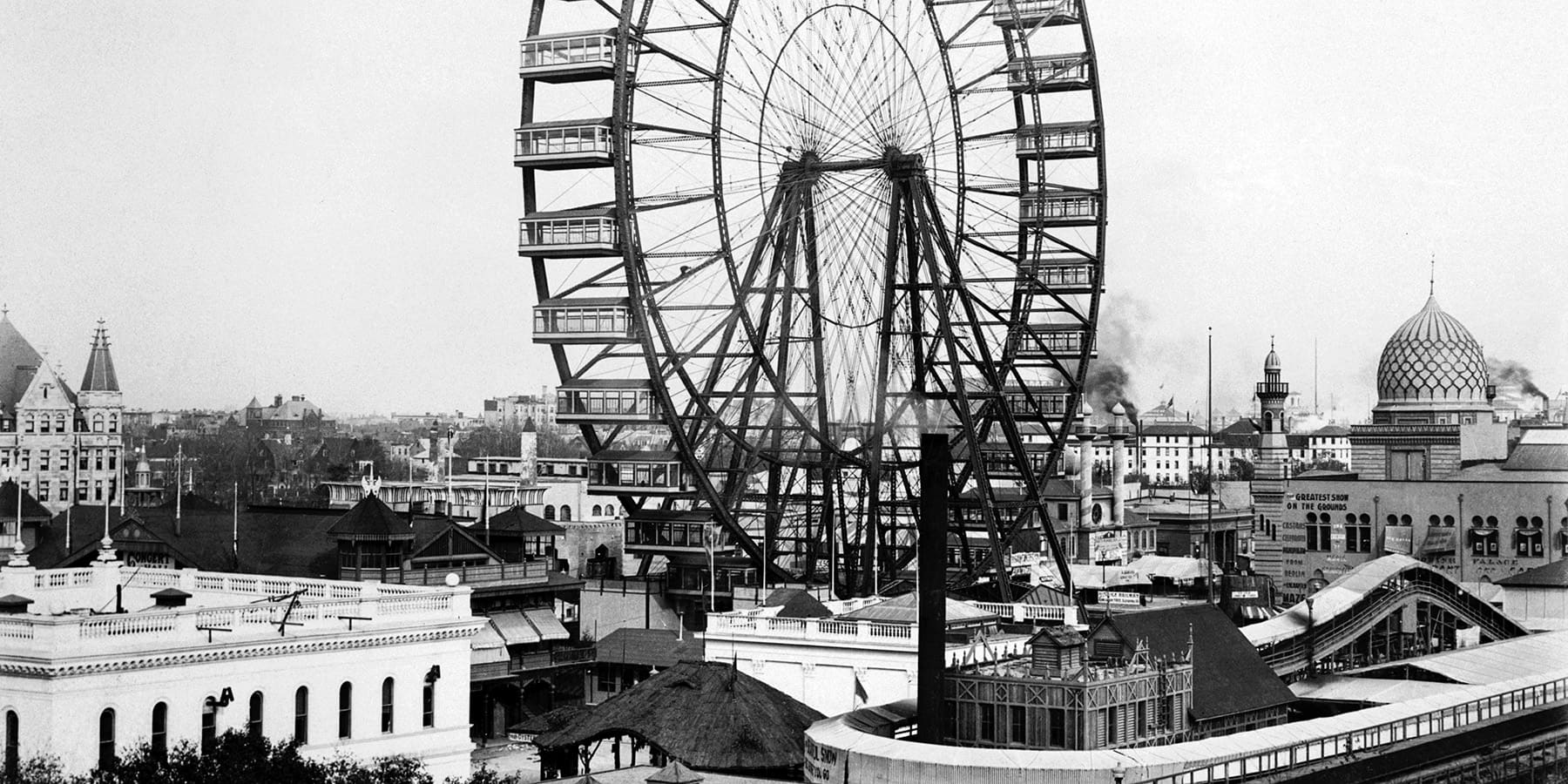
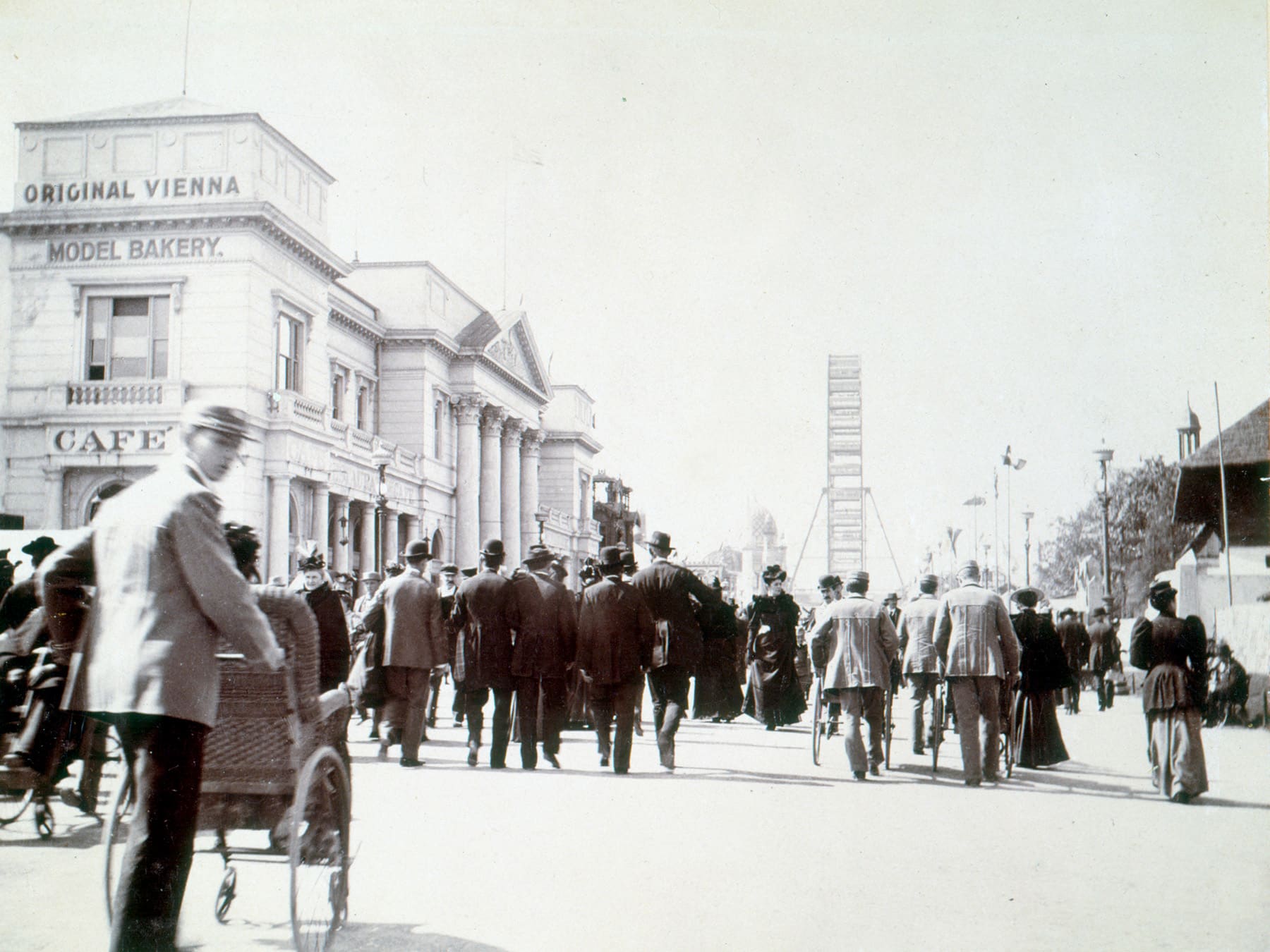
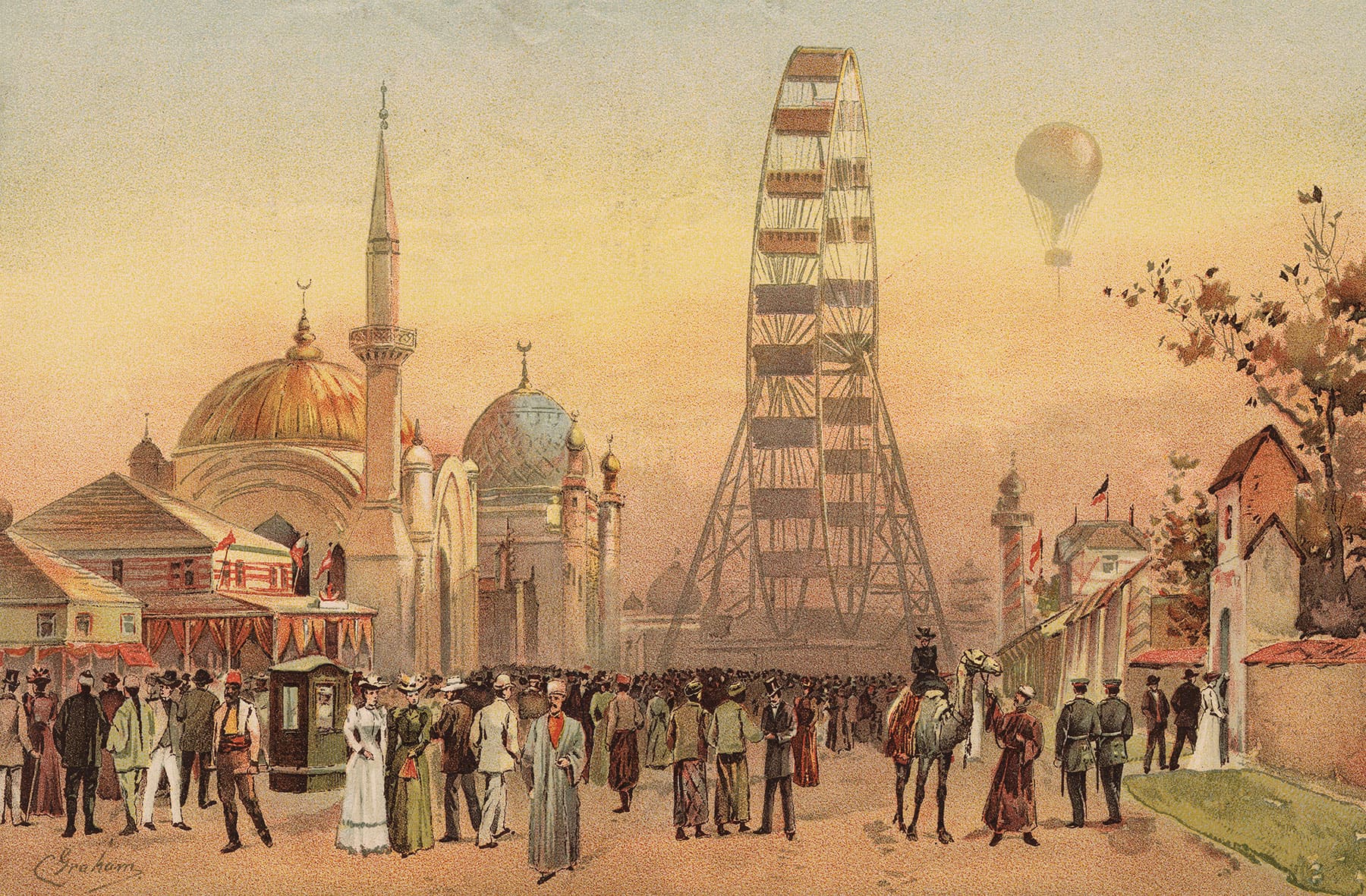
“[The White City] was its own city,” Cummings said. “It had a capitol in the Administration Building. It had its own daily newspaper. It had its own elevated train line.” In all, there were some 200 temporary buildings across the fairgrounds. And, of course, if the White City was a vision of classical refinement and order, the Midway Plaisance was its more unruly cousin, buzzing with more entertaining and scandalous activities.
In the eyes of the hundreds of thousands of visitors on opening day (and some 27 million by the fair’s end), the World’s Columbian Exposition had lived up to the high expectations. “Incomplete exhibits indoors were of no consequence when there was more to see within the sweep of the eye than could be grasped by the mind in days,” the Chicago Tribune wrote the day after the fair’s opening.
As O’Reilly wrote in her letter, “Every day that we go, some new and more beautiful thing appears.”
For many who passed through its gates in the six months that it was open, the White City delivered not just on spectacle, but on a sense of wonder that unfolded over time. The scale of the fairgrounds, the harmony of architecture and landscape, and the 65,000 exhibits meant that no single visit could capture it all. Burnham, Olmsted, and the team of architects and civic boosters had achieved their goal: Chicago was on the map.
Related