













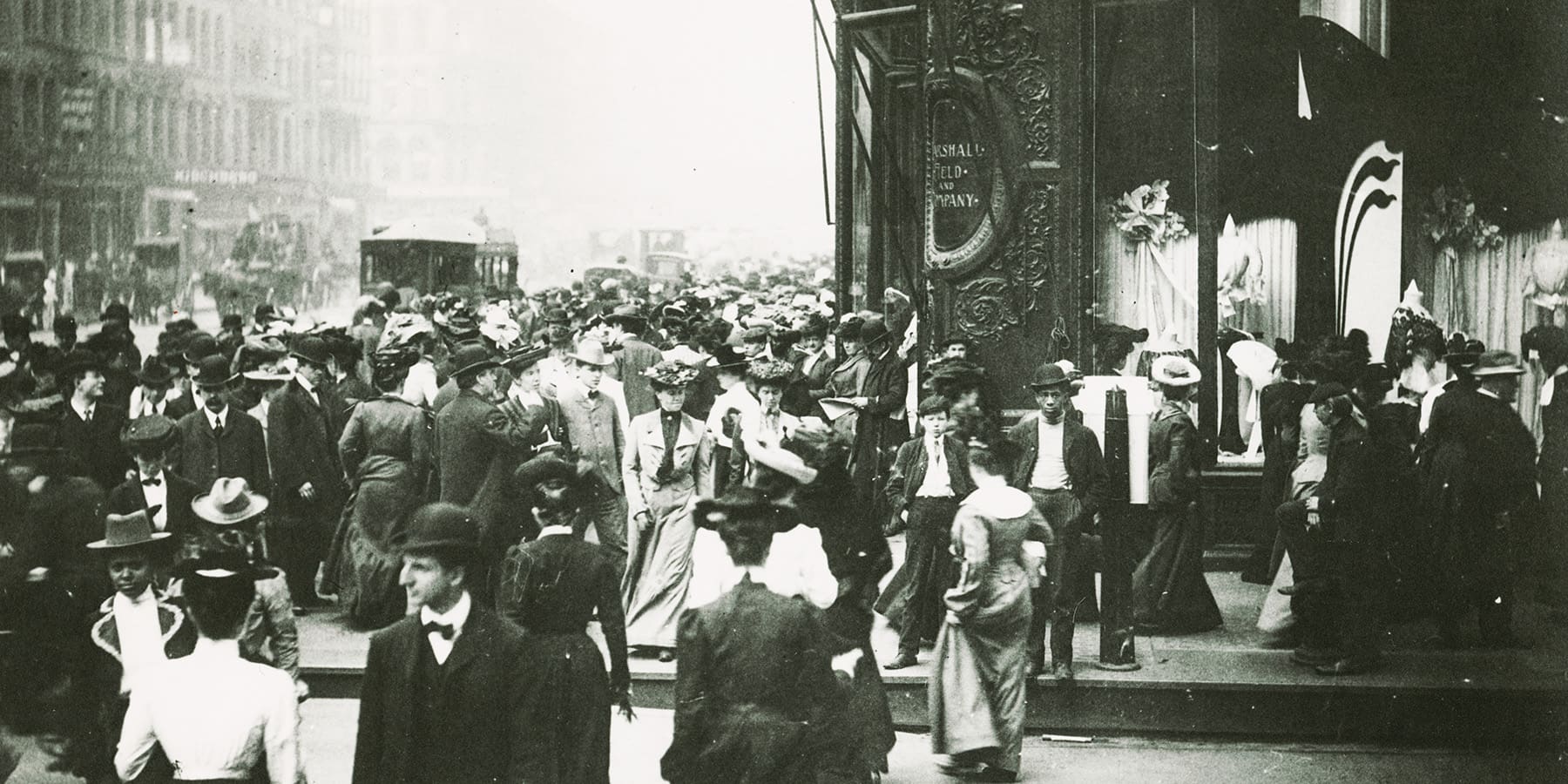
Today, many shoppers in search of a nice dress, a new book, an unusual toy, or new linens might turn to online retailers or a big box store for those items. But once upon a time in Chicago, in a luxurious store on State Street, shopping was something to savor. For many Chicagoans, the name Marshall Field’s conjures up a sense of glowing nostalgia – memories of Christmas shopping in a crowded but electric environment, hopping elevators to peruse floor upon floor of elaborate displays, or looking up in wonder at a giant stuffed animal or a sparkling glass ceiling. This bygone department store, now a National Historic Landmark, was more than just a place to buy stuff transported home in a memorable green shopping bag; it was a retail leader with a rich Chicago history that transformed shopping into an experience.
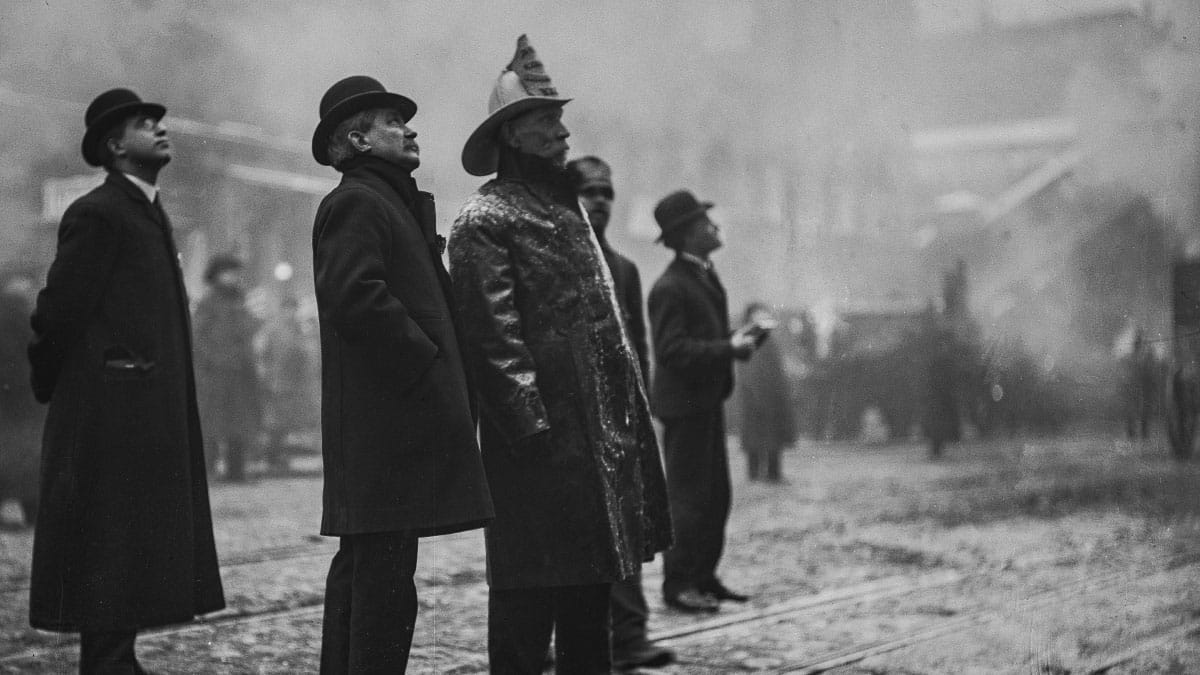
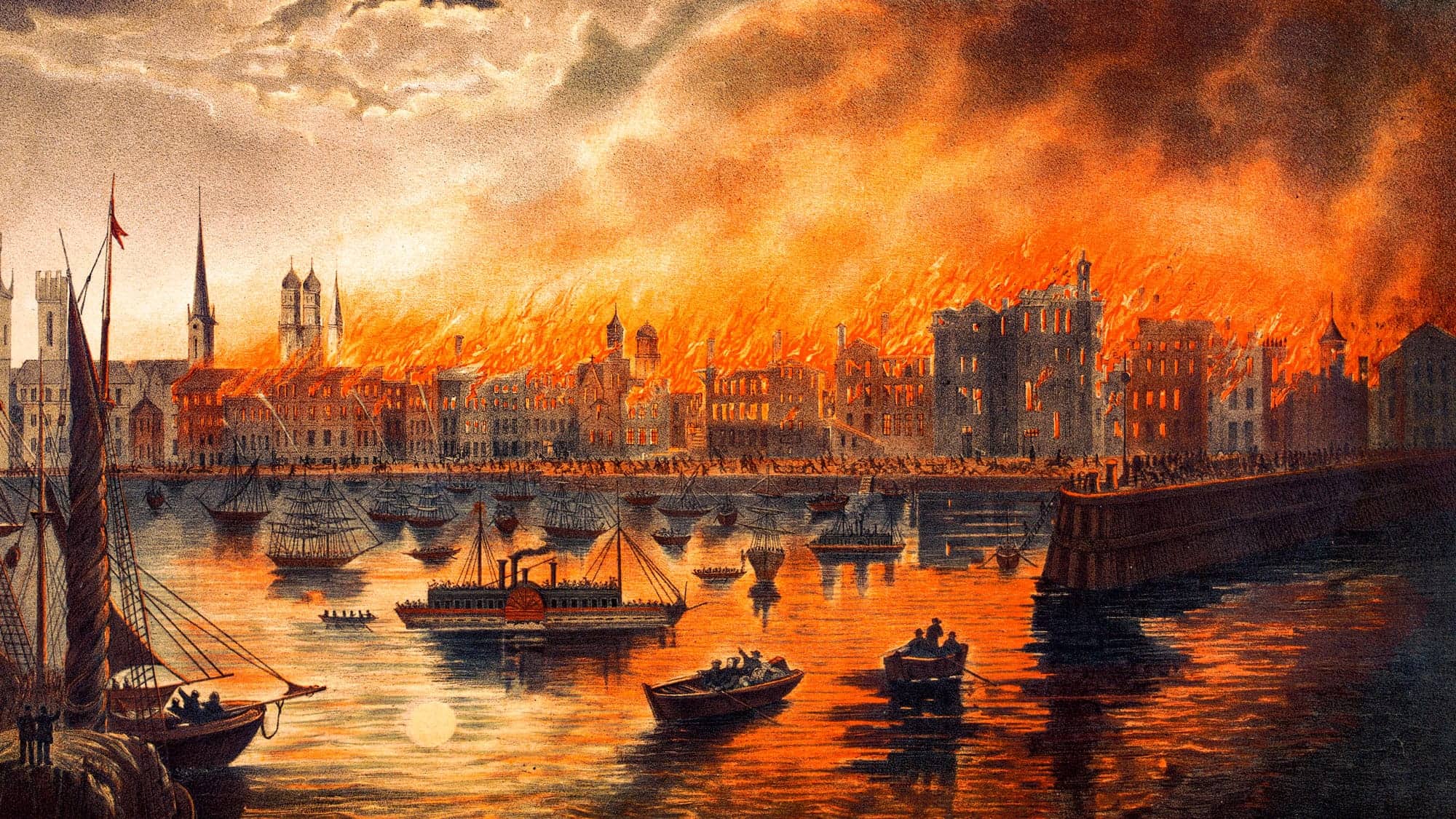
Things were going well for the company until the Great Chicago Fire of 1871. Their building was destroyed, but employees salvaged some goods, and they temporarily reopened in a trolley barn. They opened a new store just two years after the fire. In 1881, Field bought out Leiter due to business differences and became the sole head of Marshall Field & Company, which at this point was still largely drawing profits from the wholesale division, which operated out of a warehouse.
By the turn of the century, Field had a new vision for his namesake store on State Street. He began a large expansion that would ultimately consume an entire city block. There was one demographic that was key to his vision: women. But at that time, Chicago’s downtown streets were considered no place for a woman, as historian Leslie Goddard told Chicago Stories.
“The idea of a woman going into an urban area on her own, especially unescorted, was not something that happened regularly. What Marshall Field’s did really, really well was to cater to women who are out and about on their own. It’s everything from having a place where you feel welcomed, where no one’s going to turn you away at the door, to having bathrooms because there were not always restrooms…for women.”– Leslie Goddard, historian
It was not plausible for a well-to-do woman to go out shopping for a day comfortably. If a woman was hungry, for example, she “would have to go home or, heaven forbid, go to a saloon,” McHenry County College history and business instructor Sarah Sullivan told Chicago Stories. Marshall Field understood those needs and sought to keep customers in the store so that they’d spend big. Give them an attentive salesperson, a nice lunch, a cup of tea, and a comfortable place to rest. Above all: give them what they want.
The notion that “the customer is always right” wasn’t a given during this period. But Field embedded that into his business model in order to gain customer loyalty. Architectural expert James McKay recounted a story commonly told about Field. According to the legend, a sales clerk was debating with a customer about an item she wanted. Field corrected the clerk and reportedly said, “Give the lady what she wants.”
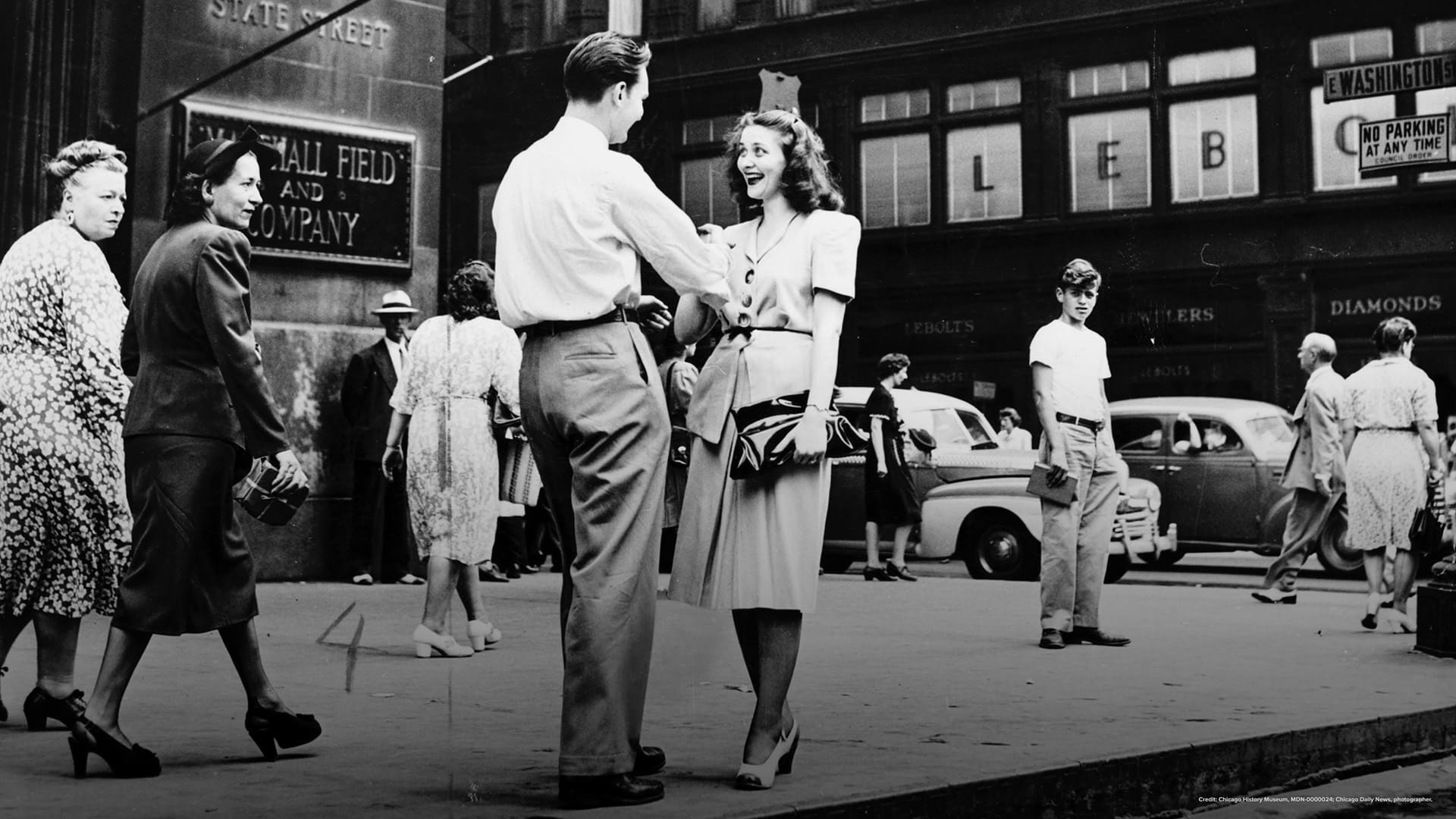
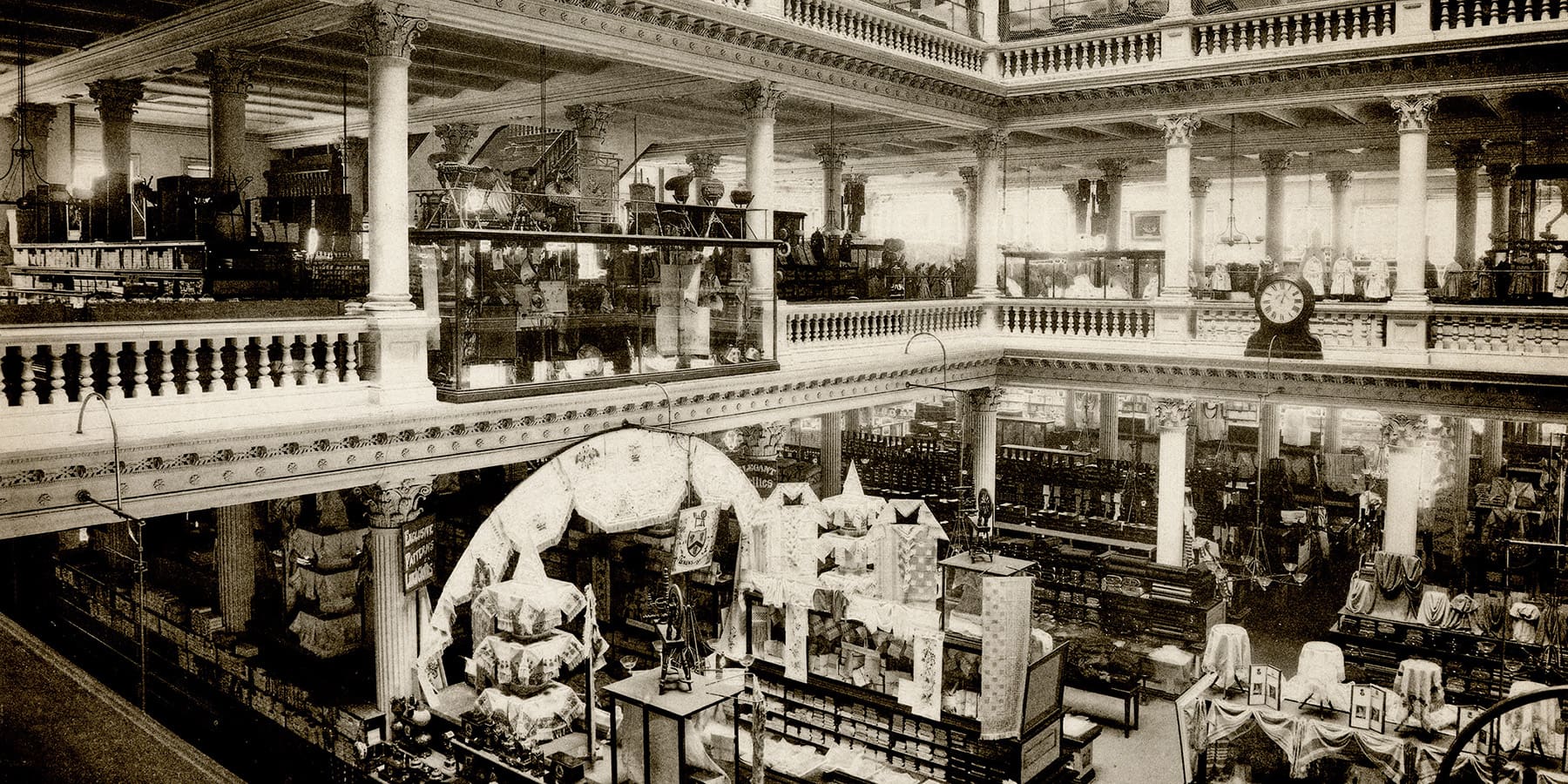
That six-word phrase reflected a new approach to shopping as a day spent in luxury rather than running a mere errand. And Marshall Field’s delivered. Daniel Burnham designed the expanded store (which was not completed until 1907, one year after Field’s death in 1906) in his signature Beaux-Arts style, the exterior made of terra cotta, brick, and granite. The interior featured a grand, light-drenched atrium and a dazzling, 6,000-square-foot Tiffany glass mosaic ceiling designed by Louis Comfort Tiffany himself. On two corners of the building, two 7-ton clocks became iconic Chicago landmarks – a place where folks could say, “Meet me under the clock,” and everyone knew where it meant.
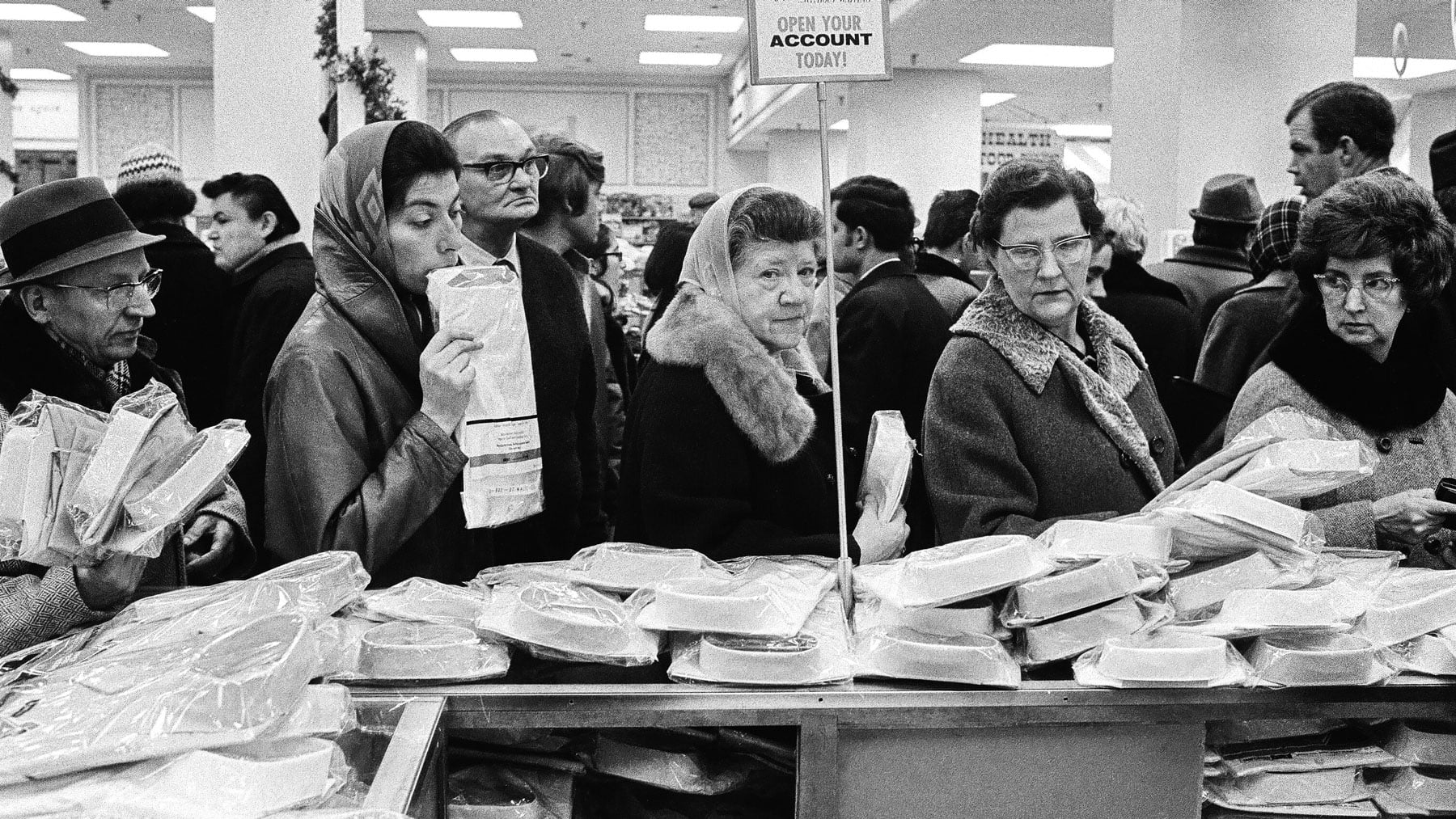
Shoppers could peruse some 150 different departments over 73 acres of floor space, according to the Chicago Architecture Center. Elaborate displays transformed the store into a consumer’s fantasy, enticing shoppers with scenes designed to loosen the grip on one’s pocketbook. Customers could have their purchases procured from, for example, the toy department, gift wrapped for free, and then delivered. Though perhaps not all items were able to be wrapped.
“They had stuffed animals, and they were the actual size. So you could have a stuffed giraffe that was the size of an actual giraffe,” Goddard said.
In addition to clothing for all, Marshall Field’s offered a wedding registry (the first to do so), a book department, home furnishings, cosmetics, a beauty salon, and a candy shop where the famous Frango Mints were sold. There was even a “doll hospital.” Glamorous elevator attendants ushered shoppers between floors in the building’s 76 elevators.
“Marshall Field’s wanted an elevated experience in their stores,” Sullivan said. “People were expected to have the best manners and be extremely polite.”
Customer service extended to a large ladies’ waiting room, which Goddard said had a wall of telephones, a theater ticket office, a European buying office, and a place to look up steamship and railroad timetables. Every employee, from the candy shop to the alterations department, were “experts in their field,” visual merchandise artist, retail design consultant, and former Field’s employee Amy Meadows told Chicago Stories. The store also pushed the idea of corporate branding long before ad agencies introduced the concept. Shoppers could send Marshall Field’s-branded post cards from the store and carry their goods home in Field’s iconic green shopping bags.
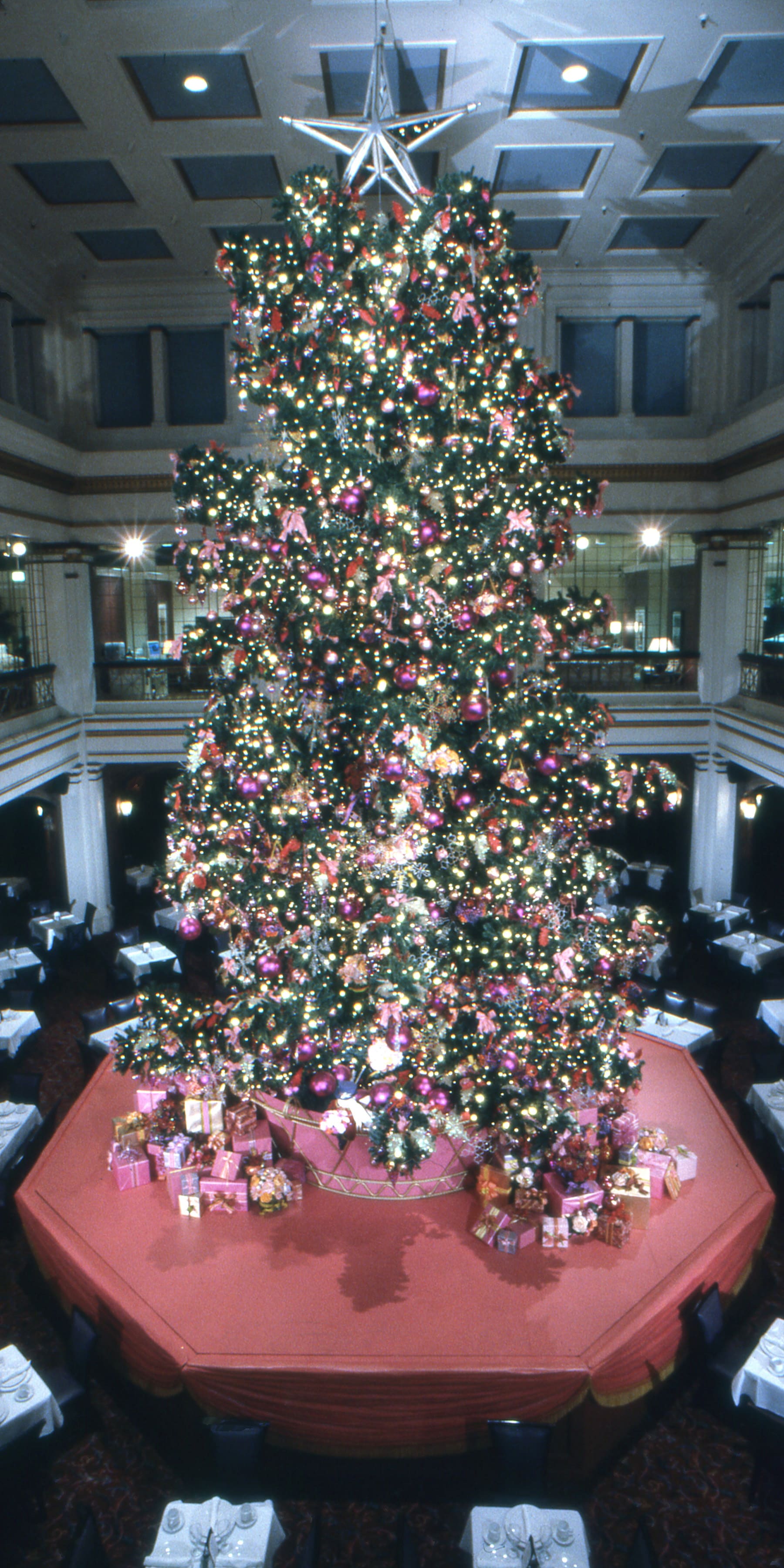
Then there was the Walnut Room: an icon within an icon. Originally called the South Grill Room, it opened in 1907 on the seventh floor, offering shoppers (especially those women who didn’t dare venture into a saloon) a refined place to dine and take a break from shopping. Clad in Circassian walnut paneling and anchored by a towering marble fountain at its center, the Walnut Room brought elegance to the retail experience. During the holiday season, the fountain gave way to a giant Christmas tree called the Great Tree, making dining there a beloved Chicago holiday tradition. One of its most enduring dishes is Mrs. Hering’s Chicken Pot Pie, a comfort food staple whose origins date back to 1890. The story goes that the recipe came from a Marshal Field’s salesclerk named Sarah Hering, who shared her homemade pot pie with a customer one day. Marshall Field’s also opened other dining spaces and tea rooms on the seventh floor to serve hungry customers. According to Sullivan, adding dining space was a “visionary move.”
“There was profit to be made. Maybe not directly, but it brought more people into the store and kept them in the store,” Sullivan said. “Now this became more of a destination. It wasn’t just a place to shop, it was a place to be seen.”
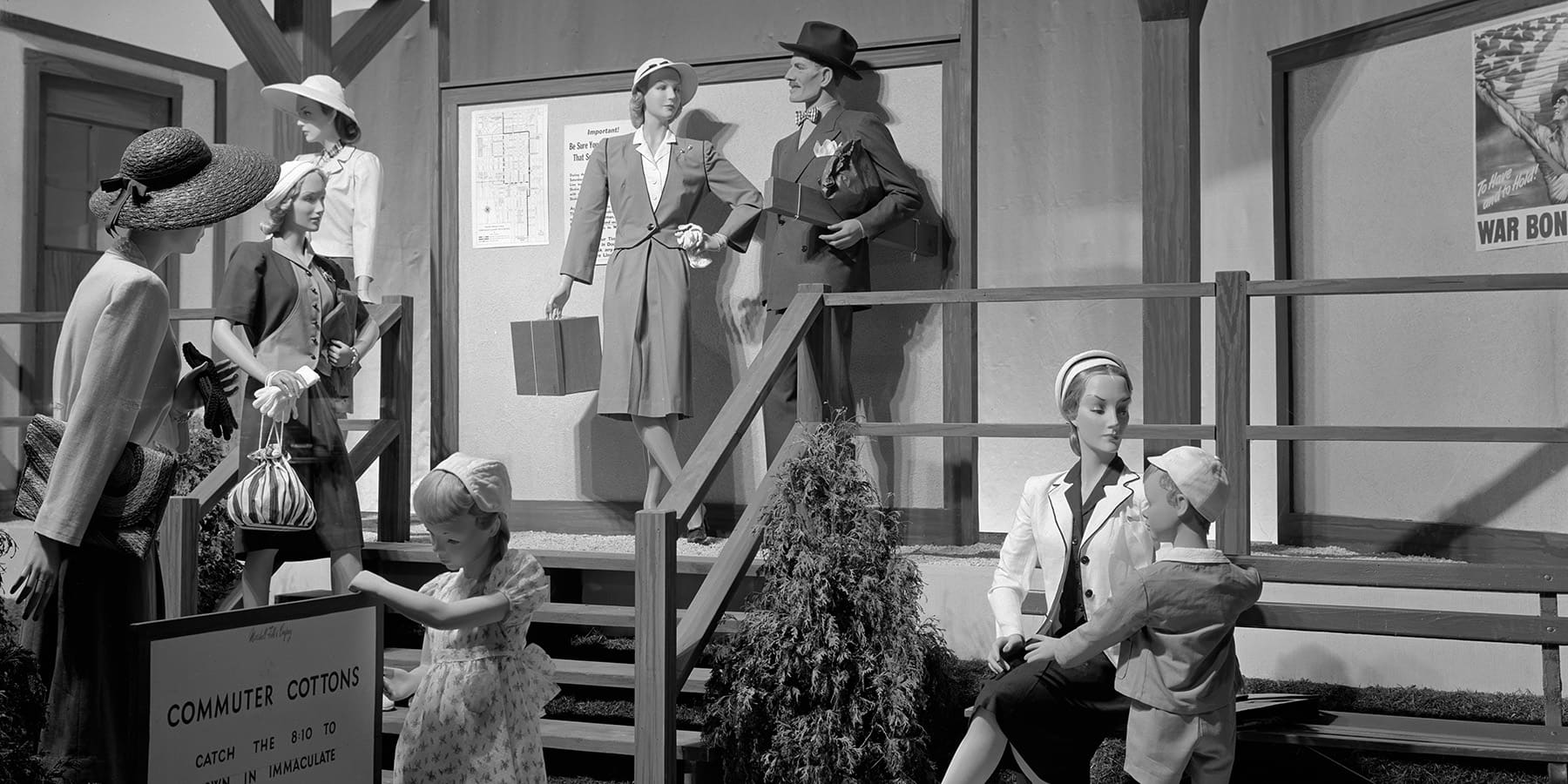
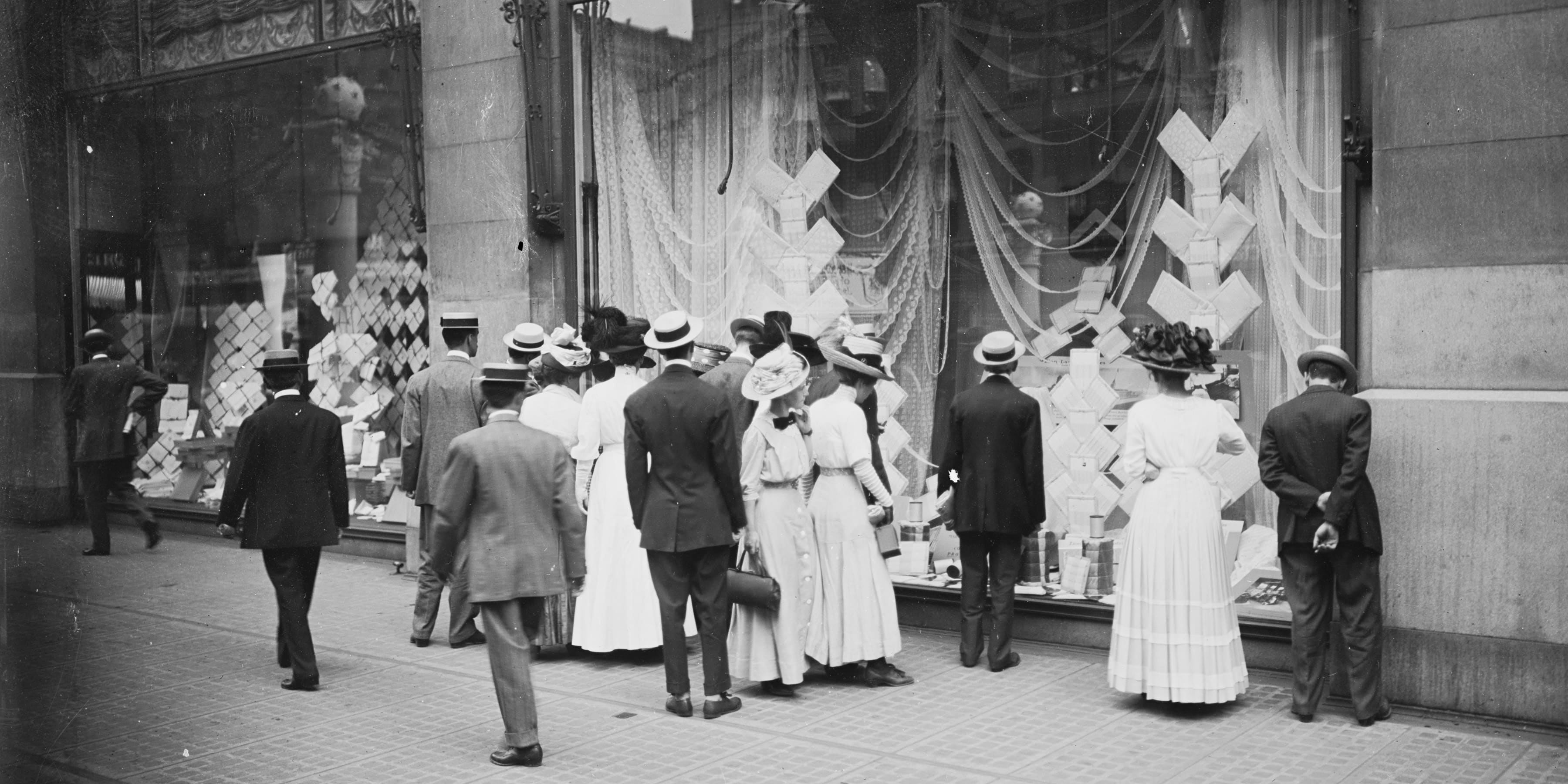
For those on the outside looking in, the window displays in particular showed customers those aspirational goods that signaled belonging, status, success, or style. The latest bag, the designer shoes, even the hottest new book were featured in elaborate window displays.
“People come to look at the windows, but the goal is to get customers into the store because they loved something that you showed them, and you showed it in a way that was absolutely irresistible,” Meadows said.
The displays especially went all-out at Christmas. Meadows designed the holiday windows for more than 20 years. For decades, holiday shoppers pressed their noses to the windows to get a look at the decorations that took months to plan. Each year had a theme, and the theme was carried throughout the entire store. With 10 floors to decorate, said Meadows, it was essentially like decorating 10 city blocks, requiring skilled workers to come in and execute the plan in just a matter of days. For her, it was always worth it.
“[The windows] were our gift to the city,” she said. “You could see them as many times as you wanted. There was no admission fee. They were for your pleasure and your entertainment.”
While anyone could enjoy the spectacle from the sidewalk, shopping inside was initially tailored to a wealthier clientele, positioning Marshall Field’s as a temple of taste. Shoppers on a budget could visit the so-called “bargain basement,” which turned the lower floor into a space dedicated to discounted items.
“Maybe you started out counting your pennies and you’re looking at the clearance sales racks,” Meadows said. “From an aspirational point of view, it’s like, ‘Someday I want to move up to the third floor.’”
But in the store’s earlier days, not everyone was extended the same courtesy of exceptional customer service. The store’s carefully curated image of refinement often excluded people of color. While it was a store beloved by many, both Sullivan and Goddard believe it’s important to examine who was sometimes left out of the discussion.
“Ironically, there were people like Al Capone who were legit criminals, who were able to go and shop there with no limitations,” Sullivan said. “But for Black people, for people of color, the situation was different. So in the ’20s, ’30s, ’40s, even into the 1950s, there was prejudice.”
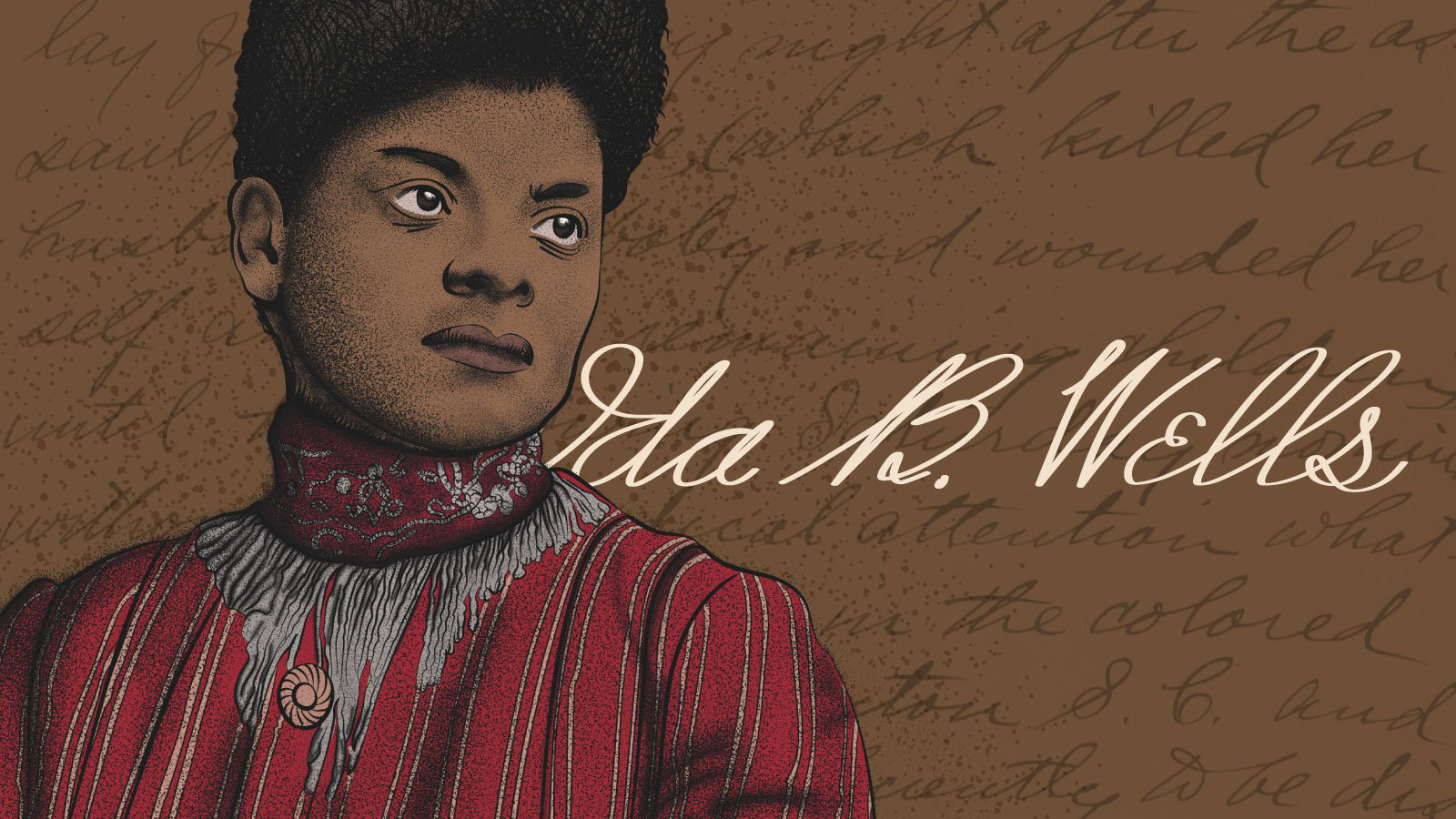
Goddard said Black shoppers were sometimes “gently persuaded” to visit the bargain basement, or were ignored by salesclerks altogether. As Black studies and fashion studies scholar Rikki Byrd recounts in this Vox article, a white salesclerk insulted prominent journalist and activist Ida B. Wells in 1914. “Ida B. Wells goes to the bargain basement and she experiences racial discrimination even though she’s there to return something – she’s already made a purchase,” Byrd told Chicago Stories. Discrimination extended to the hiring of employees.
“Field’s was very reluctant to hire African American salesclerks,” Goddard said. “They did have African Americans working in the custodial department, but it took Field’s longer than the other Chicago department stores to really welcome African Americans onto the frontline sales force.”
In time, attitudes shifted. It wasn’t until the 1950s and 1960s that Black staff began to break through in white-collar roles and on the sales floor.
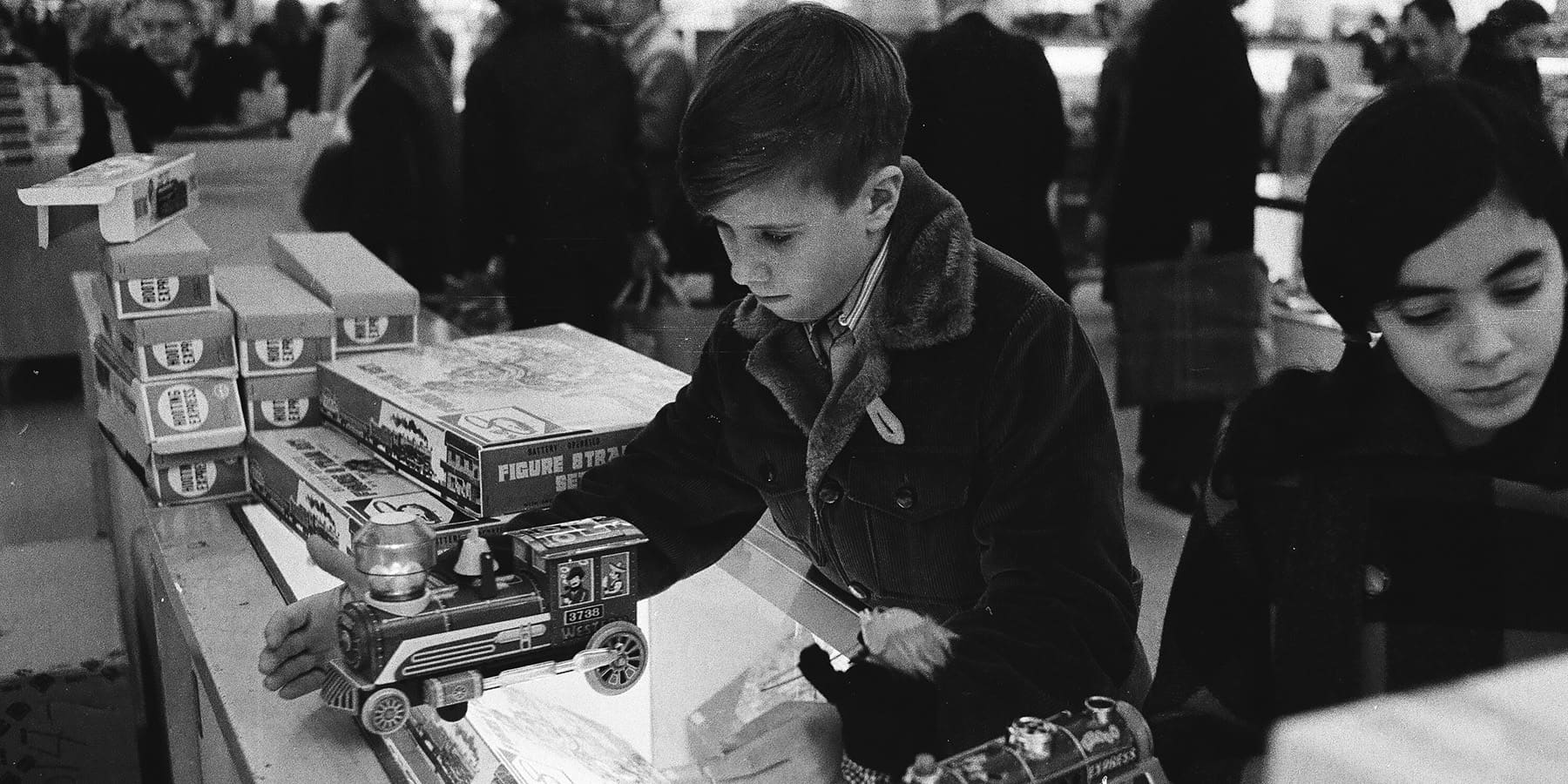
The nature of shopping was also changing. With the mid-century move of the white population to the suburbs and burgeoning middle-class spending power, shopping malls began to emerge. Marshall Field’s expanded to adjust to the trend, and at its height, it had 60 locations around the country. But in the 1980s as many retail companies were restructured or bought out, Marshall Field’s lost its status as one of the few remaining independent department stores when the British American Tobacco Group, called BATUS, acquired the store for $367 million. It continued to change ownership over the years. As shoppers turned to big box stores, Marshall Field’s began to change some of its long-held traditions. Production of Frango Mints moved to Pennsylvania, and the iconic green shopping bags became brown. Finally, in 2005, Federated Department Stores, Inc., which owned Macy’s, bought Marshall Field’s parent company (at the time, the May Company). They announced the State Street store would become Macy’s. The backlash was swift, and some shoppers even began a “Save Marshall Field’s” grassroots campaign.
“Don’t mess with Chicago, and don’t mess with the name Marshall Field’s,” beloved film critic and Chicagoan Roger Ebert wrote. “You will generate rage beyond your wildest nightmares. If you doubt me, Google the phrase ‘The Chicago Way.’”
But its fate had been decided. On September 9, 2006, Marshall Field’s State Street department store officially became Macy’s. Chicagoans mourned the store that had transformed shopping into something special.
“What we can cherish is the example that this company set…that pampering, customer service, and luxurious surroundings can create a shopping experience that is so special,” Goddard said. “For all that Marshall Field’s was in many ways catering to exclusivity, there was a lot that this store did to be democratic. I love the fact that you could go down there and you could see these amazing Christmas windows. You didn’t have to go inside the store and buy anything. You could go inside the store and try on a dress. You didn’t ever have to buy something there, but you could be part of that experience.”
Related