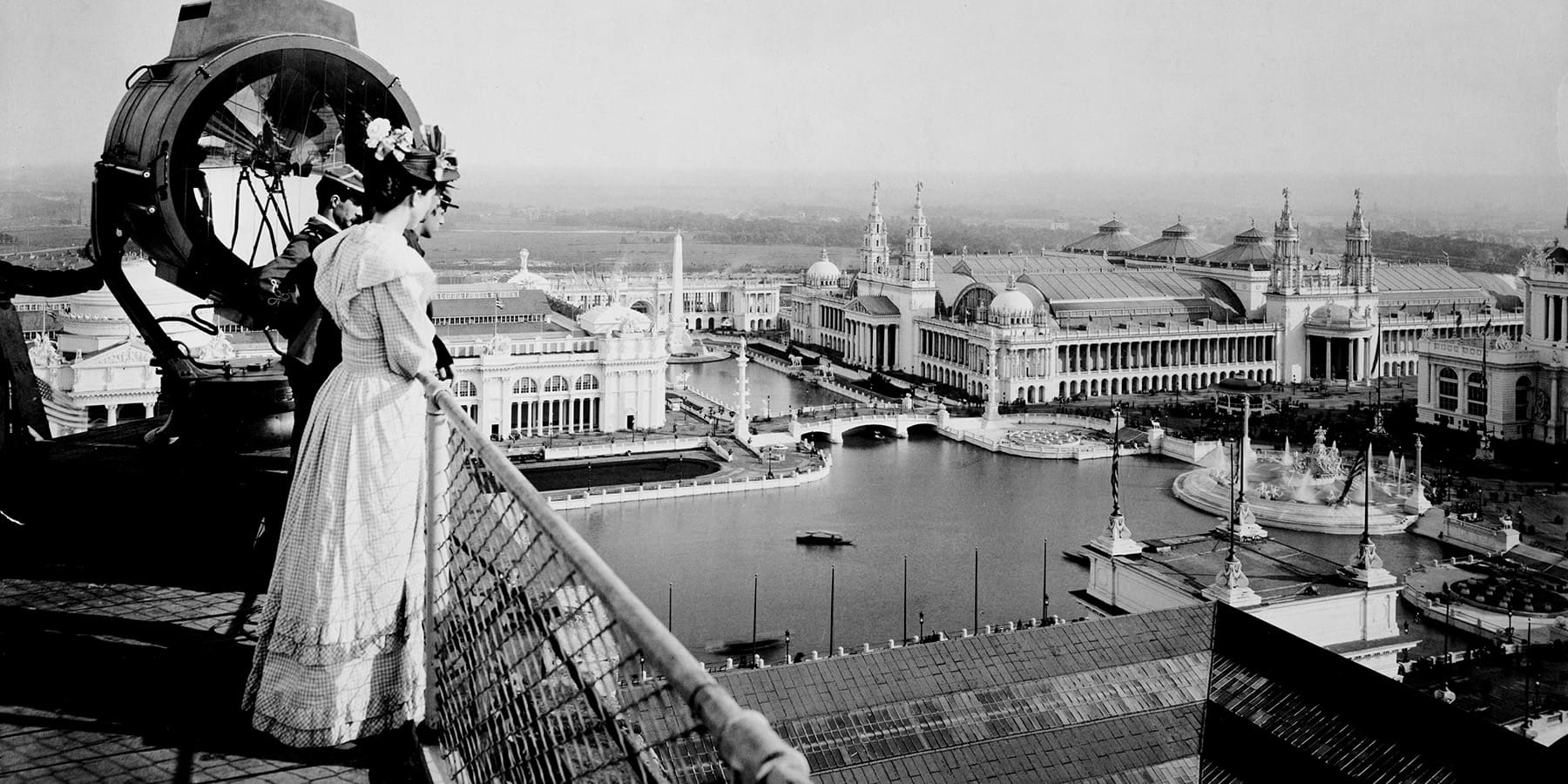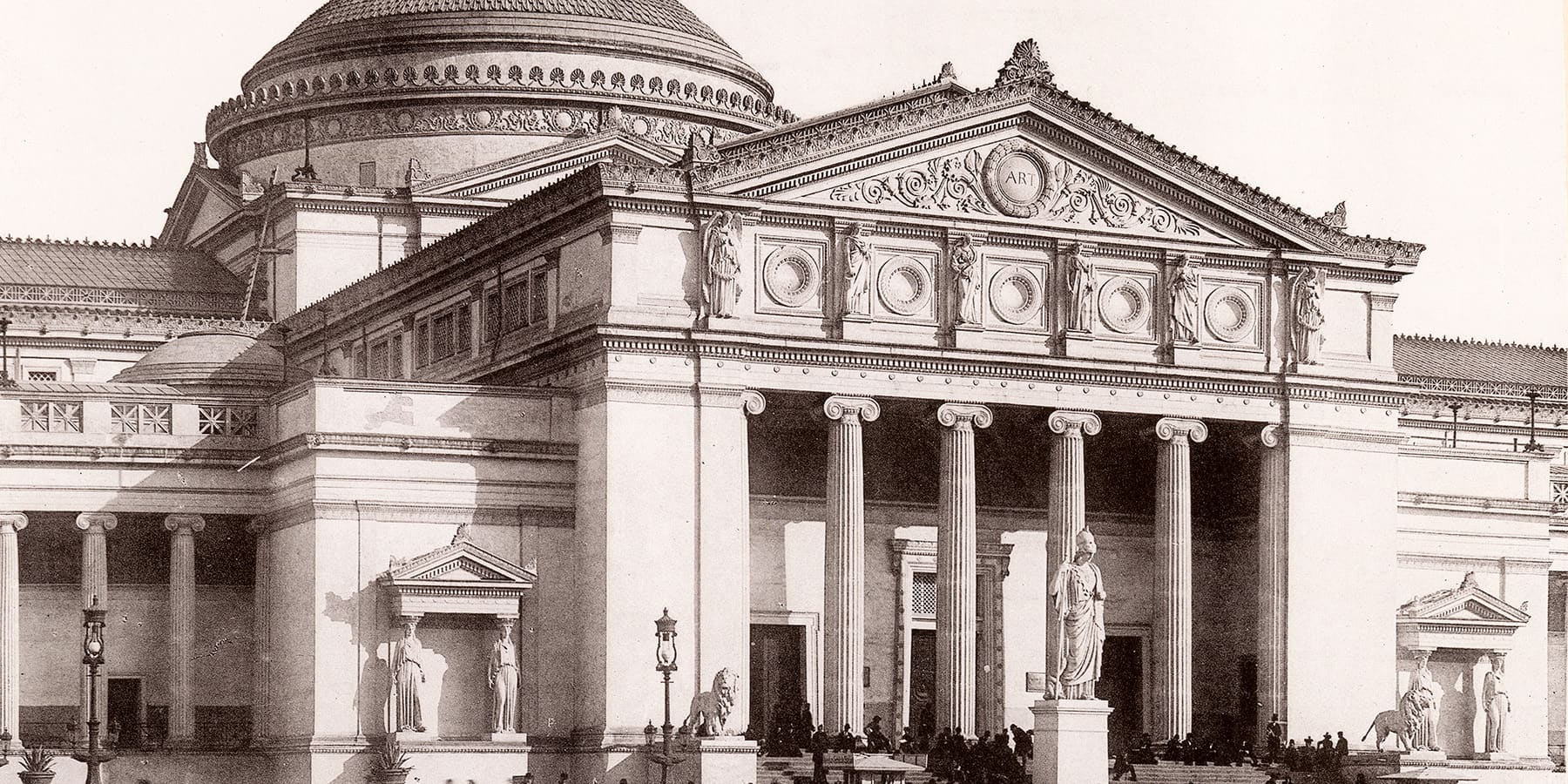



At the 1893 World’s Columbian Exposition in Chicago, fairgoers weren’t just encountering a spectacle – they were stepping into a preview of modern life. Across the gleaming White City and the boisterous Midway Plaisance, fairgoers met a cascade of “firsts” as they witnessed mechanical marvels, tasted new foods, and experienced new consumer goods. Some inventions even introduced a way of life decades before the rest of the world would catch up. And it all happened on 686 acres on Chicago’s South Side.
The Ferris Wheel
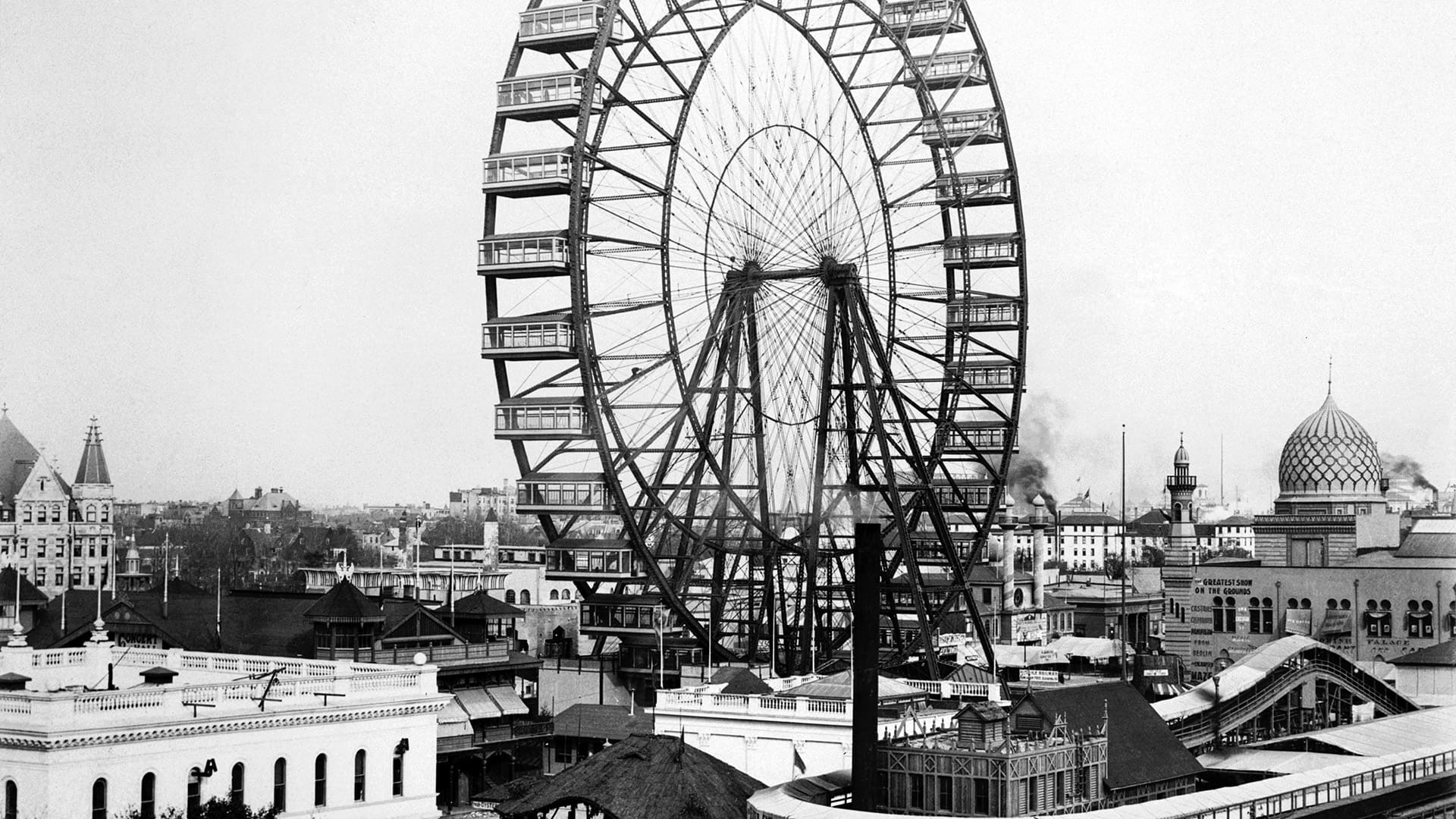
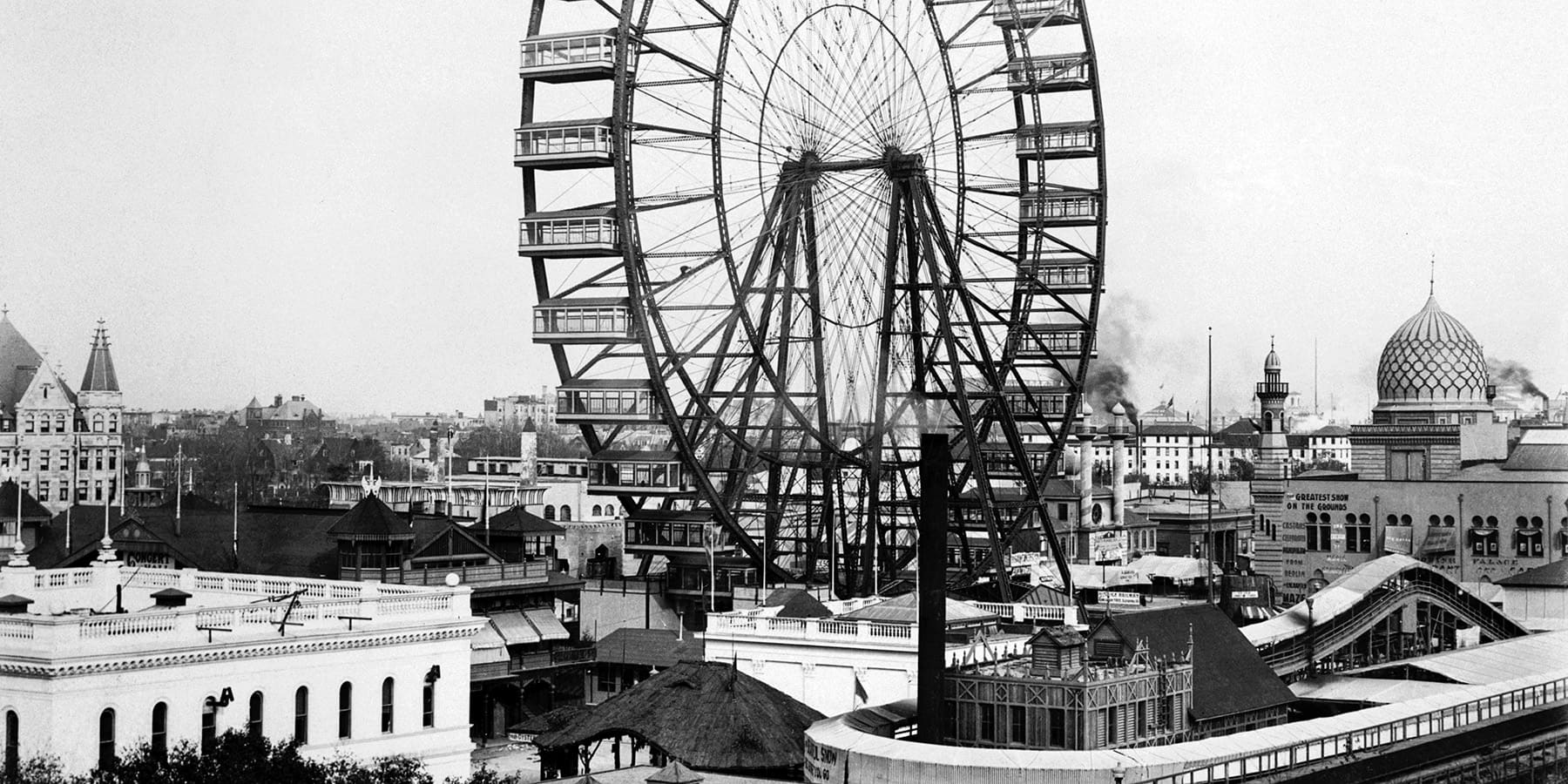
There was a lot of pressure on Chicago to deliver something spectacular for the World’s Fair. Four years prior, the 1889 Paris Exposition had mesmerized the world with a feat of engineering – the Eiffel Tower – and Director of Works Daniel Burnham and other fair planners wanted to have a similar marquee attraction that would rival it.
George Washington Gale Ferris Jr. had an idea. Ferris designed a thrilling, rideable wheel that reached 264 feet into the sky on the Midway Plaisance – the more adventurous and less refined section of the fair. Though it was plagued by delays and opened late – a month into the fair– the Ferris wheel consisted of 36 cars that could carry 2,000 passengers at a time. But this wasn’t the Ferris wheel we often picture today, with small cars that seat a few people. Each of the cars was the size of a streetcar and could carry up to 60 people. Two full rotations took 20 minutes, and for some fairgoers who were not yet accustomed to seeing tall buildings and structures, those 20 minutes amounted to a thrill ride.
“There is a story that was in a Chicago newspaper of a man who was simply terrified by the wheel, and it was getting worse as he was going up,” Scott Cummings, a researcher who published an in-depth website about the fair, told Chicago Stories. “When he got to the bottom, he didn’t realize that it was going to go on a second revolution. And at that point, he really panicked…A woman gently took off her skirt and threw it over his head to calm him down. So she saved the day and actually made national news for that.”
The Brownie, Cracker Jack, Vienna Beef, Pabst Blue Ribbon, and More
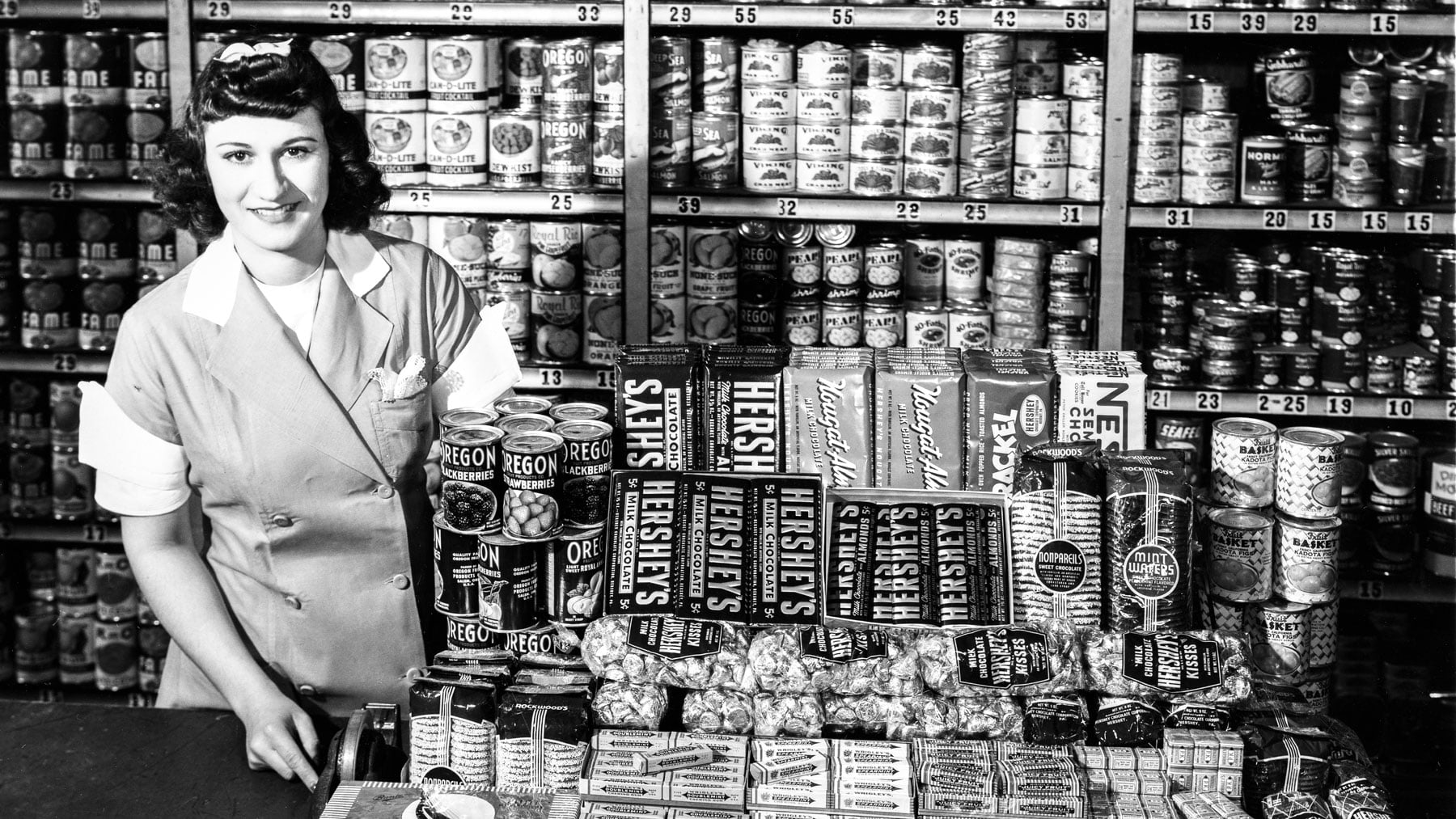
The 1893 World’s Fair also marked the first time many foods we still eat today made their debut. Chicago socialite and philanthropist Bertha Palmer is said to have instructed the kitchen at the Palmer House Hotel to create the first brownie, filled with walnuts and topped with an apricot glaze. Two years before the World’s Fair, a man named William Wrigley Jr. arrived in Chicago with just $32 to his name. His Juicy Fruit gum was first introduced at the fair. And while Hershey’s chocolate certainly wasn’t born in Chicago, the fair played a major role in its development. Milton Hershey visited the fair and saw German engineer J. M. Lehmann’s machinery, which took bitter chocolate and turned it into a much sweeter milk chocolate. Hershey bought the machinery on the spot and had it shipped to Pennsylvania when the fair closed. He created the Hershey Chocolate Company the next year.
German brothers Frederick and Louis Rueckheim created a snack that featured molasses-coated popcorn and peanuts, and it was introduced to a larger audience and popularized at the World’s Fair. The sweet-and-salty combo reportedly received its name, Cracker Jack, a few years after the fair when a salesman tried it and declared, “That’s crackerjack!”
There was also shredded wheat, developed by Henry Drushel Perky, whose initial goal was to sell the machines that shredded the wheat, not the pillow-shaped biscuits that came from the machine. Another wheat product, Cream of Wheat, debuted at the fair, after a North Dakota miller named Tom Amidon pitched his wife’s breakfast porridge to the Diamond Milling Company. The fair also helped popularize Aunt Jemima pancake mix. A formerly enslaved woman named Nancy Green, a performer hired by the R. T. Davis Mill Company, portrayed a fictional “Aunt Jemima” to demonstrate the company’s ready-made pancake mix, alongside the “World’s Largest Flour Barrel.”
After Milwaukee’s Pabst Brewing Company sold its beer to fairgoers, it decided to change its name. The company claimed to have won a blue ribbon at the fair – thus creating the name it’s sold under today, Pabst Blue Ribbon. In reality, many reports suggest that the fair didn’t actually award blue ribbons but instead offered medals to participants, suggesting the company adopted the name as a marketing gimmick.
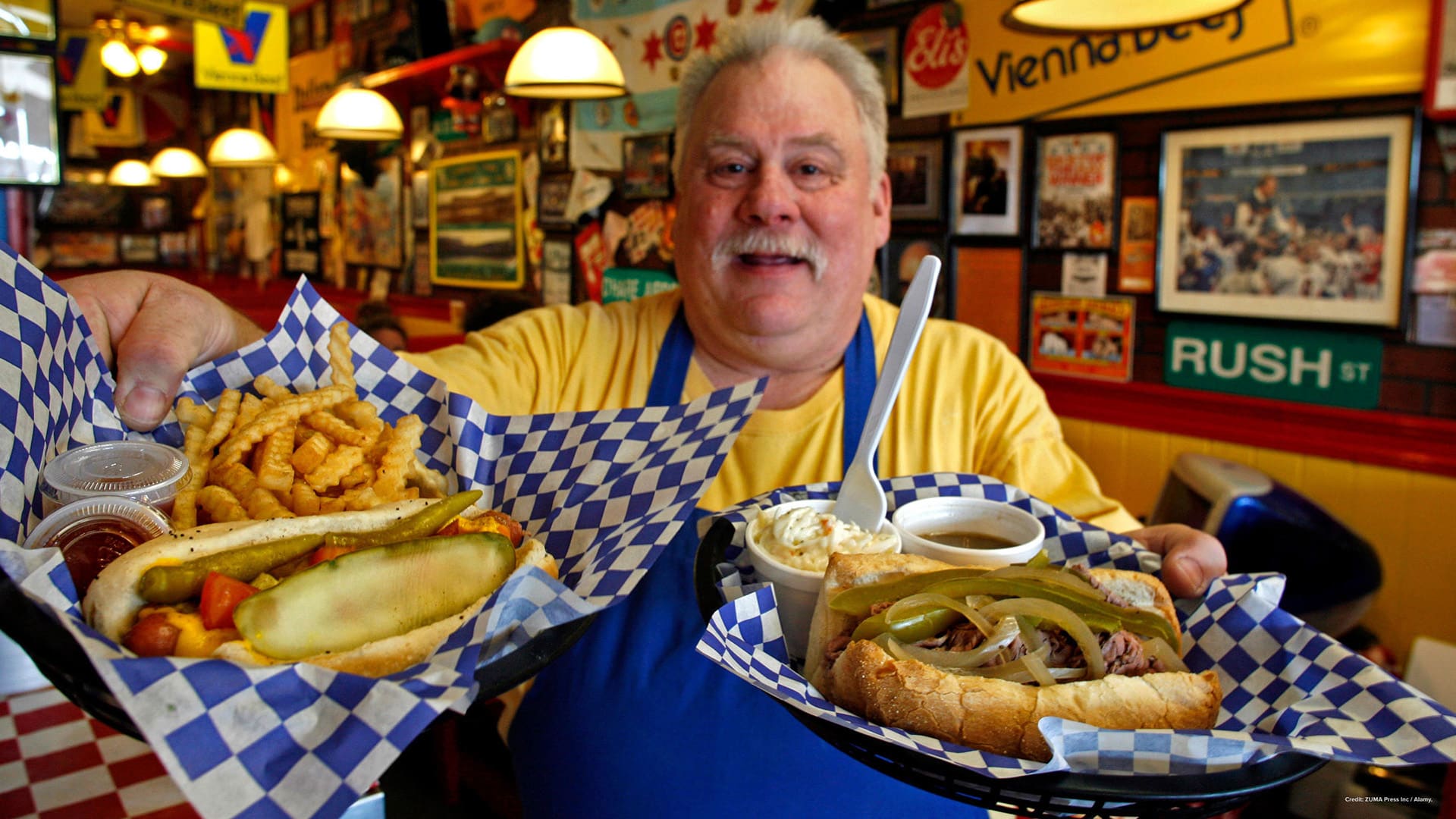
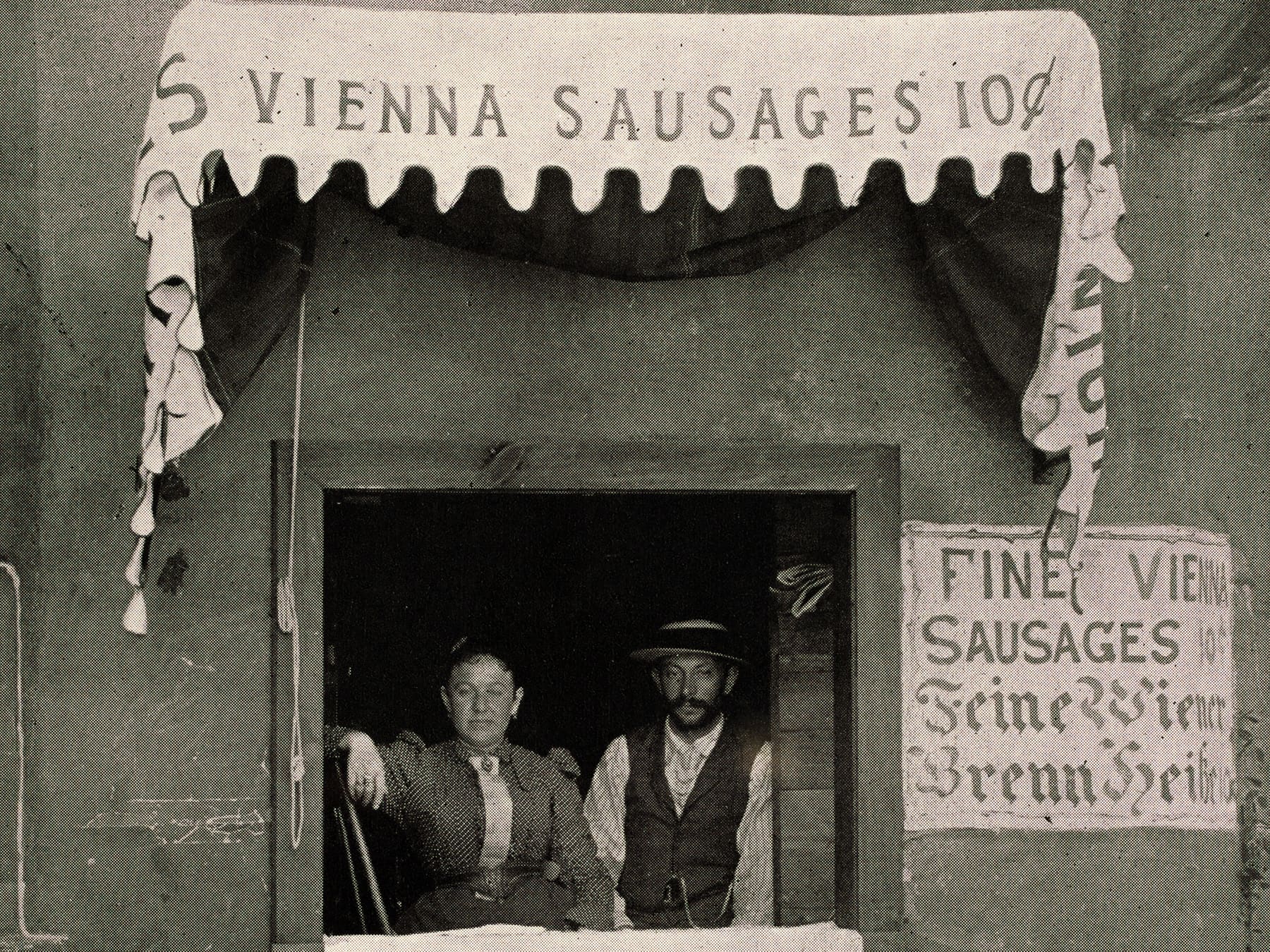
A quintessential Chicago food also debuted at the fair: Vienna beef hot dogs. On the Midway Plaisance, Austro-Hungarian immigrants Emil Reichel and Sam Ladany sold sausages topped with onions and mustard for 10 cents. In 1894, they opened a shop on Halsted Street and within a few years began selling their products to other stores.
The Zipper
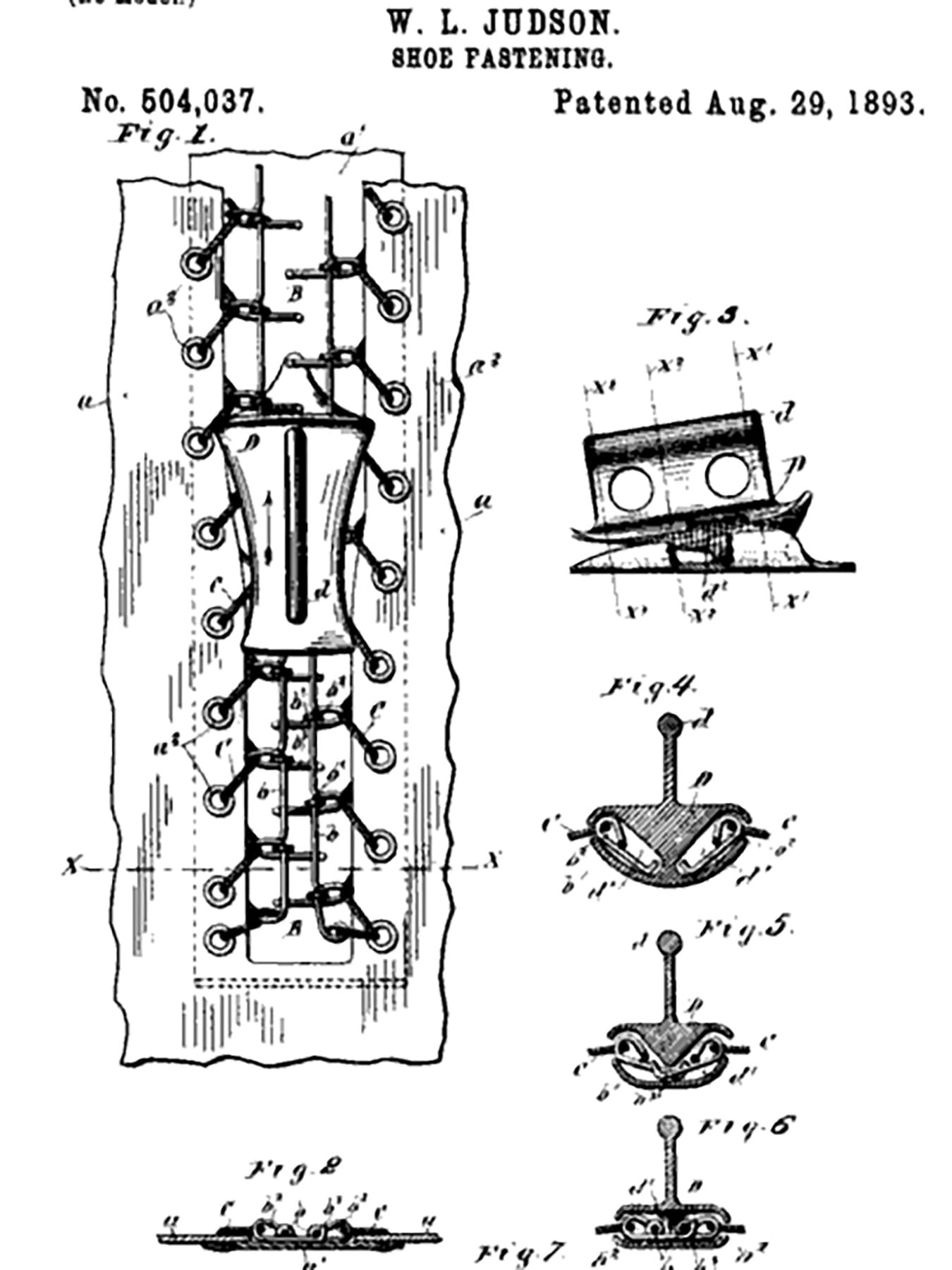
One of the fair’s more modest but enduring debuts was an early version of the zipper. Chicago inventor Whitcomb Judson unveiled his “clasp locker” at the exposition, marketing it as a faster, easier alternative to buttons for shoes and clothing. The device was clunky and prone to jamming, and fairgoers were more intrigued than impressed. Though Judson’s invention did not have much commercial success, it planted the seed for what would later become the modern zipper.
The Moving Walkway
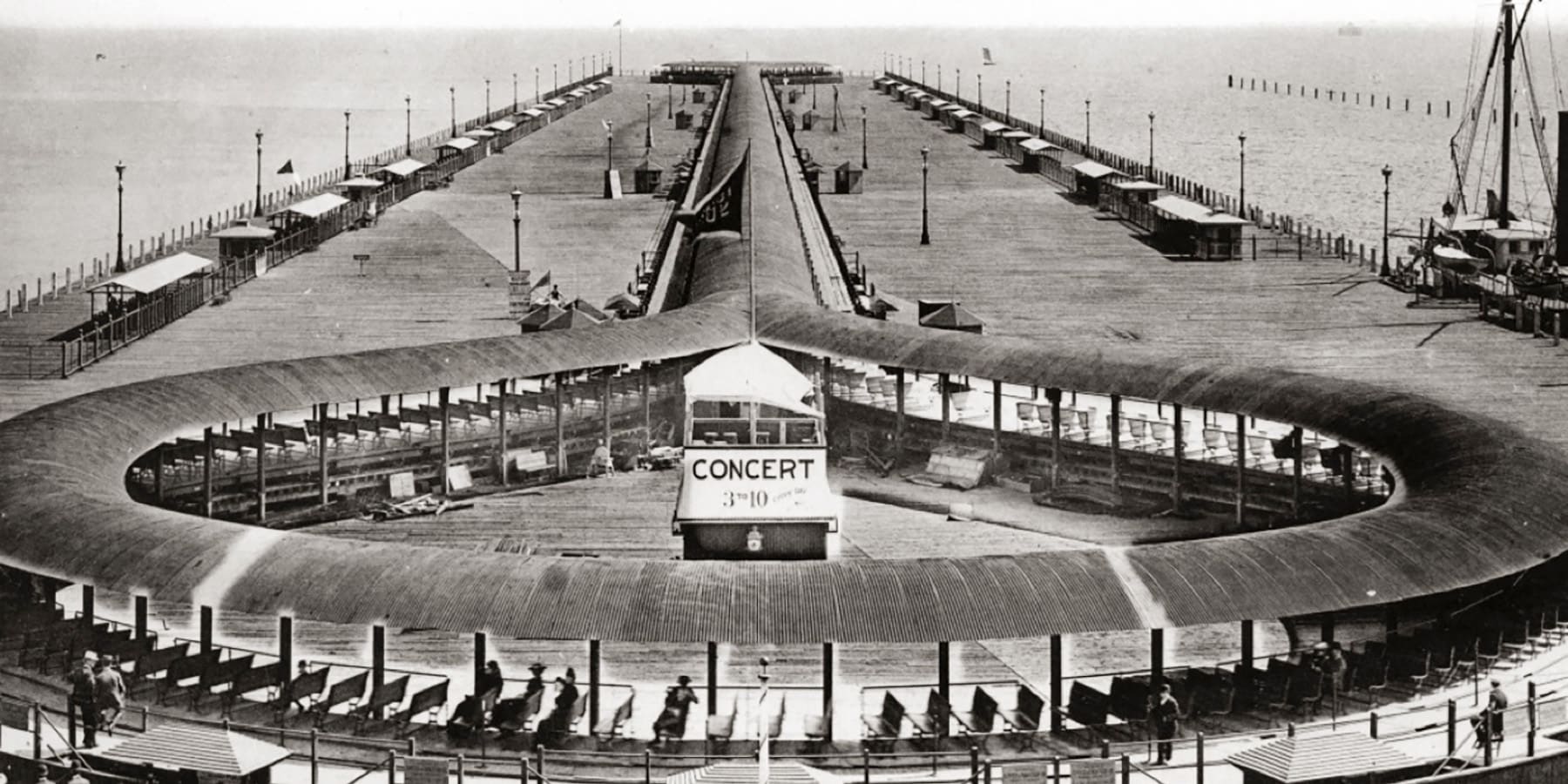
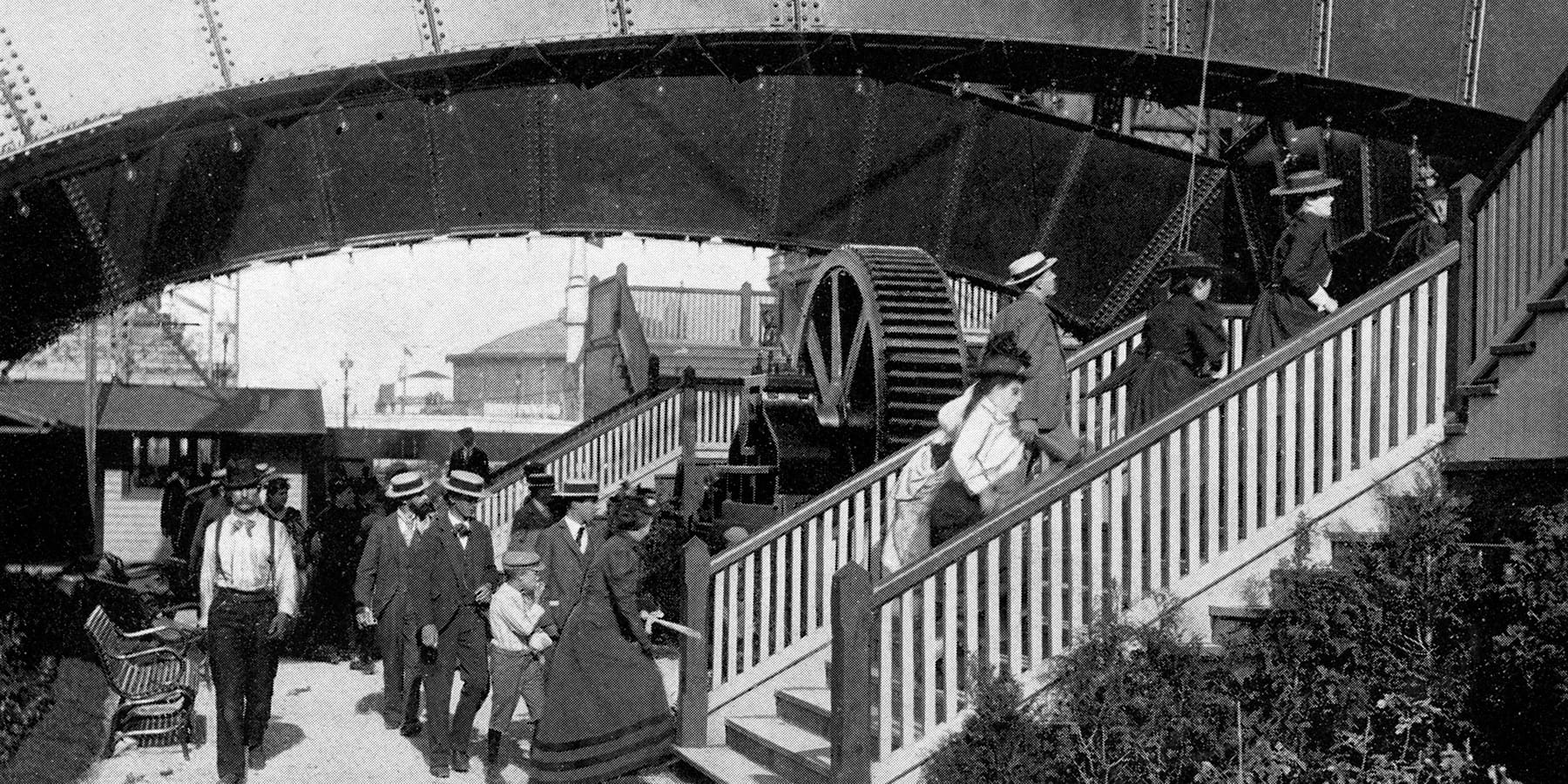
The first-ever moving walkway, or “movable sidewalk,” was constructed for the fair. Installed on a pier extending into Lake Michigan, the electrically powered, elliptical platform carried passengers slowly along a lakefront pier toward the exposition grounds. Designed by architect Joseph Lyman Silsbee, it had two versions – one on which riders could walk or stand, and another on which riders were seated.
The Dishwasher
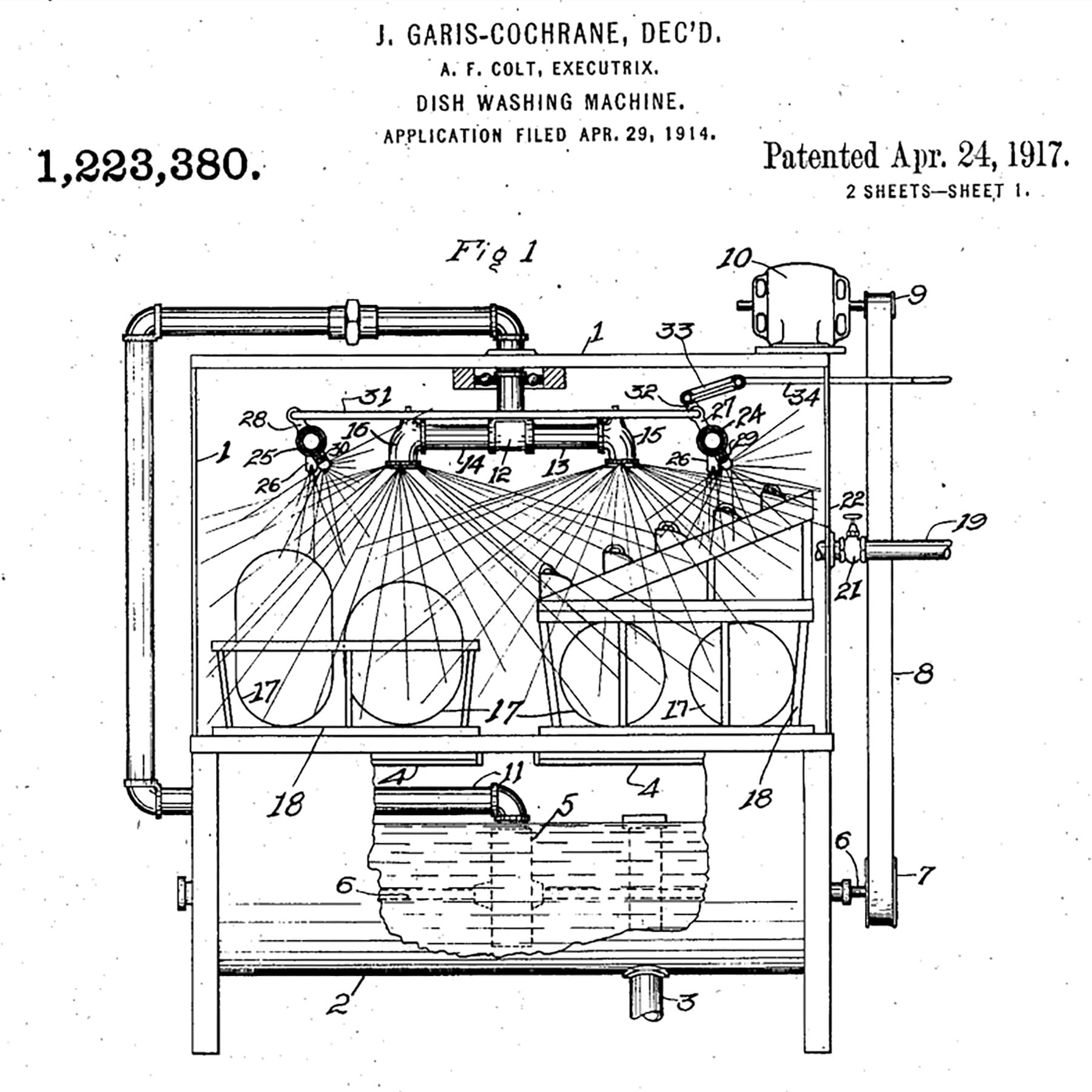
An inventor named Josephine Garis Cochrane decided to improve upon earlier versions of a mechanical dishwasher with a more efficient design. Her hand-powered dishwasher used water pressure to clean the dishes within. In 1886, she received a patent, but as a woman inventor, she struggled to find investors, and many households didn’t have the money or hot water required for the device. But in 1893, she displayed her dishwasher at the fair, capturing the interest of restaurants and hotels. Her Garis-Cochran Manufacturing Company later became part of KitchenAid after her 1913 death.
Elongated Coins (The Pressed Penny)
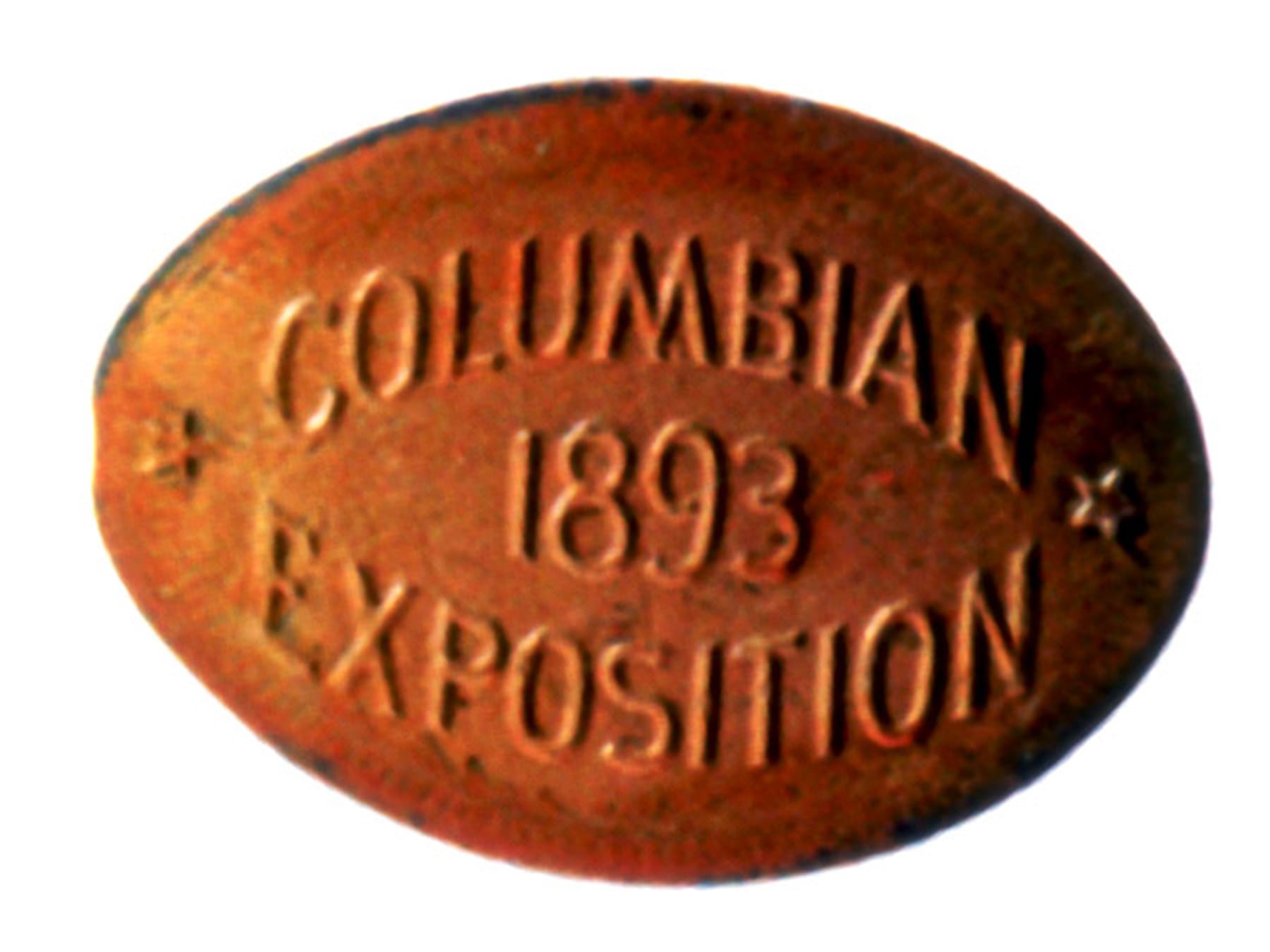
Elongated coins, often called “pressed pennies,” also made what many experts consider their first appearance at the World’s Columbian Exposition. Vendors used a hand-cranked coin-rolling machine that flattened coins and stamped them with an image or phrase – most commonly reading “Columbian Exposition 1893.” It was an affordable keepsake of the White City and has long since become a souvenir staple at museums, amusement parks, and tourist attractions around the world.
Related