








Few toys have inspired the kind of obsession and devotion as the small but mighty Beanie Baby. What began as a line of stuffed animals from a suburban Chicago company became one of the biggest toy crazes of all time. Thanks to the marketing prowess of its inventor, the $5 plush toy with the scarlet heart tag became a cultural phenomenon and, for some enthusiastic collectors, an illusory investment.
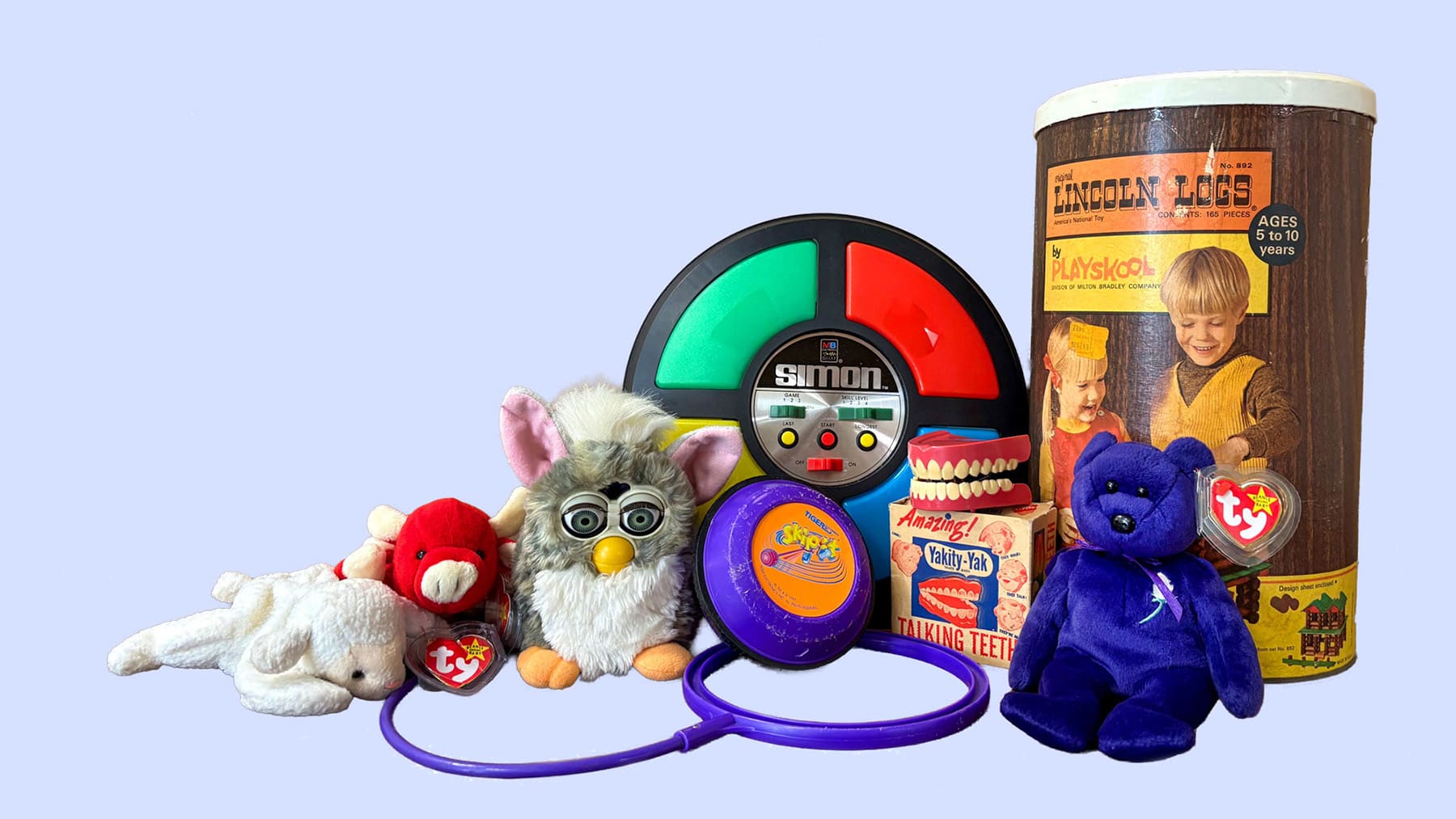
“In the mid- to late-’90s, you really had a proliferation of anthropomorphized toys. Furbies, Giga Pets, Tamagotchi. They all had this weird connection with nature and pets, and a lot of it comes from Japan,” market analyst and pop culture author Ross Benes told Chicago Stories. “Beanie Babies are an exception because they’re based in Chicago, but they were riding on a wave of children buying these toys that they wanted to humanize.”
The story of Beanie Babies began in 1986, when a Chicago-born man named Ty Warner launched Ty Inc. Warner was a college dropout and had moved to Los Angeles to try his hand at acting, but to no avail. He found a job in sales at the toy manufacturer Dakin, but was fired for trying to sell his own designs on the side. Warner then spent a few years in Italy, where he saw plush cat toys that inspired him to make his own. He ultimately returned to Chicago where, with his life savings, he launched Ty Inc. to sell his own plush cats. When Chicagoan Lina Trivedi was hired at the company in 1992, she was still in college and was just the 12th employee.
“As soon as I walked in, I saw all of the plush cats – beautiful, rich-looking, fluffy cats, as well as all kinds of other animals. Teddy bears, cows, pigs, monkeys, all kinds of things,” Trivedi told Chicago Stories. “About a year later, we came out with these bean bags that looked like animals. They were very fun…You look into their eyes, and you just fall in love with them.”
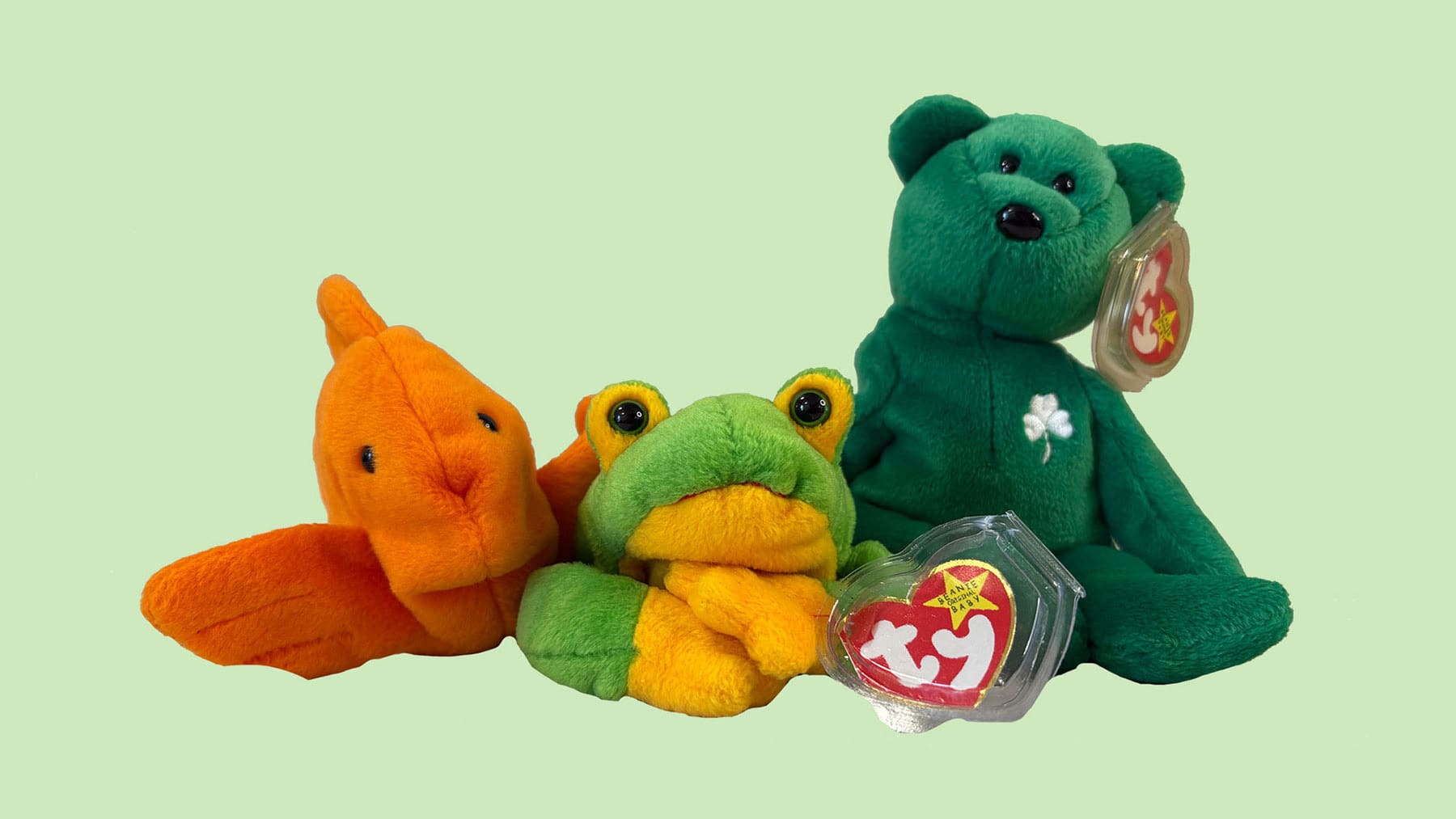
Those little bean bags were none other than Beanie Babies. When they were first introduced in 1993, there were nine floppy, stuffed creatures filled with small plastic pellets, or “beans,” with a bright red, heart-shaped tag affixed to their ears. They were Legs the Frog, Squealer the Pig, Spot the Dog, Flash the Orca, Splash the Whale, Chocolate the Moose, Patti the Platypus, Brownie the Bear, and Pinchers the Lobster.
It took time for the Beanie Babies to get traction. Trivedi said trade shows weren’t initially interested in them. But the stores that were carrying them began requesting more variety. It grew quickly from nine Beanie Babies to 30, and from 30 to 80, said Trivedi. Amid the growth, overseeing every detail was Warner.
“He was very meticulous with how the plush looked, both at the trade shows as well as in the catalog…grooming them to make sure that their fur was fluffy and that they all looked perfect,” Trivedi said. “We had different tactics that we used to groom the animals with hair dryers and brushes. There was this whole system of how the animals came to life.”
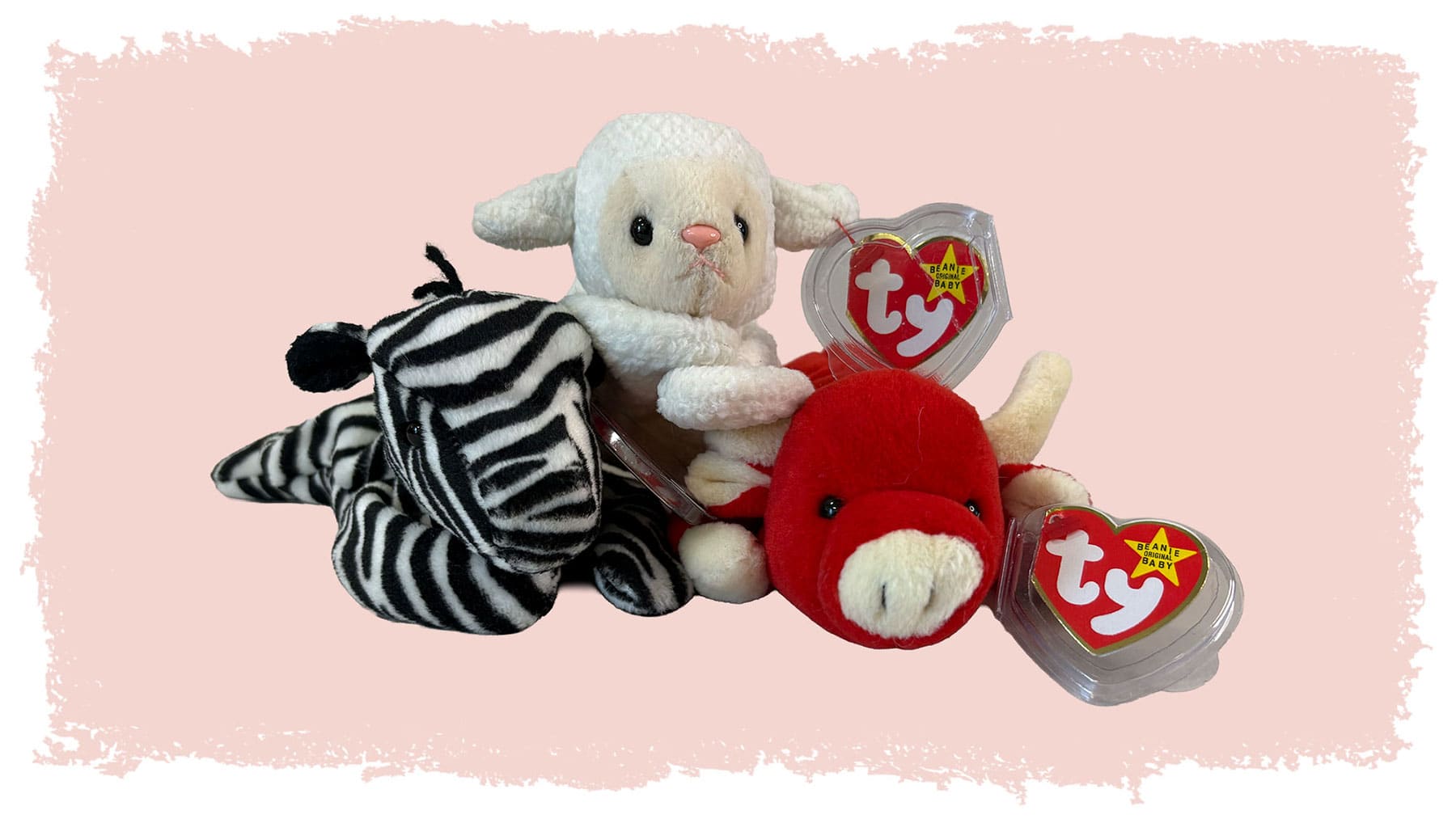
Warner had a reputation for being unconventional, eccentric, and reclusive, but he was also a clever marketer. The price of Beanie Babies was set at an affordable $5. Warner also sold his product only to mom-and-pop stores to create the illusion of scarcity. And when there was an issue with his fabric supplier for Lovie the Lamb, Warner used the hiccup as a marketing gimmick, announcing Ty Inc. would “retire” the lamb. It set off a buying frenzy.
“People believed they were rare (even though everyone had them, and they were selling millions of them every year)…because it was hard to get them. You had to go to one of those stores, and sometimes you had to get in line,” Benes said. “Ty gave that perception of scarcity when there was none.”
Mystery, too, fueled the frenzy. Trivedi recalls collectors calling the company to ask how many Beanie Babies there were.
“Nobody knew that a goldfish existed unless they actually saw it in the store, and they were flying off the shelves so quick that the only way to know which Beanie Babies exist was if someone you knew saw one….,” Trivedi said.
To add to the collecting craze, Trivedi had an idea for the Beanies’ famous red ear tags. She added simple poems, along with a birthday, to the inside of the tag.
“The poems were a way to build that connection. Ty liked the idea, and he asked me if I would be able to write one for each of the Beanie Babies,” she said. At the time, there were 85 different Beanie Babies.
With the help of her brother, Nikhil, Trivedi wrote 85 poems in a couple of days. Nikhil, who was just 19 at the time, also played a key role in the development of the company’s website, which went live in 1995 at a time when only 14 percent of Americans were online.
“I was a 19-year-old kid responsible for the online branding of the biggest toy company in the world,” Nikhil Trivedi told Chicago Stories. “That’s a ton of freedom.”
In 1996, sales reached $280 million. Collectors were eager to turn a profit. They went from plush toys to collectors’ items. Some stored their Beanie Babies in protective display cases and used plastic covers to protect the tags and therefore the authenticity.
“There were people who bought Bones the Dog for $5 or the Princess Di Bear and could sell them for a thousand dollars two months later. A lot of them got addicted to that behavior,” Benes said.
And after eBay launched in 1995, the resale market went nuts. According to Fortune magazine, Beanie Babies accounted for a tenth of eBay’s sales for a time. At its peak in 1998, Ty Inc.’s revenue exceeded $1.4 billion, making Warner one of the richest people in the world. But the Beanie bubble would burst.
“When you have tens of thousands of people filling up their basement with Beanie Babies and putting them in little glass cases…that market shrinks very quickly because eventually, too many people are doing that, and too many people have this glut of Beanie Babies that they become worthless,” Benes said.
In 1999, in another marketing stunt, Warner announced Ty would discontinue Beanie Babies, driving up demand. The company then asked the public to vote on whether they should continue making the toys. People voted to keep the toys on the market, but by then, enthusiasm had diminished.
“It irritated the collectors. [Then, in 2000], he went ahead and said, ‘Here’s a whole new line of Beanie Babies you have to have, and everyone reexamined their behavior, and that contributed to the collapse. The collapse probably would’ve happened anyway, but I think it hastened it,” Benes said.
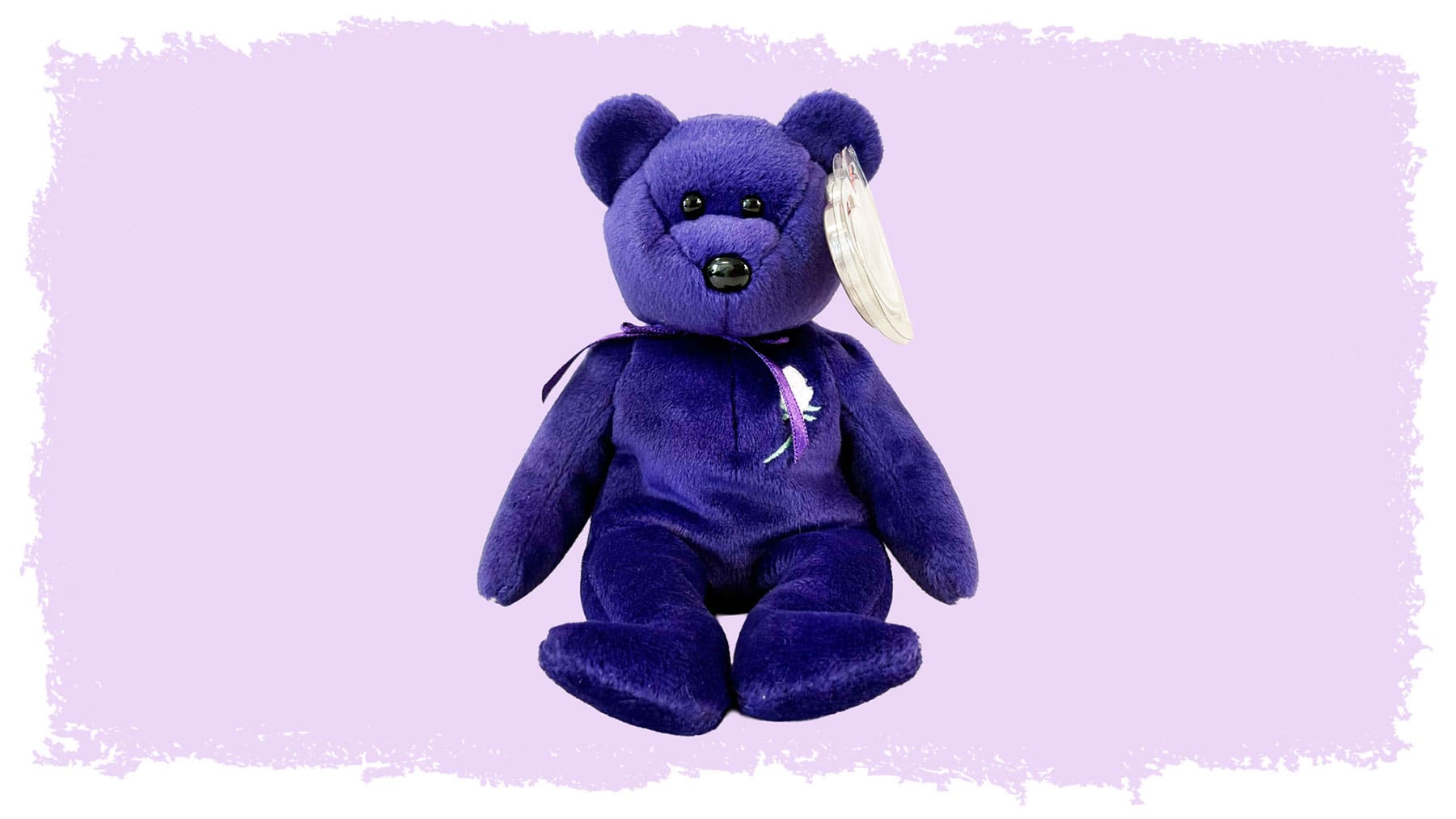
Today, even once highly sought-after Beanie Babies, such as the purple bear created to commemorate Princess Diana after her death, start at $30 on eBay. Warner’s personal bubble also later burst. In 2013, he was charged with tax evasion after it was discovered he hid assets in an undisclosed Swiss bank account. He pleaded guilty and was sentenced to probation and community service. He paid the back taxes and a $53 million civil penalty. He is still the CEO and owner of Ty Inc., which continues to sell plush animals, though with a different design.
For many people who worked on and collected Beanie Babies, the craze’s lasting legacy has little to do with the value of the toy or the legal troubles of its inventor. For Trivedi, she is proud that Beanie Babies were a product that “brought so many different people from so many different walks of life together.”
“What really made Beanie Babies what they are, are the people, the collectors,” Trivedi said. “Everybody knew what Beanie Babies were. Everybody had a Beanie Baby…It just brought joy to people. When I think back on the emails that we got, the letters that we received, there was so much joy.”
Related