





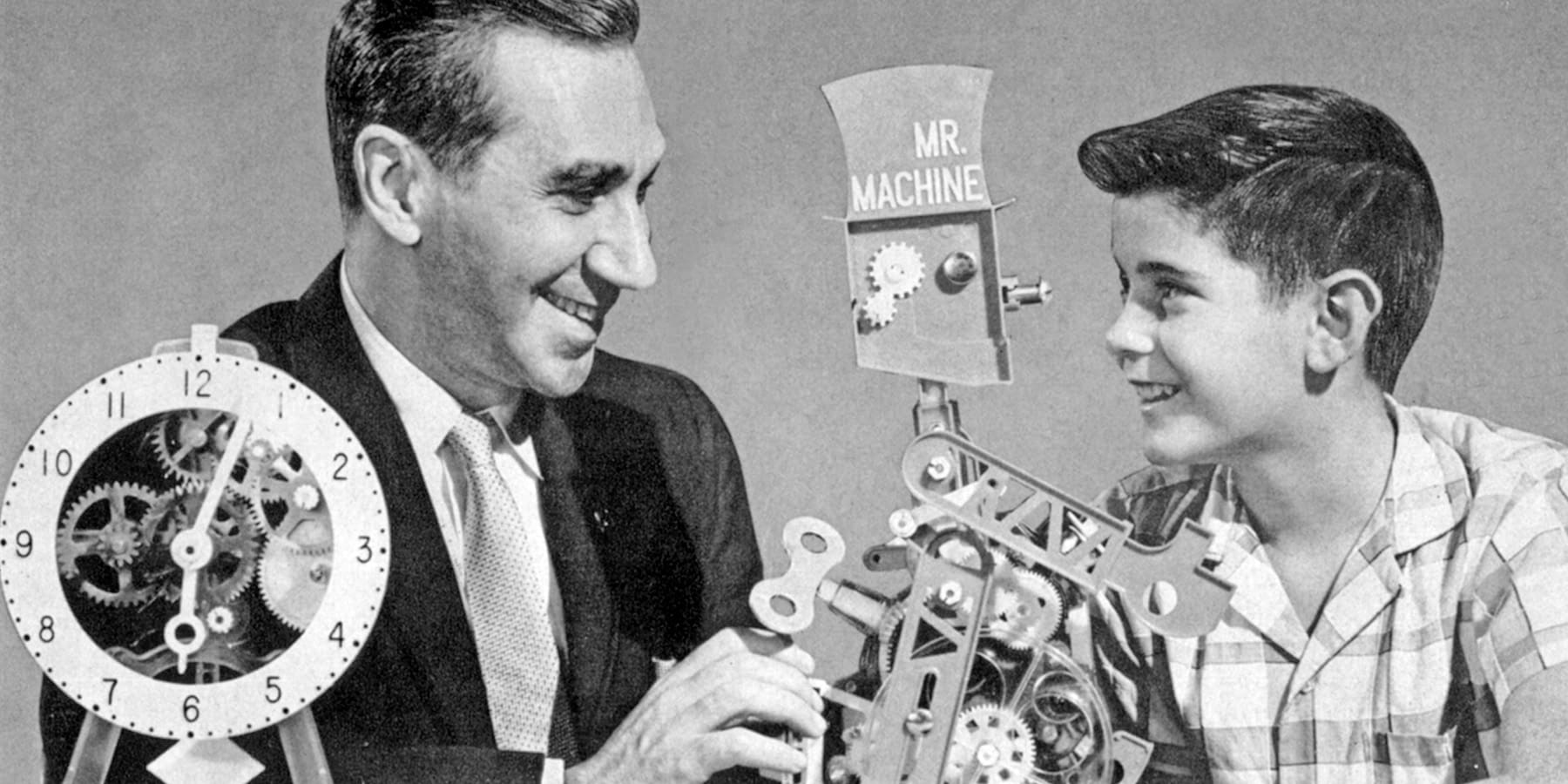
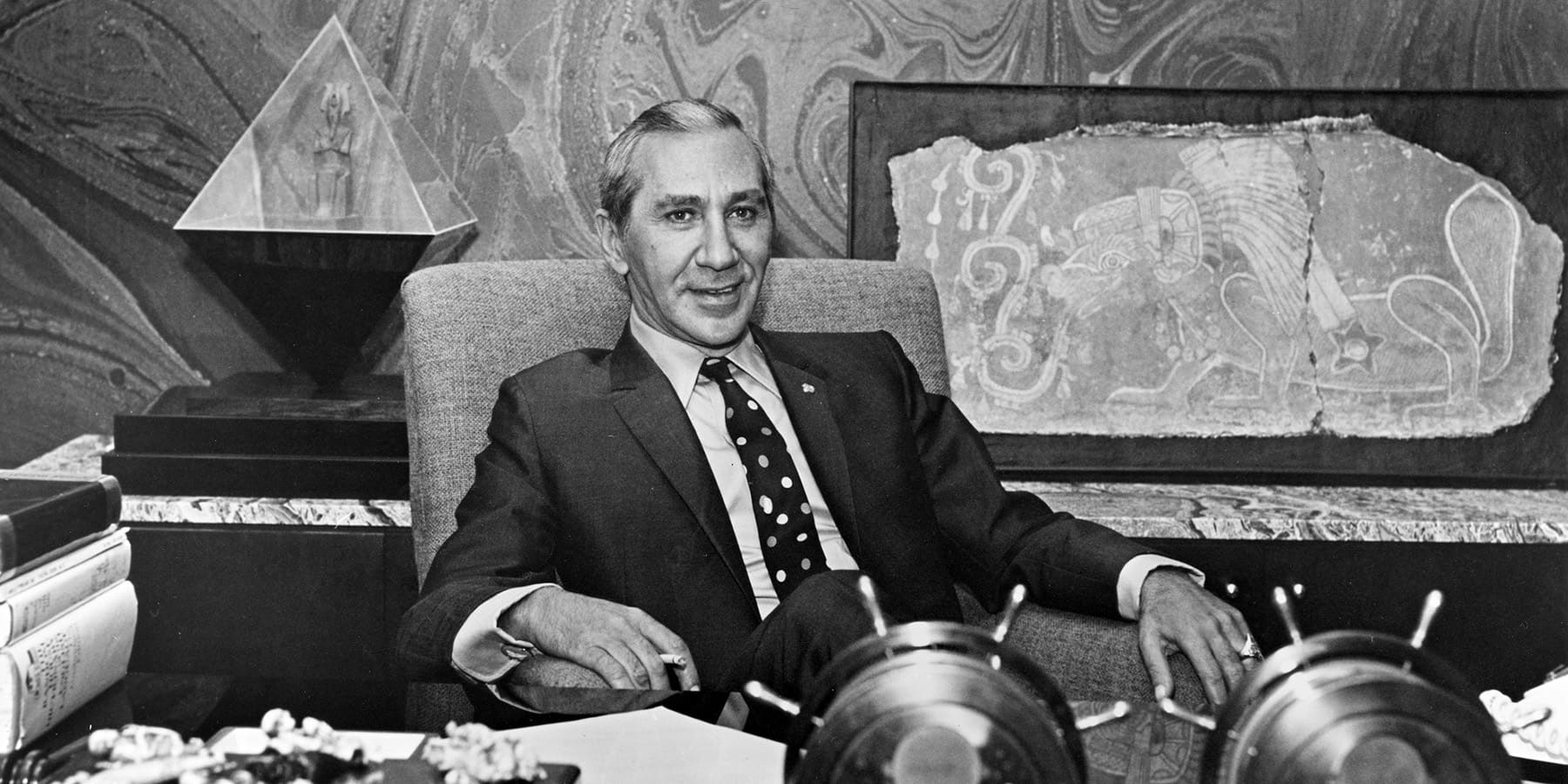
Chances are that at some point in your childhood you played with a toy or game dreamed up by the Chicago toy design and engineering firm called Marvin Glass and Associates (MGA). Games like Mouse Trap, Operation, and Simon and toys like Mr. Machine, Lite-Brite, and Rock ’Em Sock ’Em Robots were all born in Chicago. The man who started it all, Marvin Glass, transformed the toy industry by showing that ideas themselves could be big business.
For someone who would make a living shaping generations of childhood play, Glass’s own childhood was difficult, toy inventor and author Bill Paxton told Chicago Stories.
“He had a mother with mental illness that was abusive to him [and] a father that abandoned him,” Paxton said. “He knew poverty, and still he persevered.”
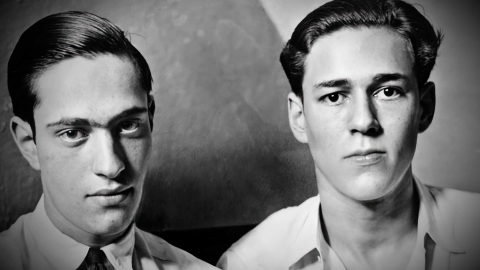
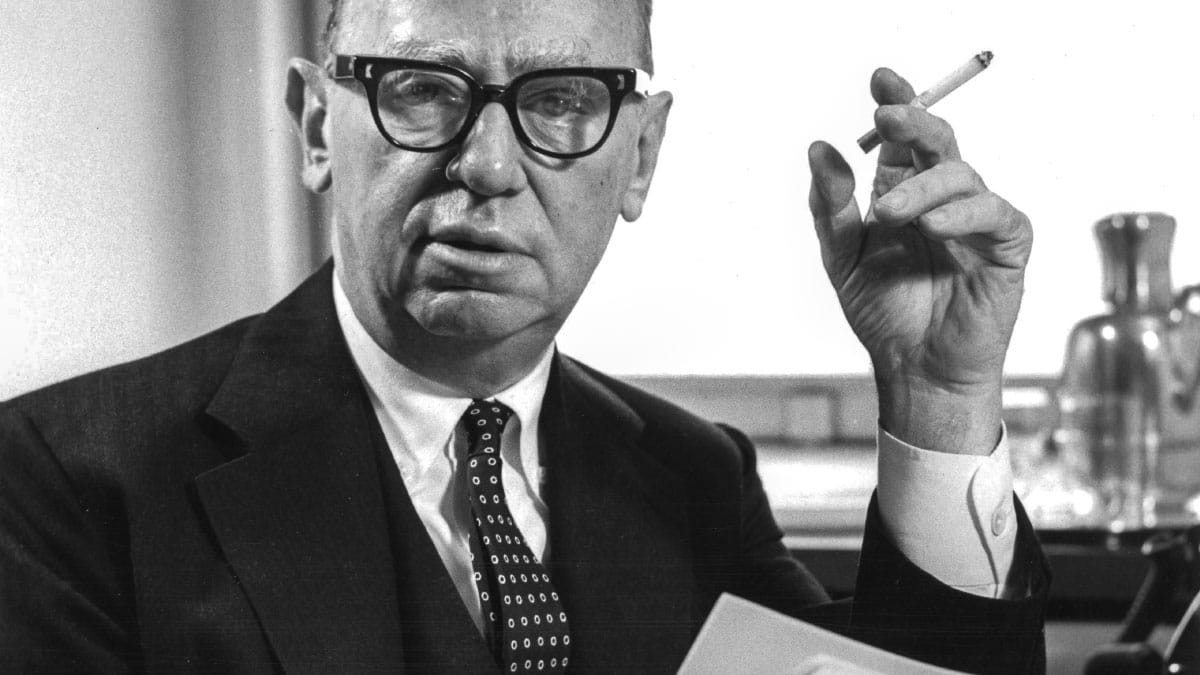
Born in 1914 in Evanston, Glass, “was a short, slight lad who found that his best way of making friends was by designing toys for the neighborhood gang,” says his New York Times obituary. After graduating from the University of Chicago, he took a job selling paper cutout sets for a toy company. He then struck out on his own, investing $1 million in a collection of small plastic Christmas tree ornaments. It was a flop, leaving him $300,000 in debt.
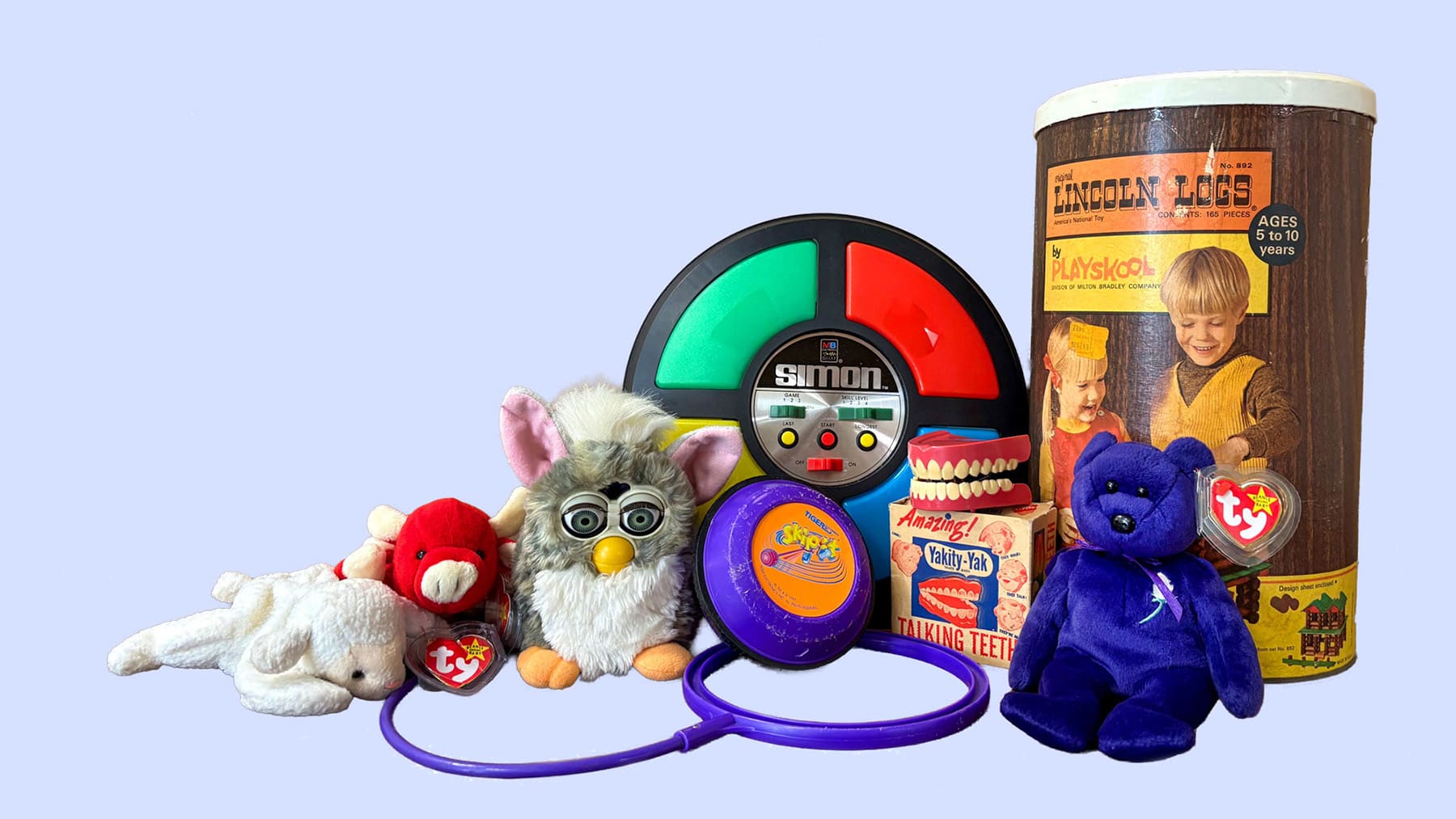
Glass’s big break came in 1948 when he joined forces with an inventor named Eddy Goldfarb. “It was a match made in heaven because Eddy knew plastics,” Paxton said. Glass and Goldfarb found success in novelties – prank or gimmick toys designed to make people laugh. Their first hit was a novelty item: Yakity-Yak Talking Teeth, a pair of chattering, wind-up teeth. Glass and Goldfarb sold the product to a toy manufacturer for $2,500. But they sold it outright, and though the talking teeth would earn millions of dollars, Glass and Goldfarb didn’t see a dime more.
Glass took the painful business lessons he learned from the Christmas ornaments and the talking teeth to heart. Manufacturing was expensive, and selling a toy outright could result in missed millions. So Glass invented a business for himself: independent toy design. His factory would not manufacture toys, but ideas. Similar to other creative industries, he would create a firm that invented toys and then license those ideas to toy manufacturers and make a profit from the royalty checks.
“You write a book, you make a record. If it sells a lot, you make a lot of money. If it doesn’t, you don’t make anything,” toy inventor Jeffrey Breslow told Chicago Stories. “[That is] what he wanted to do in the toy business.”
Their first successful novelty using the licensing model was the Busy Biddy Chicken – a small plastic hen that laid marbles for eggs.
“You press down on the chicken and the wings flap up, and it lays an egg,” Paxton said. “It was a surprise. People were like, ‘How is this happening? I have to get it.’ It was so small. It was nationwide. It was inexpensive. People couldn't have enough of it.”
Glass and Goldfarb eventually parted ways when the latter moved to California and became a prolific toy inventor in his own right. Glass hired more inventors, and his firm, Marvin Glass and Associates, became a leader in the burgeoning toy industry. By the mid-1950s and early 1960s, a booming economy and rapid suburban growth had transformed American family life. As children became the center of the household, consumer spending on toys surged.
“The advent of television changed the marketing of toys pretty dramatically,” McCracken Research Library Director Susan Fletcher told Chicago Stories. “This is a pretty dramatic shift in turning children even more into consumers than they already were and totally bypassing parents as the gatekeeper of the desired products that can come into a child’s life.”
One of MGA’s first major successes came in 1960 with a toy called Mr. Machine – a brightly colored, wind-up robot whose transparent body revealed a maze of moving mechanisms. In two years, it grossed $14 million in sales. The manufacturer, Ideal Toys, struggled to keep up with demand.
“After the massive success of Mr. Machine, all the companies are like…‘What's the next big hit? It’s going to be a Marvin Glass item. We want the next Mr. Machine,’” Paxton said.
Throughout the 1960s and ’70s, Glass’s firm delivered hit after hit. There was Robot Commando and a mechanical dinosaur called King Zor. Then came the popular three-dimensional board game Mouse Trap, inspired by the complex machines of cartoonist Rube Goldberg. The firm also created two popular games that are still sold today: Rock ’Em Sock ’Em Robots and Operation, followed by hits Lite-Brite and Ants in the Pants.
With their success, MGA moved into a state-of-the-art building on LaSalle Street. Because an idea for a toy could yield a major payday for inventors, Glass was serious about secrecy and security.
“When somebody was working on a toy or game, at the end of the day, it had to be locked up into a safe every night – a big bank vault safe,” Paxton said. “When at a toy fair, they would have briefcases…handcuffed to the employee’s wrist.” According to Paxton, while some of this was paranoia on Glass’s part, a great deal of it was showmanship. During client pitch meetings, Glass covered the toy or game with a “shroud” and revealed it on a silver platter. It made for an energetic work environment.
“He was P. T. Barnum. He was the showman,” Paxton said. “He would go on the intercom and play marching music and say, ‘Rally the troops!’...which would cause people to just roll their eyes. ‘Oh, that’s Marvin being Marvin.’”
Though he dreamt up toys for children during work hours, in the evenings, he was reportedly a regular on the party circuit at Hugh Hefner’s Chicago Playboy Mansion, even dating one of Hefner’s secretaries.
“He was an unbelievable character. You never met anybody like that in your life,” Breslow said.
By the early 1970s, MGA was earning nearly $9 million per year, or about $75 million today. At a time when companies were partnering with entertainment franchises and licensing popular characters for the next “must-have” toy, Breslow said that Glass wanted his firm to focus on original toys. But that changed when a friend introduced him to stuntman Evel Knievel when he was in Chicago for a motorcycle jump at the Chicago International Amphitheater. Glass got a meeting with Knievel and convinced him to sign an exclusive deal for all rights to toys, games, and other products. Just before Christmas 1973, the hugely successful Evel Knievel Stunt Cycle hit the market.
“If you grew up in the ’70s as a kid, you wanted that toy,” Breslow said. “We made a fortune on it. We paid [Knievel] a fortune on it, and it was very successful.”
But as the toy raked in money that holiday season, Marvin Glass’s health was declining. In July of 1973, Glass suffered a stroke. He died six months later at his home in Evanston on January 7, 1974 of stroke complications.
While Marvin Glass and Associates would continue to operate under new leadership for a few more years, eventually the inventors went their separate ways and some started their own firms. But Glass’s legacy is undeniable. According to his obituary, he “was credited with putting 500 new toys on the market within 10 years.”
“He was a dynamic personality. He just was,” Breslow said. “I never met anybody like that before or never will again. He was that kind of a character.”
Related