

















Immigrants have long been tasked with some of the most difficult and dangerous work in America. This was certainly true for Irish immigrants who arrived in America in the mid-19th century fleeing the devastation of the Great Famine. Arriving with few resources and fewer options, they took grueling, poorly paid jobs that few were willing to do – jobs that helped build the infrastructure for an ever-expanding United States. As Chicago’s Irish immigrant population swelled and the country pushed westward, one canal project proved to be deeply dangerous work.
The idea for a canal connecting the Great Lakes with the Mississippi River was first planted in the 17th century when explorers Louis Jolliet and Jacques Marquette encountered a portage that required travelers to carry their boats and supplies. By the early- to mid-1800s, the federal government and the relatively new state of Illinois sought to create such a waterway with the Illinois and Michigan (I&M) Canal, opening an important transportation route.
“You think of how central this was to the making of America…of the European push out through the American Midwest,” Northern Illinois University history Professor Sean Farrell told Chicago Stories. “These canals were absolutely central to this. This is the way that product moved. This is what connected things to stitch together the American capitalist economy that emerges.”
Construction began on the I&M Canal in 1836, though the first year was mostly a bust as contractors struggled to find workers willing to do the work, and construction halted altogether after the financial panic of 1837. The work began in earnest in 1845 as a wave of Irish immigrants was arriving in America during the Great Famine. Several different ethnic groups helped dig the canal, including Scandinavians, French Canadians, Germans, Native Americans, and enslaved people, “but the Irish immigrants who previously worked on the Erie Canal played the lead role in this backbreaking work,” according to the Illinois Department of Natural Resources.
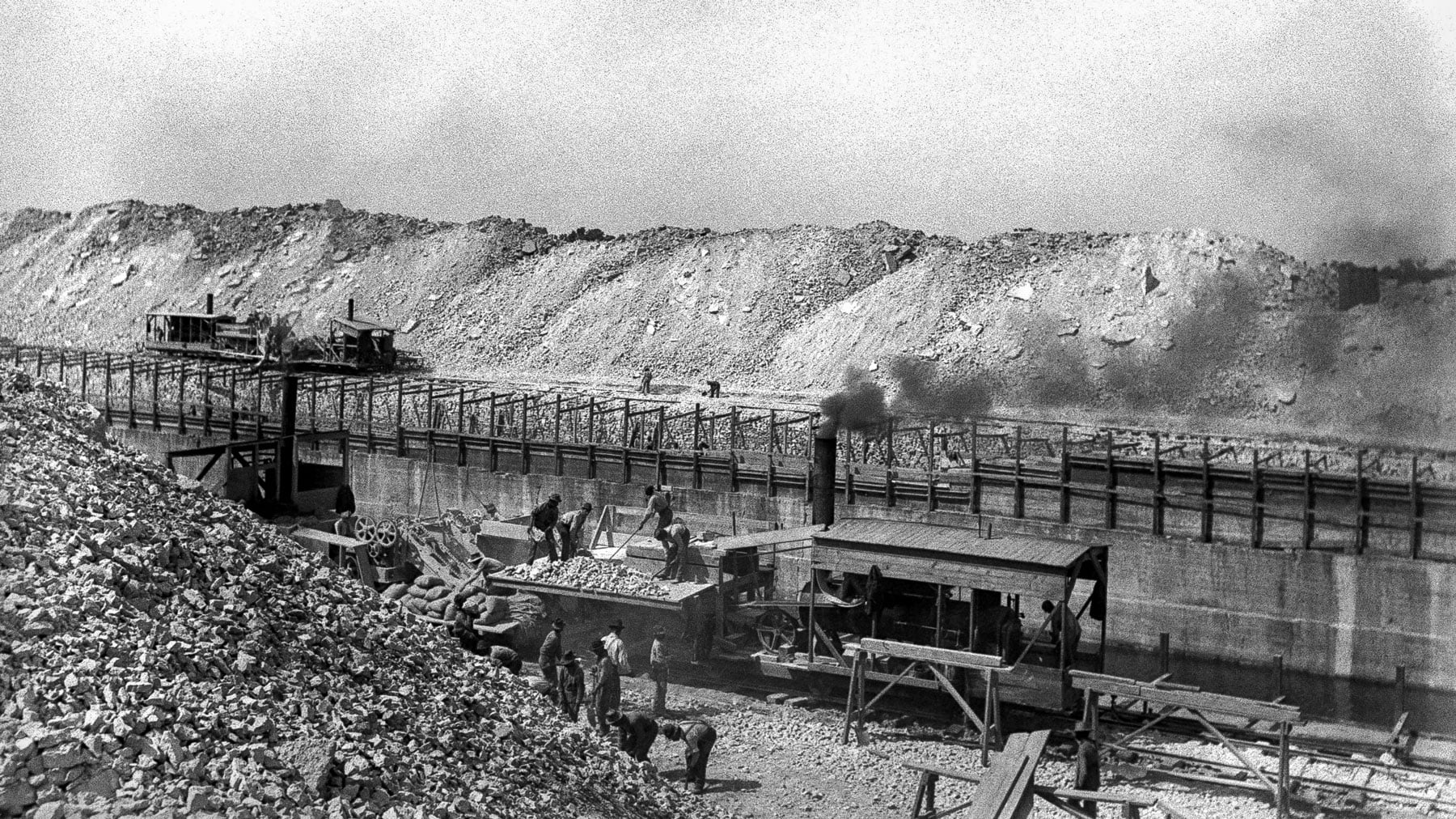
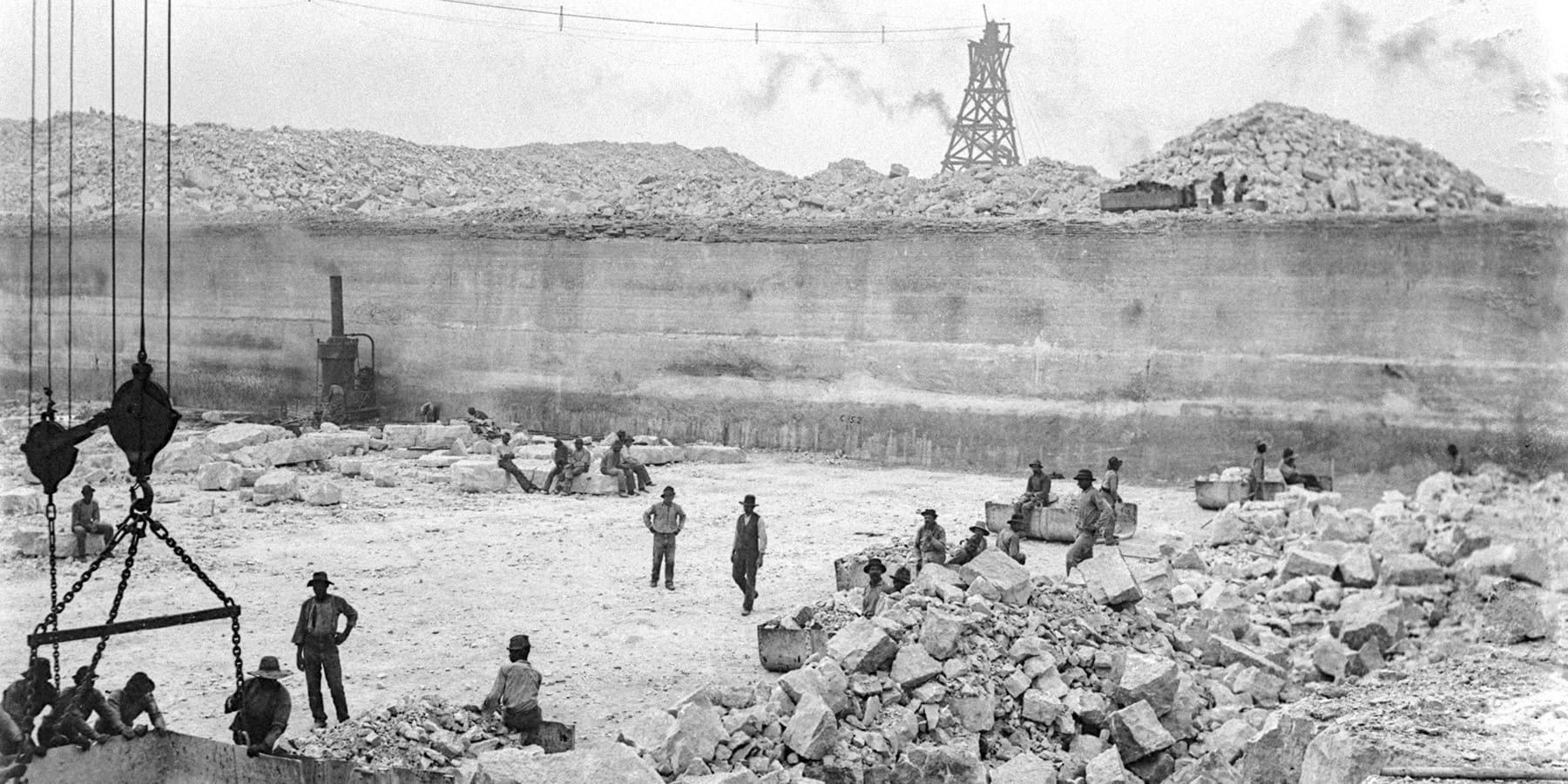
The work was indeed backbreaking. Beginning at the South Branch of the Chicago River in Bridgeport and extending to LaSalle, Illinois, workers had to dig the 96-mile canal without the benefit of steam shovels or dredging equipment. For 12 to 14 hours per day, laborers toiled in the mud, using shovels, wooden scoops, and wheelbarrows to carve a trench in the earth that was 60 feet wide and 6 feet deep. They were paid a dollar per day.
“It was dangerous. They had to blast with dynamite. They had to dig out swamps that released mosquitoes that led to ague, which is a form of malaria,” historian Eileen McMahon told Chicago Stories. “The water was bad. A cholera epidemic took at least 600 canal workers.”
If their working conditions were abysmal, their living conditions were not much better. Workers built wooden shantytowns along the canals, living in overcrowded shacks, sometimes with their wives and children.
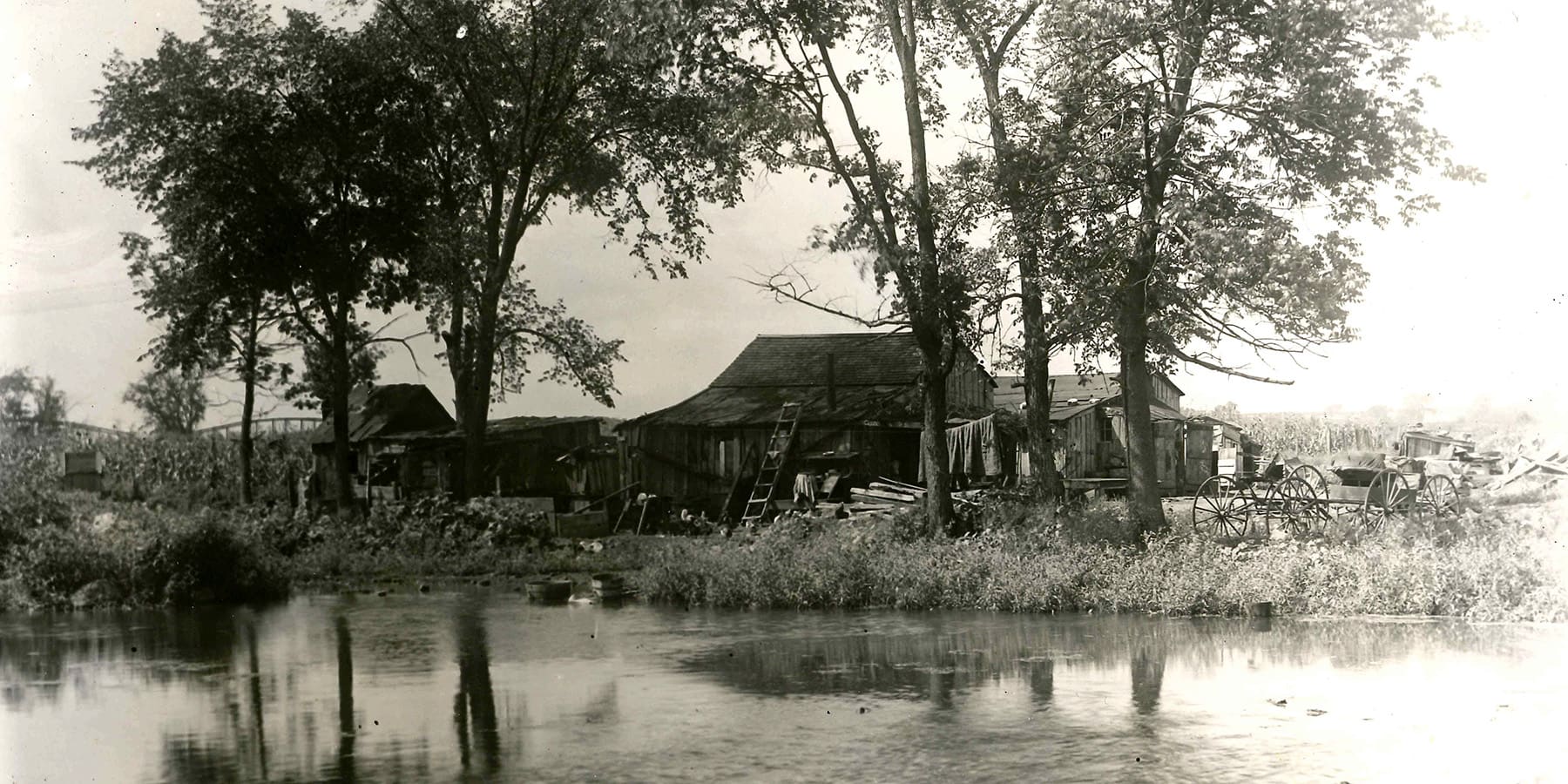
The work was also unreliable. The project was at the mercy of the elements – storms, floods, snow, and sun – and whether or not the workers were paid depended on economic conditions. If government funds didn’t reach the contractors, “Work could end at any time because the money ran out. This is a very unstable and hard environment to live in,” said Farrell.
That insecurity sometimes led to conflict between workers who were left to fight over scraps of work. One longstanding conflict between two different Irish factions known as the Corkonians and the Far-Downers boiled over to the point that the local sheriff had to form a posse to put an end to the violence. According to the LaSalle County Historical Society, 7 people were killed and 60 were arrested.
“It’s a very violent and insecure environment. They had that in common with lots of other populations. Whether free Black or other immigrant peoples in the 19th century – who were the bottom of the social rung in a fast-developing, unregulated capitalist economy – they get treated pretty roughly most of the time. The fact that they persevered and made it through I think is a testament to their own strength, but also the lack of options as well,” Farrell said.
The I&M Canal was completed in 1848, creating an important route for Midwestern growth and westward expansion. But the cost in human lives was heavy. More than 1,000 workers died on the project, many of them Irish. Some of their graves can still be found at St. James at Sag Bridge Cemetery in Lemont, Illinois.
The I&M Canal ultimately closed in 1933 with the completion of the Illinois Waterway, a broad system that replaced it as a shipping route. Today, portions of the old canal and towpath have been preserved as the Illinois & Michigan Canal State Trail. As for the workers, some Irish immigrants went on to help build railroads that helped further connect the country, while others moved into the city to work industrial jobs at steel mills, lumberyards, or meatpacking plants.
“It was a matter of survival, obviously,” McMahon said. “But I think that there was a sense of hope, too, that America [held] a promise for them.”
Related