












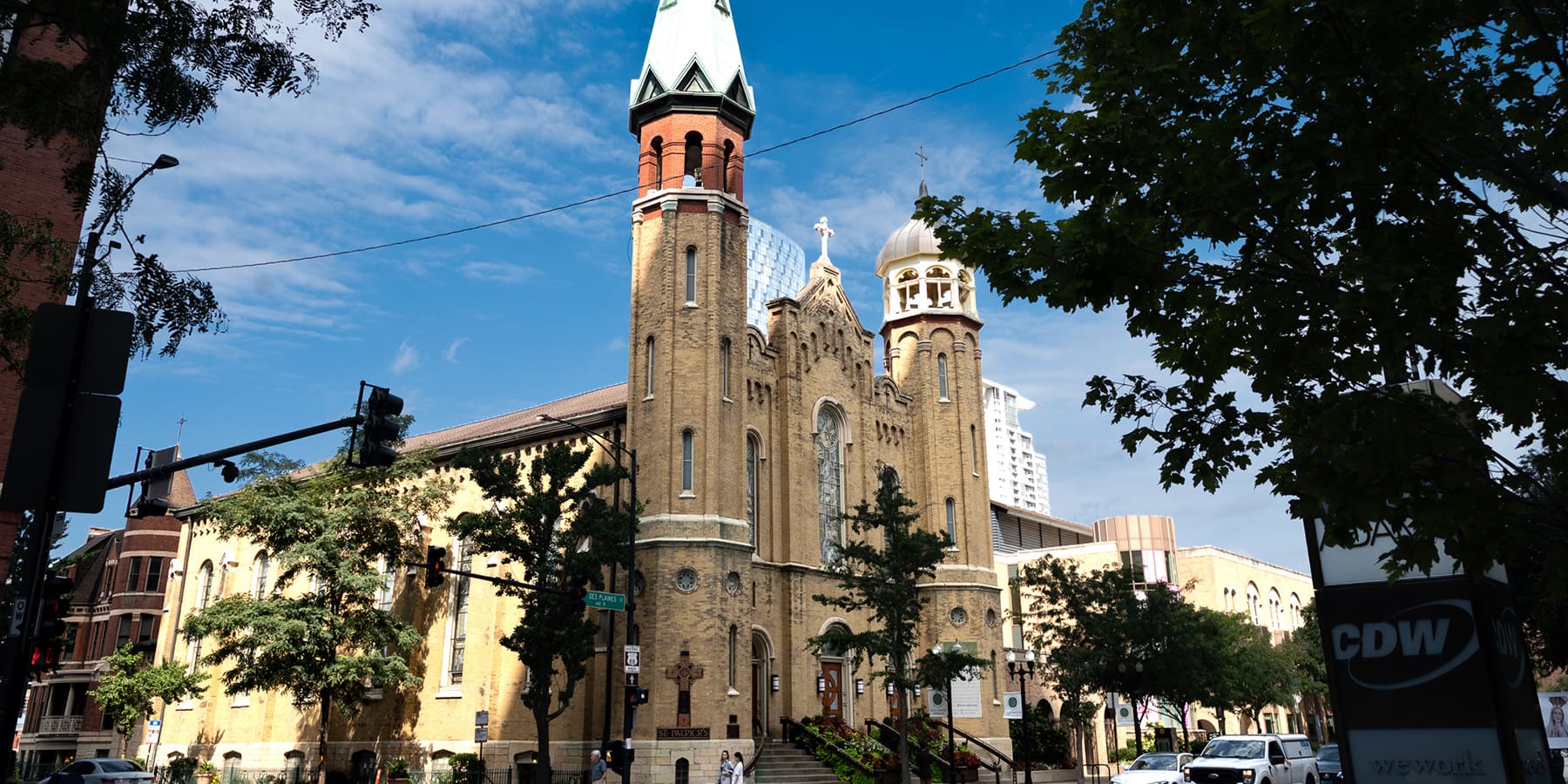
By 1860, Chicago had the fourth-largest Irish population in the United States. Many of the city’s Irish Catholics found a home at Old St. Patrick’s Church. Built with pennies from those who had few to spare, the parish became a refuge for Irish immigrants who had pushed to what was then the outskirts of the city – a city that wanted little to do with them. Decades after the first cornerstone was laid, a stained glass artist inspired by Celtic art reimagined the building’s interior. “When you walk into Old St. Patrick's Church today, you immediately know there is something distinctively Irish,” Irish Chicago expert Eileen Durkin told Chicago Stories.
Photography by Ken Carl for WTTW
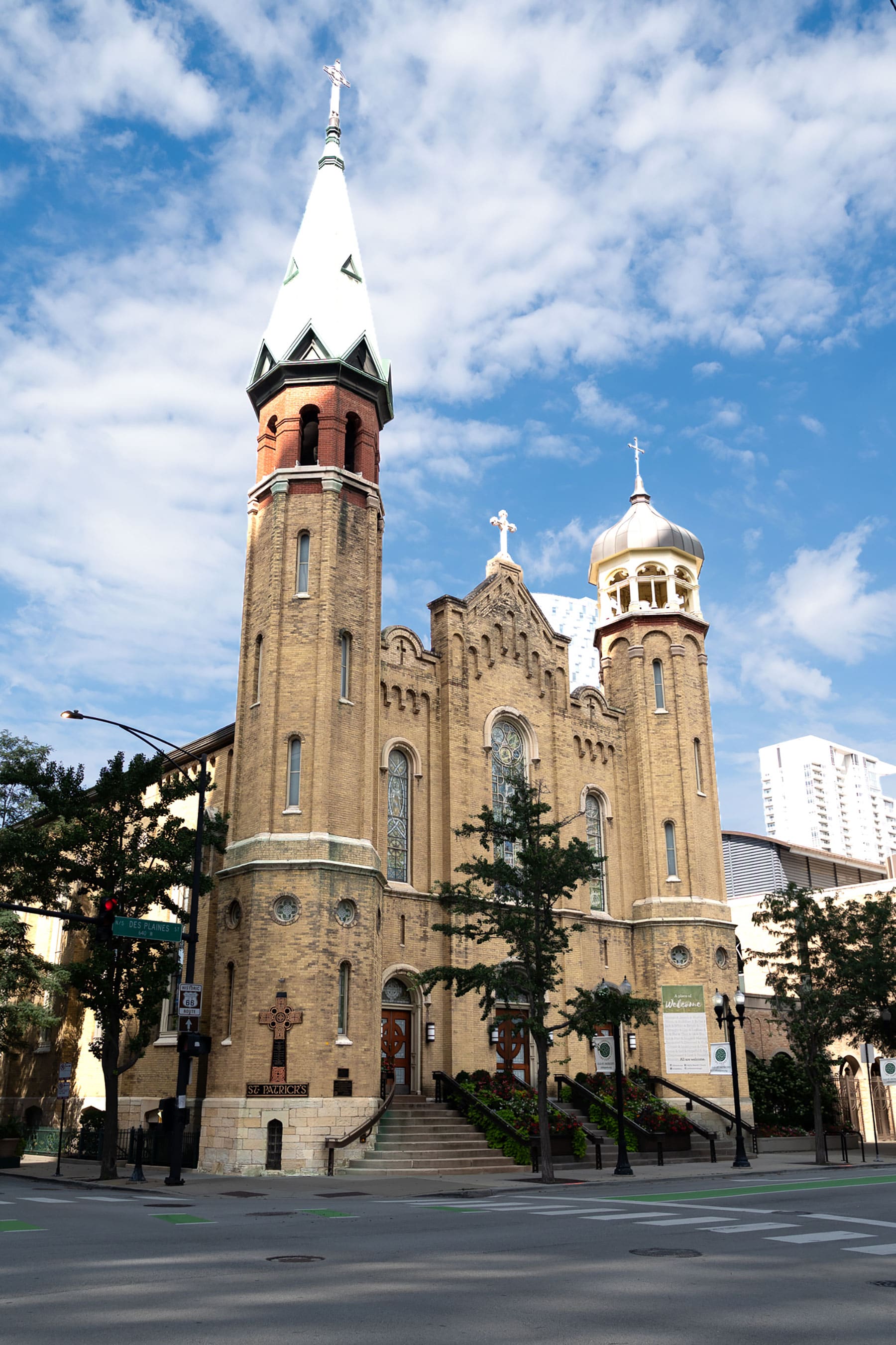
Old St. Patrick’s Parish was founded on Easter morning in 1846 as the first English-speaking parish in the city, according to the church’s history. A cornerstone for the church was laid in 1853, and the building was dedicated on Christmas Day in 1856.
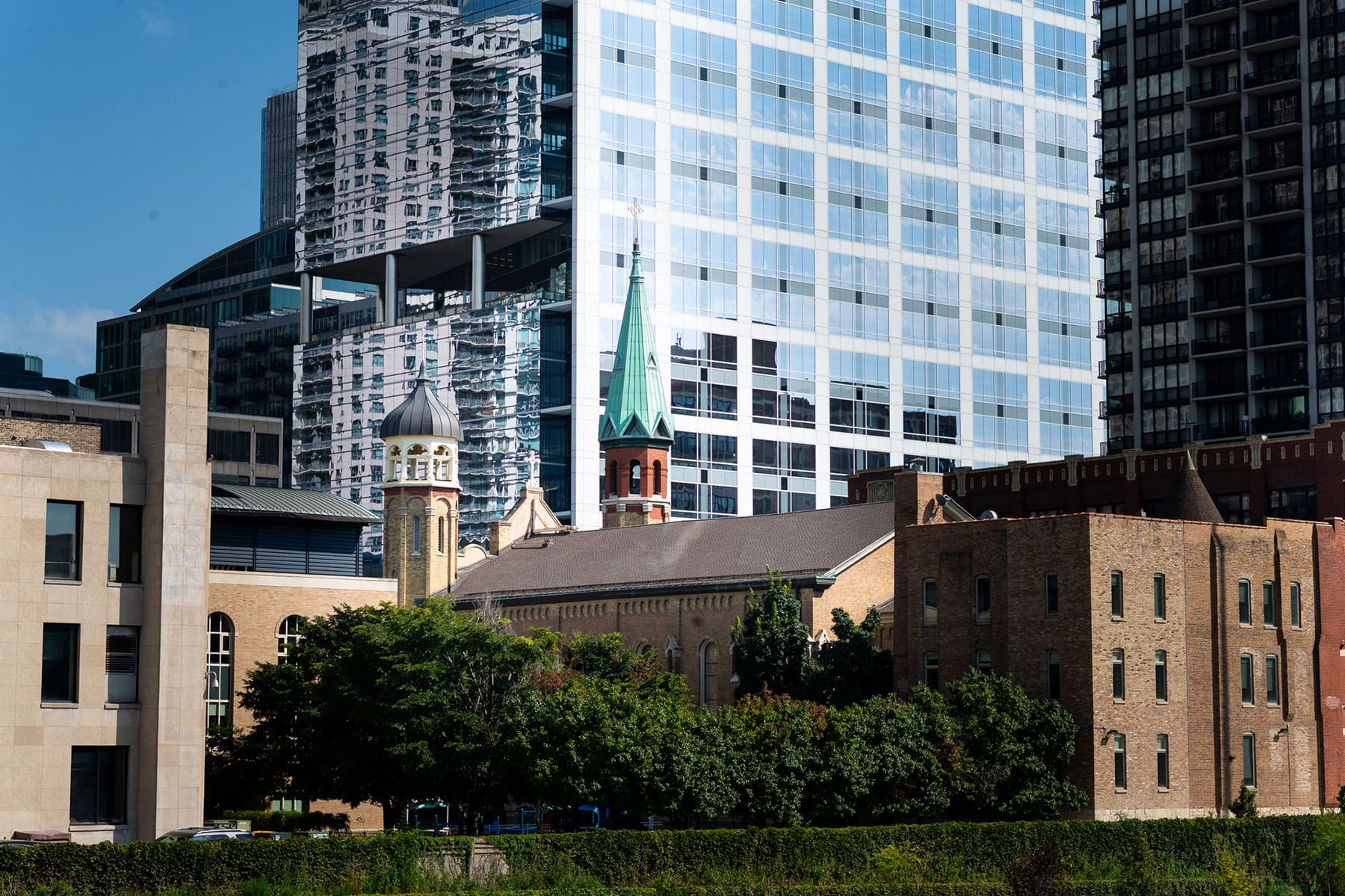
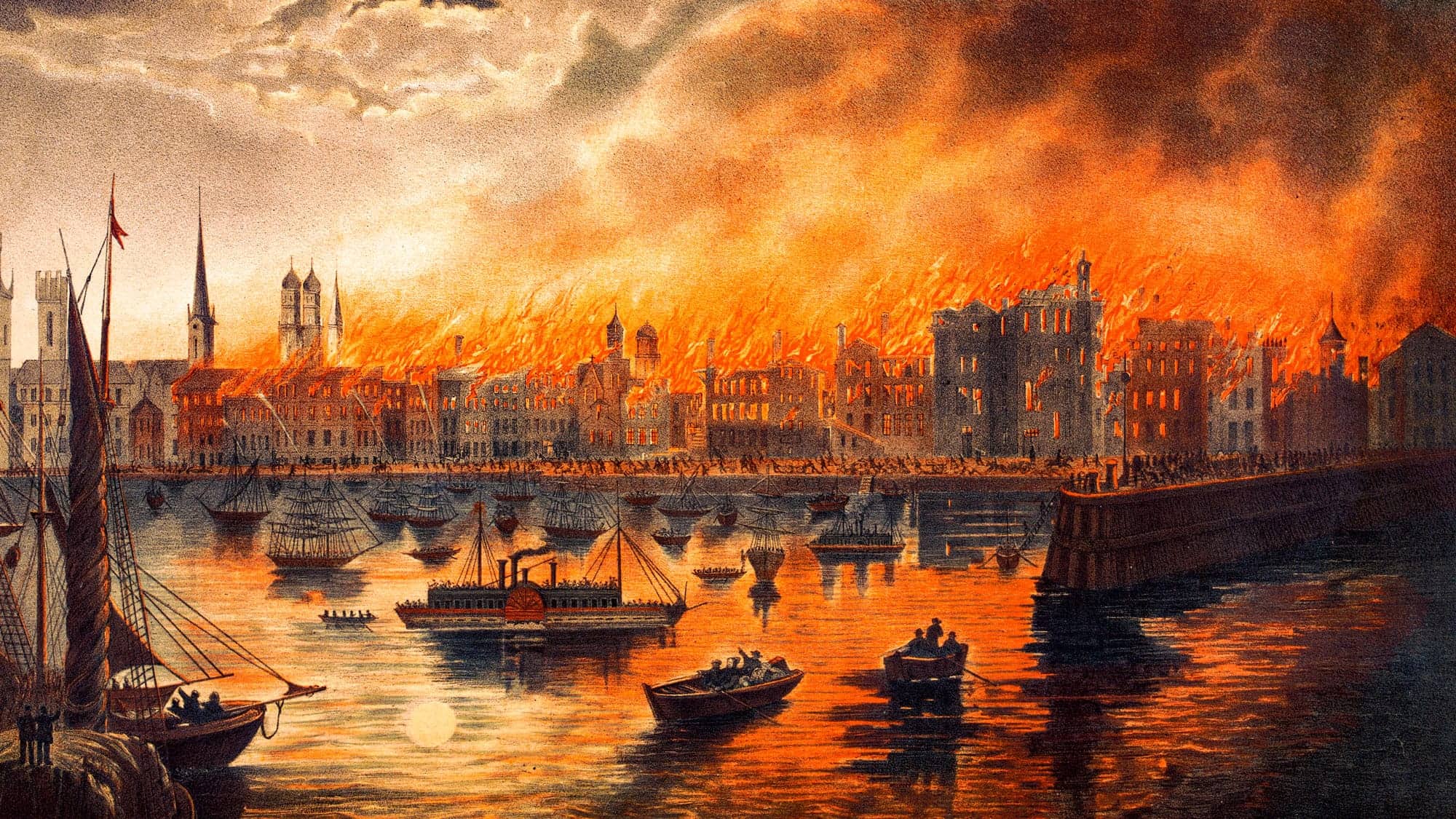
Architects August Bauer and Asher Carter designed Old St. Pat’s in the Romanesque style. Located at Adams and Des Plaines streets just east of I-90, it is the oldest church in the city of Chicago and was one of the few buildings to survive the Great Chicago Fire of 1871.
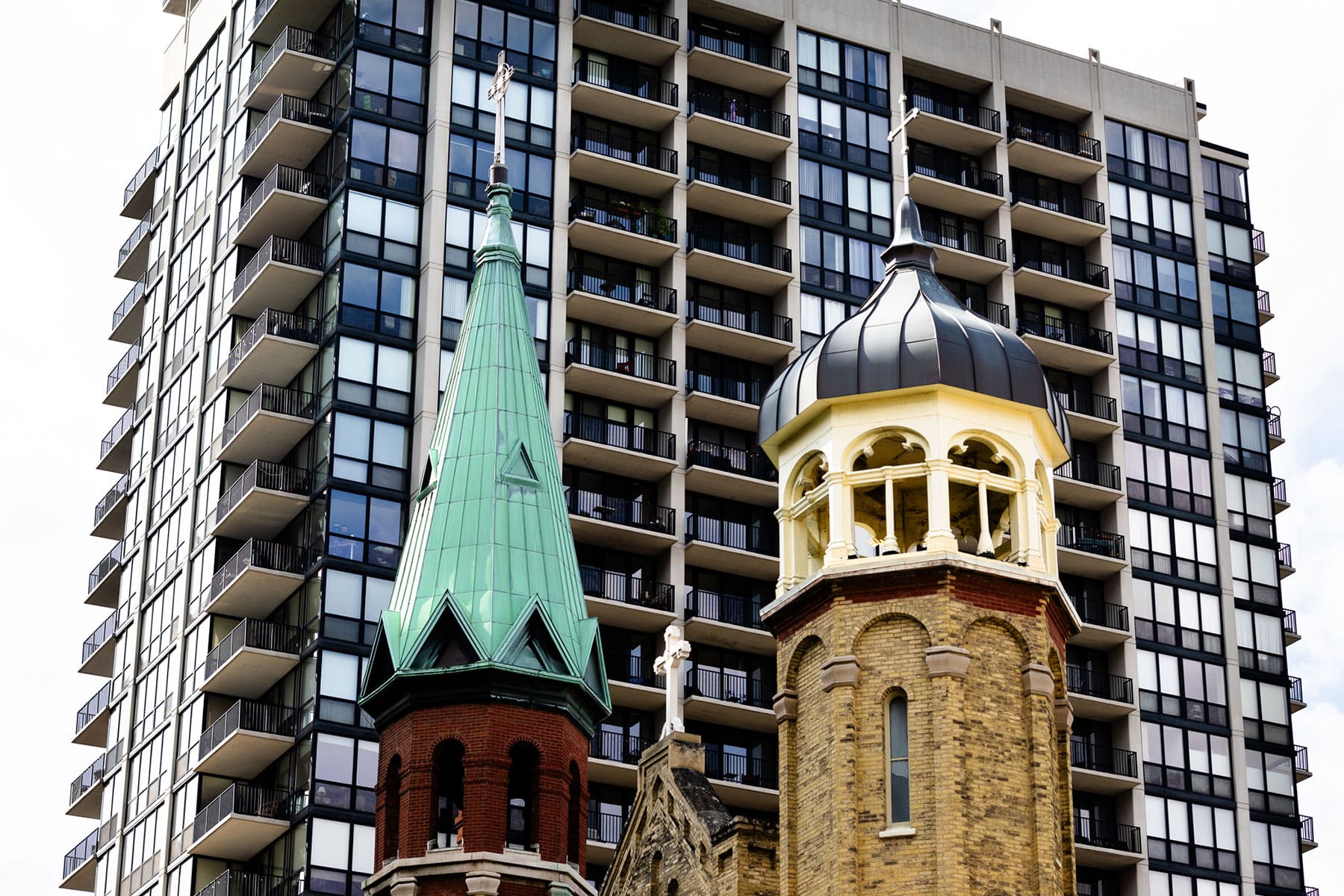
In 1885, the spires were added. The south spire (left) is said to represent the Western Catholic Church. With its onion dome, the north spire represents the Eastern Catholic Church. Together, the two spires are meant to represent the universality of the Catholic Church.
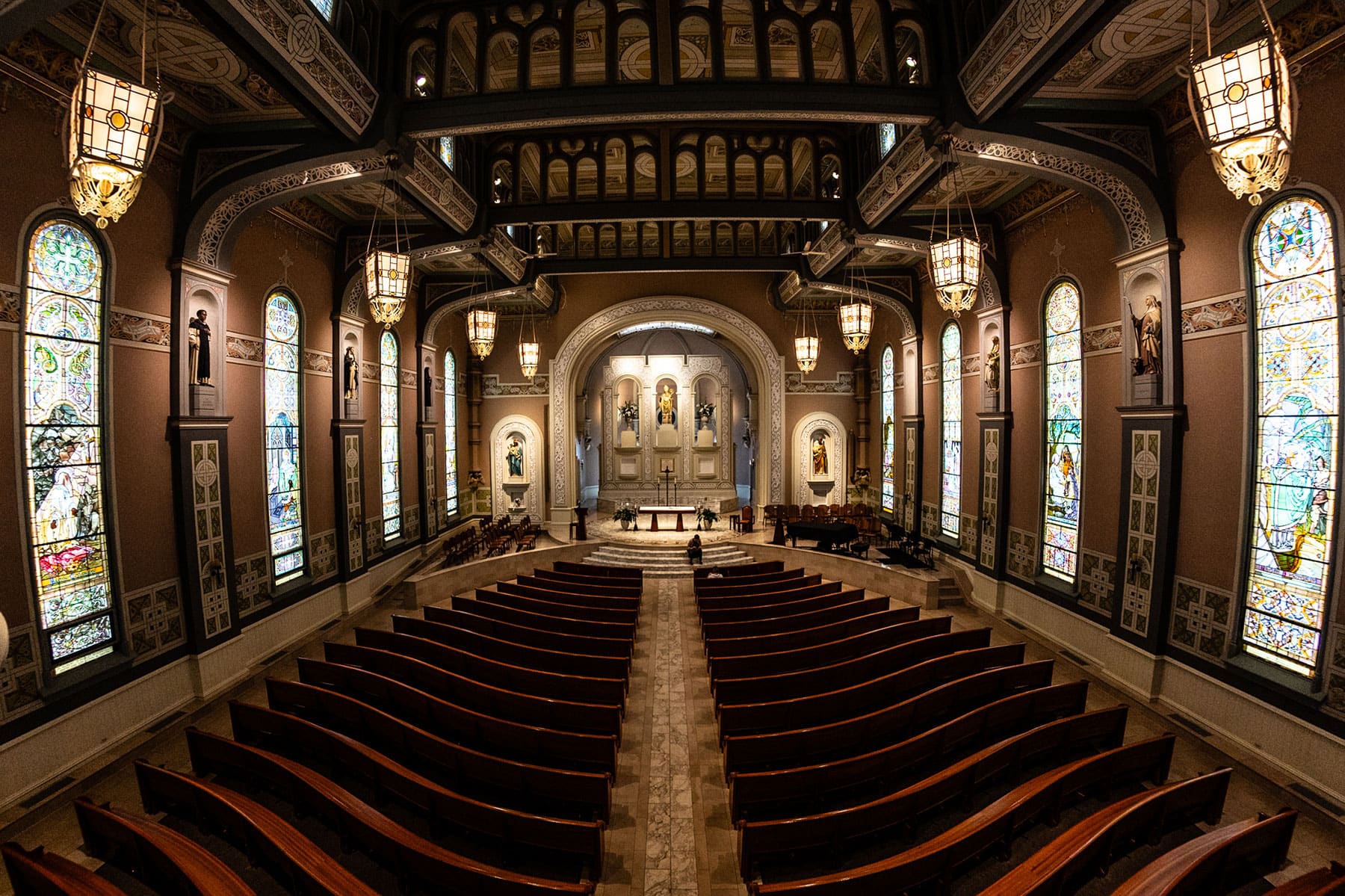
Beginning in 1912, artist Thomas O’Shaughnessy began installing 15 stained glass windows – 6 on each side, and 3 on the eastern facade – as part of a renovation of the building’s interior.
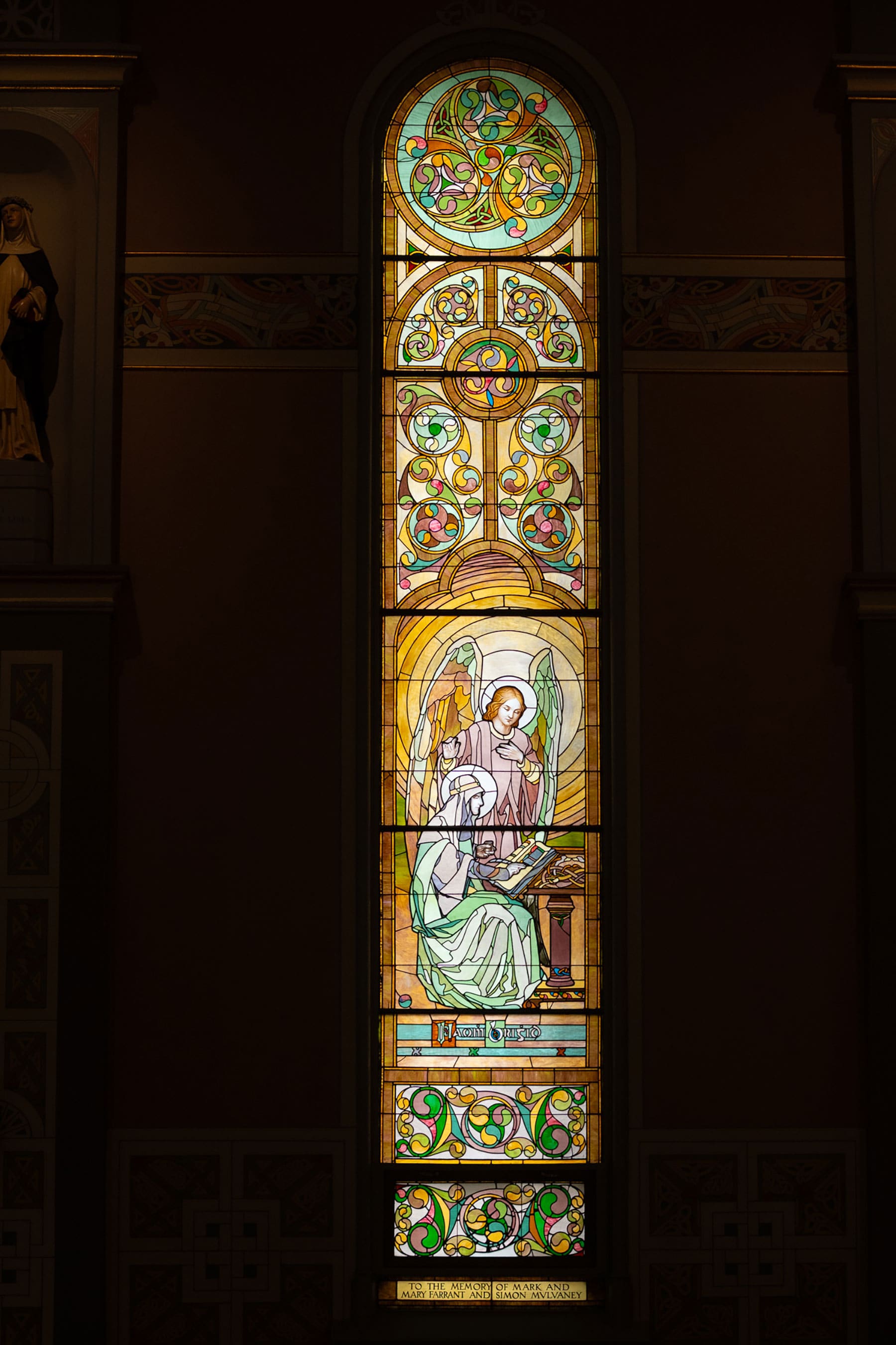
O’Shaughnessy studied stained glass at the School of the Art Institute, studying under Louis Millet, who designed windows for Louis Sullivan’s Auditorium Building, as well as the dome in the Grand Army of the Republic Hall at the Chicago Cultural Center.
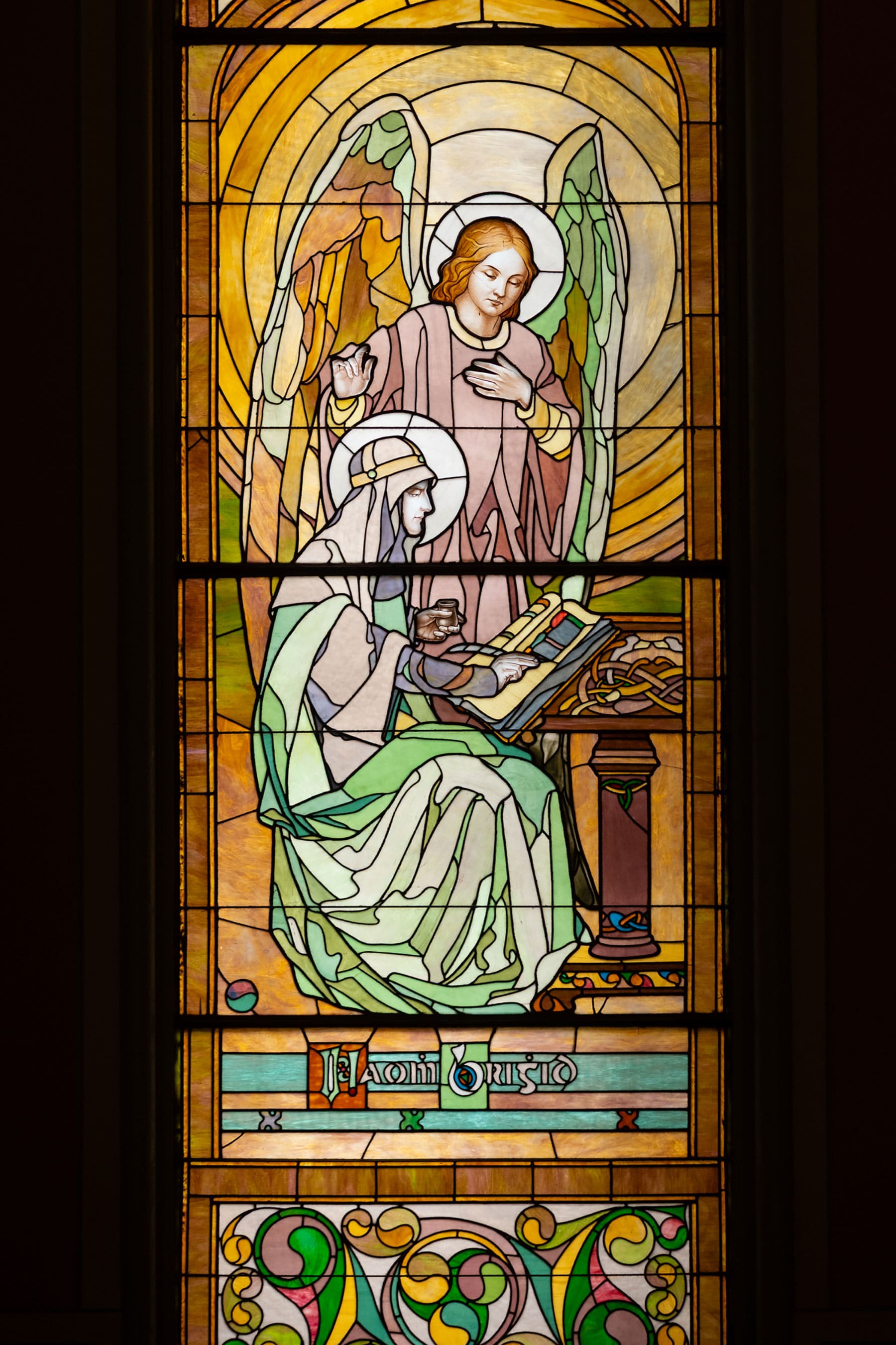
This window depicts “Naom Brid,” or St. Brigid, who is the mother saint of Ireland. (Noamh is Celtic for “saint.”) Along with Saints Patrick and Columba, St. Brigid is one of three national saints of Ireland.
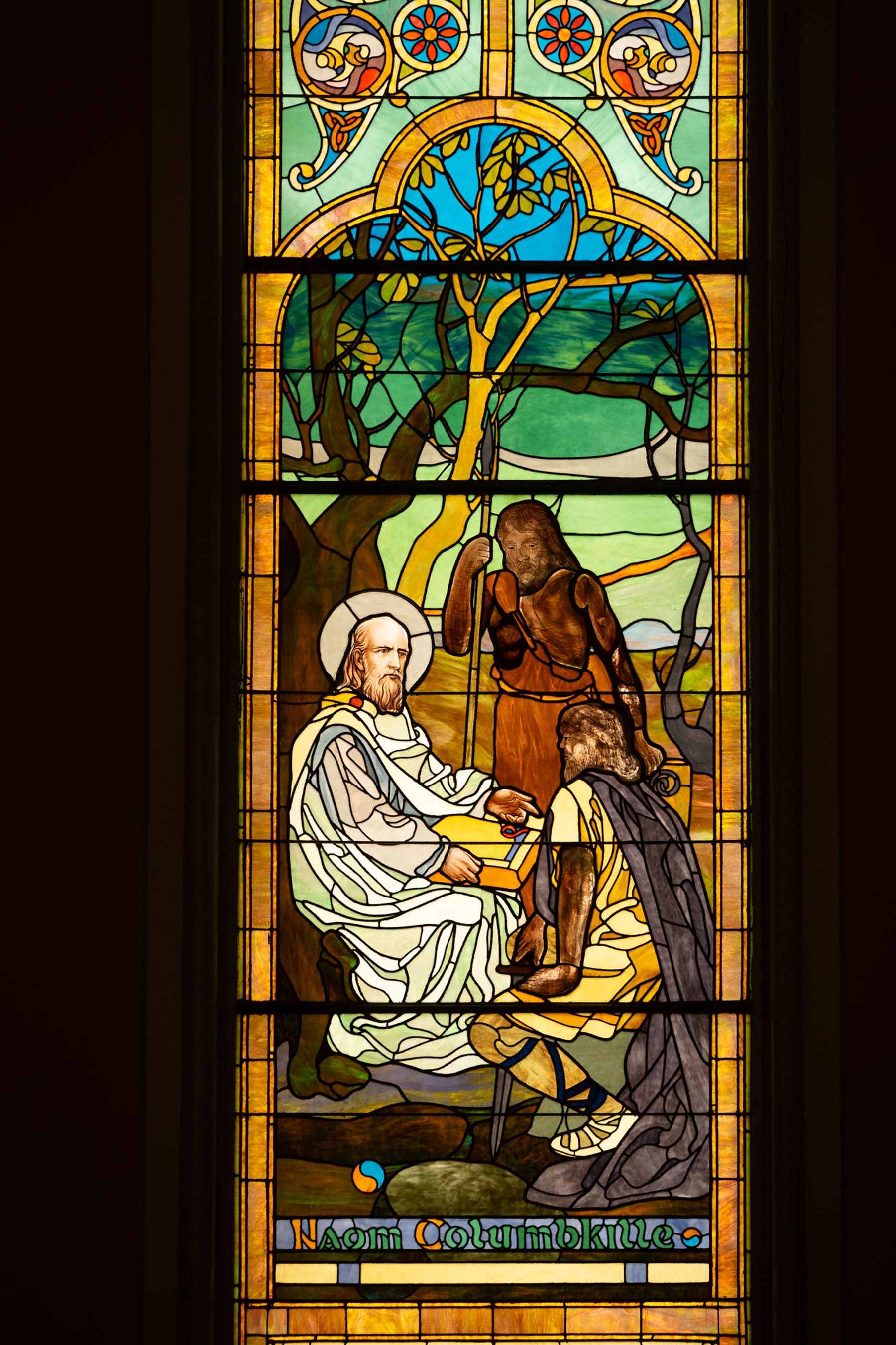
This window depicts St. Columba, a 6th-century Irish figure who spread Christianity in Scotland and is said to have encountered the Loch Ness monster.
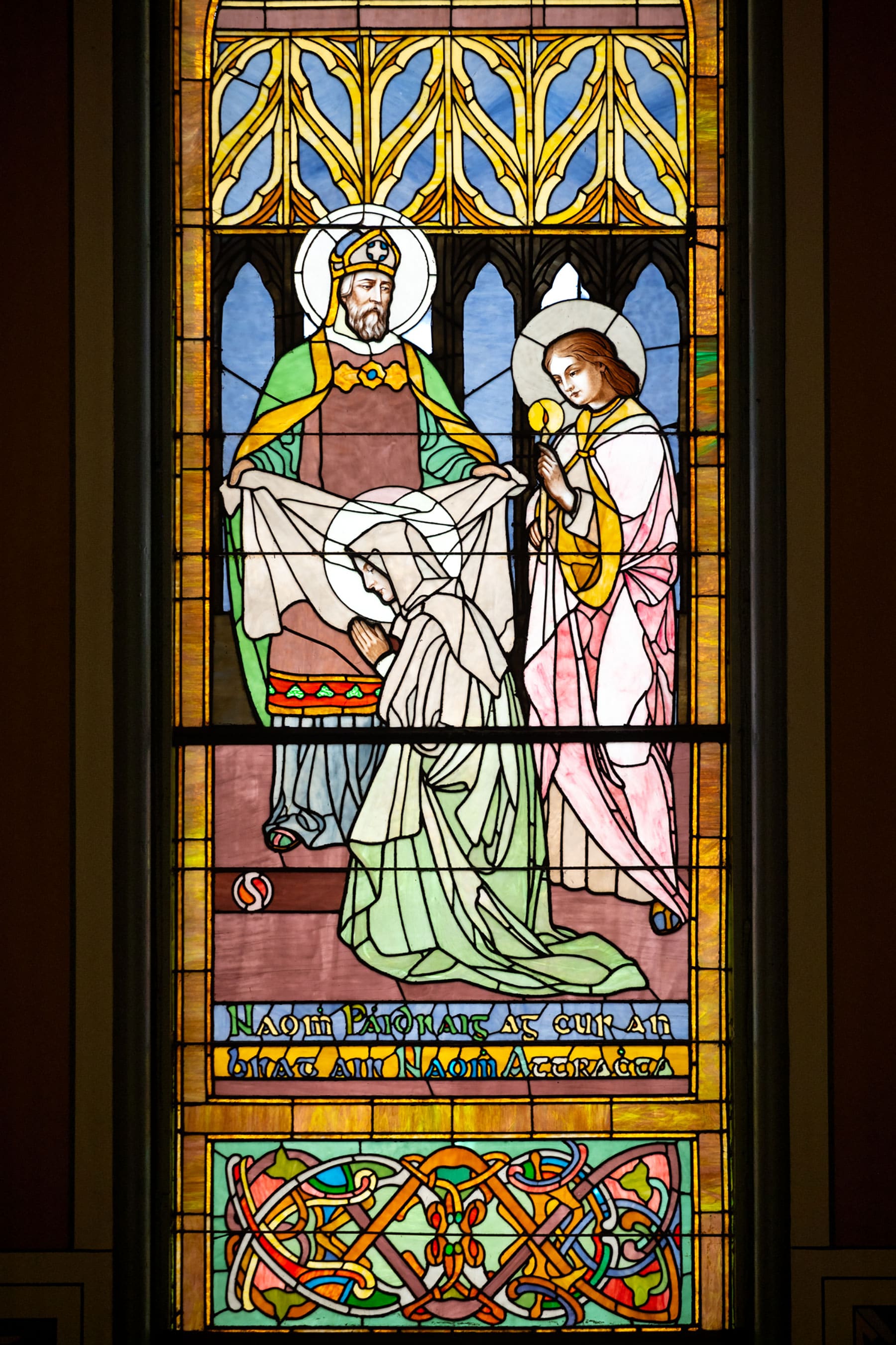
And this one depicts St. Attracta taking her vows before St. Patrick, the patron saint of Ireland.
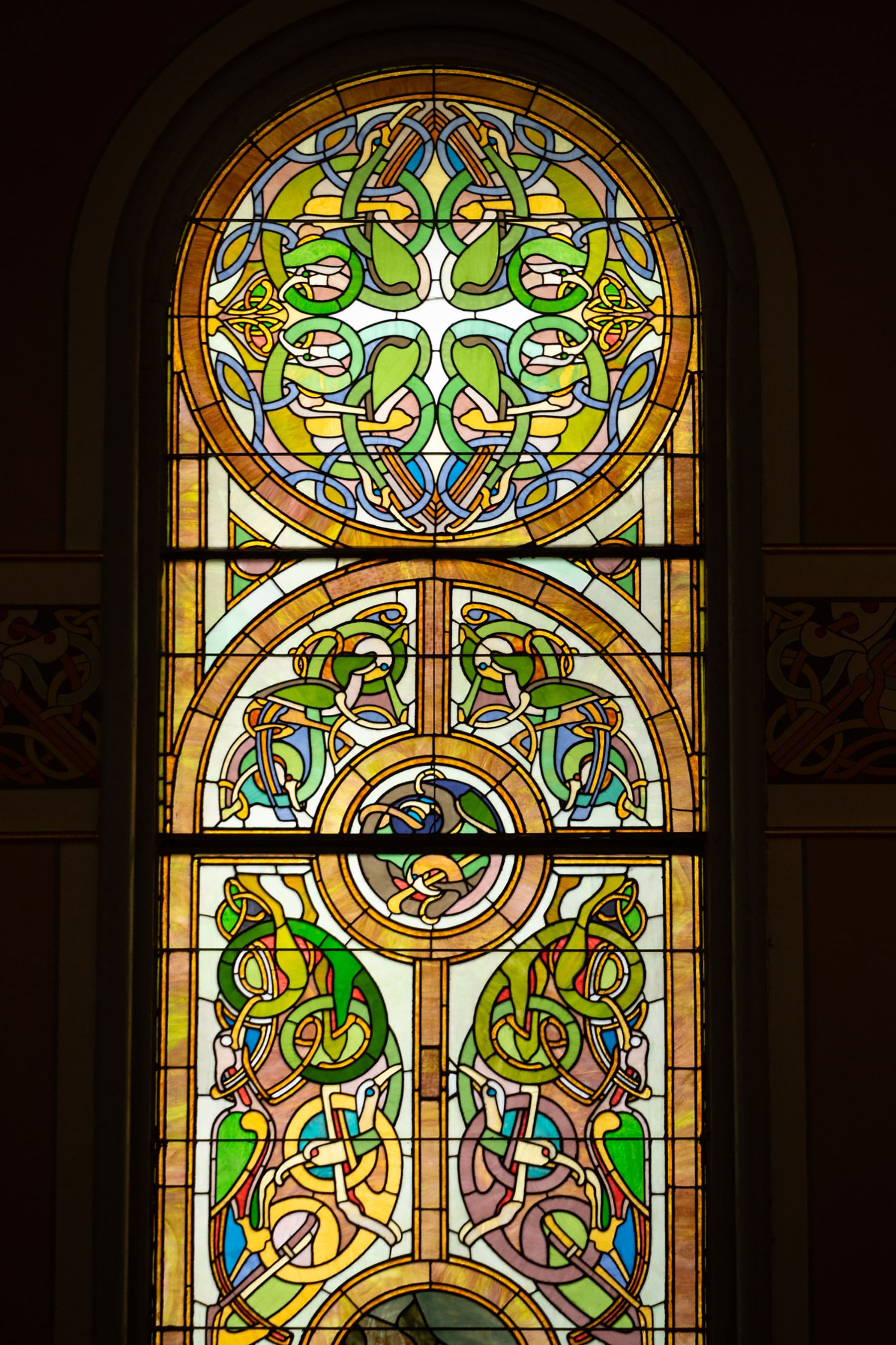
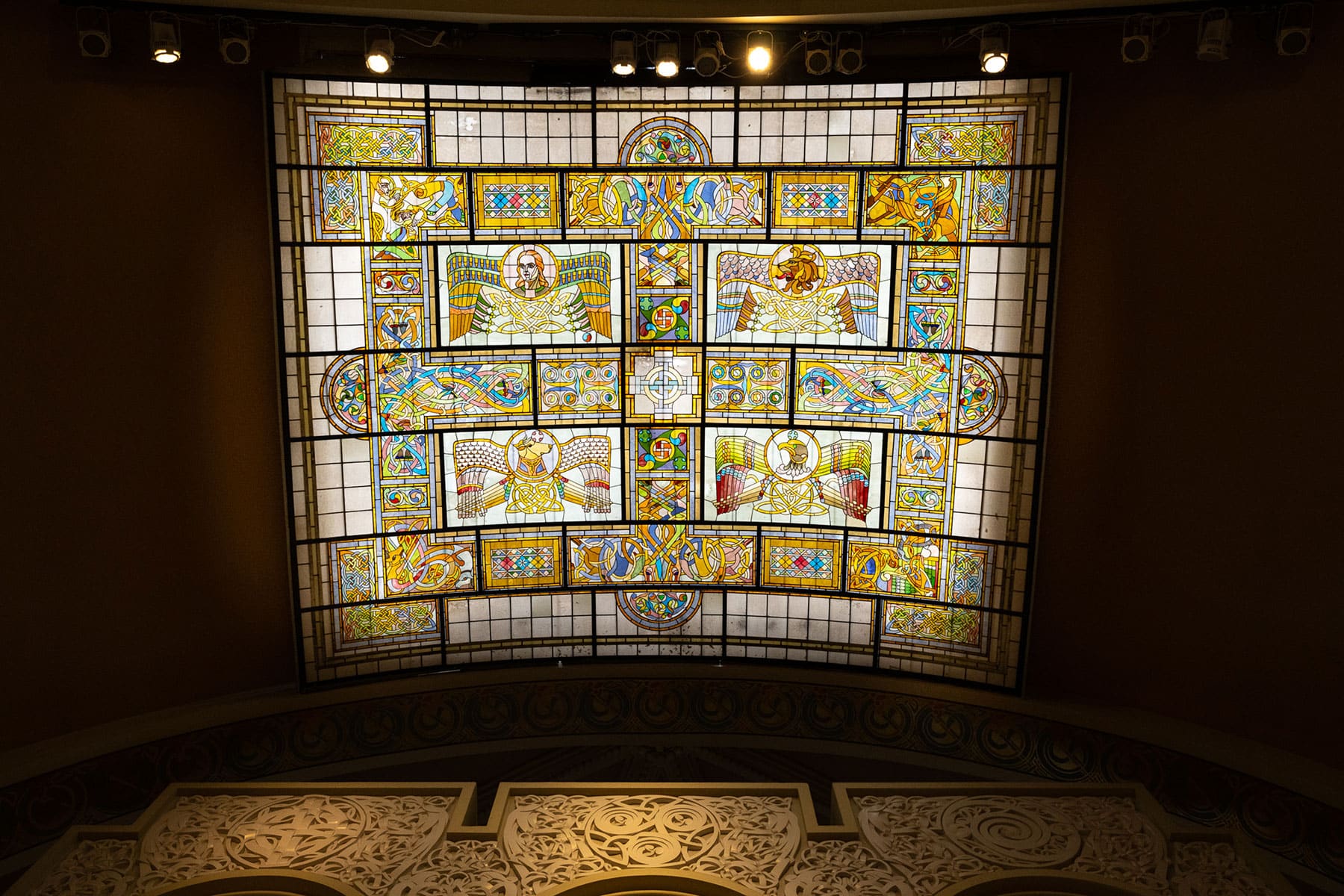
O’Shaughnessy’s windows were inspired by a Celtic art exhibit he saw at the 1893 World’s Fair, as well as the Book of Kells – an elaborate, illustrated manuscript of the Gospels created by Celtic monks around 800 CE – that he saw on a trip to Europe.
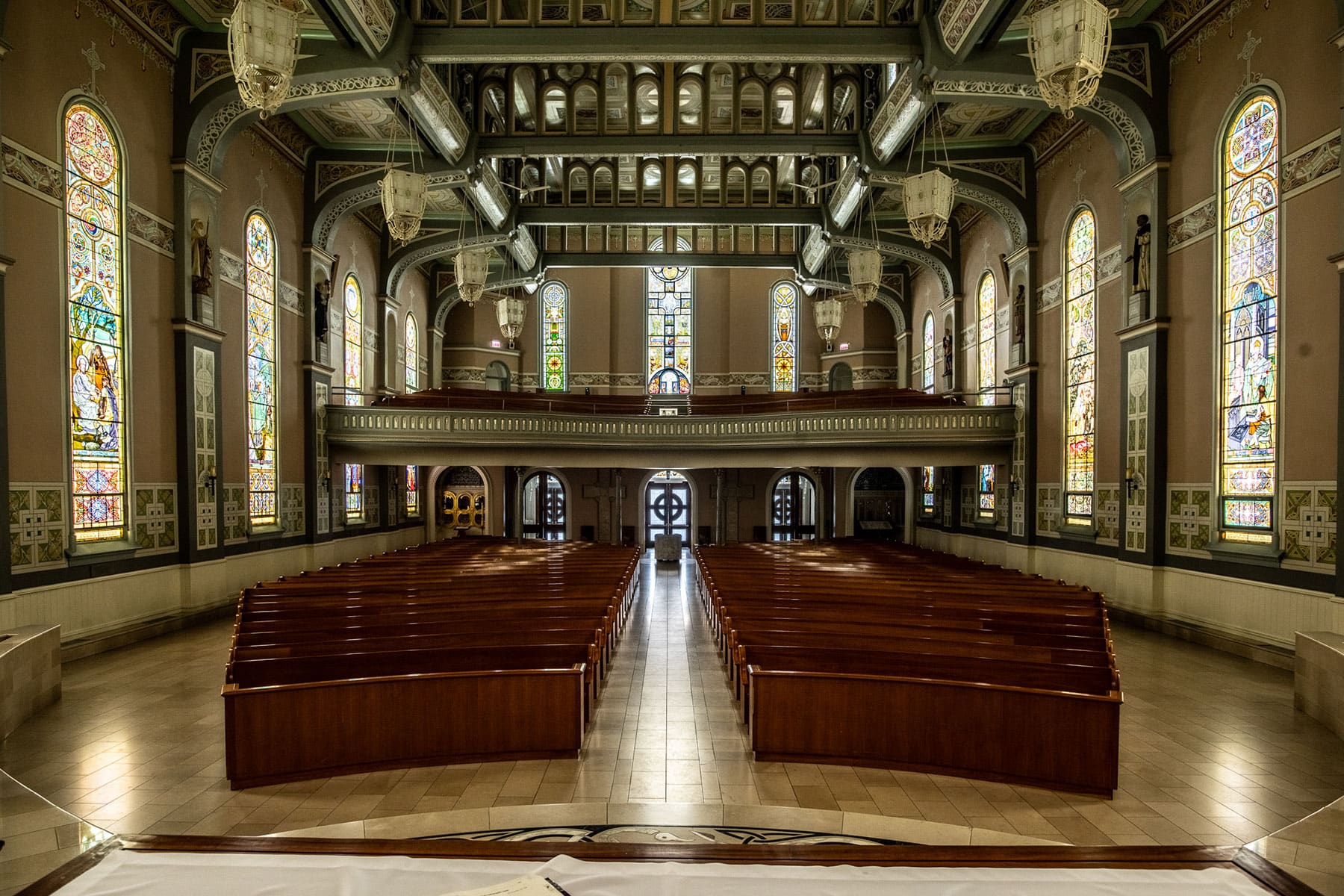
The triptych windows, known as “Faith, Hope, and Charity,” on the eastern facade of the church were designed by O’Shaughnessy in the art nouveau style.
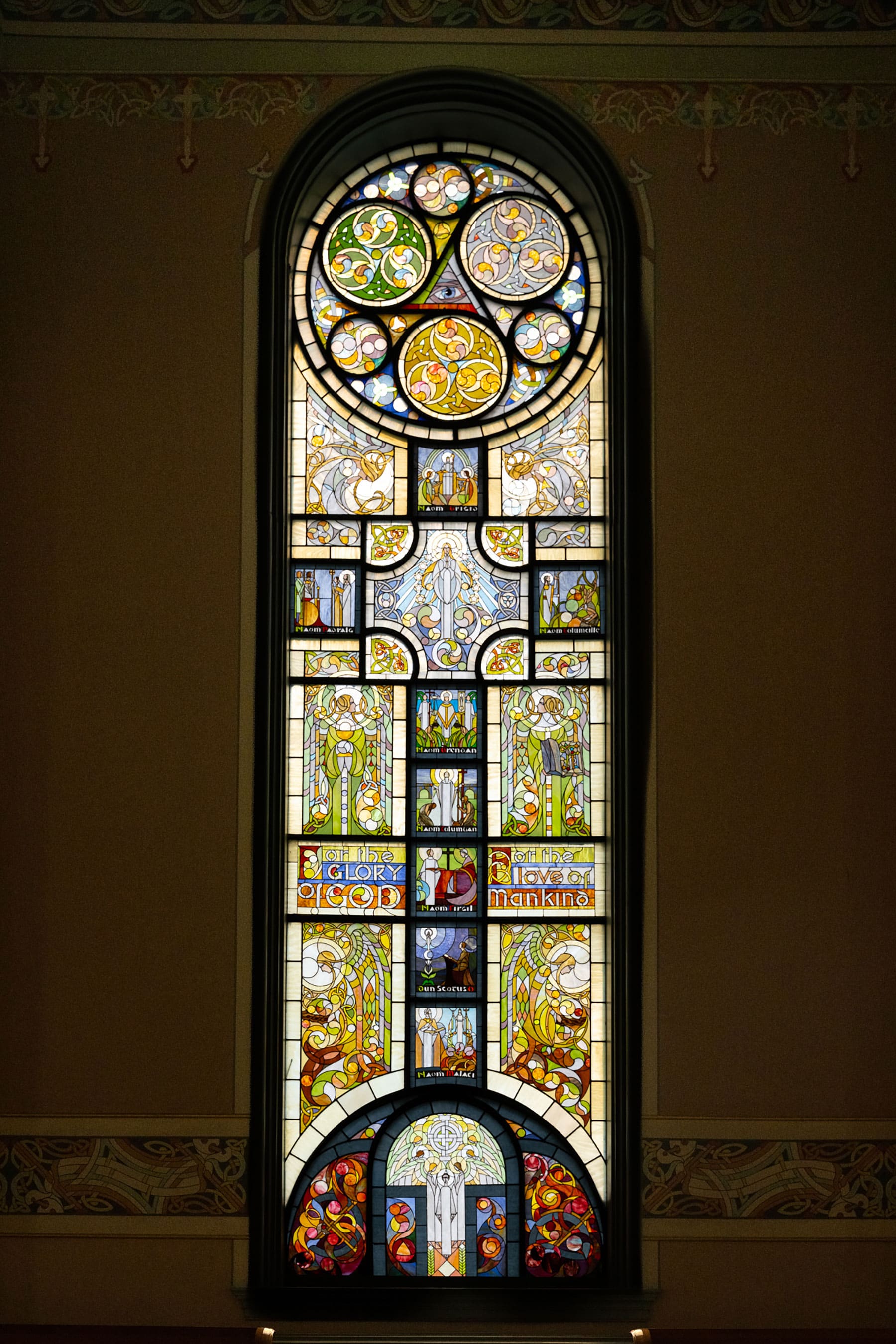
Composed of 250,000 individual pieces of glass, the center window in the triptych is called the MacSwiney window. O’Shaughnessy designed this window to show the story of Ireland. But as Chicago History Museum Curator Rebekah Coffman told Chicago Stories, it also reflects a distinctly Chicago Irish identity. “It’s not necessarily a statement of what it means to be Irish in Ireland,” Coffman said. “It is an interpretation of an American identity.”
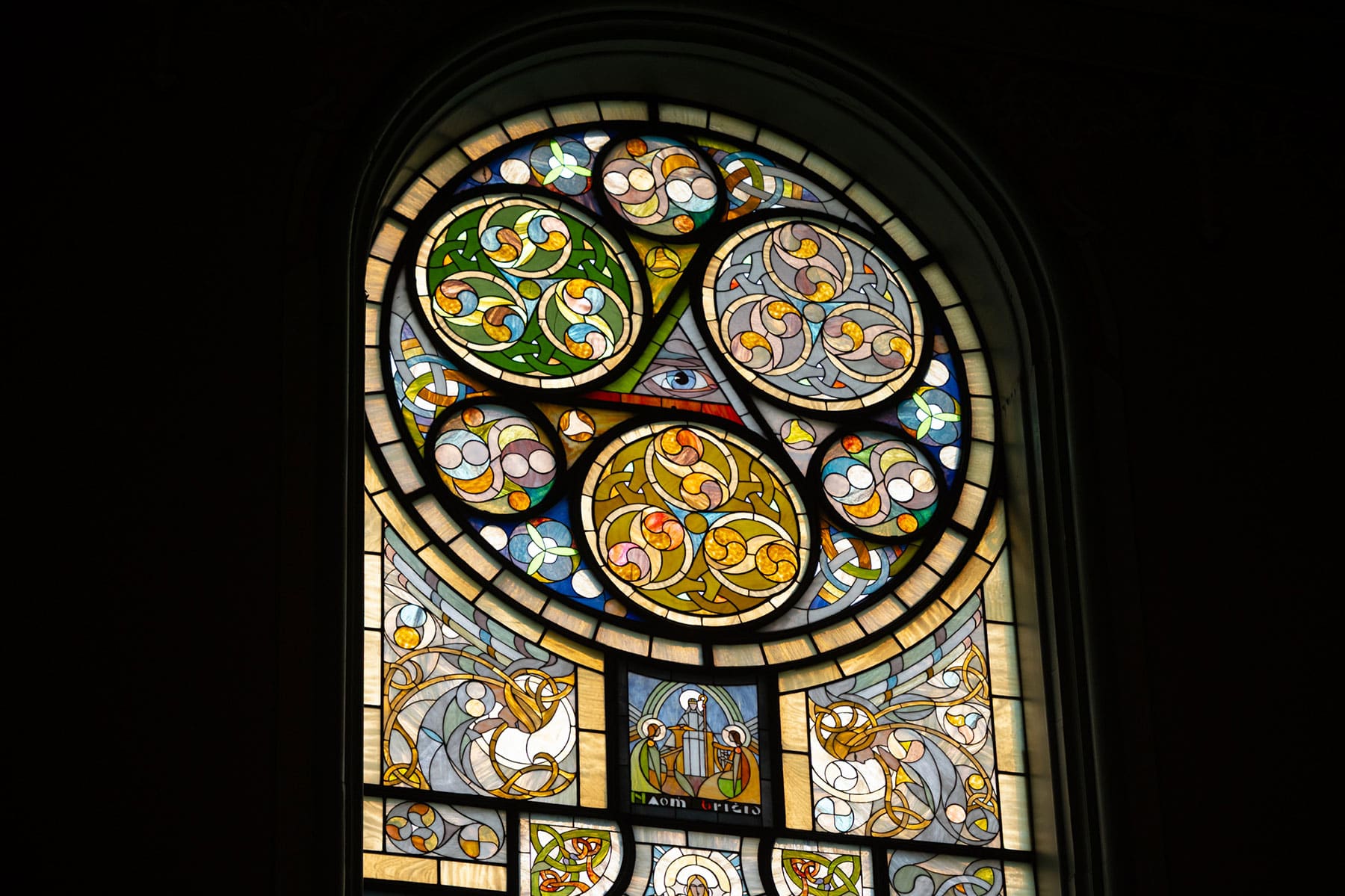
The top of the MacSwiney window depicts the “all-seeing eye of God,” surrounded by symbols for the Trinity and eternity.
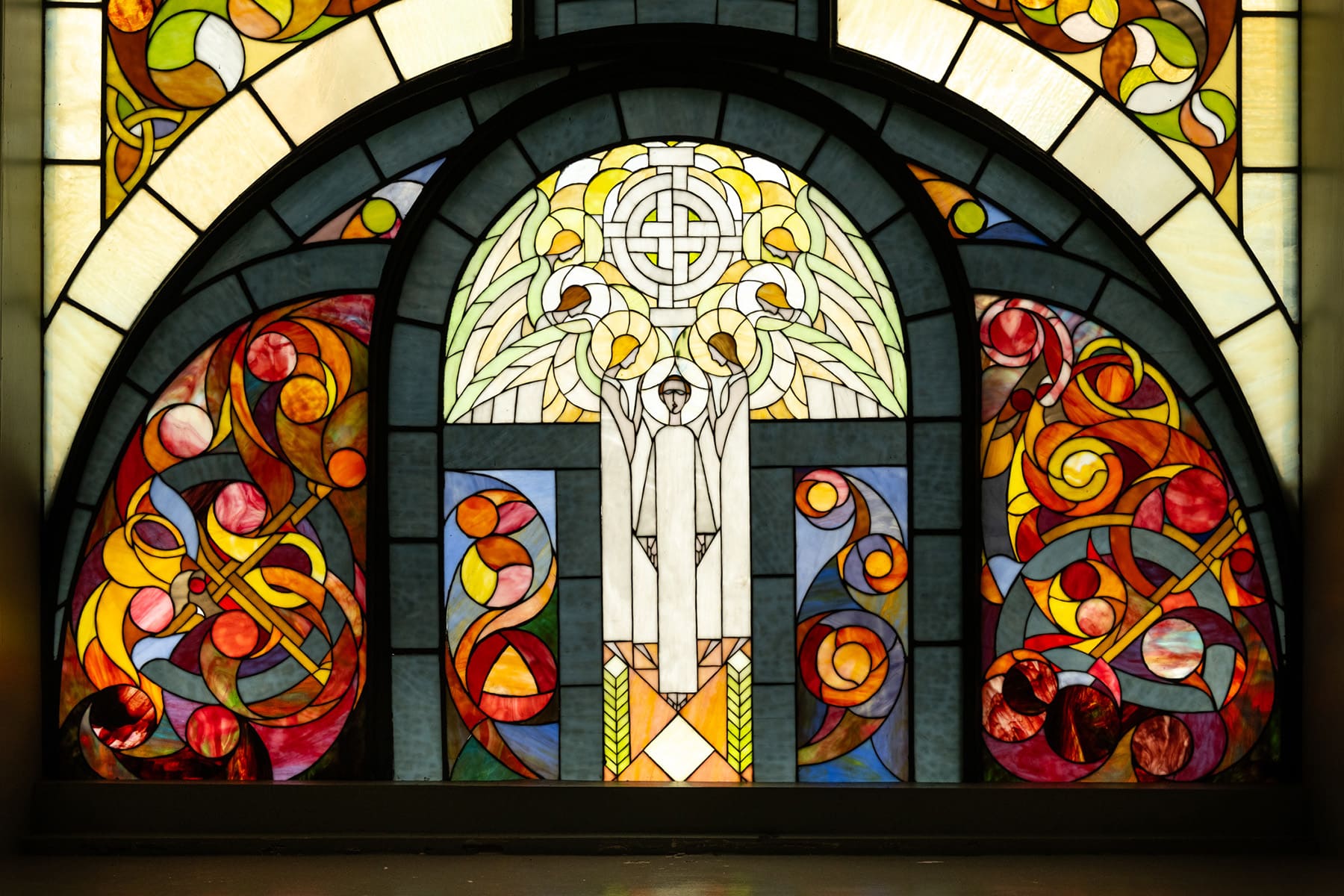
At the base of the window, the center panel depicts Terence MacSwiney being welcomed into heaven. MacSwiney was the mayor of Cork, Ireland, during the Irish War of Independence. MacSwiney died in 1920 after a 74-day hunger strike when the British imprisoned him on sedition charges.
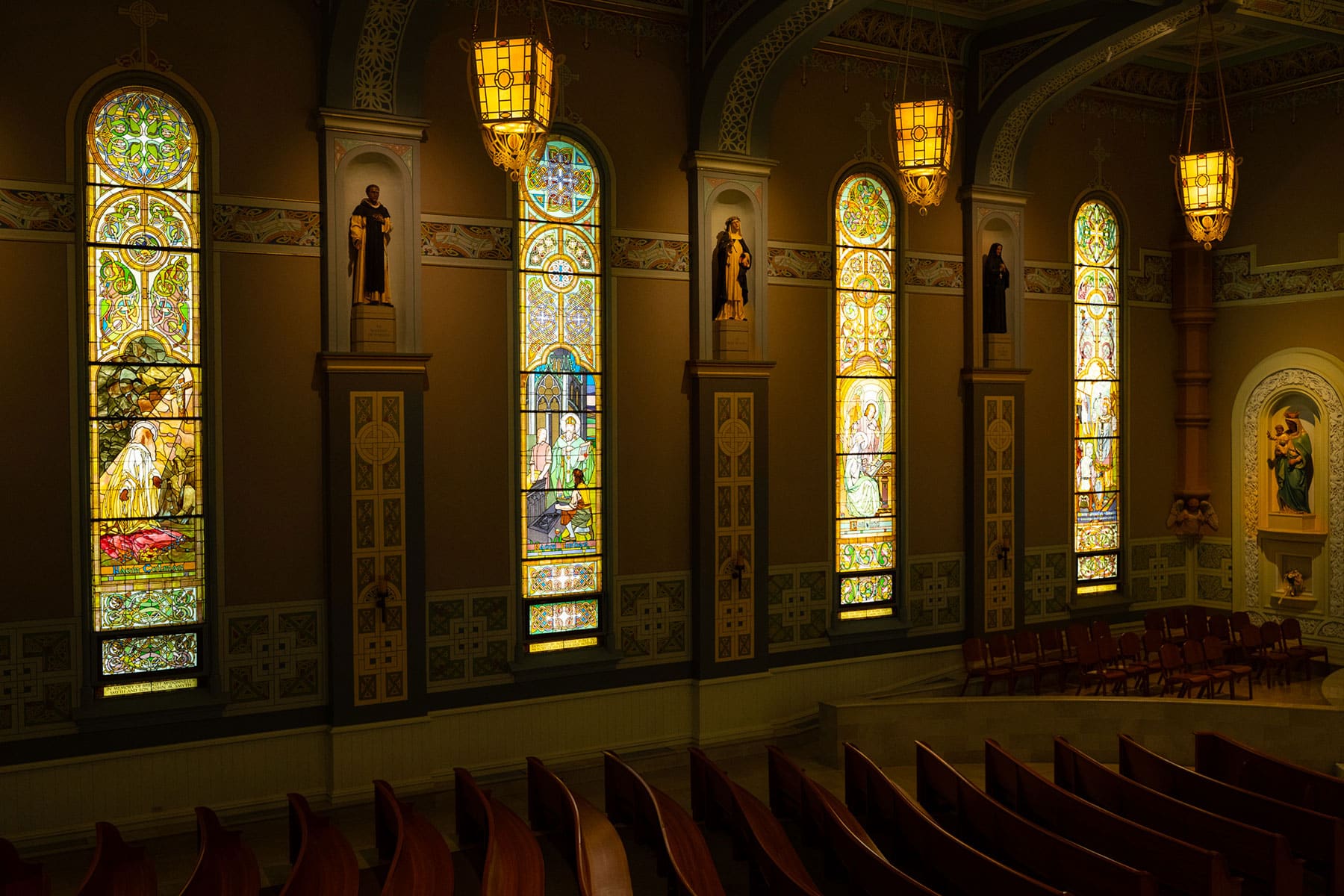
“[O’Shaughnessy] didn’t call them stained glass windows. He called them translucent mosaics of colored glass,” Durkin said. “Boy, it was beautiful.”
Over the decades, Old St. Pat’s membership declined. When Father Jack Wall joined the parish in 1983, there were just four parishioners. Wall’s outreach efforts to young adults worked, and the church’s membership and attendance rebounded by the late ’80s.
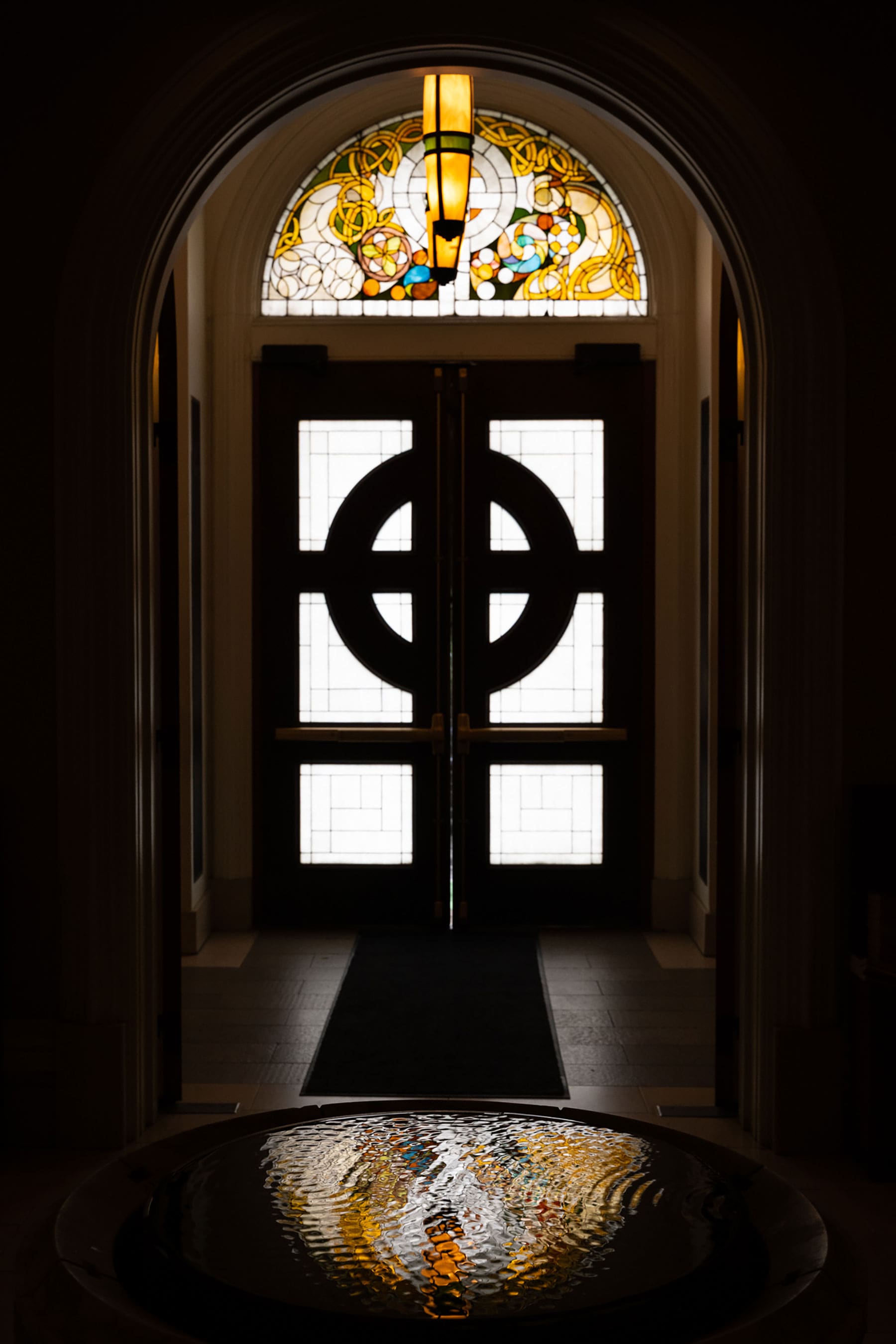
“It’s a very sacred place,” Father Jack Wall told Chicago Stories. “No matter what parish you are from, St. Patrick’s is the shrine of the Irish Catholic community here in Chicago.”
Related